2026 Trend Analysis: Modern Mother Daughter Earrings
Explore 2026 trends for mother daughter earrings, moving beyond matching sets to coordinated motifs, material safety, and expert styling frameworks.

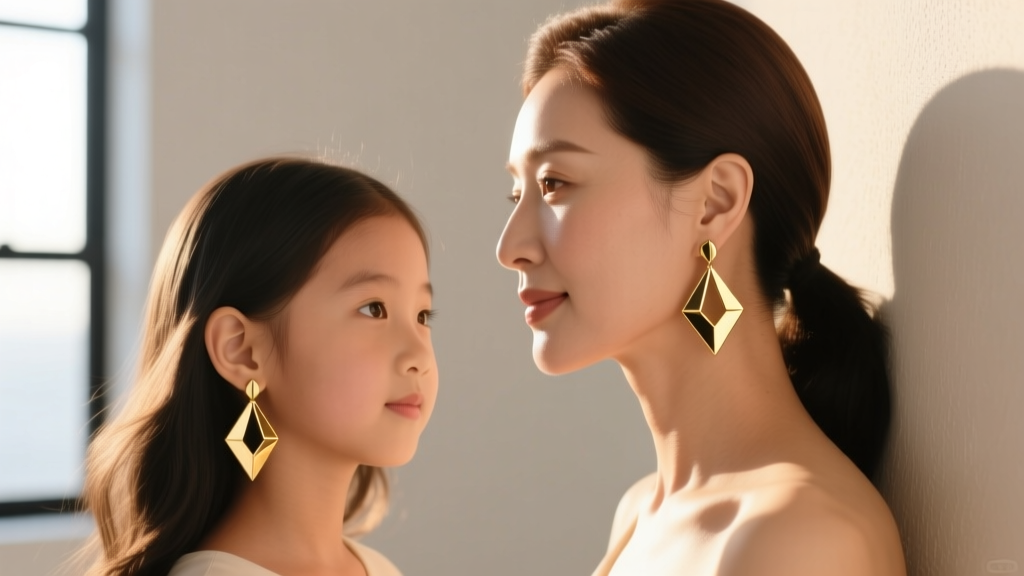
The Demise of "Matchy-Matchy": 2026's Coordinated Aesthetic
The era of identical, overly sentimental matching jewelry sets is officially behind us. As we navigate the style landscape of 2026, the market for mother daughter earrings has undergone a sophisticated evolution. Today’s discerning buyers are rejecting the "mini-me" approach in favor of thematic coordination. This shift reflects a broader cultural movement toward individuality within familial bonds, where both the mother and the daughter—whether the daughter is a teenager or a fully grown adult—want to wear pieces that suit their distinct personal styles, face shapes, and lifestyle needs.
From a stylistic perspective, this means moving away from literal replicas and embracing "echo motifs." This trend focuses on shared geometric languages, complementary material palettes, and modular designs that allow for personalized expression. In this comprehensive trend analysis, we will break down the exact specifications, material safety considerations, and styling frameworks that define the modern mother daughter earring aesthetic in 2026.
Core Trend Analysis: How to "Echo" Without Copying
The most prominent trend in shared jewelry this year is the concept of the "Echo Motif." This design philosophy ensures that two pieces of jewelry feel intrinsically linked without being carbon copies of one another. This is particularly crucial when accounting for the different physical proportions and styling preferences of two different generations.
1. Scale and Proportion Scaling
A mother with a fully developed facial structure and larger earlobes can easily carry a 25mm elongated oval drop earring. However, placing that same heavy, elongated drop on a younger daughter with a smaller, softer facial structure and delicate lobes will overwhelm her features and risk lobe stretching. The 2026 solution is scale translation. If the mother wears a 20mm elongated oval drop, the daughter wears a 7mm elongated oval stud or a 10mm huggie hoop with an oval charm. The geometric language (the elongated oval) remains the shared bond, but the scale is appropriately adapted to each wearer's anatomy.
2. The Modular Charm Huggie
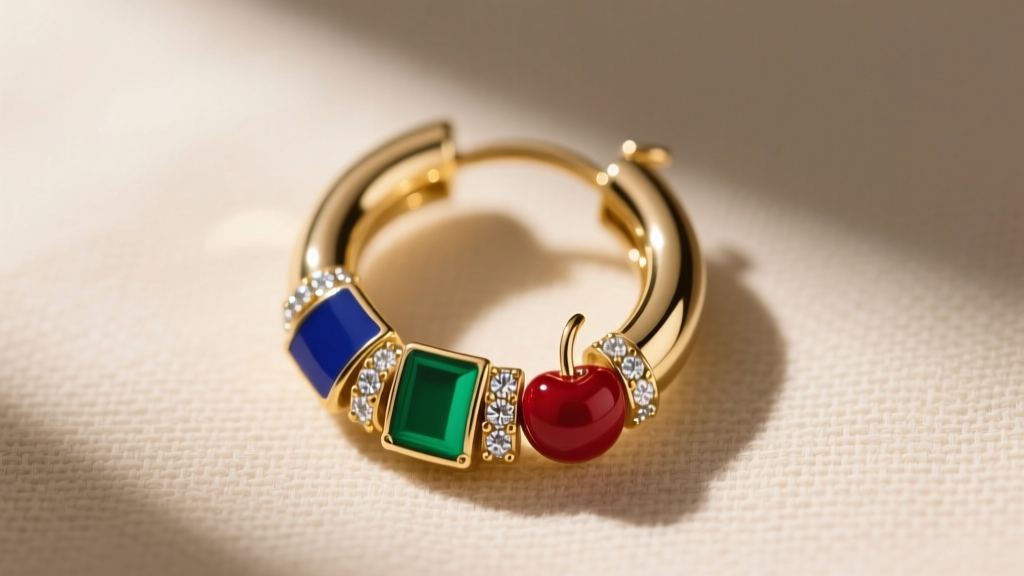
Modularity is dominating the 2026 accessories market. Brands are releasing base huggie hoops (typically 12mm or 14mm) that feature interchangeable click-in charms. A mother might select a base hoop in 14k yellow gold with a subtle diamond pavé charm, while her daughter opts for the same base hoop in PVD-coated titanium or sterling silver, adorned with a vibrant enamel or birthstone charm. This allows the mother daughter earrings to share a structural foundation while diverging in material and color story.
The Hardware & Material Matrix: Age-Appropriate Specifications
One of the most critical, yet frequently overlooked, aspects of buying shared jewelry is material biocompatibility. Younger ears, especially those that were pierced recently or are prone to contact dermatitis, require vastly different hardware than mature, fully healed adult lobes. According to the Association of Professional Piercers (APP), nickel allergies are incredibly common, making porous or low-grade alloyed metals a major risk factor for youth.
Below is a decision framework for selecting the appropriate materials and hardware based on the wearer's age and lobe maturity.
| Feature | Mother (Adult / Healed Lobe) | Daughter (Youth / Sensitive Lobe) |
|---|---|---|
| Primary Material | 14k or 18k Solid Gold (Yellow/White/Rose) | ASTM F136 Implant-Grade Titanium |
| Standard Gauge | 20g (0.81mm) or 18g (1.0mm) | 18g (1.0mm) or 16g (1.2mm) |
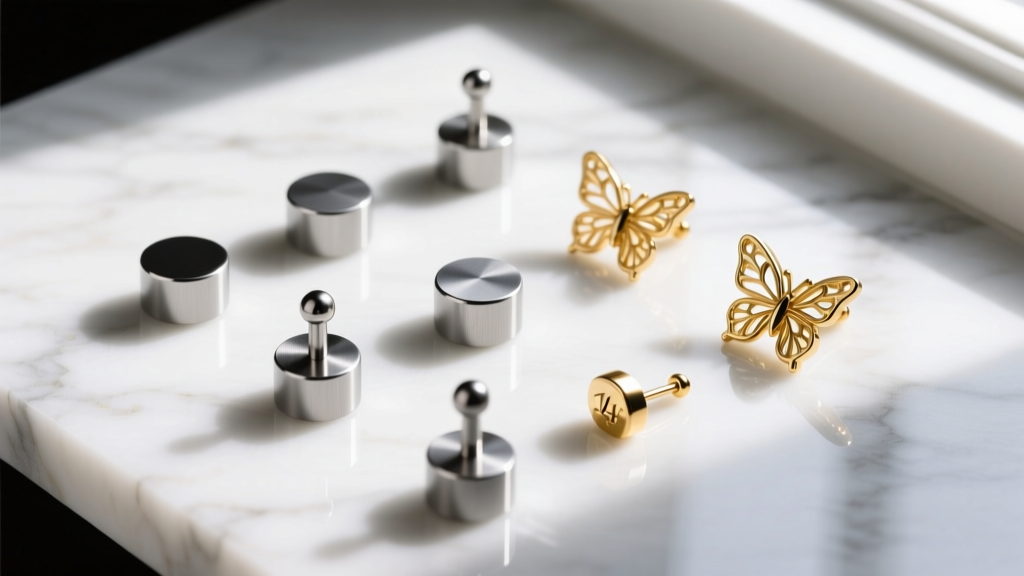
| Backing Style | Friction Butterfly Backs or Screw Backs | Threadless Flat-Back Labrets |
| Price Range (Per Pair) | $150 - $800+ | $45 - $130 |
Why Flat-Back Labrets for Youth?
While adults often prefer the ease of friction butterfly backs, they are notoriously problematic for younger wearers. The sharp post of a butterfly back can poke the neck during sleep, and the tension backs frequently loosen and fall out during active play or sports. Threadless flat-back labrets (where a bent pin snaps securely into a hollow tube) sit completely flush against the back of the earlobe. They are virtually impossible to pull out accidentally and provide a smooth, snag-free surface for sleeping, making them the gold standard for youth and teen jewelry.
Gemstone Durability: The Mohs Scale Factor
When incorporating birthstones or colored gems into mother daughter earrings, durability must dictate the design. The Gemological Institute of America (GIA) provides extensive data on gemstone hardness and toughness, which is vital when selecting stones for active younger wearers.
- High-Risk Stones (Avoid for Youth): Opal (Mohs 5.5-6.5), Pearl (Mohs 2.5-4.5), and Moonstone. These are highly susceptible to scratching, chipping, and chemical degradation from sweat or swimming pools.
- High-Durability Stones (Ideal for All Ages): Sapphire (Mohs 9), Ruby (Mohs 9), and Cubic Zirconia (Mohs 8-8.5). These stones can withstand the daily wear-and-tear of school, sports, and active lifestyles without losing their facet polish.
If a daughter’s birthstone is a fragile option like Pearl (June) or Opal (October), the 2026 styling workaround is to use a durable Sapphire in the daughter's birthstone color (e.g., a pink sapphire instead of a pearl), while the mother can safely wear the traditional, more fragile gemstone in a protected bezel setting.
Styling Framework: Face Shape & Lobe Proportion
Coordinated earrings must flatter both individuals. Here is a quick diagnostic framework for selecting the right "echo" shapes based on facial geometry:
Round Face Shapes
The Goal: Create vertical elongation.
The Mother: Opt for linear drop earrings, elongated rectangular hoops, or V-shaped dangles (15mm - 30mm).
The Daughter: Avoid large circular hoops or wide studs. Instead, choose vertically oriented oval studs, marquise-shaped flat-backs, or small teardrop huggies that mimic the mother's vertical lines without adding horizontal width.
Angular / Square Face Shapes
The Goal: Soften sharp jawlines and add curvature.
The Mother: Medium-sized circular hoops, curved drop earrings, or organic, asymmetrical molten gold designs (12mm - 20mm).
The Daughter: Round bezel-set studs, small classic huggies, or curved ear cuffs (if cartilage is pierced) that echo the mother's softer geometry.
Brand Spotlight: Who is Executing This Best?
If you are looking to invest in high-quality pieces that fit this 2026 coordinated aesthetic, several brands are leading the charge in offering modular, safe, and beautifully scaled options:
- BVLA (Body Vision Los Angeles): The absolute pinnacle for the younger wearer's flat-back labrets. Their 14k gold and titanium threadless ends offer gemstone settings that rival fine jewelry, allowing a daughter to have a high-end piece that is entirely safe for sensitive lobes.
- Catbird: Known for their delicate, whimsical motifs. Their "Snow Queen" and "Swan" collections offer excellent scaling opportunities, where a mother can wear the larger drop iteration and the daughter can wear the micro-stud version.
- Mejuri: Excellent for the modular huggie trend. Their bold hoop and charm ecosystem allows for mixing metals and textures, perfect for a mother-daughter duo that wants to build a coordinated but distinct curated ear stack.
Conclusion: Investing in Heirloom-Quality Bonds
The 2026 approach to mother daughter earrings is ultimately about mutual respect for personal style and anatomical needs. By prioritizing thematic echoes over literal matching, selecting biocompatible materials like ASTM F136 titanium for younger ears, and respecting the Mohs scale for gemstone selection, you can curate a shared jewelry experience that feels modern, sophisticated, and deeply meaningful. This is no longer just about wearing the same accessory; it is about sharing a design language that celebrates both your connection and your individuality.


