How to Style, Clean, and Store Gold Fringe Earrings
Master the art of wearing gold fringe earrings. Learn step-by-step styling tips, precise cleaning methods for delicate chains, and tangle-free storage.

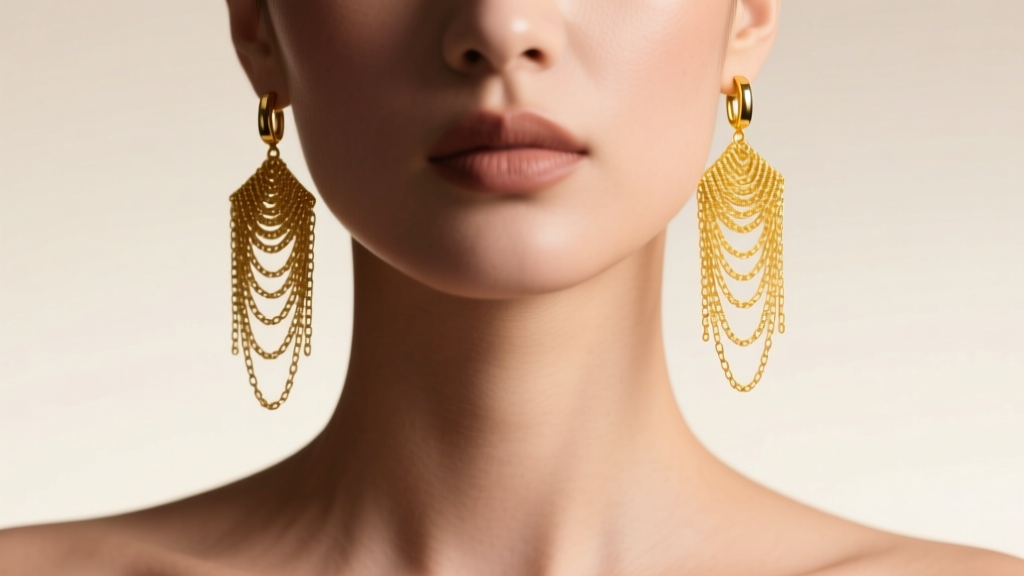
The Resurgence and Anatomy of Gold Fringe Earrings
Gold fringe earrings have cemented their status as a staple in fine jewelry, bridging the gap between vintage 1970s bohemian aesthetics and the sleek, kinetic minimalism dominating 2026 runways. Unlike static studs or rigid hoops, fringe earrings introduce movement, catching the light with every turn of the head. However, their intricate construction—comprising dozens of micro-chains, delicate solder joints, and specialized wire findings—requires a highly specific approach to styling, maintenance, and storage.
Before diving into care protocols, it is essential to understand the anatomy of a quality fringe earring. The structural integrity relies heavily on the finding (the hook or post) and the solder points where the fringe chains meet the main body. Master jewelers typically use laser welding for these micro-joints to prevent heat damage to the delicate chains. Furthermore, the gauge of the ear wire dictates both comfort and durability. A standard French hook for medium-weight fringe is usually crafted from 20-gauge (0.81mm) wire, while heavier statement pieces require an 18-gauge (1.02mm) leverback to prevent the wire from bending under the kinetic load of the swinging chains.
Step-by-Step Styling Guide: Matching Fringe to Face Shape
Styling gold fringe earrings is an exercise in balancing proportions. Because fringe creates a strong vertical line, it can dramatically alter the perceived geometry of your face. Here is a step-by-step framework for selecting the right fringe length and volume.
Round and Square Face Shapes
If you have a round or square face, your goal is to elongate your features and draw the eye downward.
- Opt for Long, Narrow Fringe: Choose styles that drop at least 2 to 3 inches below the earlobe. Linear, un-tapered chain fringe creates a slimming vertical illusion.
- Avoid Wide Tassels: Fringe that flares out horizontally at the bottom will accentuate the width of your jawline or cheeks.
- Hair Pairing: Wear your hair in a sleek, high ponytail or an updo to ensure the vertical lines of the earrings remain unobstructed.
Oval and Heart Face Shapes
Oval faces can pull off almost any fringe style, but heart-shaped faces (characterized by a wider forehead and narrow chin) benefit from specific volumetric choices.
- Opt for Tapered or Teardrop Fringe: Fringe that is wider at the bottom or features a teardrop silhouette adds visual weight to the lower half of the face, balancing a narrow chin.
- Embrace Volume: Multi-layered, thick chain fringe or fringe interspersed with small gold beads works beautifully to add width at the jawline.
- Hair Pairing: Soft, sweeping waves tucked behind one ear allow the fringe to rest against the neck, highlighting the collarbone.
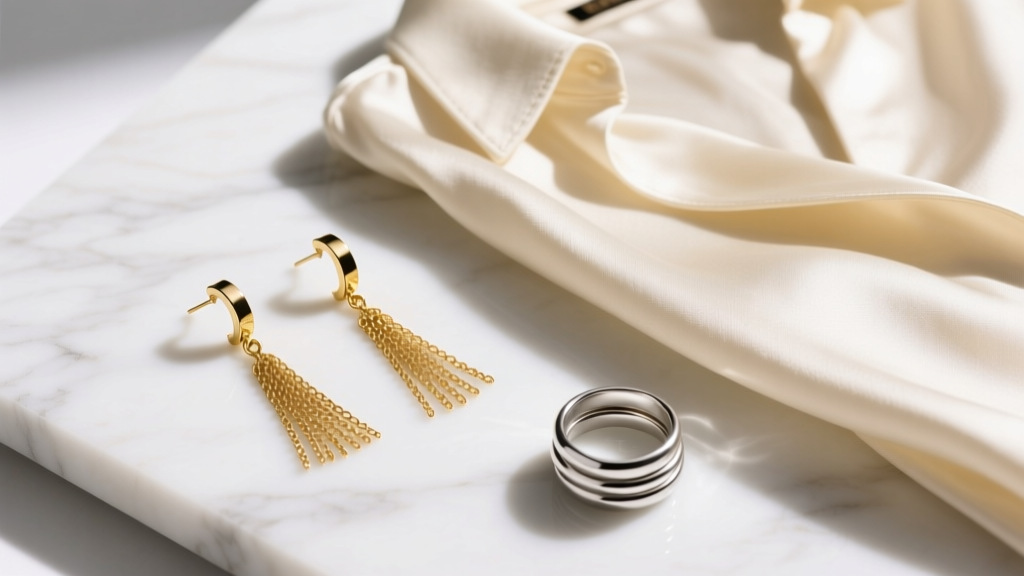
Material Grades and Hardware Specifications
Not all gold is created equal, especially when it comes to the unique structural demands of fringe jewelry. The kinetic energy generated by swinging chains places immense stress on the ear wire and the top solder joints. Below is a breakdown of how different gold karats perform in fringe earring construction.
| Gold Karat | Purity | Best Use in Fringe Earrings | Durability & Risk Factors |
|---|---|---|---|
| 14k Gold | 58.3% | Ear wires, hooks, and structural caps | Highly durable. Resists bending and stretching. Ideal for the hardware that bears the weight of the fringe. |
| 18k Gold | 75.0% | The fringe chains and decorative elements | Rich color with good durability. Excellent for the chains themselves, offering a balance of luxury and tensile strength. |
| 22k Gold | 91.6% | Solid wire-wrapped fringe (rare) | Very soft. Not recommended for micro-chains or hooks, as the weight of the earring will cause the metal to stretch and deform over time. |
When shopping, look for pieces that utilize 14k or 18k gold for the structural components. According to fabrication guidelines from Rio Grande, a leading jewelry supply authority, using alloys below 14k can cause skin irritation for sensitive ears, while alloys above 18k lack the tensile strength required for long-term chain suspension.
How to Clean Delicate Gold Fringe Without Tangling
Cleaning gold fringe is notoriously difficult. The biggest mistake consumers make is tossing them into an ultrasonic jewelry cleaner. The high-frequency vibrations in an ultrasonic bath will almost certainly cause micro-chains to cross over, knot, and tangle into an unbreakable mess. Furthermore, the vibrations can fatigue the laser-soldered joints, leading to chain breakage.
Follow this meticulous, step-by-step manual cleaning protocol instead:
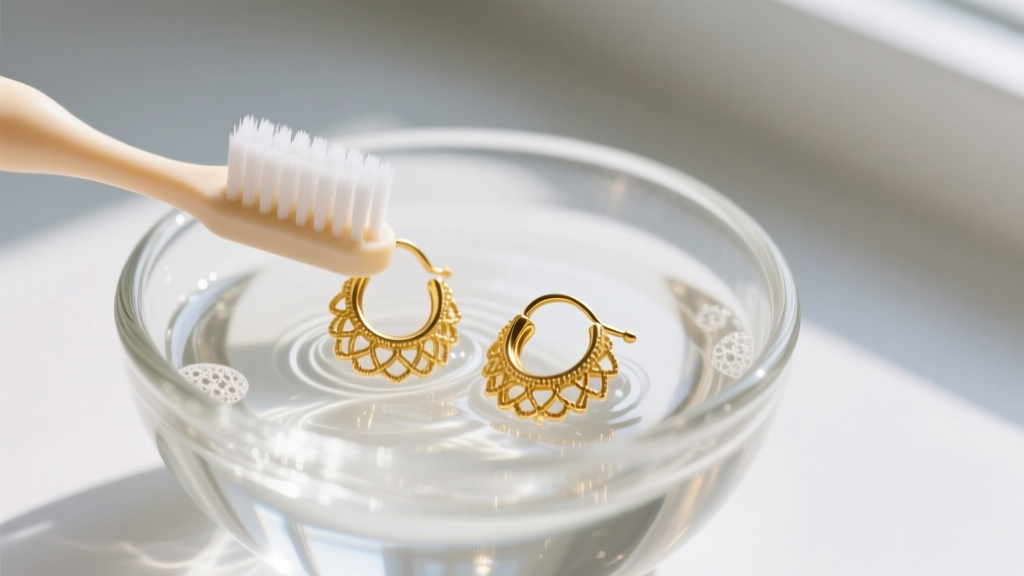
- Prepare a Mild Solution: In a small glass bowl, mix lukewarm water with a few drops of ammonia-free, phosphate-free dish soap (such as Dawn). The Gemological Institute of America (GIA) specifically recommends mild dish soap for gold care, warning that harsh chemicals like chlorine or bleach can cause stress corrosion cracking in gold alloys.
- Secure the Fringe: Hold the earring by the top finding (the hook or post). Do not let the fringe chains pile up at the bottom of the bowl. Keep them suspended in the water.
- Gentle Agitation: Swish the earring gently back and forth in the soapy water for 30 to 60 seconds. This allows the surfactants to break down skin oils and lotion residue trapped between the chain links.
- Targeted Brushing: If the top cap or structural elements have buildup, use an extra-soft baby toothbrush to gently sweep the crevices. Never brush the chains themselves, as the bristles can catch on the links and pull them apart.
- Rinse and Dry: Rinse under a gentle stream of lukewarm water. Lay the earring flat on a lint-free microfiber cloth. Use a hairdryer on the cool, low setting to blow the water out of the micro-chains. Air-drying can leave hard water spots trapped inside the links.
Tangle-Free Storage Protocols
Proper storage is the single most important factor in extending the lifespan of gold fringe earrings. When tossed into a jewelry box, the chains will inevitably intertwine with other pieces or even with themselves.
The Individual Poly-Bag Method
The most effective, jeweler-approved storage method is isolation. Place each earring in its own small, zip-top polyethylene bag. Before sealing, gently squeeze the air out. This prevents the chains from having the space to move and tangle during transit or drawer shifts. For added protection against tarnish (especially for lower-karat gold alloys containing copper or silver), drop a small anti-tarnish silica strip into the bag.
The Hanging Display Method
If you prefer to display your jewelry, use a specialized earring tree or a wall-mounted rack with individual pegs. Hang the fringe earrings by their hooks, ensuring they are spaced at least two inches apart from any other jewelry. The gravitational pull will keep the chains hanging straight and naturally aligned.
Troubleshooting Common Fringe Issues
Even with meticulous care, kinetic jewelry is subject to wear and tear. Here is how to handle the most common issues associated with gold fringe earrings.
"Never attempt to pull a knot out of a micro-chain with your fingers or tweezers. The oils from your skin add friction, and metal tweezers will crush the delicate links. Use a drop of mineral oil and two fine sewing needles to gently tease the knot apart under a magnifying glass." — Master Jeweler's Bench Note
- Bent Ear Wires: If your 20-gauge French hook has bent out of shape due to the weight of the fringe, do not bend it back and forth repeatedly. This causes work-hardening and will snap the wire. Take it to a jeweler to be annealed and reshaped, or replaced entirely.
- Snagged Chains: If a single chain in the fringe catches on a sweater and stretches, do not pull it. Carefully unhook the snag. If the link is deformed, a jeweler can use laser welding to snip and re-solder the single micro-link without affecting the surrounding chains.
- Skin Irritation: If the earring hook irritates your piercing, it may be due to friction rather than a metal allergy. Apply a microscopic layer of medical-grade silicone earring backing gel to the wire to reduce friction against the healing or sensitive fistula.
Conclusion
Gold fringe earrings are a masterclass in jewelry engineering, offering unparalleled movement and light reflection. By understanding the structural limits of gold karats, avoiding the destructive forces of ultrasonic cleaners, and implementing strict, isolated storage protocols, you can ensure your kinetic earrings remain untangled, structurally sound, and brilliantly radiant for decades to come.


