The Ultimate Style Guide for Guys with Two Earrings
Discover the ultimate style guide for guys with two earrings. Learn about placement, gauge sizes, premium metals, and aftercare.
Why the Double-Piercing Trend is Dominating Men's Style
As we navigate the style landscape of 2026, the outdated stigmas surrounding men's jewelry have completely evaporated. The single stud look has evolved, and guys with two earrings are now setting the standard for modern, curated masculinity. Whether you are looking to add a second hole to your earlobe or branching out into cartilage, a double-piercing setup offers a versatile canvas for self-expression. However, moving from one earring to two requires a strategic approach to placement, metal safety, and proportions. This beginner-friendly explainer will break down the exact technical specifications and styling frameworks you need to execute the perfect dual-earring look.

Choosing Your Second Piercing Placement
When deciding on the second piercing, you generally have two main routes: the upper lobe or the helix (cartilage). The choice depends entirely on your pain tolerance, lifestyle, and desired aesthetic.
The Upper Lobe (Second Hole)
The upper lobe is the most common second piercing for men. It heals relatively quickly and allows for easy swapping of jewelry. The critical factor here is spacing. A professional piercer will typically measure 7mm to 9mm between the center of your first lobe piercing and the second. If the spacing is too tight, you will not be able to wear two standard-sized studs or small hoops simultaneously without them overlapping. If it is too wide, the piercings will look disconnected rather than curated.
The Helix (Outer Cartilage)
For a more edgy, contemporary look, many guys opt for a helix piercing to complement a standard lobe stud. The helix sits on the upper outer rim of the ear. While visually striking, cartilage is dense and avascular, meaning it takes significantly longer to heal and is more prone to irritation bumps if subjected to friction from headphones or sleeping on the wrong side.

The Best Jewelry Materials for Men's Second Piercings
One of the most common mistakes beginners make is buying cheap, mystery-metal earrings from mall kiosks. For fresh piercings or long-term wear in sensitive ears, material grade is non-negotiable. According to the Association of Professional Piercers, only specific implant-grade metals should be used to prevent allergic contact dermatitis and heavy metal toxicity.
| Material Grade | Pros for Men's Jewelry | Cons / Limitations | Average Price Range |
|---|---|---|---|
| Implant-Grade Titanium (ASTM F-136) | 100% nickel-free, lightweight, highly biocompatible, won't tarnish. | Limited color options (mostly silver/grey unless anodized). | $35 - $85 |
| Solid 14k or 18k Gold | Premium aesthetic, excellent for healed piercings, holds value. | Expensive; must avoid white gold (contains nickel) for fresh holes. | $120 - $400+ |
| Surgical Stainless Steel (316L) | Very affordable, widely available, classic silver look. | Contains trace nickel; can cause reactions in sensitive or fresh piercings. | $15 - $40 |
Expert Tip: Avoid 'gold-plated' or 'gold-filled' jewelry for your second piercing. The plating will eventually wear off due to friction and body chemistry, exposing the base metal underneath and leading to severe irritation or green discoloration on the skin.
Sizing and Gauge: What You Need to Know
Gauge refers to the thickness of the earring post. The standard sizing for men's jewelry is vastly different from women's, primarily to ensure durability and prevent the dreaded 'cheese-cutter effect.' The cheese-cutter effect occurs when a post is too thin (like a 20-gauge wire), causing it to slice through the earlobe tissue under the weight of the jewelry or during accidental snags.
- 20G (0.8mm) / 18G (1.0mm): Standard for basic mall piercings and lightweight women's studs. Not recommended for men's daily wear.
- 16G (1.2mm): The gold standard for men's lobe and cartilage piercings. It provides enough structural integrity to support heavier metals and gemstones without tearing the tissue.
- 14G (1.6mm): Often used for industrial bars or heavy statement pieces, though it requires a piercer to stretch the initial hole slightly.
When shopping for your second earring, always check the product description for the gauge. If you are buying threadless or internally threaded jewelry from high-end brands like Maria Taka or BVLA, 16G will be the default, ensuring a secure, flush fit that won't easily fall out during workouts or sleep.
Symmetrical vs. Asymmetrical Styling Frameworks
Once you have guys with two earrings in mind, the next decision is how to balance the face. You do not need to mirror the exact same earrings on both sides. In fact, asymmetrical curation is the hallmark of advanced men's styling.
The Rule of Weight
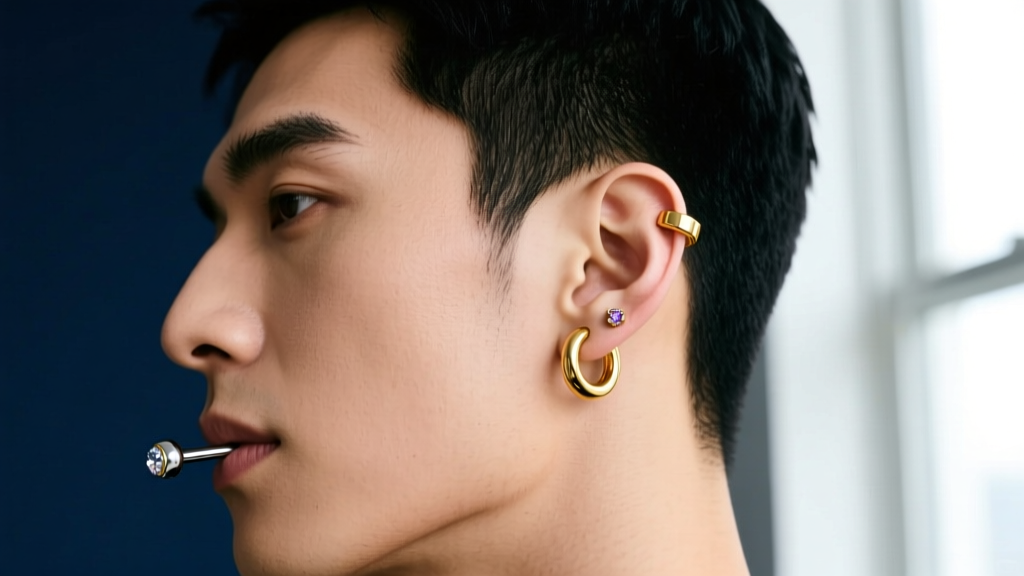
If you wear a slightly heavier or more visually dominant piece in your lower lobe (such as a 4mm black onyx stud or a small textured hoop), balance it by wearing a smaller, subtler piece in the upper lobe or helix (like a 2mm diamond or a simple titanium ball). This creates a visual anchor without overwhelming the side of your face.
Metal Mixing
While matching metals (all silver or all gold) is the safest route for beginners, 2026 trends heavily support intentional metal mixing. Pairing a yellow gold lower lobe hoop with a white gold or platinum upper lobe stud adds depth and a bespoke, custom feel to your ear curation.

Healing Timelines and Aftercare Realities
Getting a second piercing means managing a fresh wound while living your daily life. The Mayo Clinic emphasizes that proper aftercare is the single biggest determinant of whether your new piercing heals cleanly or develops chronic irritation bumps.
Lobe Healing (6 to 8 Weeks)
Earlobes are highly vascular, meaning they receive plenty of blood flow and heal relatively fast. However, you must avoid sleeping on the new piercing. Use a travel neck pillow to keep your ear suspended in the center hole, preventing pressure and friction.
Cartilage Healing (6 to 12 Months)
Cartilage is notoriously stubborn. It is common for helix piercings to look healed on the outside after two months, while the internal fistula (the skin tube forming the hole) is still fragile.
The Only Aftercare Solution You Need
Throw away the harsh alcohol, hydrogen peroxide, and tea tree oils. These destroy newly forming cells and dry out the skin. The only solution approved by professional piercers is sterile saline wound wash (0.9% sodium chloride with no additives). Spray it directly onto the front and back of the piercing twice a day, and gently dry it with non-woven gauze or a hair dryer on the cool setting. Never twist or rotate the jewelry, as this tears the delicate healing tissue and introduces surface bacteria into the wound.
Final Thoughts on Building Your Ear Curation
Transitioning to a double-piercing setup is a fantastic way to elevate your personal style. By prioritizing precise spacing, investing in ASTM F-136 titanium or solid gold, and adhering to strict 16G sizing, you ensure your jewelry looks intentional, masculine, and built to last. Take your time with the healing process, respect the biology of your skin, and treat your ear curation as an evolving art form rather than a one-time purchase.