How to Wear Gold Big Earrings Without Earlobe Sagging
Learn how to wear gold big earrings without earlobe sagging or pain. Expert troubleshooting for weight distribution, supports, and karat choices.

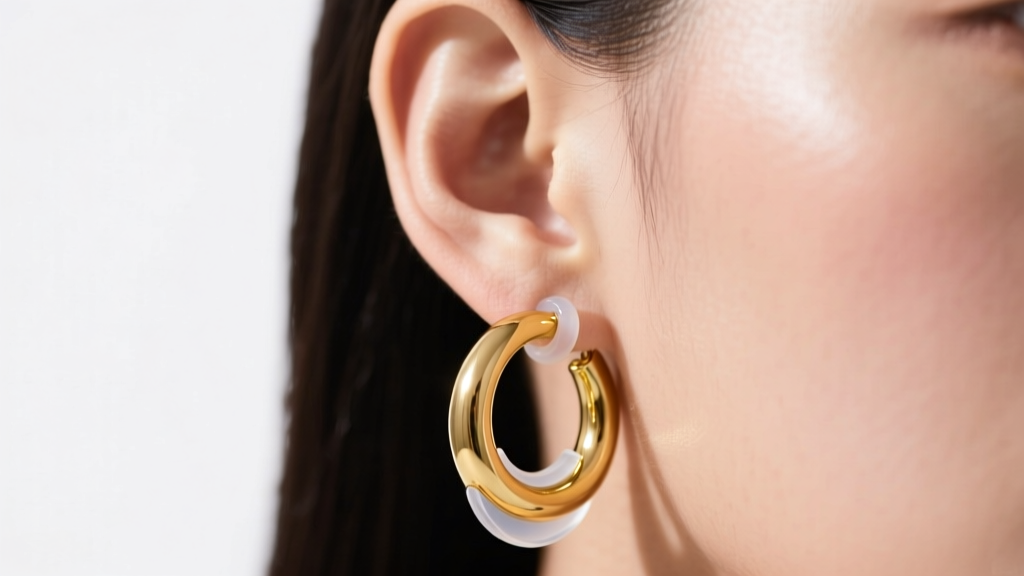
The Physics of Heavy Gold: Why Your Lobes Hurt
Statement jewelry is having a massive moment, but the physical reality of wearing oversized pieces is often ignored until the damage is done. When you slip on a pair of heavy gold big earrings, you are subjecting your earlobes to a continuous mechanical load. Unlike the upper ear, which is supported by rigid cartilage, the earlobe is composed entirely of areolar connective tissue, fat, and a dense network of collagen and elastin fibers. It contains no structural cartilage whatsoever.
When a heavy earring is suspended from the fistula (the piercing hole), gravity pulls the mass downward. This creates a localized stress point at the inferior edge of the piercing. Over time, chronic tension causes the collagen fibers to micro-tear and degrade, leading to irreversible elongation of the piercing channel. Furthermore, the 'lever effect' exacerbates the issue: a 2-inch drop earring generates significantly more torque on the lobe than a heavy stud sitting flush against the skin, even if their total gram weight is identical. Understanding this biomechanical reality is the first step in troubleshooting your jewelry wardrobe.
Diagnostic Checklist: Identifying Your Earring Failure Point
Before you can fix the problem, you must diagnose the specific failure mode of your current jewelry. Examine your lobes and your gold big earrings against this troubleshooting checklist:
- The Forward Tilt: Do your earrings point downward or lean forward rather than sitting perpendicular to your jawline? This indicates the post is too thin or the earring back is failing to support the center of gravity.
- The Slit Hole: Gently pull the earring down. Does the circular piercing hole stretch into a vertical slit? This is the primary precursor to a full lobe tear.
- Post-Wear Redness: Is the tissue immediately below the piercing inflamed or tender after four hours of wear? This signals acute ischemic compression (restricted blood flow) from a poorly distributed load.
- The Cheese-Cutter Sensation: Do you feel a sharp, slicing pain rather than a dull ache? This means the wire gauge is too thin for the earring's overall mass.
Material & Weight: Solid vs. Hollow Gold Big Earrings
The most common mistake consumers make is assuming all gold jewelry of the same volume weighs the same. The manufacturing technique dictates the wearability of large-scale pieces. According to the Gemological Institute of America (GIA), the karat weight also affects the tensile strength of the metal. 24k gold is far too soft for large structural pieces and will bend under its own weight, risking loss. 14k gold (58.5% pure gold alloyed with copper and silver) offers the optimal balance of rich color and structural rigidity.
| Manufacturing Method | Karat | Approx. Weight (2-inch Hoop) | Durability & Wearability |
|---|---|---|---|
| Solid Cast | 14k | 8 - 12 grams | Highly durable, but too heavy for all-day lobe wear without support patches. |
| Solid Cast | 18k | 9 - 14 grams | Heavier and softer. Prone to bending if dropped. Requires heavy-duty backs. |
| Electroformed (Hollow) | 14k | 2 - 4 grams | Excellent. Created over a wax mandrel that is later melted out. Gives massive volume at 70% less weight. |
| Gold Vermeil | N/A (Silver base) | 4 - 7 grams | Moderate. Lighter than solid gold, but the sterling silver core can oxidize and weaken over time. |
Pro-Tip: If you desire the look of solid gold big earrings but cannot tolerate the weight, seek out 'electroformed' or 'hollow gold' pieces. Jewelers use an electrodeposition process to build a thick shell of 14k gold over a resin or wax mold, which is subsequently dissolved. The result is a structurally sound, voluminous earring that weighs a fraction of its solid counterpart.
Structural Fixes: Upgrading Your Earring Backs
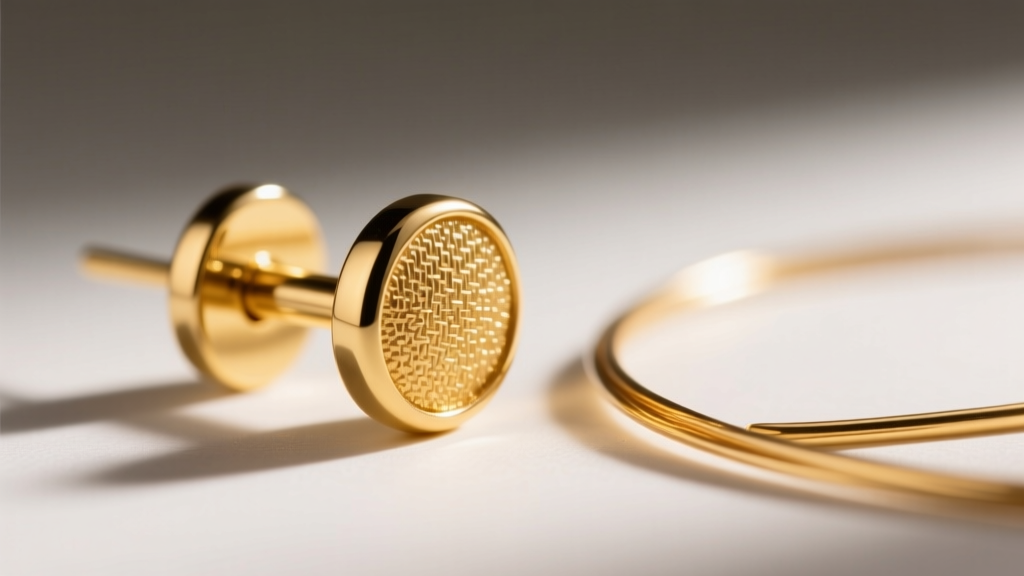
The standard 'butterfly' clutch earring back is a mechanical failure waiting to happen when paired with heavy jewelry. A standard metal clutch has a surface area of roughly 4mm. When a 10-gram earring pulls against this tiny surface area, the pressure concentrates on a microscopic point on the back of your lobe, causing deep tissue bruising and eventual migration of the piercing.
The Jumbo Silicone Disc Solution
To solve this, you must manipulate the physics of pressure (Pressure = Force ÷ Area). By swapping your standard clutch for a 10mm to 12mm jumbo silicone disc back, you increase the surface area distributing the weight by up to 900%. Medical-grade silicone also provides high-friction grip against the skin, preventing the heavy earring from slowly sliding down the post throughout the day. For extremely heavy drop styles, upgrade to a 'screw-back' or 'locking clutch' mechanism to ensure the increased weight doesn't simply pull the earring off the post entirely.
The Secret Weapon: Earlobe Support Patches
When upgrading the earring back isn't enough, you must reinforce the biological tissue itself. Earlobe support patches (often sold under brand names like LobeWonder or BlingDots) are a non-negotiable tool for collectors of heavyweight jewelry.
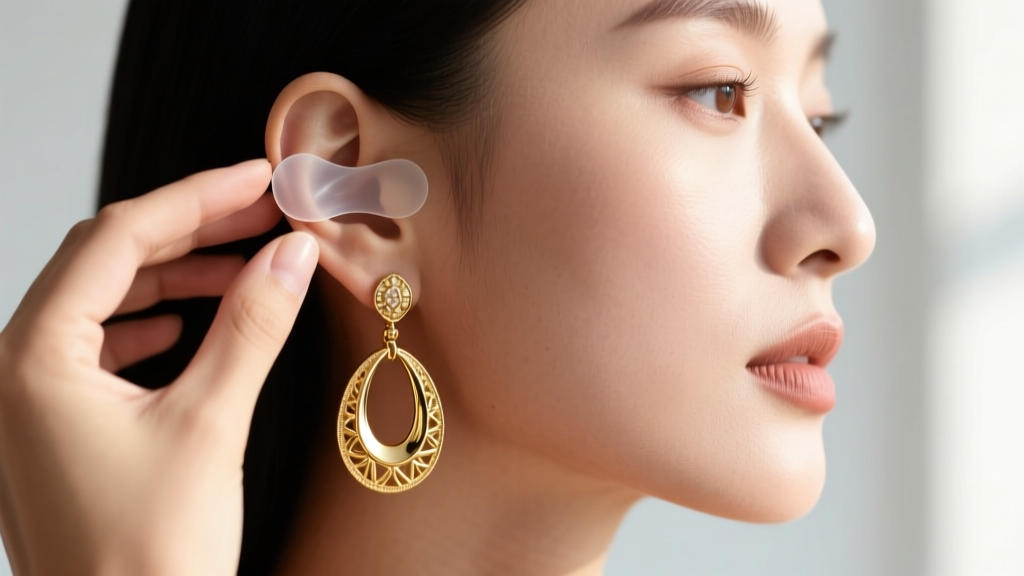
These patches are made from ultra-thin, hypoallergenic medical adhesive and polyurethane. Here is the exact protocol for using them effectively with gold big earrings:
- Prep the Tissue: Cleanse the back of your earlobe with rubbing alcohol to remove natural sebum and skincare residues. The adhesive will fail if applied over moisturizer.
- Apply the Patch: Peel the backing and center the patch directly over the fistula exit wound on the back of the lobe.
- Pierce Through: Push your earring post directly through the pre-scored center of the patch.
- Secure the Back: Attach your jumbo silicone disc or locking clutch over the patch. The patch acts as an artificial layer of fascia, absorbing the tensile stress and preventing the gold post from tearing through your natural collagen.
Gauge Thickness and Piercing Health
One of the most insidious problems with mass-produced gold big earrings is the use of micro-thin wire posts to save on precious metal costs. The Association of Professional Piercers (APP) notes that standard lobe piercings are typically performed at 18-gauge (1.02mm) or 20-gauge (0.81mm). However, many oversized commercial earrings use 22-gauge (0.64mm) or even 24-gauge (0.51mm) wires.
When a heavy gold earring hangs from a 24-gauge wire, it creates the infamous 'cheese-cutter effect.' The thin wire exerts immense downward shear force, slowly slicing through the bottom of the piercing channel. If you are purchasing bespoke or high-end gold big earrings, explicitly request an 18-gauge (1.02mm) or 16-gauge (1.29mm) post. If you already own a pair with a dangerously thin wire, take them to a local bench jeweler. For a minimal fee, they can laser-weld a thicker, 18k or 14k gold post onto the existing earring body, instantly resolving the cheese-cutter risk and vastly improving the structural integrity of the piece.
Conclusion: Wear Them With Confidence
You should never have to compromise between making a bold style statement and maintaining the health of your piercings. By understanding the biomechanics of the earlobe, opting for hollow electroformed gold, maximizing surface area with jumbo silicone backs, and reinforcing the tissue with medical-grade patches, you can troubleshoot the inherent flaws of heavy jewelry. Armed with these technical adjustments, your gold big earrings will remain a source of joy and confidence, rather than a painful burden on your anatomy.


