Lucky Charm Earrings: A Complete Material & Metal Guide
Discover the best metals and materials for lucky charm earrings. Compare titanium, gold, and silver properties for durable, hypoallergenic talismans.

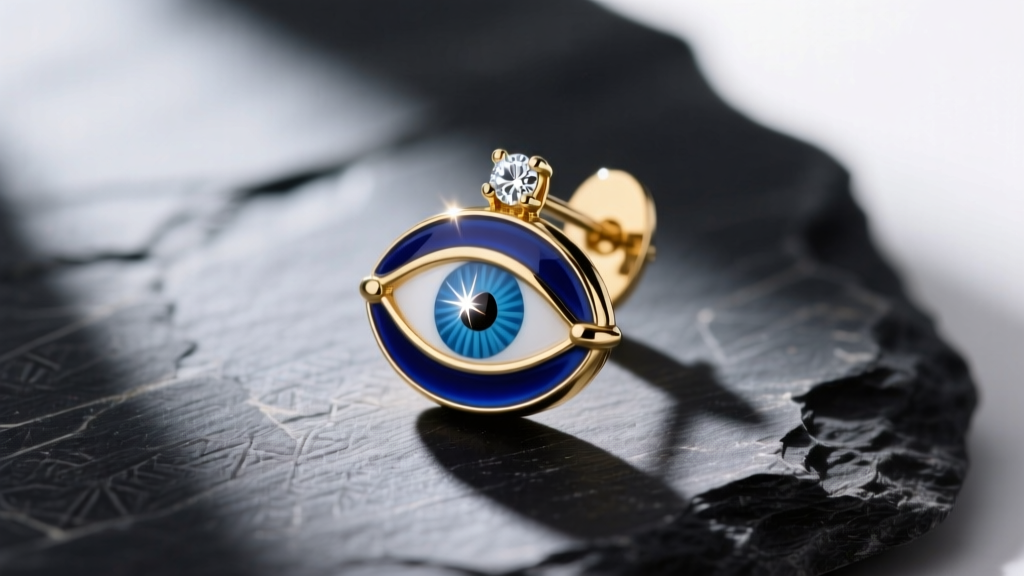
The Intersection of Superstition and Metallurgy
When you invest in lucky charm earrings—whether they feature an evil eye to ward off negative energy, a Hamsa hand for protection, or a four-leaf clover for fortune—you are likely planning to wear them daily. Talismans lose their perceived efficacy if they are constantly taken off, meaning the materials must withstand 24/7 exposure to skin oils, sweat, shower water, and friction. Unfortunately, many mass-market charm earrings prioritize aesthetic detailing over metallurgical integrity, leading to rapid tarnishing, allergic contact dermatitis, and structural failure.
As a domain expert in jewelry materials, I evaluate lucky charm earrings not just by their symbolic meaning, but by their Vickers hardness, alloy composition, and galvanic reactivity. This comprehensive guide breaks down the exact material properties you need to look for when selecting a forever talisman, ensuring your luck doesn't run out due to poor manufacturing.
Base Metals vs. Precious Alloys: What Touches Your Skin
The post and the backing of your earring are the most critical components because they interact directly with the fistula (the piercing hole). Here is how the most common metals perform in daily-wear charm earrings.
Implant-Grade Titanium (ASTM F136)
For cartilage placements like a helix evil eye or a tragus horseshoe, titanium is the undisputed king. You must look specifically for ASTM F136 implant-grade titanium, not just "commercially pure" titanium. ASTM F136 contains aluminum and vanadium, which increases its tensile strength while maintaining a completely nickel-free profile. According to the American Academy of Dermatology, nickel is the leading cause of metal contact dermatitis. Titanium naturally forms a microscopic passivation layer of titanium dioxide when exposed to oxygen, making it entirely impervious to sweat and water corrosion. Pricing expectation: $30–$60 for high-quality threaded titanium charm tops.
Solid Gold (14k vs. 18k for Intricate Charms)
Gold is a classic choice for lucky charms, but the karat weight drastically affects the longevity of the charm's details. Pure 24k gold is too soft (Vickers hardness of ~25 HV) and will easily scratch or bend. While 18k gold (75% pure gold, ~120 HV) is luxurious and hypoallergenic, it is still relatively soft. For lucky charm earrings with intricate stamped or cast details—like the delicate fingers on a Hamsa hand or the veins on a clover—14k solid gold (58.5% pure gold, ~140 HV) is vastly superior. The higher copper and zinc content in 14k gold provides the structural rigidity needed to keep crisp, fine details from wearing smooth over years of daily friction. Pricing expectation: $120–$350 depending on weight and gemstone accents.
Sterling Silver & The Tarnish Reality
Sterling silver (925) is an alloy of 92.5% silver and 7.5% copper. That copper is the Achilles' heel of silver lucky charms. When exposed to sulfur compounds in the air, cosmetics, and human sweat, the copper reacts to form copper sulfide, resulting in a dark, blackish tarnish. If you choose silver for a lucky charm earring, ensure it features a heavy rhodium plating. Rhodium is a platinum-group metal that provides a brilliant, tarnish-proof barrier. However, once the rhodium wears off the high-friction areas (like the post and clasp), the underlying silver will oxidize. Pricing expectation: $25–$80.
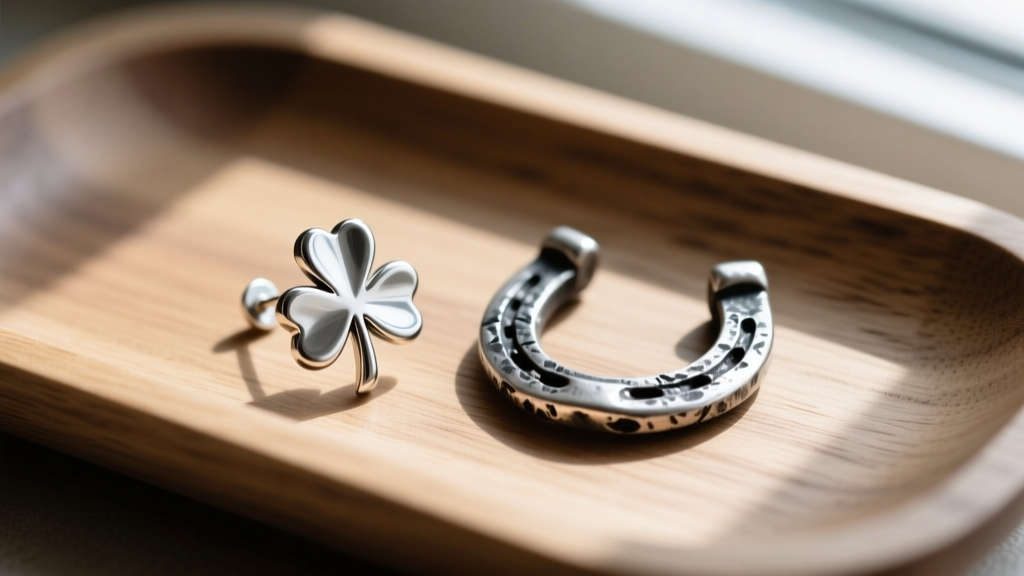
Decorative Elements: Enamel, Gemstones, and Resin
Lucky charms rely heavily on color to convey their meaning—the cobalt blue of an evil eye, the vibrant green of a clover, or the turquoise of a Hamsa. How these colors are applied dictates the lifespan of the earring.
- Vitreous Enamel: This is crushed glass fused to metal at temperatures exceeding 1400°F. It is incredibly durable, UV-resistant, and will never yellow or peel. High-end jewelers use vitreous enamel for premium evil eye and clover charms.
- Cold Enamel (Epoxy Resin): Common in fast-fashion jewelry, this is essentially colored plastic poured into metal recesses. It scratches easily, degrades when exposed to UV light (turning yellow or cloudy within 12-18 months), and will chip if the earring is dropped on a hard surface.
- Inlaid Gemstones: For a more elevated talisman, look for bezel-set stones. According to the Gemological Institute of America (GIA), stones like turquoise and malachite are porous and can be damaged by perfumes and lotions. If your charm features porous stones, you must remove the earrings before showering or applying skincare.
Material Durability & Maintenance Matrix
| Material | Hardness / Durability | Tarnish / Corrosion Risk | Best Piercing Placement | Maintenance Required |
|---|---|---|---|---|
| ASTM F136 Titanium | Very High (334 HV) | None (Passivates naturally) | Fresh piercings, Cartilage | Basic saline cleaning |
| 14k Solid Gold | High (140 HV) | Very Low | Lobes, Healed Cartilage | Mild soap and warm water |
| 18k Solid Gold | Medium (120 HV) | Very Low | Lobes, Special Occasion | Polishing cloth for scratches |
| 925 Sterling Silver | Medium (60-70 HV) | High (Copper oxidation) | Healed Lobes only | Frequent silver-polish dips |
| Vitreous Enamel | High (Glass-like) | None (Color stable) | N/A (Decorative element) | Wipe with damp cloth |
Gauge Sizes and the "Cheese-Cutter" Effect
One of the most overlooked aspects of buying lucky charm earrings is the physics of weight distribution. Charms like solid brass elephants, oversized Hamsa hands, or heavy gemstone-encrusted evil eyes add significant mass to the earring. If a heavy charm is suspended from a thin wire, it creates a mechanical failure mode known in the piercing industry as the "cheese-cutter effect."
Standard lobe piercings are usually done at 20-gauge (0.81mm) or 18-gauge (1.02mm). If you hang a 4-gram solid metal charm on a 20-gauge wire, the extreme localized pressure will slowly slice through the bottom of your earlobe fistula over time, causing migration, tearing, and permanent scarring.
Expert Rule of Thumb: If your lucky charm earring weighs more than 2.5 grams, you must upgrade the post or hoop wire to a minimum of 16-gauge (1.29mm) or 14-gauge (1.63mm). The thicker the wire, the more surface area is distributed across the base of the piercing, neutralizing the downward shear force.
For cartilage piercings, heavy charms are generally discouraged regardless of gauge, as the rigid cartilage tissue is highly susceptible to pressure-induced irritation bumps (hypertrophic scarring) when subjected to the swinging momentum of a dangling charm.
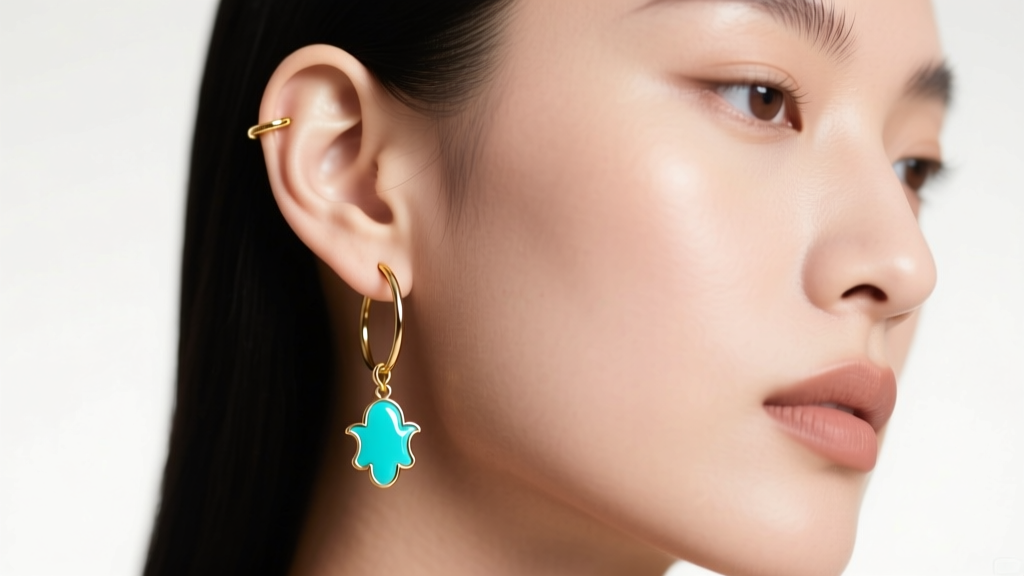
Real-World Troubleshooting: When Your Lucky Charm Turns Green
There is a common misconception that if a lucky charm earring turns your skin green, it means the metal is "fake" or toxic. In reality, this is a simple chemical reaction. The green stain is caused by cupric chloride or copper carbonate, which forms when the copper alloys in 925 silver, 14k gold, or brass react with the natural acidity (pH) of your sweat and the chlorides in your environment.
Actionable Troubleshooting Steps:
- Check Your pH and Products: Highly acidic diets, certain medications, and sulfur-heavy skincare products (like those containing salicylic acid or retinol) accelerate copper oxidation. Remove your earrings before your skincare routine.
- The Polymer Barrier Trick: If you have a beloved vintage silver or brass charm that stains your skin, apply a micro-thin layer of clear, flexible jewelry sealant (or a high-quality clear nail polish) to the post and backing. This creates a physical polymer barrier between the reactive metal and your skin. Reapply every few weeks as it wears off.
- Avoid Chemical Dips for Enamel: If your evil eye charm is tarnished, do not use harsh liquid silver dips (like Tarn-X). These chemicals will strip the vitreous enamel or cloud the epoxy resin, ruining the charm's vibrant colors. Instead, use a dry microfiber polishing cloth specifically treated for precious metals, as recommended by Jewelers of America.
Final Verdict: Choosing Your Forever Talisman
A lucky charm is only effective if it remains a part of you. When shopping for lucky charm earrings, bypass the temptation of cheap, heavy base metals and epoxy-filled fast fashion. For sensitive cartilage placements, demand ASTM F136 titanium. For intricate, heirloom-quality lobe charms that will retain their crisp symbolic details for decades, invest in 14k solid gold with vitreous enamel accents. Finally, always respect the physics of your piercing: match the gauge thickness to the weight of the charm to protect your earlobe's structural integrity. By aligning ancient superstitions with modern material science, you ensure your talisman brings you nothing but good fortune.


