Paper Clip Earrings Gold Guide: Solid, Filled & Vermeil Compared
Discover how 14k solid, gold-filled, and vermeil compare for paper clip earrings gold. Learn about link durability, alloys, and pricing in our expert guide.

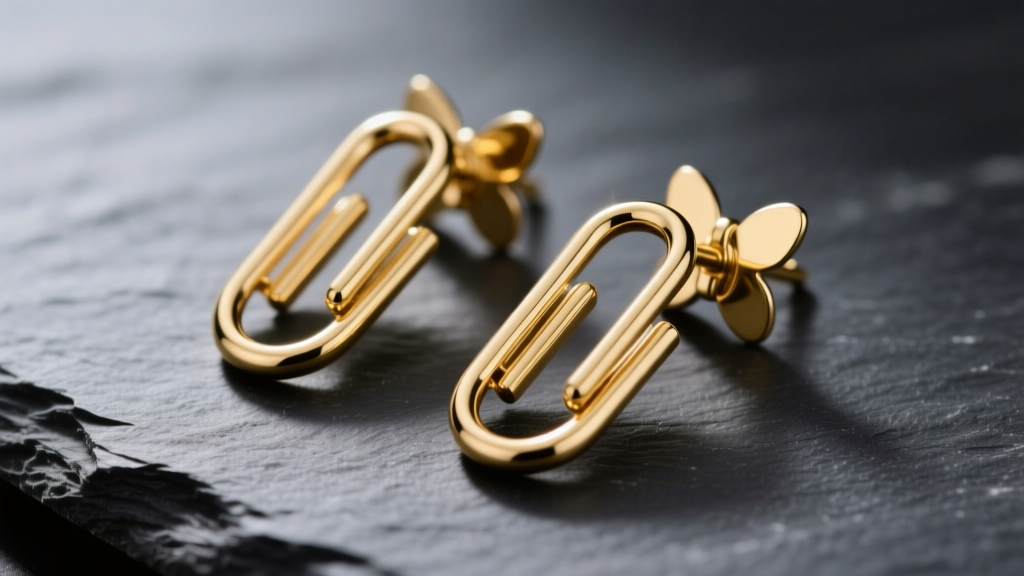
The Geometry of Wear: Why Paper Clip Links Demand Specific Alloys
The architectural appeal of paper clip earrings lies in their interlocking, elongated oval or rectangular links. While visually striking, this specific geometry creates unique structural stress points that generic jewelry guides often overlook. Unlike traditional round cable chains where links pivot on a single, minimal axis, the flat or slightly domed surfaces of paper clip links result in broader metal-on-metal contact areas. When you are shopping for paper clip earrings gold, understanding how different gold compositions react to this specific friction profile is the difference between a lifelong staple and a tarnished disappointment.
At the core of the issue is tensile strength and surface degradation. The elongated shape of the links means that the weight of the earring is distributed across the longitudinal axis, putting immense pressure on the solder joints or the stamped closures of each individual link. In 2026, with sustainable and long-lasting jewelry becoming a primary consumer demand, selecting the right metallurgical composition for your earrings is more critical than ever. Let us break down the material properties that dictate the lifespan of your favorite silhouette.
Solid Gold (14k vs. 18k): Hardness, Tensile Strength, and Link Integrity
When investing in solid gold, the karat weight directly dictates the alloy composition, which in turn determines the Vickers hardness (HV) of the metal. This metric is crucial for paper clip chains, as softer metals are prone to 'link stretch'—a failure mode where the elongated loops slowly pull apart under the earring's own weight.
14k Solid Gold: The Structural Sweet Spot
Comprising 58.5% pure gold and 41.5% alloy metals (typically a mix of copper, silver, and zinc), 14k gold boasts a Vickers hardness of approximately 125 to 150 HV. This makes it the undisputed champion for interlocking link earrings. The higher copper content not only provides the tensile strength necessary to keep paper clip links rigid but also offers superior resistance to the micro-abrasions caused by the links rubbing together during daily wear. According to the Gemological Institute of America (GIA), the alloy ratios in 14k gold provide the optimal balance between the rich color of gold and the mechanical durability required for structural jewelry components.
18k Solid Gold: Luxury with Caveats
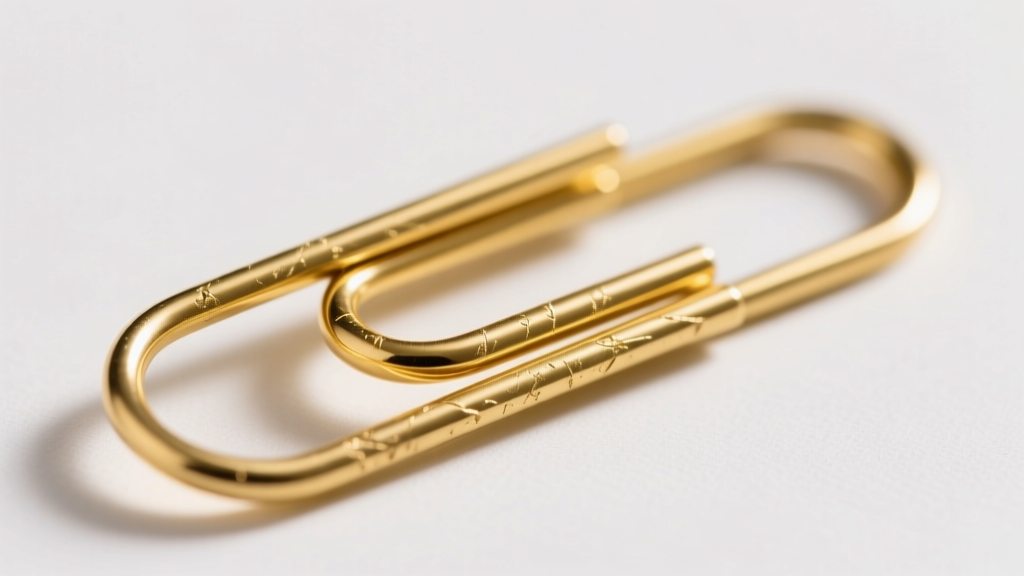
With 75% pure gold, 18k gold offers a deeper, more saturated yellow hue. However, its Vickers hardness drops to roughly 90 to 110 HV. While perfectly suitable for studs or rigid hoops, 18k gold paper clip dangles are highly susceptible to surface scratching at the friction points. Over time, the links will develop a patina of micro-scratches where they interlock. If you prefer 18k gold, opt for shorter, lighter paper clip huggies rather than long, heavy drop earrings to minimize gravitational stress on the softer links.
Gold-Filled vs. Gold Vermeil: Decoding the Plating Standards
For those navigating a stricter budget, gold-filled and gold vermeil offer accessible alternatives to solid gold. However, the manufacturing processes behind these materials dictate how they will survive the rigorous friction of paper clip links. The Federal Trade Commission (FTC) Jewelry Guides strictly regulate these terms, yet consumer confusion remains rampant.
| Material | Base Metal Core | Gold Layer Thickness | Friction Resistance | Avg. Price (2-inch Hoops) |
|---|---|---|---|---|
| 14k Solid Gold | None (Homogeneous) | N/A (Solid throughout) | Excellent (Will not flake) | $250 - $450 |
| Gold-Filled (14k) | Jeweler's Brass | 5% of total weight (Mechanical bond) | High (Lasts years with care) | $65 - $120 |
| Gold Vermeil | Sterling Silver (925) | Min. 2.5 microns (Electroplated) | Moderate (Wears at contact points) | $45 - $95 |
| Standard Gold Plated | Brass or Copper | < 0.5 microns (Flash plated) | Poor (Fails within months) | $15 - $35 |
The Friction Factor: Metal-on-Metal Degradation
The primary failure mode for non-solid paper clip earrings is edge wear. Because paper clip links are often stamped from flat sheet metal or drawn wire, the interior edges where the links connect are sharp. In gold vermeil earrings, the electroplated gold layer (even at the FTC-mandated minimum of 2.5 microns) will eventually wear away at these high-friction interior edges, exposing the sterling silver core beneath. Gold-filled jewelry, which utilizes a heat-and-pressure mechanical bond to fuse a much thicker layer of gold to a brass core, will withstand this link-on-link friction significantly longer, making it the superior choice for budget-conscious buyers wanting the paper clip aesthetic.
Wire Gauge, Weight Distribution, and Clasp Mechanics
Material purity is only half the battle; the physical dimensions of the wire used to create the links dictate the earring's structural integrity. Most high-quality paper clip earrings are crafted from 18-gauge (1.02mm) or 16-gauge (1.29mm) wire. Beware of 'hollow' paper clip links—a manufacturing shortcut where links are electroformed or stamped from ultra-thin sheet metal and folded over. While hollow links allow for massive, oversized paper clip hoops that remain lightweight, they are highly susceptible to crushing and cannot be repaired if dented.
Furthermore, the clasp mechanism must be matched to the material's weight. A standard spring-ring clasp is insufficient for heavy, solid 14k gold paper clip drops. Look for a precision-cast lobster clasp with a reinforced internal spring. For gold-filled or vermeil options, ensure the clasp itself is stamped with the same material quality as the chain; a common manufacturing flaw is attaching a solid gold clasp to a plated chain, which creates a galvanic reaction that can accelerate tarnishing at the connection point when exposed to moisture.
Material-Specific Care: Avoiding Ultrasonic Disasters
'The most common way clients destroy gold vermeil paper clip earrings is by tossing them into an ultrasonic cleaner. The high-frequency vibrations will literally shake the electroplated gold molecules right off the sterling silver core at the friction points.' — Master Bench Jeweler, 2026 Industry Symposium
Maintaining the luster of your earrings requires a material-specific approach. Solid 14k and 18k gold paper clip earrings can safely be cleaned in an ultrasonic machine using a mild ammonia-free solution to dislodge sebum and lotion trapped between the interlocking links. Gold-filled pieces can tolerate gentle ultrasonic cleaning for very short durations (under 60 seconds), but manual cleaning is preferred.
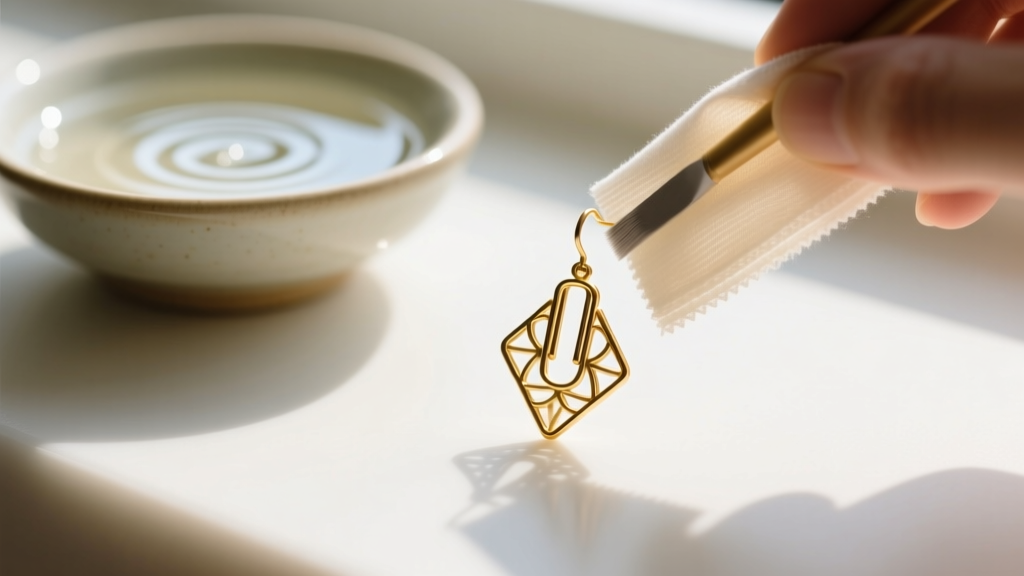
For gold vermeil paper clip earrings, ultrasonic cleaners are strictly prohibited. Instead, lay the earring flat on a microfiber towel. Use a soft-bristled baby toothbrush dipped in a solution of warm water and a single drop of phosphate-free dish soap. Gently agitate the bristles between the links, rinse under a low stream of lukewarm water, and immediately pat dry. Allowing vermeil to air-dry traps water against the silver core, accelerating oxidation and causing the gold layer to blister.
The 2026 Buying Framework: Which Gold Standard Fits Your Lifestyle?
Choosing the right paper clip earrings gold material ultimately comes down to your wear habits and budget. Use this decision framework before adding to cart:
- The Everyday Minimalist (Wears earrings 24/7, showers, and sweats in them): Invest exclusively in 14k solid gold. The initial premium pays for itself by eliminating the need for replacements due to plating wear or brass-induced skin reactions.
- The Trend Adapter (Rotates jewelry weekly, stores carefully): Gold-filled is your optimal choice. You get the heavy, luxurious drape of thick paper clip links and a lifespan of 3 to 5 years before any significant interior edge wear occurs, all at a fraction of the solid gold cost.
- The Occasional Stylist (Wears statement pieces for events or evenings out): Gold vermeil offers the most intricate designs and highest polish at the lowest entry price. Just commit to the strict manual cleaning protocols and store them flat to prevent the links from kinking.
By understanding the metallurgical realities of interlocking links, you can confidently navigate the market and select a pair of paper clip earrings that will maintain their structural brilliance for years to come.


