A Beginner's Guide to Choosing Diamond Small Hoop Earrings
Discover everything you need to know before buying diamond small hoop earrings. Learn about diamond grades, metal types, and sizing in this beginner guide.

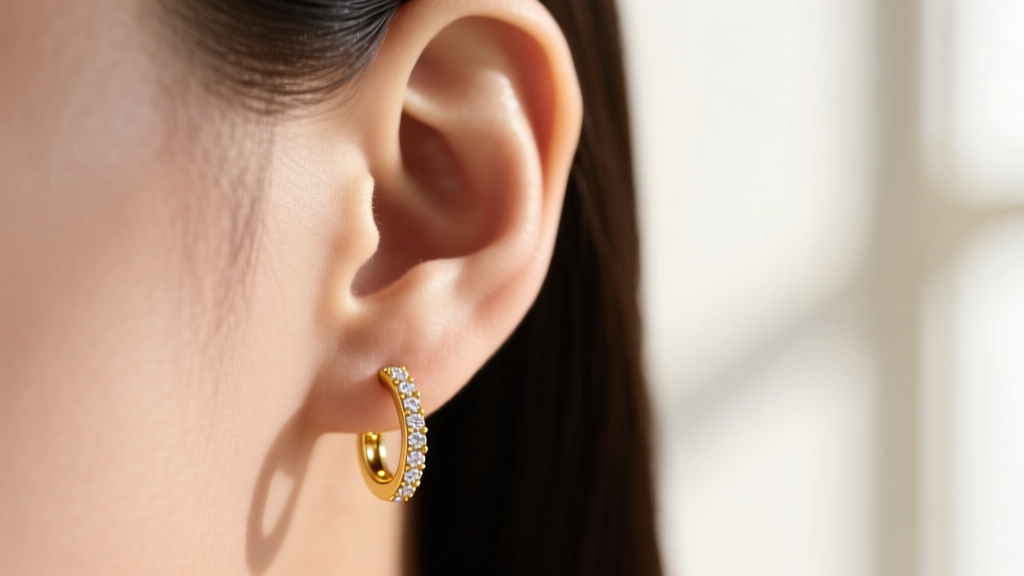
Stepping into the world of fine jewelry can feel like learning a new language. Between carat weights, metal purities, and clasp mechanisms, finding your first pair of diamond small hoop earrings often leads to decision paralysis. However, small hoops—often bridging the gap between classic huggies and standard everyday hoops—are arguably the most versatile staple a jewelry collection can have. They offer the continuous sparkle of a pavé band with the lightweight comfort of a stud.
This guide strips away the industry jargon and focuses on the actionable specifics you need to make a confident, informed purchase. Whether you are navigating the natural versus lab-grown debate or trying to figure out why your earlobes get irritated by certain metals, we will break down the exact metrics that matter for small diamond hoops.
Why Diamond Small Hoops Are the Ultimate Starter Piece
Unlike large statement hoops that can catch on clothing or heavy drop earrings that stretch the piercing over time, diamond small hoop earrings (typically ranging from 10mm to 15mm in diameter) sit flush against the earlobe. This low-profile design makes them ideal for 24/7 wear, including sleeping and showering, provided the clasp mechanism is secure. Furthermore, the continuous circle of diamonds catches light from every angle, offering a higher perceived sparkle-to-carat ratio than a single solitaire stud of the same total carat weight.
Decoding the 4Cs for Small Hoops: What Actually Matters
The traditional 4Cs (Cut, Color, Clarity, Carat) were designed for large, center solitaire diamonds. When applied to the tiny melee diamonds (stones under 0.15 carats) used in small hoops, the rules change dramatically. Overpaying for top-tier grades in micro-pavé settings is a common beginner mistake.
Cut: The Non-Negotiable Factor
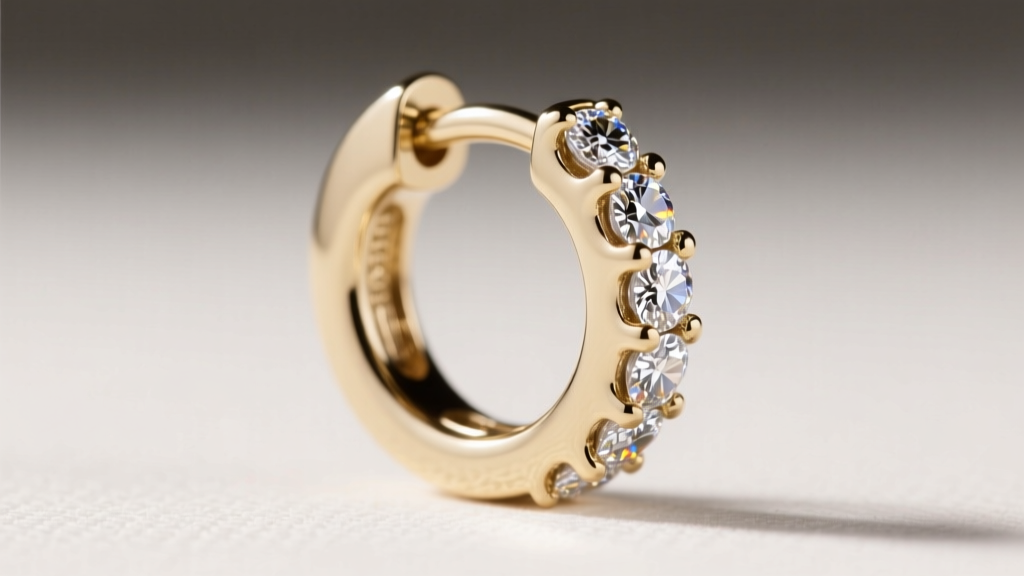
Cut is the only C you should never compromise on, even for microscopic stones. In the jewelry industry, small diamonds are classified as either single cut (17 to 18 facets) or full cut (57 to 58 facets, mirroring a standard brilliant diamond). Single-cut melee looks glassy and flat in dim lighting. Always ask the jeweler if their diamond small hoop earrings feature full-cut melee diamonds. According to the Gemological Institute of America (GIA), the precision of the facet alignment is what dictates light return, meaning a well-cut 1.5mm stone will outshine a poorly cut 2.5mm stone.
Color and Clarity: Where to Save Your Budget
Because melee diamonds are so small, the human eye cannot easily detect subtle color tints or minor inclusions.
- Color: Stick to the G-H range (near-colorless). Paying a premium for D-F (colorless) diamonds in a micro-pavé hoop is a waste of budget, as the metal setting and the sheer size of the stones mask any warmth.
- Clarity: SI1 to SI2 (Slightly Included) is the sweet spot for small hoops. As long as the stones are "eye-clean" from a distance of six inches, there is no need to pay for VS or VVS grades.
Metal Matters: Choosing the Right Base for Sensitive Ears
The metal holding your diamonds is just as critical as the stones themselves, especially if you have sensitive skin or newly healed piercings. Contact dermatitis from jewelry is incredibly common, and the American Academy of Dermatology notes that nickel is the most frequent culprit in metal allergies.
| Metal Type | Purity & Composition | Allergy Risk | Maintenance Level |
|---|---|---|---|
| 14k Yellow Gold | 58.3% Gold, alloyed with copper/zinc | Low | Very Low |
| 18k Yellow Gold | 75% Gold, richer yellow hue | Very Low | Very Low |
| Platinum | 95% Platinum, naturally white | None (Hypoallergenic) | Low (develops patina) |
| 14k White Gold | Gold alloyed with nickel/palladium, plated in rhodium | High (if nickel alloy) | High (requires rhodium dipping every 1-2 years) |
Expert Tip: If you love the silvery look of white gold but have nickel sensitivities, opt for Platinum or specifically request "nickel-free" white gold (alloyed with palladium instead), though the latter is harder to find and more expensive.
Sizing and Mechanics: Huggies vs. Classic Small Hoops
While often used interchangeably, huggies and classic small hoops have distinct mechanical differences that affect how they sit on your ear.
Understanding Gauge and Diameter
The diameter dictates the visual size. A 10mm to 12mm hoop will "hug" the earlobe tightly, while a 14mm to 15mm hoop will leave a small gap, allowing the diamond hoop to dangle slightly when you move.
The gauge refers to the thickness of the wire that passes through your piercing. Standard lobe piercings done with a gun are usually 20-gauge (0.81mm) or 18-gauge (1.02mm). However, high-quality diamond huggies often utilize a "clicker" hinge mechanism for security, which requires a thicker wire—typically 16-gauge (1.29mm) or a sturdy 18-gauge. If your piercings are accustomed to flimsy 22-gauge butterfly-back studs, inserting a 16-gauge huggie for the first time may require gentle stretching or the help of a professional piercer.
Real-World Pricing: Lab-Grown vs. Natural
The market for diamond small hoop earrings has shifted dramatically. Lab-grown diamonds are chemically, physically, and optically identical to mined diamonds, but they trade at a fraction of the cost. For a standard pair of 14k gold small hoops with a 0.50 Total Carat Weight (TCW):
- Natural Earth-Mined Diamonds: Expect to pay between $800 and $1,500, depending on the brand markup and metal weight.
- Lab-Grown Diamonds: Expect to pay between $300 and $650 for the exact same visual quality and metal setting.
For a beginner purchasing their first everyday pair, lab-grown diamonds offer an undeniable advantage, allowing you to upgrade to a larger diameter or higher gold purity (like 18k instead of 14k) without breaking the budget.
Care and Maintenance for Long-Lasting Sparkle
Small hoops accumulate skin oils, lotion, and hairspray rapidly, which creates a film over the pavilion (bottom) of the diamonds, killing their sparkle.
The Weekly Clean: Skip the harsh chemical dips. Use a few drops of mild dish soap (like Dawn) in warm water. Let the hoops soak for 15 minutes, then gently scrub the underside of the diamonds with an ultra-soft baby toothbrush. Rinse and pat dry with a lint-free cloth.
The Snag Test: Micro-pavé settings use tiny beads of metal to hold the stones. Once a month, run the hoop lightly over a piece of silk or thin cotton. If the fabric catches on a prong, it means the metal bead has lifted, and the earring needs to be taken to a jeweler for a quick prong-tightening before you lose a diamond.
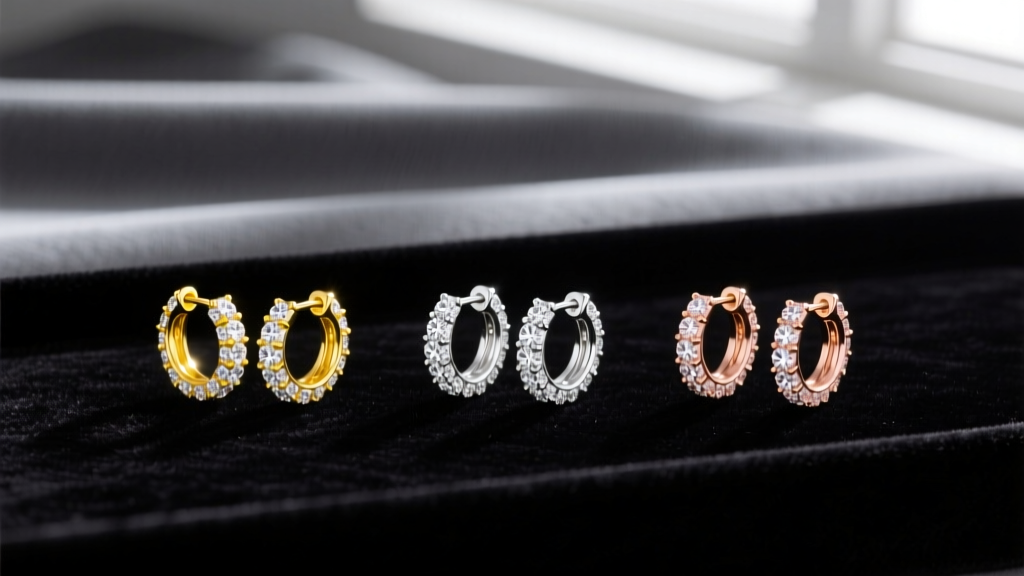
By prioritizing full-cut melee, choosing a hypoallergenic metal base, and understanding the mechanics of clicker hinges, you can invest in a pair of diamond small hoop earrings that will serve as your most reliable, sparkling everyday companion for decades to come.


