Earring Surgery Prevention: A Buyer's Guide To Ear-Safe Jewelry
Learn how to avoid earring surgery by choosing the right jewelry. Our buying guide covers safe gauges, weight limits, and hypoallergenic metals.

When most jewelry buyers think about ear adornment, they rarely consider the medical consequences of their choices. Yet, the phrase earring surgery—clinically known as lobuloplasty or earlobe repair—is becoming increasingly common in dermatological and plastic surgery clinics. Driven by the gradual tissue damage caused by heavy dangles, thin-gauge wires, and severe allergic reactions, earlobe reconstruction costs anywhere from $600 to $1,500 per ear. As a jewelry buyer in 2026, understanding the biomechanics of ear tissue is just as important as knowing the latest aesthetic trends.
This comprehensive buying guide will teach you how to select ear-safe jewelry that prevents tissue elongation, migration, and the eventual need for surgical intervention. We will cover exact gauge requirements, metallurgical grades, and the specific frameworks you need to protect your piercings for a lifetime.
The Biomechanics of Tissue Damage: The Cheese-Cutter Effect
The primary culprit behind non-traumatic earring surgery is a phenomenon known in body modification communities as the 'cheese-cutter effect.' This occurs when a thin piece of metal bears a disproportionate amount of weight, slowly slicing through the earlobe tissue over months or years.
Standard fashion earrings are typically manufactured at 20-gauge (0.81mm) or 22-gauge (0.64mm). While these ultra-thin wires are inexpensive to produce and slide easily into the ear, they offer almost zero surface area to distribute weight. If you hang a 12-gram brass dangle from a 20-gauge wire, the downward force concentrates entirely on a sub-millimeter strip of skin. Over time, the body's natural elasticity yields, resulting in a permanently elongated slit that requires surgical suturing to fix.
What to Look For: Gauge and Weight Ratios
To prevent the need for earring surgery, you must match the jewelry's thickness to its overall mass. Here are the strict parameters you should look for when browsing:
- Everyday Studs (Under 3 grams): 18-gauge (1.02mm) or 16-gauge (1.29mm) is ideal. Never wear 20-gauge wires for daily, long-term use.
- Medium Dangles (3 to 8 grams): Require a minimum of 16-gauge thickness. Look for designs that feature a wide, flat ear wire or a huggie-style base that wraps around the cartilage to distribute weight.
- Statement Pieces (Over 10 grams): Should only be worn for short durations (under 4 hours). Opt for 14-gauge (1.60mm) or 12-gauge (2.00mm) hooks, or choose clip-on styles that bypass the piercing hole entirely.
Material Grades: Preventing Allergic Granulomas
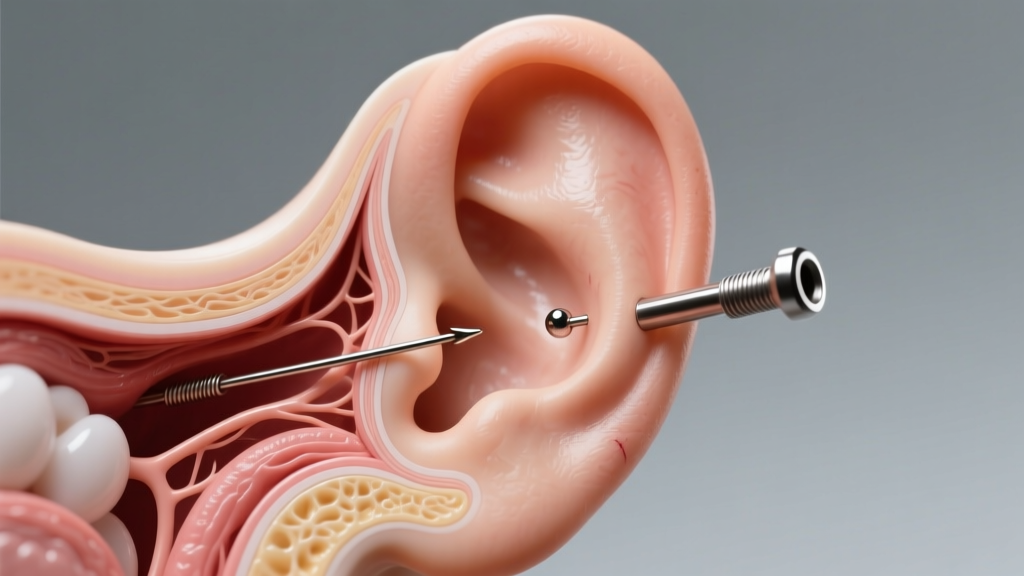
Not all earring surgeries are structural; many are immunological. Contact dermatitis caused by nickel exposure can lead to chronic inflammation, weeping tissue, and the formation of granulomas (small bumps of inflamed tissue). When a granuloma forms around a piercing tract, surgical excision is often the only permanent remedy.
According to the American Academy of Dermatology, nickel allergy is one of the most common causes of allergic contact dermatitis. To avoid this, you must scrutinize the metallurgical grade of your jewelry, not just the marketing buzzwords.
The Safe-Metal Hierarchy
| Material Grade | Nickel Content | Best Use Case | Surgery Risk Level |
|---|---|---|---|
| ASTM F-136 Titanium | 0% (Nickel-Free) | Fresh piercings, sensitive ears, daily wear | Extremely Low |
| Niobium (99.9% Pure) | 0% (Nickel-Free) | Anodized colorful hoops, lightweight dangles | Extremely Low |
| 14k / 18k Solid Gold | Varies (Alloy dependent) | Healed piercings, luxury daily wear | Low (if nickel-free alloy) |
| 316L Surgical Steel | 8% - 10.5% | Short-term wear only | High (Allergy/Migration risk) |
| Brass / Copper Alloys | Trace to High | Display only (Avoid wearing) | Very High (Oxidation/Infection) |
Expert Insight: Never trust the term 'Surgical Steel' if you have a history of ear irritation. 316L steel contains up to 10.5% nickel. When the protective chromium oxide layer on cheap jewelry wears away from friction, nickel salts leach directly into the piercing fistula, triggering the exact immune response that leads to earring surgery.
Post-Earring Surgery: What to Buy During Recovery
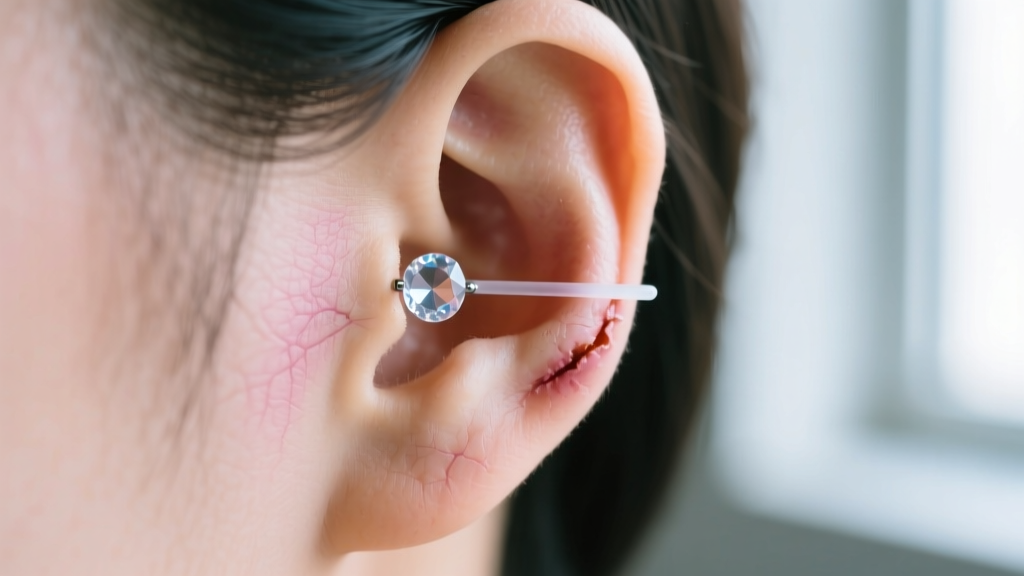
If you have already undergone lobuloplasty or cartilage repair, your buying strategy must shift entirely. Post-surgical tissue is fragile, prone to keloid scarring, and highly reactive. The American Society of Plastic Surgeons advises patients to avoid traditional metals until the scar tissue has fully matured, which can take up to a year.
Biocompatible Retainers for Healing Tissue
During the 6-to-12-month recovery window, you need materials that are completely inert and flexible enough to move with the healing ear without applying tension to the sutures.
- PTFE (Polytetrafluoroethylene): Commonly known by the brand name Bioplast, PTFE is a flexible, bio-compatible polymer. It bends with the ear, eliminating the risk of snagging on clothing and tearing fresh surgical scars.
- Fused Quartz Glass: Hand-blown glass retainers are entirely non-porous and can be sterilized in an autoclave. They are heavy enough to keep a fistula open but smooth enough to prevent micro-tears in new tissue.
- Silicone O-Rings: For stretched lobes recovering from surgical reduction, medical-grade silicone o-rings provide gentle, even pressure without the rigid edges of metal.
Brand Recommendations for Ear-Safe Jewelry
Finding jewelry that adheres to these strict safety parameters requires looking beyond fast-fashion retailers and mall kiosks. Here are the industry leaders prioritizing ear health and structural integrity:
- NeoMetal: The gold standard for implant-grade titanium. Their threadless push-pin system eliminates the micro-tears caused by screwing in traditional earring backs, making them ideal for preventing cartilage trauma.
- Anatometal: Known for their rigorous ASTM F-136 compliance and mirror-finish polishing. Their 14-gauge and 12-gauge rings are perfect for those who want the look of heavy jewelry without the cheese-cutter risk.
- Maria Tash: For luxury buyers, this brand offers 18k gold pieces specifically engineered with wider posts and lightweight, hollow-forged dangles that maintain a high-end aesthetic while respecting the ear's weight limits.
Troubleshooting: Early Warning Signs of Tissue Failure
Prevention is always cheaper than surgery. Inspect your earlobes monthly for these early warning signs that your current jewelry is causing structural damage:
- The 'Slit' Migration: If your piercing hole looks like a vertical line rather than a perfect circle, the tissue is actively stretching. Switch to a thicker gauge or lighter earring immediately.
- White Ringing: A pale, bloodless ring around the bottom of the piercing hole indicates restricted circulation due to excessive downward pressure.
- Chronic Tenderness: If your earlobe aches after removing your earrings at night, the jewelry is too heavy or the metal is causing a low-grade allergic reaction.
By treating your jewelry purchases as an investment in your anatomical health, you can enjoy decades of styling without ever needing to consult a reconstructive surgeon. Prioritize gauge thickness, demand nickel-free metals, and respect the physical limits of your tissue.


