Buying Floral Earrings Gold: 2026 Comprehensive Guide
Discover how to choose the perfect floral earrings gold. Learn about karats, casting techniques, gauge sizes, and styling tips in our expert buying guide.

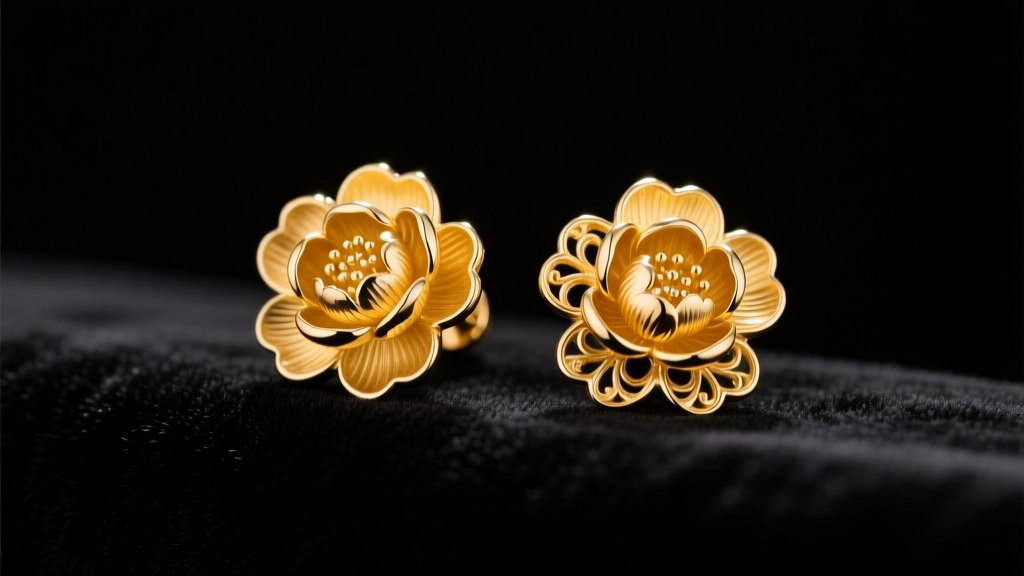
The Resurgence of Botanical Jewelry in 2026
Botanical motifs have transcended seasonal trends to become a permanent fixture in fine jewelry, and as we navigate the style landscape of 2026, floral earrings gold remain a cornerstone of elegant accessorizing. Whether you are drawn to the delicate symmetry of a daisy stud or the dramatic, sweeping lines of an orchid drop, buying gold floral earrings requires a nuanced understanding of metallurgy, craftsmanship, and structural engineering. Unlike simple geometric shapes, floral designs demand exceptional precision to capture the organic imperfections of nature. This comprehensive buying guide will walk you through the critical factors to consider when investing in botanical gold earrings, ensuring your purchase is both aesthetically breathtaking and built to last a lifetime.
Decoding Gold Alloys for Intricate Petal Work
When shopping for floral earrings gold, the karatage of the metal dictates not only the color but the structural viability of the design. Pure 24K gold is far too soft for jewelry; it would easily bend and lose its shape. Therefore, gold is alloyed with metals like copper, silver, and zinc to achieve durability.
- 14K Gold (58.5% Pure Gold): This is the undisputed champion for intricate floral earrings. On the Vickers hardness scale, 14K gold scores significantly higher than 18K, meaning it can support ultra-thin petals, delicate stamen wires, and detailed leaf veining without warping during daily wear. If you are buying floral huggies or detailed stud earrings, 14K is your best option.
- 18K Gold (75% Pure Gold): Offering a richer, deeper yellow hue, 18K gold is ideal for chunkier, more sculptural floral designs where extreme thinness is not required. It is the preferred choice for high-end floral drop earrings featuring pavé diamond centers. However, 18K gold is more prone to scratching and micro-bending, so it requires a slightly more robust design architecture.
- White and Rose Gold Variations: For a modern twist on botanical themes, 14K rose gold (alloyed with a higher copper content) beautifully mimics the warmth of autumn leaves and rose petals, while white gold provides a striking, frost-like contrast for winter floral motifs like snowdrops or edelweiss.
According to the Gemological Institute of America (GIA), understanding these alloy compositions is crucial for predicting how your jewelry will age, patina, and withstand environmental stressors over time.
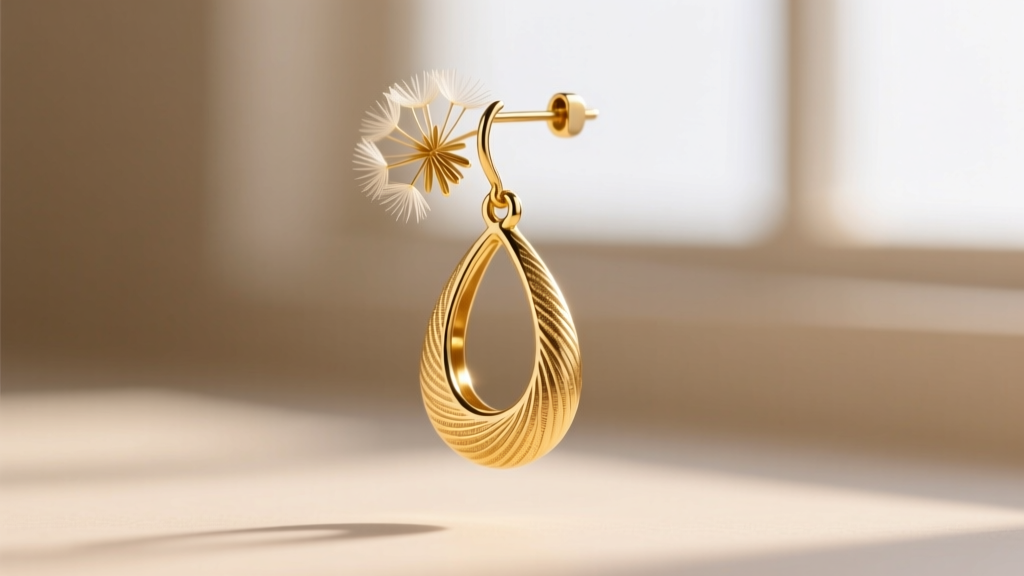
Manufacturing Techniques: How Floral Earrings Are Made
The method used to create your floral earrings gold drastically impacts the level of detail, the weight of the earring, and the final price point. Discerning buyers should look for specific manufacturing hallmarks based on the style of the flower.
| Technique | Best For | Detail Level | Price Range (Solid 14K) |
|---|---|---|---|
| Lost-Wax Casting | 3D florals (Orchids, Peonies) | Microscopic textures, organic curves | $250 - $1,200+ |
| Die Striking | Flat florals (Daisies, Sunflowers) | Crisp edges, uniform thickness | $150 - $400 |
| Electroforming | Oversized statement florals | Hollow, lightweight, bold silhouettes | $400 - $900 |
| Hand Fabrication | Bespoke, one-of-a-kind pieces | Unmatched, artisanal imperfections | $1,500 - $5,000+ |
Lost-wax casting is the gold standard for three-dimensional floral earrings. A jeweler carves a detailed wax model, encases it in plaster, and burns out the wax before injecting molten gold into the cavity. This method captures microscopic textures, such as the velvet-like surface of a pansy petal. Conversely, die striking is highly effective for flat, two-dimensional designs. A massive press forces a sheet of gold into a steel die, compressing the gold molecules and making the resulting floral earrings incredibly dense and highly resistant to bending.
Structural Integrity: Gauge Sizes and Weight Distribution
A frequent oversight when buying floral earrings gold is ignoring the post gauge and weight distribution. The gauge refers to the thickness of the earring post or wire, which is critical for supporting the often top-heavy nature of floral motifs.
- 20-Gauge (0.81mm): The industry standard for lightweight floral studs and small huggies. It fits comfortably in standard lobe piercings without causing irritation.
- 18-Gauge (1.02mm): Essential for floral dangles and drop earrings. The added thickness provides the necessary shear strength to support the weight of a swinging gold flower without the post bending or snapping.
- 16-Gauge (1.29mm) and above: Reserved for heavy, oversized statement florals or cartilage piercings. If a pair of solid gold floral earrings exceeds 8 grams per ear, an 18K or 16K wire is mandatory to prevent lobe stretching.
Weight distribution is equally critical. Top-heavy floral designs will droop forward, obscuring the beautiful face of the flower. Look for earrings with a properly calibrated drop loop or a slightly thicker backing plate that shifts the center of gravity closer to the earlobe. The Jewelers of America organization frequently highlights the importance of ergonomic backing systems, such as La Pousette or jumbo silicone friction backs, to keep heavy floral earrings sitting flush and upright.
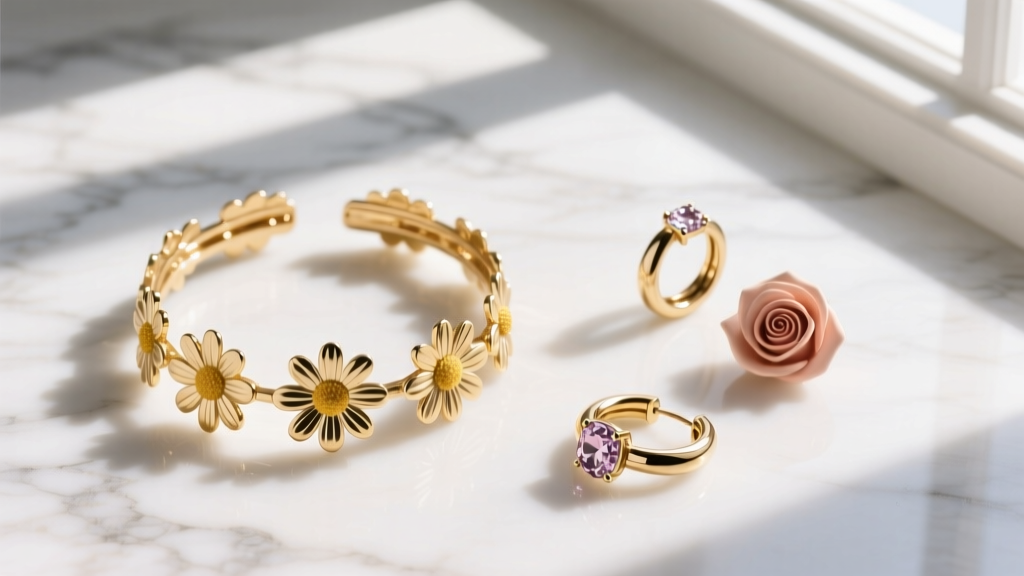
Styling Floral Earrings Gold for Different Face Shapes
The silhouette of your floral earrings can dramatically influence your facial proportions. Selecting the right botanical shape ensures the jewelry enhances your natural features rather than overwhelming them.
- Round Faces: Opt for elongated floral drops or angular botanical designs, such as a linear branch with suspended gold leaves. Avoid wide, circular floral studs like large daisies, which can accentuate facial roundness.
- Square Faces: Soft, curved florals like peonies, lotuses, or rounded rose huggies help to soften a strong jawline. The organic curves of the gold petals provide a beautiful contrast to angular facial structures.
- Heart-Shaped Faces: Chandelier floral earrings or teardrop-shaped floral dangles are ideal. They add visual weight and width at the jawline, beautifully balancing a narrower chin and wider forehead.
- Oval Faces: Highly versatile, oval faces can carry off virtually any floral silhouette, from bold geometric sunflower studs to dramatic, sweeping orchid ear cuffs.
Gemstone and Enamel Accents in Floral Designs
To elevate floral earrings gold beyond simple metalwork, master jewelers incorporate specialized enameling and gemstone techniques that mimic the vibrant colors of a real garden.
Plique-à-Jour Enamel: Often described as stained glass for jewelry, this technique involves filling the open cells of a gold flower framework with translucent enamel. When light passes through, the floral petals glow with vibrant, lifelike colors. Guilloché Enamel: This involves engraving a precise, repetitive pattern into the gold base before fusing translucent enamel over it, creating a mesmerizing depth within the gold petals. For the center of the flower, micro-pavé diamond settings add a brilliant, dew-like sparkle, while bezel-set colored gemstones, such as tsavorite garnets for leaves or pink sapphires for lotus petals, offer a durable, snag-free alternative to traditional prong settings.
Expert Care and Maintenance
Maintaining the intricate crevices of floral earrings gold requires specific care routines. The deep undercuts of cast petals can trap lotions, perfumes, and skin oils, leading to a dull appearance over time.
Avoid ultrasonic cleaners if your floral earrings feature fracture-filled diamonds, opals, or delicate plique-à-jour enamel, as the vibrations can shatter these fragile elements. Instead, use a soft-bristled baby toothbrush dipped in a solution of warm water and a few drops of mild, phosphate-free dish soap. Gently brush the crevices of the petals and rinse thoroughly under lukewarm water. Never toss floral earrings into a communal jewelry box. The delicate gold petals can easily be crushed or scratched by harder gemstones. Store them individually in soft, anti-tarnish flannel pouches or dedicated compartments with enough vertical clearance to prevent the posts from bending. By following these meticulous care guidelines, your botanical gold earrings will remain a timeless, blooming staple in your collection for decades to come.


