How to Choose the Perfect Green Heart Earrings (2026 Guide)
Discover how to choose the perfect green heart earrings in 2026. Compare gemstones, metals, and settings for lobe and cartilage piercings.

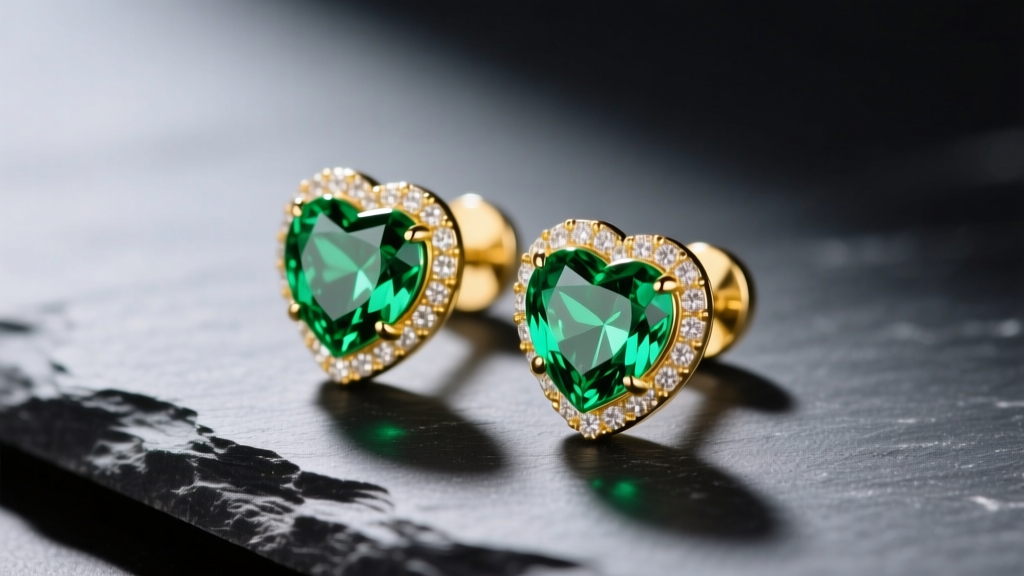
The Allure of the Green Heart Motif
The romantic silhouette of the heart cut is a timeless staple in jewelry, but when rendered in vibrant green hues, it transforms from a traditional symbol of love into a striking statement of individuality, growth, and earthy elegance. As we navigate the jewelry trends of 2026, the shift away from conventional clear diamonds toward expressive, colored gemstones has made green heart earrings a highly sought-after category. Whether you are drawn to the vivid saturation of tsavorite, the classic allure of emerald, or the playful charm of green enamel, buying the perfect pair requires a nuanced understanding of gemology, metalwork, and piercing anatomy.
This comprehensive buying guide will walk you through the exact specifications, material grades, and structural vulnerabilities you must consider before investing in green heart earrings. From avoiding the notorious "cheese-cutter effect" in cartilage piercings to understanding why a V-prong is non-negotiable for certain stones, here is everything you need to know.
Decoding the Green: Gemstone vs. Enamel vs. Inlay
Not all green stones are created equal. The Mohs hardness scale, natural inclusions, and optical properties dictate how a green gemstone will survive the daily wear and tear of an earring. According to the Gemological Institute of America (GIA), understanding the specific durability of your chosen stone is the first step in making a smart purchase.
Tsavorite Garnet: The Vibrant Powerhouse
Tsavorite is a variety of grossular garnet that boasts a brilliant, highly saturated green without the need for oiling or fracture filling. With a Mohs hardness of 7.0 to 7.5, it is exceptionally durable for everyday wear. Tsavorite is typically found in smaller carat weights, making it ideal for delicate 6mm to 8mm heart studs. Expect to pay between $500 and $2,000+ per carat for high-quality, eye-clean stones. For a deeper dive into its properties, consult the GIA Tsavorite Guide.
Emerald: The Classic with Caveats
Emeralds (Mohs 7.5-8.0) are famous for their deep, velvety green, but they are notoriously brittle due to natural internal fractures known as "jardin." An emerald heart earring requires meticulous care. Never clean emerald earrings in an ultrasonic cleaner, as the vibrations can shatter the stone. Most emeralds are treated with cedar oil; therefore, they should be kept away from harsh chemicals and hot water.
Peridot: The Budget-Friendly Alternative
Peridot offers a lighter, slightly yellowish-green hue. It is highly affordable ($50 to $200 per carat) but sits at a 6.5 to 7.0 on the Mohs scale, making it prone to scratching if stored improperly. Peridot is an excellent choice for fashion jewelry or occasional wear.
Malachite and Jade: The Opaque Cabochons
For a vintage or bohemian aesthetic, opaque stones like malachite and jade are cut into smooth cabochons rather than faceted hearts. Malachite is extremely soft (3.5-4.0) and highly sensitive to acids and heat, requiring a protective bezel setting. Jade is much tougher (nephrite jade is incredibly impact-resistant) and ideal for carved heart motifs.
Vitreous vs. Cold Enamel
If you prefer metal-based heart earrings with green accents, pay close attention to the enamel type. Vitreous enamel is kiln-fired glass fused to metal; it is highly durable, scratch-resistant, and carries a premium price tag. Cold enamel is essentially an epoxy resin; it is cheaper but will yellow, scratch, and chip within a year of daily wear.
Material Comparison Matrix
Use this quick-reference table to evaluate which green material aligns with your budget, lifestyle, and setting preferences.
| Material | Mohs Hardness | Avg. Price (per carat) | Best Setting Style | Daily Wear Safe? |
|---|---|---|---|---|
| Tsavorite Garnet | 7.0 - 7.5 | $500 - $2,000+ | Prong or Bezel | Yes |
| Emerald | 7.5 - 8.0 | $1,000 - $5,000+ | V-Prong or Bezel | With Caution |
| Peridot | 6.5 - 7.0 | $50 - $200 | Bezel | Moderate |
| Malachite (Cab) | 3.5 - 4.0 | $20 - $100 (flat) | Full Bezel | No |
| Vitreous Enamel | 5.0 - 6.0 | N/A (Labor-based) | Recessed Bezel | Yes |
The Anatomy of a Heart Cut: Setting Vulnerabilities
The heart shape is essentially a modified brilliant cut with a cleft at the top and a sharp point at the bottom. This geometry creates two major structural vulnerabilities that jewelers must address.
The Bottom Point and the V-Prong
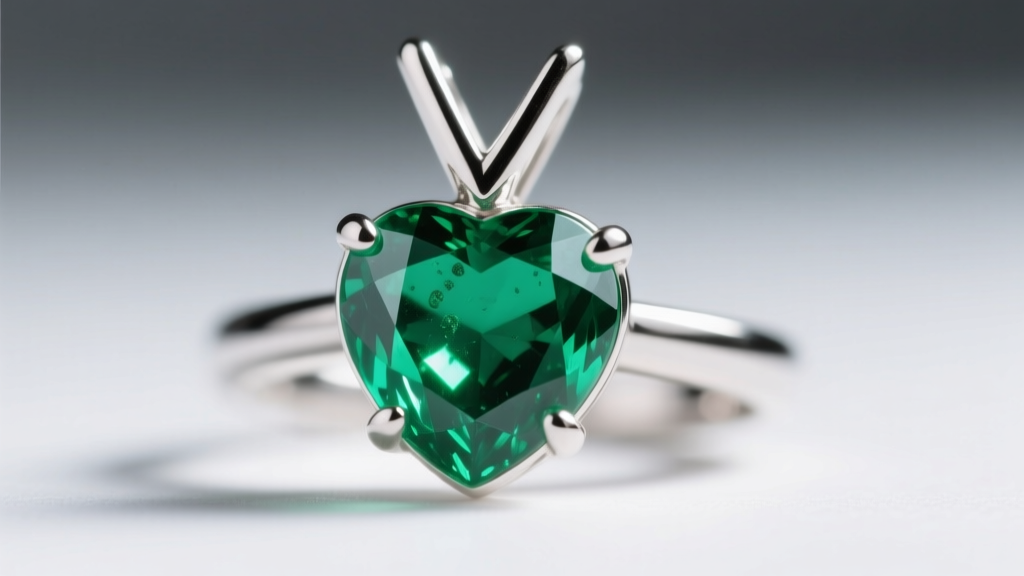
The sharp bottom point of a faceted green gemstone is a prime target for chipping. If you are buying prong-set emerald or tsavorite heart earrings, the bottom point must be secured by a V-prong (a triangular wedge of metal that cups the point). Standard round prongs on a sharp point will leave the edges exposed and prone to snapping off upon impact.
The Cleft and the Bezel Alternative
The cleft (the dip at the top of the heart) is another weak point where dirt accumulates and structural integrity is low. For active lifestyles, a full bezel setting—where a thin rim of metal completely encircles the gemstone's girdle—is the safest choice. A bezel not only protects the point and cleft but also creates a sleek, modern outline that makes the green color pop.
Metal Pairings: Color Theory in Practice
The metal you choose will dramatically alter the visual temperature of your green heart earrings.
- Yellow Gold (14k or 18k): Enhances the warmth in peridot and malachite. With emeralds, yellow gold creates a rich, vintage contrast that has been favored by royalty for centuries.
- White Gold or Platinum: Provides a crisp, high-contrast backdrop that makes the neon-green saturation of tsavorite look incredibly vivid and modern.
- Rose Gold: Offers a romantic, unconventional pairing. The subtle pink undertones of rose gold sit opposite green on the color wheel, creating a dynamic visual tension that makes both the metal and the stone stand out.
Sizing, Gauges, and Piercing Placements
A common mistake buyers make is ignoring the relationship between the earring's weight, the post gauge, and the specific piercing placement.
Standard Lobe Piercings
Standard lobe piercings are typically 20-gauge (0.81mm) or 18-gauge (1.02mm). For heart studs, a width of 6mm to 10mm is ideal. If you opt for a large 15mm drop or dangle heart earring, ensure the post is at least 18-gauge and features a secure friction back or a screw-back mechanism to prevent the heavy heart from drooping forward on the lobe.
Cartilage, Helix, and Conch Placements
Adapting heart motifs for cartilage requires stricter engineering. Cartilage piercings are usually 16-gauge (1.29mm) or 14-gauge (1.63mm). If you wear a 20-gauge heart stud in a 16-gauge helix piercing, the thin wire can cause the "cheese-cutter effect," where the earring slowly migrates and slices through the thin cartilage tissue under the weight of the heart motif. Always match the post thickness to your piercing gauge. Furthermore, avoid long dangling hearts on the upper helix, as they are easily snagged on hair and clothing, which can tear the cartilage.
Face Shape and Styling Framework
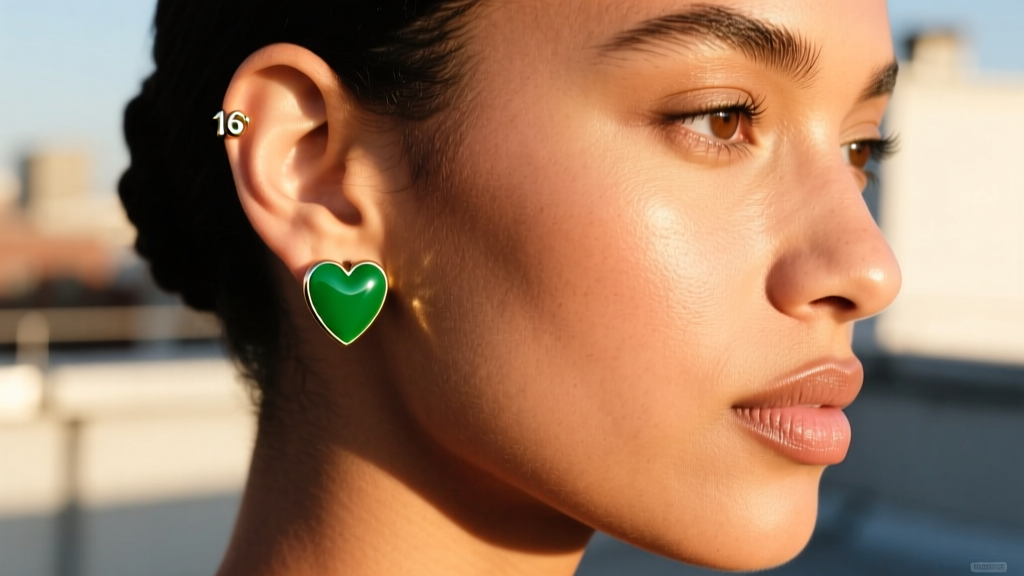
Heart-shaped earrings interact uniquely with different facial structures. Use this framework to find your most flattering silhouette:
- Round Faces: Opt for elongated heart drop earrings or dangles. The vertical line draws the eye downward, creating the illusion of a longer, more oval face shape. Avoid wide, chunky heart studs.
- Square Faces: The soft, curved top of the heart shape beautifully counterbalances a strong, angular jawline. Medium-sized heart huggies or rounded cabochon heart studs are ideal.
- Heart-Shaped Faces: Wearing heart earrings can sometimes over-emphasize a pointed chin. To balance this, choose heart earrings that are wider at the bottom or feature a halo of smaller diamonds/gemstones around the green stone to add width to the lower half of the face.
- Oval Faces: Highly versatile; virtually any style of green heart earring, from tiny 4mm tsavorite studs to dramatic malachite chandeliers, will complement your proportions.
Final Buying Checklist
Before checking out, run your prospective green heart earrings through this final quality-assurance checklist:
- Is the bottom point protected by a V-prong or a full bezel?
- Does the post gauge match my specific piercing (e.g., 16g for cartilage, 18g/20g for lobes)?
- If buying emerald, has it been disclosed if the stone is heavily oil-treated?
- Is the enamel vitreous (kiln-fired) rather than cold (epoxy)?
- Does the metal color (yellow, white, or rose) enhance the specific undertone of the green stone?
By prioritizing structural integrity and gemological quality over fleeting fast-fashion trends, your green heart earrings will remain a vibrant, meaningful staple in your collection for decades to come.


