The Ultimate Buying Guide to Cat Earrings for Women
Discover what to look for when buying cat earrings for women. Learn about metal grades, gauge sizes, face shapes, and quality markers in 2026.

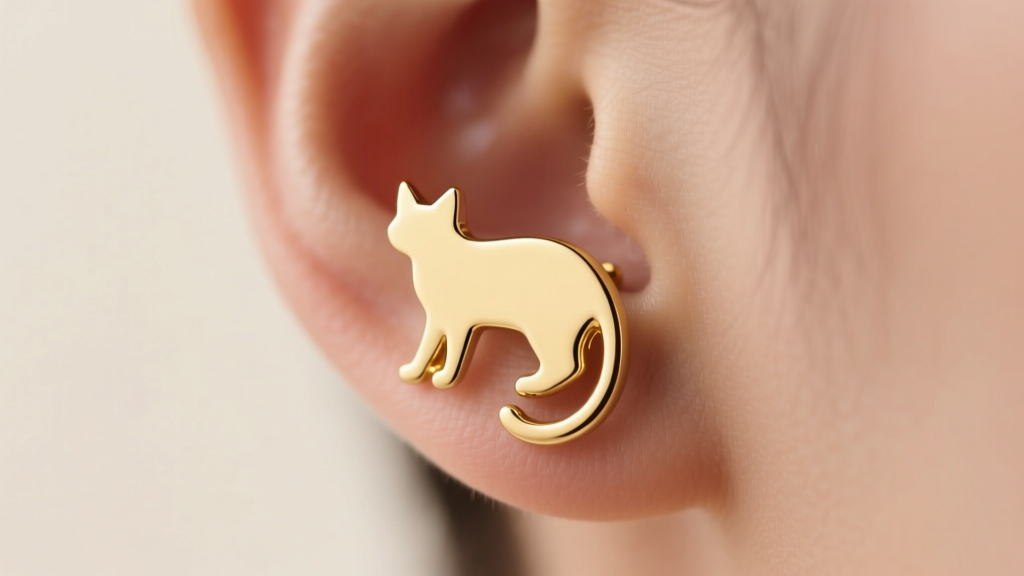
The feline motif has transcended fleeting trends to become a permanent fixture in fine and demi-fine jewelry. However, when shopping for cat earrings for women, the market is heavily saturated with novelty pieces that prioritize shape over substance. As a senior jewelry stylist, I see countless clients experience contact dermatitis, lost stones, and bent posts simply because they ignored the structural and metallurgical realities of animal-shaped jewelry. This comprehensive buying guide will teach you exactly how to evaluate metal grades, gauge requirements, and structural integrity before you add to cart in 2026.
Why Material Grade Matters More Than the Motif
Intricate silhouettes like cat heads, paw prints, or winding tails require precise casting. If the base metal is cheap, the detailing will be muddy, and the risk of skin irritation skyrockets. According to the Mayo Clinic, nickel allergy is one of the most common causes of allergic contact dermatitis, often triggered by cheap alloy earrings. When evaluating materials, look for these specific grades:
- Implant-Grade Titanium (ASTM F136): The absolute gold standard for sensitive ears and fresh piercings. It contains zero nickel and is lightweight, making it ideal for larger cat silhouette studs that might otherwise drag on the lobe.
- Solid 14k or 18k Gold: 14k offers superior durability for intricate prongs holding gemstone "eyes," while 18k provides a richer, warmer yellow hue. Avoid anything labeled "gold filled" for cartilage piercings, as the mechanical bonding can separate over time.
- Gold Vermeil vs. Gold Plated: The Federal Trade Commission strictly regulates jewelry labeling. True vermeil must feature a sterling silver base with a gold plating of at least 2.5 microns. Standard "gold plated" earrings often use a brass base with a mere 0.5-micron flash that will wear off within months, exposing the porous brass beneath.
Pro Tip: If a brand does not explicitly state the micron thickness of their gold plating or the exact alloy of their base metal, assume it is low-grade brass and avoid purchasing for daily wear.
Decoding the Styles: Studs, Dangles, and Cuffs
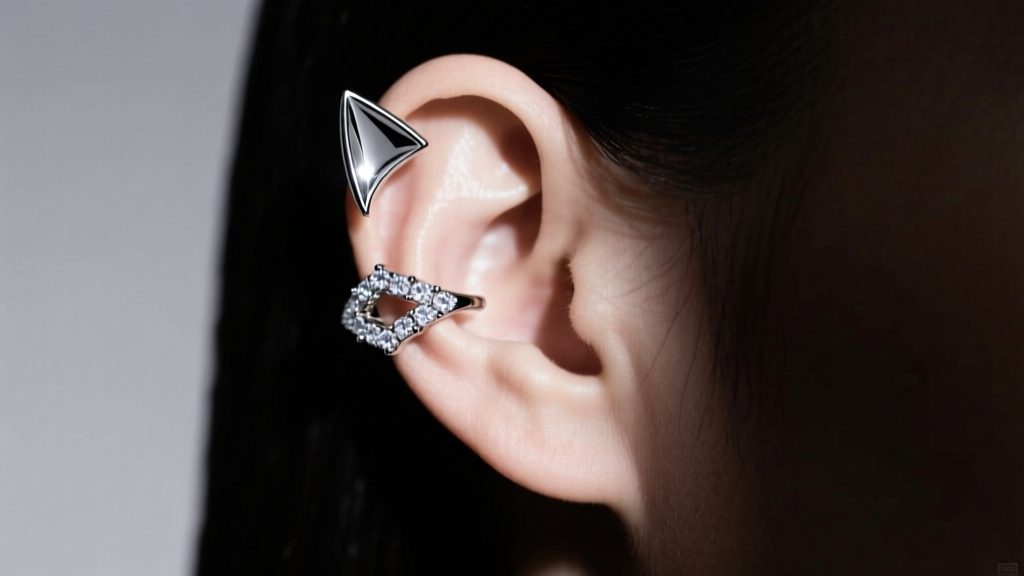
The anatomy of a cat earring dictates how it should be worn. A heavy, solid-metal cat head dangle will stretch a delicate earlobe, while a tension-based cat ear cuff requires precise cartilage placement to avoid slipping.
Style and Piercing Compatibility Matrix
| Earring Style | Best Piercing Location | Standard Gauge Size | Weight & Structural Consideration |
|---|---|---|---|
| Silhouette Studs | Standard Lobe | 20g or 18g | Requires a wide, flat butterfly clutch or secure screw-back to prevent the top-heavy cat head from drooping forward. |
| Articulated Dangles | Standard Lobe | 18g | French wire hooks must have a slight tension curve to prevent the earring from slipping out during movement. |
| Huggies with Charms | Lobe or Upper Lobe | 16g or 18g | The hinge mechanism must snap completely flush; otherwise, the tiny cat charm will catch on hair and sweaters. |
| Ear Cuffs (No Piercing) | Helix / Scapha | N/A (Adjustable) | Look for cuffs with an inner silicone grip or a heavily textured interior band to prevent sliding down the ear ridge. |
Face Shape & Proportion: Framing the Feline Features
Because cat motifs often feature sharp angles (ears, pointed tails) or distinct curves (coiled sleeping cats), you can use these shapes to balance your facial structure.
- Round Faces: Opt for elongated, angular drop earrings featuring a geometric, mid-century modern cat silhouette. The vertical lines and sharp ears will draw the eye downward, creating the illusion of a longer, more sculpted jawline.
- Square Faces: Soften a strong jaw with curved, fluid designs. A sleeping, coiled cat stud or a smooth, polished gold hoop with a small, rounded cat charm will complement your natural bone structure without adding harsh angles.
- Heart-Shaped Faces: Embrace teardrop-shaped dangles where the cat motif is integrated into the wider bottom half of the earring. This adds visual weight to the lower half of the face, balancing a narrower chin.
The 2026 Quality Checklist: What to Inspect Before Checkout
When buying online or inspecting pieces in a boutique, use this rigorous checklist to separate heirloom-quality jewelry from disposable fast fashion.
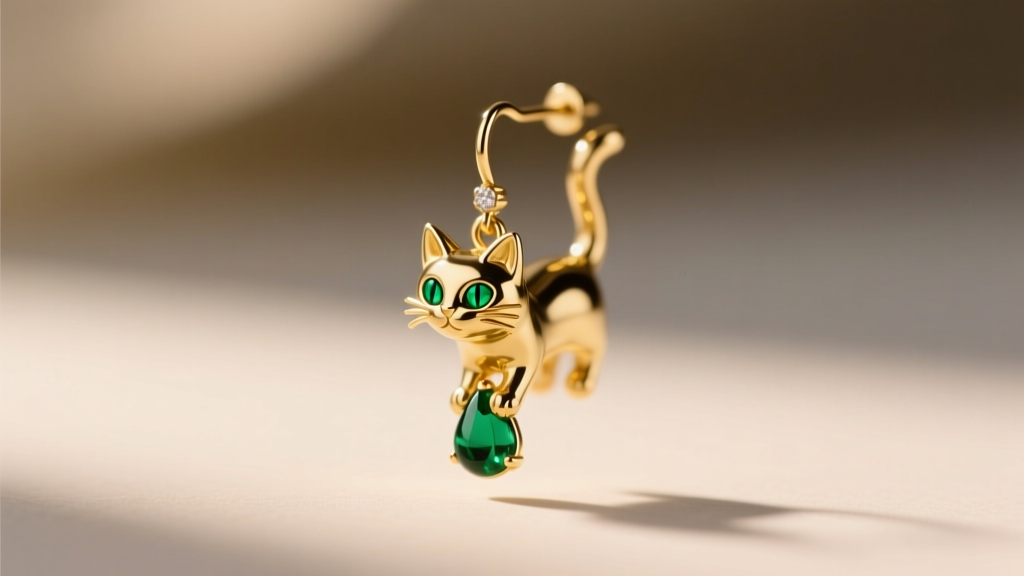
- Examine the Prong Settings: Many novelty cat earrings use glued-in rhinestones for the eyes. Always demand bezel settings or four-prong settings for gemstones. Glue degrades upon contact with skin oils and perfumes, guaranteeing lost stones within a year.
- Check the Enamel Application: If the earring features black or tortoiseshell enamel, look for guilloché or vitreous enamel, which is fired at high temperatures and fused to the metal. Avoid "cold enamel" (epoxy resin), which scratches easily and yellows when exposed to UV light.
- Test the Post Thickness: Bring a digital caliper or use a gauge wheel if shopping in person. A post thinner than 0.8mm (20g) on a large, heavy cat silhouette will easily bend if you sleep on it or catch it on a towel.
- Inspect the Jump Rings: If the cat charm dangles from a hoop or chain, the jump ring connecting it must be soldered shut. An open jump ring will inevitably pull apart under the kinetic weight of the charm.
Pricing Tiers: Where Should You Invest?
Understanding the pricing landscape prevents you from overpaying for base metals or underestimating the cost of fine craftsmanship.
- Fashion Tier ($15 - $40): Typically brass or zinc alloy with a microscopic gold flash and glued-in glass stones. Fun for a weekend costume, but expect green skin and tarnished crevices within weeks.
- Demi-Fine Tier ($65 - $150): The sweet spot for everyday wear. Expect sterling silver bases with thick 2.5 to 3-micron gold vermeil, secure prong settings for CZ or semi-precious stones, and hypoallergenic titanium posts.
- Fine Jewelry Tier ($300 - $1,500+): Solid 14k/18k gold, ethically sourced sapphires or emeralds for the eyes, and hand-finished detailing. These pieces are designed to be passed down and will not tarnish or degrade.
Care & Maintenance for Intricate Silhouettes
Cat earrings feature deep crevices around the ears, whiskers, and tails that trap dead skin cells, sebum, and hair products. Never use ultrasonic cleaners on earrings featuring enamel, opals, or emeralds, as the high-frequency vibrations will shatter the stones or crack the enamel glaze. Instead, create a gentle cleaning bath using warm distilled water and a few drops of mild, phosphate-free dish soap. Use a brand-new, ultra-soft baby toothbrush to gently sweep the bristles into the microscopic grooves of the cat's silhouette. Rinse thoroughly and dry immediately with a microfiber cloth to prevent water spots on high-polish gold surfaces. By prioritizing metallurgical integrity and structural soundness over cheap novelty, your feline jewelry will remain a sophisticated staple in your collection for decades.