Necklace With Earrings Gold Sets: 2026 Budget & Value Assessment
Discover how to evaluate a necklace with earrings gold set in 2026. We break down karat values, earring post gauges, and hidden manufacturing markups.

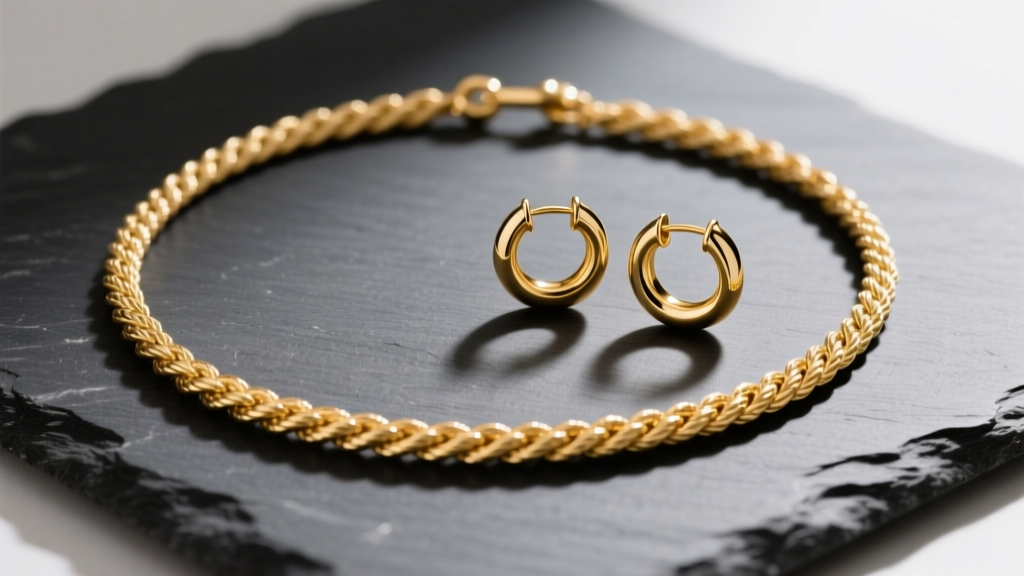
When appraising a necklace with earrings gold set, buyers are often caught between the allure of a perfectly matched ensemble and the confusing reality of jewelry pricing. In 2026, with raw precious metal markets experiencing sustained volatility, understanding the true value of coordinated jewelry sets is no longer optional—it is a financial necessity. A matching set can offer incredible versatility and aesthetic cohesion, but it can also hide severe manufacturing shortcuts, inflated 'set premiums,' and subpar earring constructions that compromise both comfort and longevity.
This comprehensive value assessment breaks down the economics, metallurgy, and structural integrity of gold earring and necklace sets. Whether you are investing in solid 18-karat heirlooms or navigating the vermeil market, this guide will equip you with the exact metrics needed to separate genuine value from clever marketing.
The Economics of the 'Set Premium'
Jewelry manufacturers and retailers frequently market coordinated sets as a 'bundle deal,' implying a discount. However, a deep dive into 2026 retail pricing models reveals a different reality. When brands cast a necklace pendant and matching earrings from the same master mold, they save on CAD design and mold-making costs. Yet, the retail price often includes a 12% to 18% 'convenience markup' for the matching set.
To accurately assess value, you must calculate the melt value plus the labor multiplier. For mass-cast sets, the labor multiplier should not exceed 2.5x the raw gold weight value. If a 10-gram 14K gold set (containing roughly 5.8 grams of pure gold) is priced above $1,200 in the current market, you are paying a heavy brand premium rather than intrinsic value.
Karat Breakdown: Durability vs. Purity in Earrings
The karat weight dictates not just the color and price, but the structural viability of the earrings. While necklaces can easily be crafted in softer, higher-karat golds, earring posts require specific tensile strength to avoid bending or snapping.
| Metal Grade | Pure Gold Content | Earring Post Durability | Estimated 2026 Price Range (5g Set) | Best Use Case |
|---|---|---|---|---|
| 10K Gold | 41.7% | Excellent (Very Stiff) | $250 - $350 | Budget daily wear, high-risk of nickel allergy |
| 14K Gold | 58.3% | Very Good (Industry Standard) | $400 - $650 | Everyday lobe studs, secure friction backs |
| 18K Gold | 75.0% | Good (Slightly Pliable) | $600 - $950 | Heirloom sets, screw-backs recommended |
| 22K/24K Gold | 91.6% - 99.9% | Poor (Too Soft for Posts) | $900 - $1,500+ | Wire-wrapped hooks only, investment pieces |
According to the Gemological Institute of America (GIA), 14K and 18K gold remain the optimal choices for fine jewelry. For earring posts specifically, 14K is often preferred by master jewelers because the higher alloy content (usually copper and silver) provides the 'spring' needed for friction backs to grip the post securely without warping.
Earring Construction: Where Brands Cut Corners
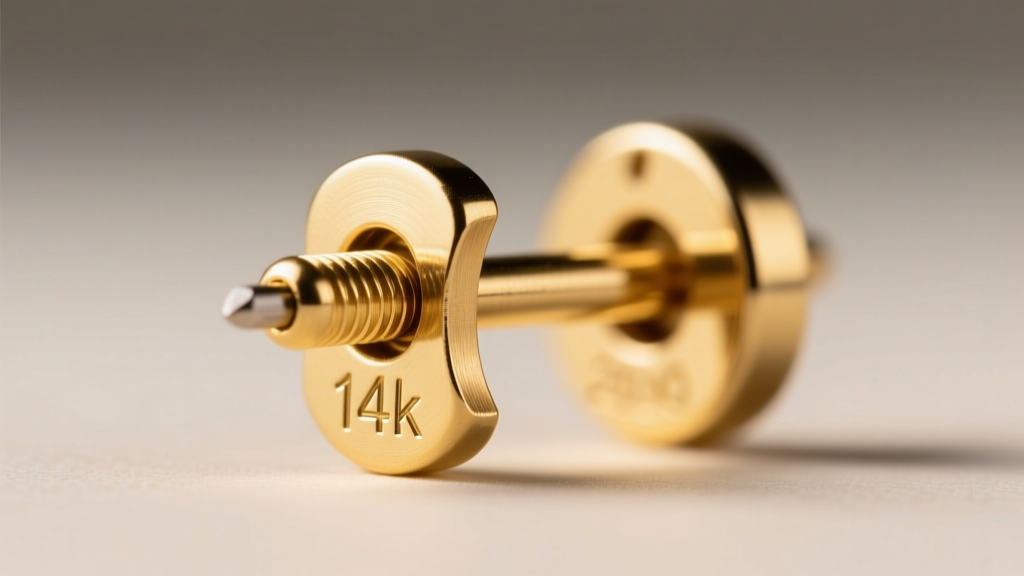
The most critical point of failure in any necklace with earrings gold set is the earring post and its solder joint. To maximize profit margins on matched sets, manufacturers often reduce the gold weight in areas the consumer cannot easily see.
Gauge Sizes and Post Thickness
Standard lobe piercing jewelry is typically 20-gauge (0.81mm) or 18-gauge (1.02mm). In budget gold sets, brands frequently use ultra-thin 22-gauge (0.64mm) posts to save fractions of a gram of gold. While this saves the manufacturer money, a 22-gauge post will bend under the weight of even a modest 3mm drop earring, leading to uncomfortable wear and eventual metal fatigue.
Solder Joints and Laser Welding
Examine where the post meets the earring backing plate. Traditional torch soldering uses a gold solder that melts at a lower temperature than the earring body. If done poorly, the post will snap off under minor pressure. High-value sets in 2026 utilize laser welding, which fuses the exact same karat gold without introducing weaker solder alloys. If you are paying a premium for an 18K set, demand laser-welded posts.
The Electroforming Trap
Some brands offer 'statement' gold earrings that look massive but weigh almost nothing. This is achieved through electroforming, a process that creates hollow gold shells over a wax core that is later melted out. While this keeps the gold weight (and price) low, hollow earrings are incredibly fragile. A single accidental squeeze can crush the metal, and because they are hollow, they are virtually impossible for a jeweler to repair. Always check the gram weight; if a large hoop earring weighs under 1.5 grams, it is likely hollow.
Vermeil vs. Solid: Navigating the Plated Market
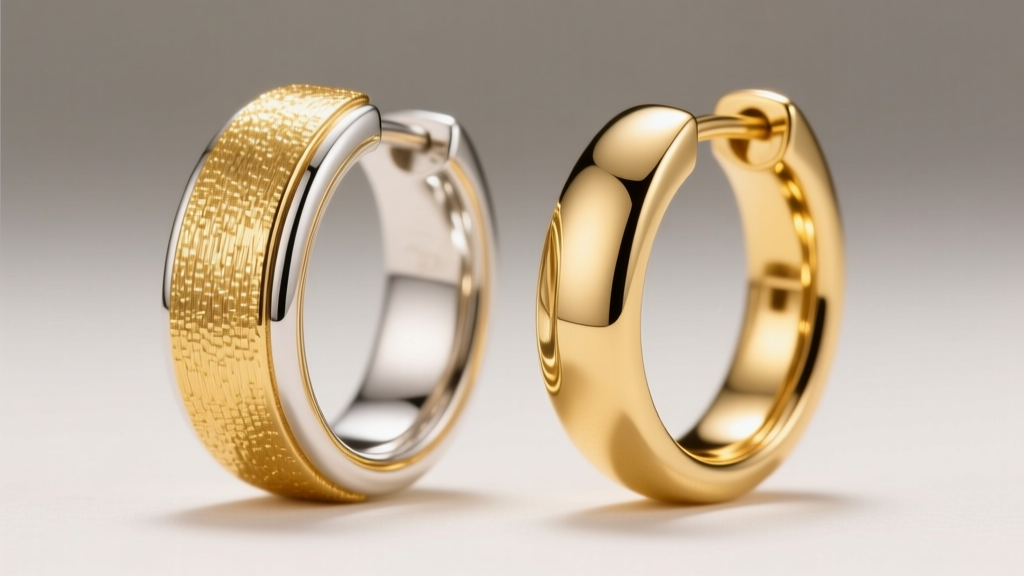
For buyers with a strict budget, gold vermeil offers a compelling alternative to solid gold. However, the terminology is heavily abused. The Federal Trade Commission (FTC) Jewelry Guides strictly define vermeil: it must be a sterling silver base coated with a minimum of 2.5 microns of gold (usually 14K or higher).
The Earring Post Problem with Vermeil:
While a vermeil necklace pendant can last for years with proper care, vermeil earring posts present a unique biological and mechanical challenge. The friction of pushing the post through the earlobe, combined with exposure to bodily fluids and skincare acids, rapidly degrades the 2.5-micron gold layer. Once the sterling silver or underlying copper is exposed, it can cause severe contact dermatitis or green discoloration. If you buy a vermeil set, ensure the earring posts are explicitly listed as 'solid 14K gold' or surgical steel, even if the decorative elements are vermeil.
Chain Weight vs. Earring Weight Ratios
A common trick in budget sets is manipulating the gold distribution. A retailer might advertise a '10-gram gold set,' but upon inspection, the necklace chain accounts for 8.5 grams, while the earrings and pendant are paper-thin. A high-quality, balanced set should feature a chain that complements the weight of the earrings. For example, a 1.5mm rope chain weighing 4 grams paired with 3-gram earrings represents a balanced, durable allocation of metal that ensures the chain won't snap when supporting a matching pendant.
Red Flags When Shopping
- Missing Hallmarks: In the US and UK, gold jewelry must be stamped with its karat weight (e.g., 14K, 585, 750). Unclassified sets are almost always flash-plated brass.
- 'Gold Tone' or 'Gold Dipped':strong> These terms indicate a microscopic layer of gold (under 0.5 microns) over base metal. They hold zero resale value and will tarnish within weeks.
- Friction Backs on Heavy Earrings: If the earring design is a heavy drop or chandelier style, the set must include screw-backs or secure latching mechanisms. Standard butterfly friction backs will fail, resulting in lost jewelry.
Final Verdict: Maximizing Your 2026 Budget
Investing in a necklace with earrings gold set requires looking past the polished display case and evaluating the engineering. For everyday wear and long-term value, a solid 14K gold set with 18-gauge, laser-welded earring posts remains the undisputed champion of the budget-to-value ratio. Avoid the 'set premium' by asking retailers for the individual gram weights of the chain, pendant, and earrings. By calculating the price-per-gram and scrutinizing the earring construction, you can secure a matching set that is not only visually stunning but structurally engineered to last a lifetime.


