2026 Style Guide: Colored Gem Hoop Earrings Trend Analysis
Discover the 2026 trends in colored gem hoop earrings. We analyze setting styles, lab-grown stones, and metal pairings for modern ear styling.

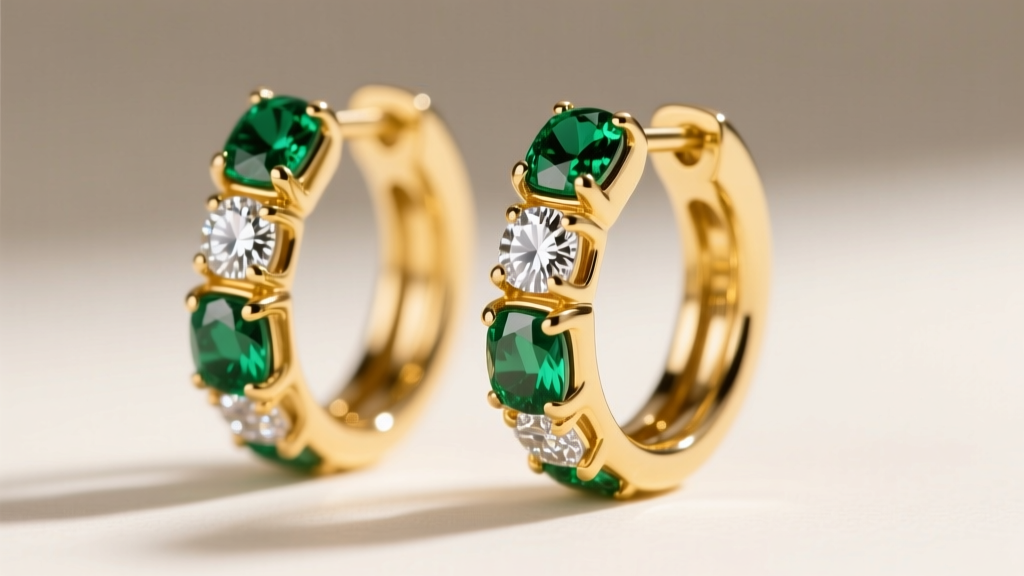
The 2026 Shift: From Clear Diamonds to Vivid Gem Hoop Earrings
As we navigate the jewelry landscape of 2026, a definitive pivot has occurred in ear styling. The ubiquitous diamond tennis hoop, while a classic, has taken a backseat to the vibrant, personality-driven appeal of colored gem hoop earrings. This shift is largely driven by the mainstream maturation of lab-grown corundum (sapphires and rubies) and spinels, which now offer flawless clarity and deep saturation at a fraction of their mined counterparts. According to industry analysis by JCK Online, consumer demand for lab-grown colored stones in everyday fine jewelry has surged, allowing designers to create high-carat-weight hoops that were previously cost-prohibitive.
Today's collectors are moving away from uniform white stones and embracing 'toi et moi' alternating patterns, gradient ombré effects, and deep teal or peach sapphires. Gem hoop earrings are no longer reserved for evening wear; they have become a staple of the curated, high-end daily ear stack.
Technical Breakdown: Setting Styles and Durability
When incorporating colored gemstones into a continuous hoop design, the setting style dictates both the visual impact and the structural longevity of the piece. Colored gems possess varying levels of hardness and cleavage planes, making the choice of metalwork critical. The GIA Gem Encyclopedia notes that while sapphires rank a 9 on the Mohs scale, emeralds (7.5 to 8) are heavily included and brittle, requiring vastly different setting approaches.
| Setting Style | Best For Gem Type | Durability Rating | Light Return & Aesthetics |
|---|---|---|---|
| Full Bezel | Emeralds, Opals, Tanzanite | High (Protects girdle) | Reduces light entry by ~15%; offers a sleek, modern, and snag-free profile. |
| Shared Prong | Sapphires, Rubies, Spinels | Medium (Prongs can catch) | Maximizes light return; creates a continuous 'river' of color and sparkle. |
| Channel Set | Calibrated Baguettes | Very High (Metal walls) | Creates an architectural, vintage-inspired look with geometric light flashes. |
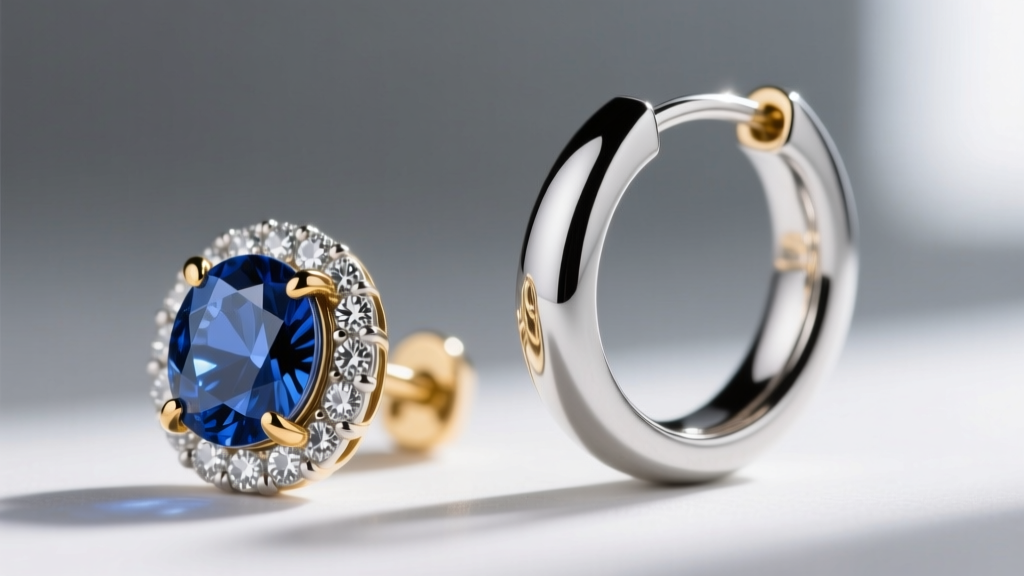
For daily wearers who frequently change headphones or wear over-ear accessories, bezel-set gem hoop earrings are the superior choice. The continuous metal rim prevents the stones from chipping upon impact and eliminates the risk of prongs catching on knitwear or hair.
Material Pairings: Metal Grades and Gemstone Color Theory
The alloy composition of the hoop's metal dramatically alters the perceived color of the gemstones. In 2026, jewelers are heavily utilizing specific karat weights to manipulate color theory.
- 18k Yellow Gold & Emeralds/Rubies: The high copper and silver content in 18k yellow gold provides a warm, rich backdrop that amplifies the 'jardin' (inclusions) in emeralds and deepens the pigeon-blood hue of rubies.
- 14k White Gold & Sapphires: Alloyed with palladium or nickel and plated in rhodium, 14k white gold offers a cool, stark contrast that makes teal and Montana sapphires appear more vivid and icy.
- Platinum & Multi-Gem Gradients: Due to its density and natural white luster, platinum is the premier choice for heavy, high-carat ombré hoops. It requires less maintenance than rhodium-plated white gold and provides a secure grip on prongs.
Gauge and Sizing Specifications for Daily Wear
A common failure point in mass-produced gem hoop earrings is the wire gauge. Hoops laden with heavy gemstones require a thicker wire to prevent warping and to support the clasp mechanism.
Standard Lobe Hoops: For hoops ranging from 15mm to 25mm in inner diameter (ID), an 18-gauge (1.0mm) wire is standard. However, if the hoop features more than 2 carats of total gem weight, upgrading to a 16-gauge (1.2mm) wire is highly recommended to prevent the hoop from pulling downward and stretching the earlobe piercing over time.
Cartilage & Helix Hoops: For smaller 'huggie' style gem hoops (8mm to 12mm ID) worn on the helix or tragus, a 16-gauge or 14-gauge (1.6mm) wire is mandatory. These thicker gauges match standard cartilage piercing needles and ensure the hinged clicker clasp can withstand the pressure of side-sleeping without bending.
Price Matrix: Natural vs. Lab-Grown Gem Hoops
The democratization of colored stones via lab-grown technology has completely disrupted the pricing tiers for fine jewelry hoops. Below is a comparative analysis of current market pricing for a standard 15mm inner diameter hoop featuring approximately 2.50 total carat weight (TCW) of gemstones set in 14k gold.
| Gemstone Type | Origin | Estimated 2026 Retail Price | Value Proposition |
|---|---|---|---|
| Blue Sapphire | Mined (Ceylon) | $4,500 - $7,200 | Investment grade; retains secondary market value. |
| Blue Sapphire | Lab-Grown (Flux) | $650 - $1,100 | Identical chemical composition; flawless clarity. |
| Emerald | Mined (Colombian) | $5,800 - $9,500 | Highly included; requires careful wear and oiling. |
| Emerald | Lab-Grown (Hydrothermal) | $700 - $1,300 | Vivid green without the structural fragility of mined stones. |
| Spinel (Red/Pink) | Mined (Burma) | $3,200 - $5,000 | Excellent durability; single-refractive brilliance. |
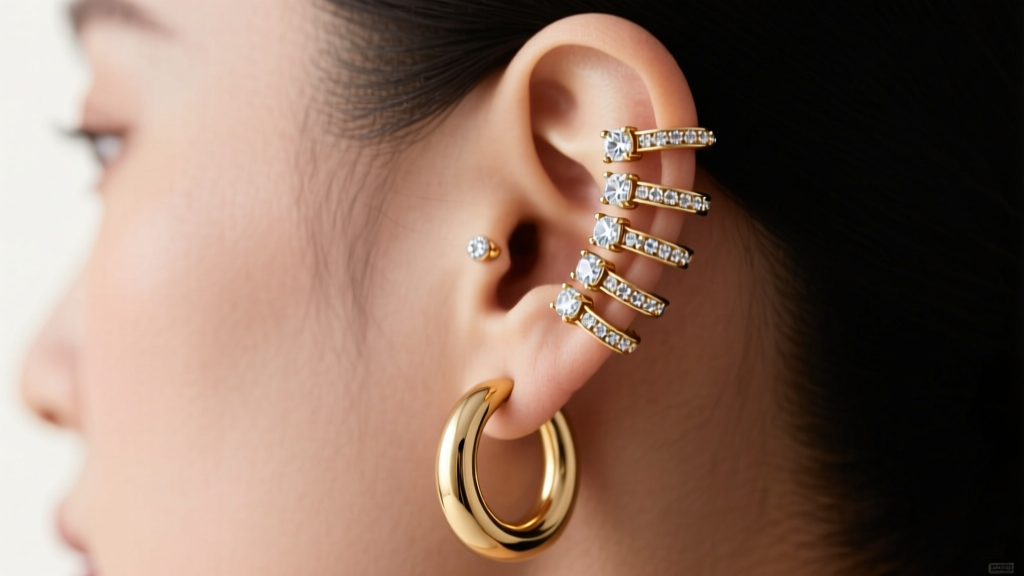
Expert Styling: Face Shape and Ear Anatomy Considerations
The structural geometry of gem hoop earrings can be used to balance facial features and complement individual ear anatomy. The interplay between the hoop's diameter and the jawline is a critical styling metric.
Round and Square Face Shapes: Opt for elongated drop-hoops or oval-shaped gem hoops (e.g., 15mm width x 25mm height). The vertical drop draws the eye downward, creating an illusion of length. Avoid perfectly round, thick huggies that end exactly at the jawline, as they can widen the appearance of the face.
Heart and Oval Face Shapes: These versatile profiles can carry off almost any silhouette. In 2026, the trend for these face shapes leans toward chunky, 20mm to 30mm inside-out gem hoops, where diamonds line the front half and vibrant colored gems line the back half, revealing flashes of color only when the head turns.
Ear Anatomy & The 'Tuck' Factor: If you frequently tuck your hair behind your ears, prioritize low-profile bezel settings and hinged snap-back clasps that sit flush against the lobe. Traditional latch-back clasps often catch on hair strands, which can violently yank the earring and cause lobe tearing, especially when the hoop is weighted down by dense gemstones.
Final Thoughts on the 2026 Ear Landscape
The evolution of gem hoop earrings represents a broader consumer desire for bespoke, expressive fine jewelry that doesn't compromise on durability or ethical sourcing. By understanding the technical nuances of gauge thickness, setting styles, and metal color theory, you can curate an ear stack that is not only visually striking but engineered to last a lifetime. Whether you choose a pair of hydrothermal emerald huggies for your cartilage or a sweeping pair of lab-grown sapphire tennis hoops for your lobes, the modern ear is a canvas for unapologetic color.


