Vermeer's Pearl Earring Painting Inspires 2026 Drop Trends
Discover how Vermeer's iconic pearl earring painting drives the 2026 art-history jewelry trend. Expert styling tips for modern baroque pearl drops.

The "Museum Girl" Aesthetic: From Canvas to Cartilage
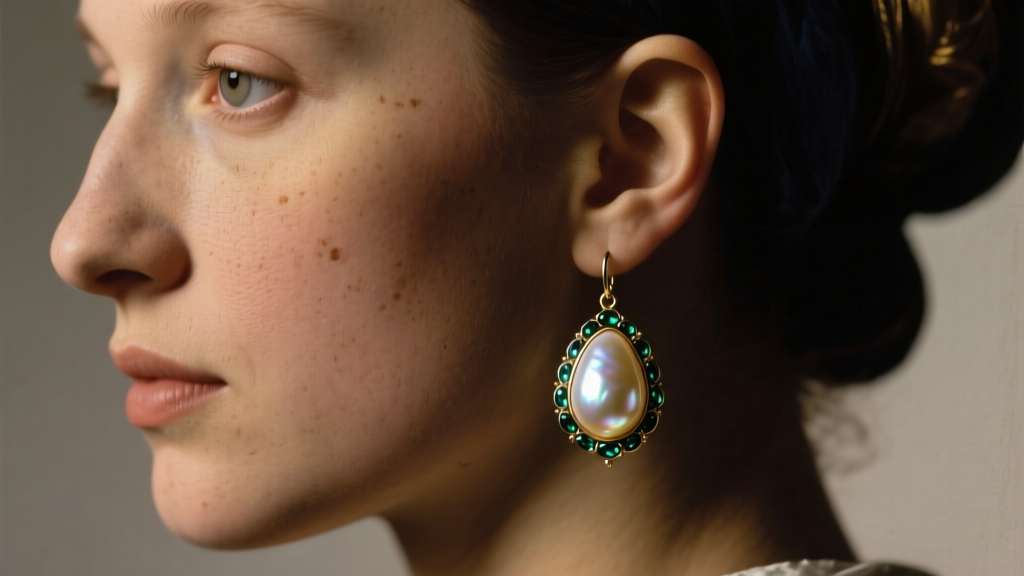
In the ever-evolving landscape of jewelry trends, 2026 has seen a massive resurgence of the "Art History Core" aesthetic, a movement that draws direct inspiration from classical European portraiture. At the absolute center of this revival is the cultural gravity of the pearl earring painting by Johannes Vermeer. Originally painted in 1665, the masterpiece has transcended its canvas to become the ultimate blueprint for modern drop earring design. Today's collectors and style enthusiasts are no longer just looking for generic pearl studs; they are seeking the dramatic, light-catching teardrop silhouettes that mimic the enigmatic glow of Vermeer's most famous subject.
According to the Mauritshuis museum archives, the illusion of the pearl in the original artwork was achieved using just two brushstrokes of lead white and ultramarine. Modern jewelers are now attempting to replicate this optical brilliance through advanced gemological sourcing and structural hardware engineering. The result is a market flooded with Vermeer-inspired drops that range from accessible freshwater baroques to ultra-luxurious South Sea teardrops. But navigating this trend requires a deep understanding of pearl grading, weight distribution, and facial geometry.
Anatomy of a Vermeer-Inspired Drop Earring
To truly capture the essence of the pearl earring painting trend, one must look beyond the basic spherical bead. The 2026 market is heavily skewed toward two distinct pearl morphologies: the organic baroque teardrop and the perfectly spherical Akoya. Both offer unique interpretations of the classical aesthetic, but their gemological profiles differ vastly.
Pearl Grading: Baroque vs. Spherical Nacre
The signature look of the 17th-century masterpiece relies on a pearl that appears heavy, luminous, and slightly asymmetrical. This is best replicated using high-grade freshwater baroque pearls, specifically those in the 13mm to 16mm range. When evaluating these pieces, the Gemological Institute of America (GIA) emphasizes the critical importance of nacre thickness and luster. For a drop earring to possess that signature "inner glow" or orient, the nacre must be at least 0.8mm thick. Thinner nacre will appear chalky and lack the deep, mirror-like reflection required to mimic the chiaroscuro lighting of Dutch Golden Age paintings.
Conversely, the spherical Akoya pearl (typically 9mm to 10.5mm) offers a more refined, uniform interpretation of the trend. Akoya pearls are bead-nucleated and cultivated in saltwater, resulting in a sharper, more intense luster compared to the soft, satiny glow of freshwater variants. While less historically accurate to the teardrop shape depicted in the painting, spherical Akoya drops have become a staple in minimalist, modern-capsule wardrobes.
Hardware and Gauge Specifications
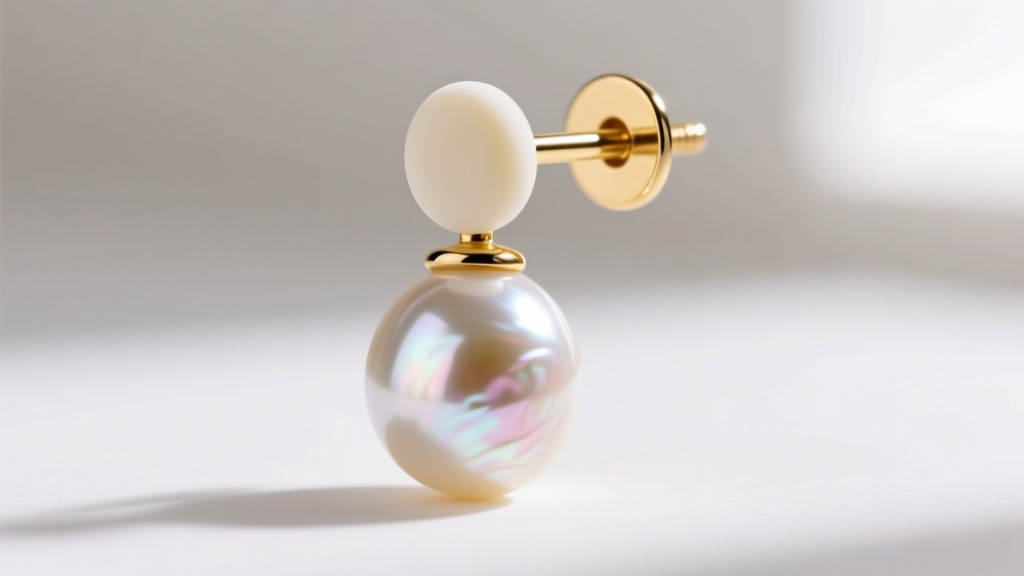
A major failure point in art-history-inspired jewelry is the hardware. A 15mm freshwater baroque pearl can weigh upwards of 4 to 6 grams per earring. When suspended from a delicate earlobe, this concentrated weight creates a fulcrum effect that will easily bend standard jewelry wire. Most mass-market earrings utilize 22-gauge (0.64mm) or 20-gauge (0.81mm) posts, which are entirely insufficient for heavy pearl drops.
For 2026's premium Vermeer-style collections, structural integrity is paramount. Look for brands that utilize 18-gauge (1.02mm) or even 16-gauge (1.29mm) posts crafted from solid 14k or 18k gold, or implant-grade titanium (ASTM F-136). Furthermore, the backing mechanism must be upgraded. Standard butterfly friction backs will fail to support the weight, causing the pearl to droop forward and hide against the neck. Instead, seek out jumbo 8mm silicone clutch backs, threaded screw-backs, or omega-clip leverbacks that distribute the weight across a wider surface area of the earlobe.
Face Shape Pairing Guide for Heavy Pearl Drops
The dramatic scale of pearls inspired by the pearl earring painting requires strategic styling. Because these drops command immediate visual attention, they can drastically alter the perceived proportions of the face. Below is a structural pairing guide to ensure the earrings enhance rather than overwhelm your natural geometry.
| Face Shape | Ideal Drop Length | Pearl Morphology | Visual Effect & Styling Goal |
|---|---|---|---|
| Round | 1.5 to 2.5 inches | Elongated Baroque Teardrop | Creates vertical lines that elongate the jawline and neck, countering facial width. |
| Oval | 0.75 to 1.25 inches | Spherical Akoya or Round South Sea | Maintains natural facial balance; spherical shapes add softness without over-lengthening. |
| Square | 1.5 to 2.0 inches | Soft, Curved Baroque | The organic curves of baroque pearls soften strong, angular jawlines and prominent cheekbones. |
| Heart | 1.0 to 1.5 inches | Bottom-Heavy Teardrop | Adds visual weight to the lower half of the face, balancing a narrower chin and wider forehead. |
Lobe Health and Weight Distribution
Wearing heavy, Vermeer-scale pearls daily can lead to a condition known as earlobe elongation or stretching. The continuous downward pull on the piercing fistula can cause the tissue to thin and droop over time. To mitigate this while participating in the 2026 art-history trend, jewelry experts recommend utilizing invisible earlobe support patches. These small, adhesive silicone shields sit behind the earlobe and feature a reinforced slit for the earring post, effectively transferring the weight of the pearl from the delicate fistula tissue to the broader, more resilient surface of the ear.
Additionally, consider alternating heavy drop days with periods of rest, or opt for huggie-style ear cuffs that incorporate smaller pearl accents if your lobes are already showing signs of fatigue. For those with cartilage piercings, the pearl earring painting trend has also inspired delicate, lightweight pearl charms designed specifically for 16-gauge flat-back labrets, allowing the aesthetic to be worn safely on the helix or tragus without the risk of migration.
2026 Market Pricing & Authenticity Tiers
As the demand for classical art-inspired jewelry peaks, the market has stratified into distinct pricing tiers. Understanding these tiers is crucial for avoiding synthetic imitations and ensuring you are paying a fair market value for genuine nacre.
- Accessible Tier ($45 - $120): Dominated by freshwater baroque pearls set in 18k gold vermeil over a brass or sterling silver base. These offer the exact teardrop silhouette of the painting but may feature thinner nacre (0.3mm - 0.5mm) and less intense orient. Brands like Missoma and Mejuri frequently operate in this space.
- Mid-Market Tier ($250 - $800): Features high-luster, near-round or premium baroque freshwater pearls, or entry-level Akoya pearls, set in solid 14k gold with upgraded 18-gauge hardware. This is the sweet spot for durability and gemological quality.
- Investment Tier ($1,500 - $5,000+): Reserved for South Sea or high-grade Tahitian teardrop pearls (13mm+) with exceptional luster, set in 18k or 22k gold, often accented with pavé diamond caps. Luxury houses like Yoko London and Assael define this category, offering heirloom-quality pieces that genuinely rival the jewel depicted in the 1665 masterpiece.
When shopping, always request a gemological report or detailed specification sheet. Beware of terms like "pearl shell" or "coated bead," which indicate a glass or plastic core painted with a pearlescent mica coating—a common trick used to fake the heavy weight and high shine of a genuine South Sea pearl.
Styling the Classical Revival for Modern Wear
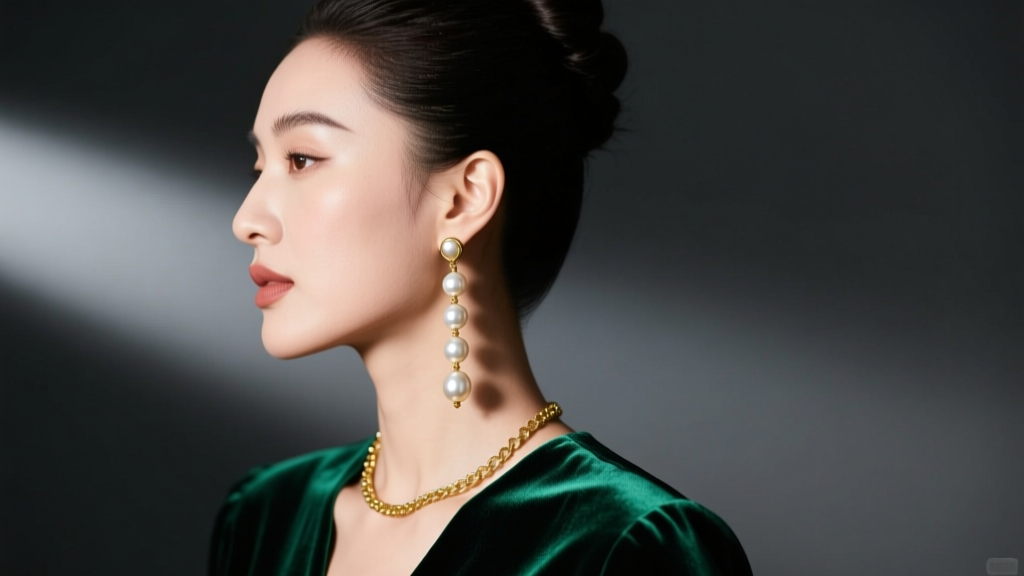
While the pearl earring painting is rooted in 17th-century Dutch modesty, styling these pieces in 2026 requires a juxtaposition of classical elegance and modern edge. The most effective way to showcase a heavy pearl drop is through high-contrast styling. Pair the luminous, organic white or cream tones of the pearl against deep, saturated fabrics like emerald green velvet, midnight blue silk, or structured black wool. This mimics the dark, moody backgrounds of classical portraiture, allowing the pearl to act as the primary light source in your outfit.
Hair placement is equally critical. To honor the aesthetic of the painting, the hair should be swept up or tucked behind the ear to expose the jawline and neck, ensuring the pearl is not lost in a tangle of modern layers. A sleek, low chignon or a relaxed, textured French twist provides the perfect canvas. Finally, keep the rest of your jewelry minimal. A heavy Vermeer-style drop earring is a statement piece that demands isolation; pairing it with competing diamond chandeliers or heavy chain necklaces will dilute its historical impact and visual power.
Final Thoughts on the Art-History Revival
The enduring fascination with Vermeer's masterpiece proves that true style transcends centuries. By understanding the gemological nuances of nacre thickness, the mechanical necessity of 18-gauge hardware, and the strategic geometry of face pairing, you can master the 2026 art-history trend with confidence. Whether you choose an asymmetrical freshwater baroque or a flawless spherical Akoya, wearing a piece inspired by the pearl earring painting is not just a fashion choice—it is a wearable tribute to one of art history's most captivating optical illusions.


