Expert Buying Guide: Choosing Stud Earrings 8mm in Diameter
Learn how to choose the perfect stud earrings 8mm in size. Our expert guide covers metal grades, post gauges, secure backings, and pricing tiers.

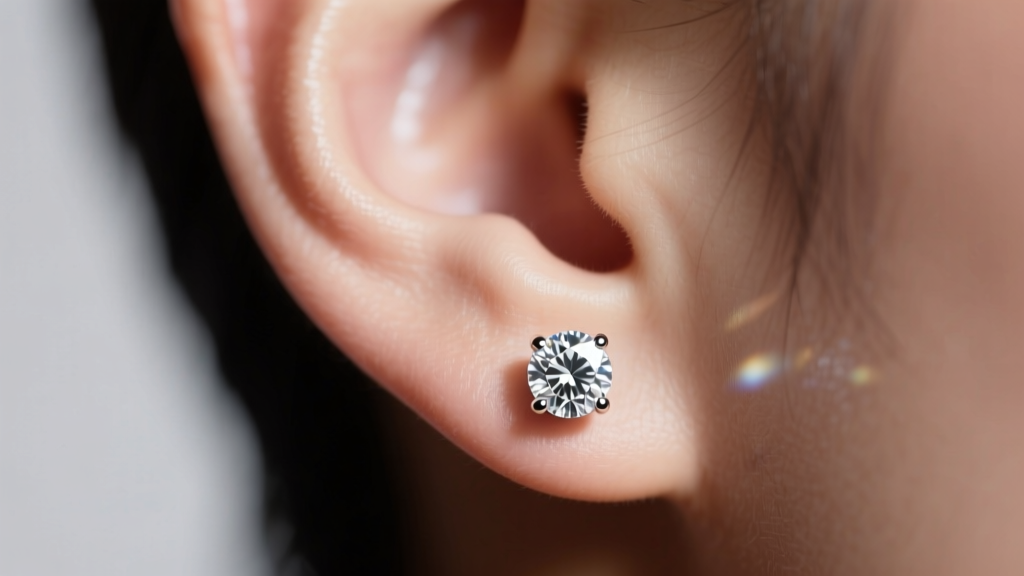
Why 8mm is the Ultimate Statement Stud Size
When most shoppers think of stud earrings, they picture delicate 3mm or 4mm solitaires meant for everyday, understated wear. However, stud earrings 8mm in diameter occupy a completely different category in fine jewelry. Measuring roughly 5/16 of an inch, an 8mm stud is a bold, statement-making piece that covers approximately 40% to 50% of an average adult earlobe.
Because of their significant visual footprint and physical weight, buying 8mm studs requires a completely different approach than purchasing smaller sizes. You cannot simply scale up a 4mm earring design and expect it to perform well. The center of gravity shifts, the stress on the earlobe piercing increases, and the hardware must be engineered to prevent drooping, embedding, or loss. In this comprehensive buying guide, we break down the exact metallurgical, structural, and mechanical specifications you need to look for when investing in 8mm stud earrings.
Material Grades and Weight Distribution
The first critical decision when buying 8mm studs is the material. At this size, the density of the metal directly impacts the overall weight of the earring, which in turn dictates how it will sit on your ear. A heavy 8mm platinum dome will pull on the earlobe much more aggressively than an 8mm titanium or hollowed-gold design.
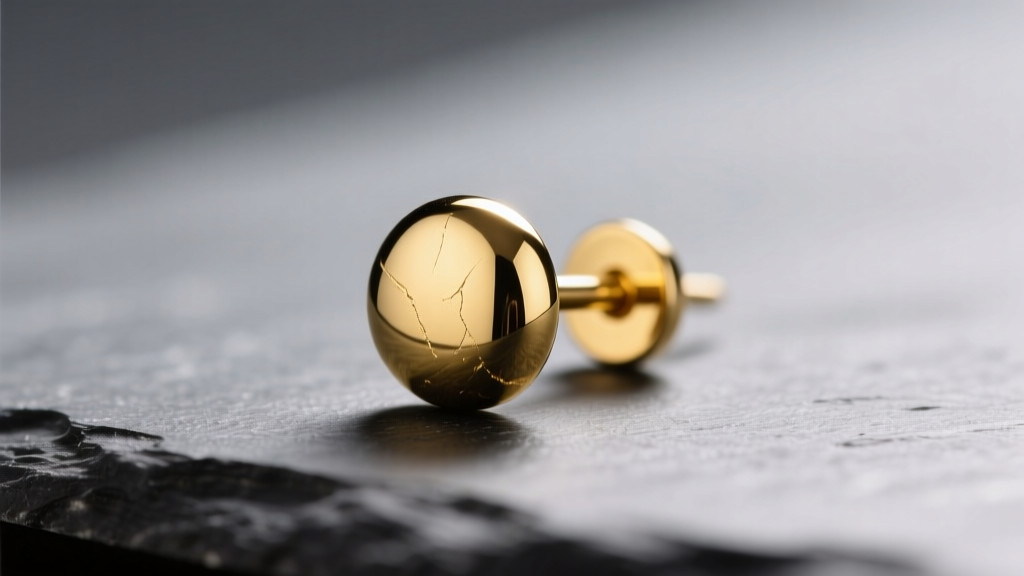
Table: Metal Density and Wearability for 8mm Studs
| Metal Type | Density (g/cm³) | Best For | Weight Considerations |
|---|---|---|---|
| Implant-Grade Titanium (ASTM F136) | 4.43 | Sensitive ears, heavy gemstone clusters | Extremely lightweight; reduces lobe fatigue. |
| 14k Solid Gold | 12.9 - 14.6 | Everyday luxury, metal domes, bezel sets | Moderate weight; requires sturdy backings. |
| 18k Solid Gold | 15.2 - 15.9 | High-end diamond solitaires | Heavier than 14k; prone to bending if post is thin. |
| Platinum (950) | 21.45 | Heirloom pieces, secure prong settings | Very heavy; requires lightweight basket designs to prevent drooping. |
For gemstone-heavy 8mm studs (such as a 2.0-carat round brilliant diamond, which naturally measures about 8mm across according to the Gemological Institute of America (GIA)), opting for a 14k or 18k gold setting with a hollowed-out gallery (the underside of the setting) is crucial to shave off unnecessary grams. If you have highly sensitive skin or nickel allergies, ensure the white gold is alloyed with palladium rather than nickel, or opt for ASTM F136 implant-grade titanium, which the Association of Professional Piercers (APP) recognizes as the gold standard for biocompatibility.
The Hardware: Gauges, Posts, and Backings
The most common point of failure for large stud earrings is the hardware. An 8mm stud has a wide face, meaning its center of gravity sits further away from the piercing hole. This creates a lever effect that puts immense downward pressure on the post and the earlobe.
Post Gauge and Length
Standard stud earrings are typically manufactured with 20-gauge (0.81mm) or 22-gauge (0.64mm) posts. Do not buy 8mm stud earrings with 20-gauge posts. The lever effect of an 8mm face will easily bend a 20G post over time, and it will not provide enough rigidity to keep the earring facing forward.
- 18-Gauge (1.02mm): The minimum acceptable thickness for 8mm studs. Provides enough rigidity to support the weight without bending.
- 16-Gauge (1.29mm): Ideal for heavy 8mm metal domes or cluster settings. Note that 16G is a standard body piercing size, but may feel thick for those with very fine, delicate earlobe piercings.
- Post Length: Ensure the post is at least 11mm to 14mm long. An 8mm earring requires a larger, wider backing, and you need sufficient post length to clear the earlobe thickness plus the backing mechanism without poking the neck.
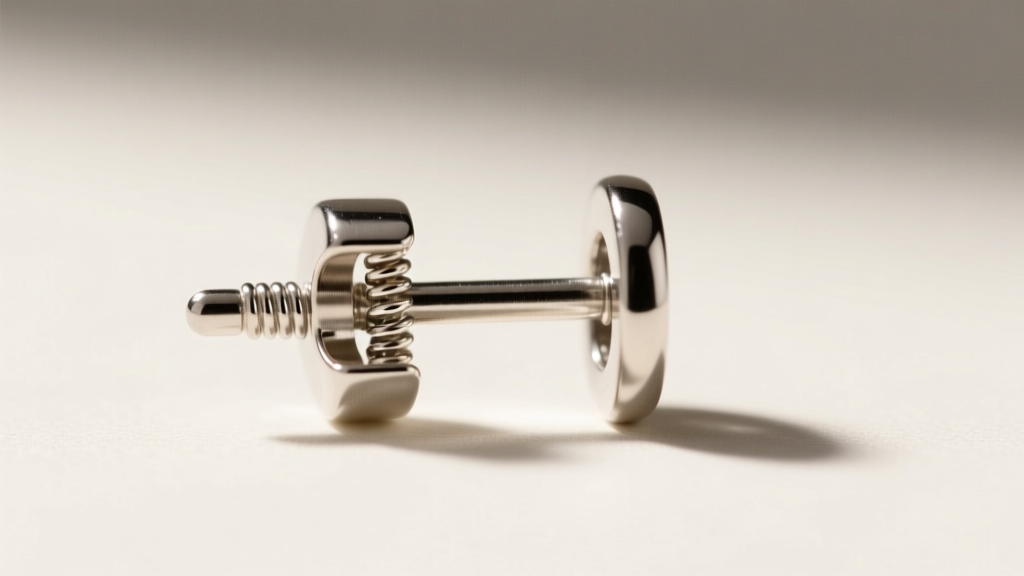
Backing Mechanisms: Securing the Investment
Standard friction backs (butterfly backs) are entirely inadequate for 8mm studs. The small surface area of a butterfly back will dig into the earlobe under the weight of the earring, and the friction grip is easily overcome by the downward pull of an 8mm face, leading to drooping or loss. Look for these superior alternatives:
- La Pousette (Locking) Backs: The premier choice for fine jewelry. These feature a tiny internal spring mechanism that clicks securely into a groove on the post. They offer a wide, flat surface area that distributes the weight of the 8mm stud evenly across the back of the earlobe.
- Screw Backs: The post is threaded, and the backing screws on. While highly secure, they can be tedious to put on and the threads can wear down or strip if cross-threaded over years of use.
- Jumbo Silicone Discs: For fashion or demi-fine 8mm studs, a 10mm or 12mm medical-grade silicone disc provides excellent grip and weight distribution, preventing the 'droop' effect at a fraction of the cost of mechanical locking backs.
Gemstone vs. Metal Dome: Visual Weight
When shopping for stud earrings 8mm in diameter, you will generally encounter two main styles: gemstone solitaires/clusters and solid metal domes/buttons.
An 8mm round diamond solitaire is exceptionally rare and expensive (often exceeding $15,000+). Most '8mm diamond studs' on the market are actually clusters of smaller pave diamonds set into an 8mm halo or bezel, or they feature lab-grown diamonds which make this carat weight more accessible.
Metal Domes: An 8mm solid gold dome is a sleek, modern choice. However, solid gold at this volume is heavy. Look for 'puffed' or hollow-backed gold domes, which offer the exact same exterior 8mm dimensions but weigh up to 60% less, saving your earlobes from stretching over time.
Bezel vs. Prong: For 8mm gemstones, a bezel setting (where a rim of metal completely encircles the stone) adds structural integrity and protects the edges of the gem from chipping against doors or hairbrushes. Prong settings allow more light into the stone, maximizing sparkle, but the prongs on an 8mm stone are larger and more prone to catching on knitwear.
Pricing Tiers: What to Expect in 2026
Because 8mm requires significantly more raw material and larger gemstones, the pricing scales exponentially compared to standard 5mm studs. Here is a realistic breakdown of what you should expect to pay for high-quality 8mm stud earrings in the current market:
- Demi-Fine / Fashion ($80 - $250): Sterling silver or gold vermeil bases with cubic zirconia, moissanite, or semi-precious stones (like 8mm onyx or lapis lazuli domes). Ensure the vermeil has a thick gold plating (at least 2.5 microns) to prevent rapid wear.
- Solid Gold & Lab-Grown ($600 - $1,800): 14k or 18k solid gold settings featuring lab-grown diamonds (typically 1.5 to 2.0 total carat weight) or solid gold puffed domes. This is the sweet spot for durability and luxury.
- Fine Natural Diamonds & Platinum ($4,000 - $25,000+): Natural, earth-mined diamond solitaires or high-end cluster settings in platinum or 18k gold. At this tier, insist on GIA or IGI certification for the center stones.
Troubleshooting Common 8mm Stud Issues
Even with the right purchase, large studs require specific care. Here is how to troubleshoot the most common complaints associated with 8mm earrings:
The Earring Keeps Drooping Forward
The Cause: The backing is too small or light to counterbalance the 8mm face, or the earlobe piercing is stretched/sits too low.
The Fix: Switch to a La Pousette locking back or a wide silicone support disc. If the piercing hole itself is stretched, consider using an 'earring support patch' (a small, clear adhesive sticker placed behind the lobe) to provide a firm anchor for the post.
The Post is Bending or Snapping
The Cause: The manufacturer used a 20-gauge or 22-gauge post to save on precious metal costs, which cannot handle the torque of an 8mm head.
The Fix: Take the earrings to a local bench jeweler and have them laser-weld a thicker 18-gauge or 16-gauge post onto the existing setting. This is a relatively inexpensive repair that will permanently solve the structural flaw.
Embedding and Irritation
The Cause: The backing is pushed too tightly against the earlobe to prevent drooping, cutting off circulation and causing the skin to swell around the metal.
The Fix: Always leave a 1mm to 2mm gap between the back of the earlobe and the earring backing to allow for natural swelling and airflow. If you sleep in your 8mm studs, switch to flat-back labret posts (16G or 14G) with a threaded 8mm end, which eliminates the sharp post tip entirely and provides a perfectly flush, comfortable fit.


