The Complete Buying Guide for Toilet Paper Earrings
Discover what to look for when buying toilet paper earrings. Our guide covers polymer clay, resin, titanium posts, and weight distribution.

The Rise of Whimsical Novelty Jewelry
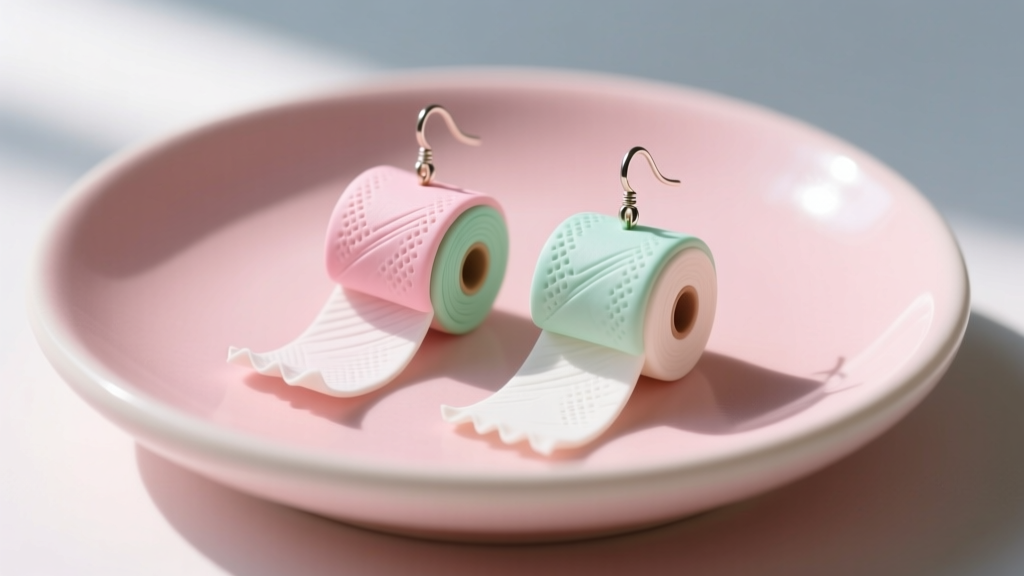
Novelty jewelry has transcended its reputation as mere costume fodder, evolving into a legitimate category of wearable art. Among the most viral and enduringly popular whimsical designs are toilet paper earrings. What started as a humorous nod to the 2020 paper shortage has cemented itself as a staple of quirky, conversational fashion in 2026. However, the novelty shape presents unique structural and dermatological challenges. The cylindrical body, the often-attached "unrolling" tail, and the surface area required for detailed painting mean that not all novelty earrings are created equal. Whether you are shopping for handcrafted polymer clay pieces or mass-produced acrylic novelties, understanding the engineering behind these specific shapes is crucial for comfort, longevity, and ear health.
Material Breakdown: Polymer Clay vs. Resin vs. Acrylic
The base material dictates the weight, durability, and visual appeal of your toilet paper earrings. Because the design relies heavily on the illusion of white, soft paper, material choice directly impacts how well the earrings resist staining from makeup, oils, and environmental dirt.
Polymer Clay (The Artisan Standard)
High-quality indie makers typically use professional-grade polymer clays like Sculpey Premo or Cernit. These clays allow for intricate surface texturing that mimics the soft dimpling of actual tissue paper. However, raw polymer clay is slightly porous. If the white "paper" portion is left unsealed, it will quickly absorb foundation, sebum, and hair products, turning a dingy yellow or gray. According to polymer clay experts at The Blue Bottle Tree, a proper sealant like a water-based polyurethane or a specialized UV resin topcoat is mandatory for light-colored clay jewelry. When buying, look for makers who explicitly state their sealing process.
UV and Epoxy Resin
Resin offers a brilliant, glass-like finish and can be cast in molds to create perfectly uniform toilet paper rolls. The primary failure mode for resin novelty earrings is UV degradation. Without the addition of HALS (Hindered Amine Light Stabilizers), clear or white resin will yellow rapidly when exposed to sunlight. Always check if the artisan uses jewelry-grade resin with UV inhibitors.
Laser-Cut Acrylic
Mass-produced versions are often laser-cut from flat sheets of acrylic and layered to create a 3D effect. While highly affordable, acrylic edges can be microscopically sharp. If the "unrolled tail" of the earring rests against your neck or jawline, poorly tumbled acrylic edges can cause micro-abrasions on the skin.
Hardware and Hypoallergenic Posts: Do Not Compromise
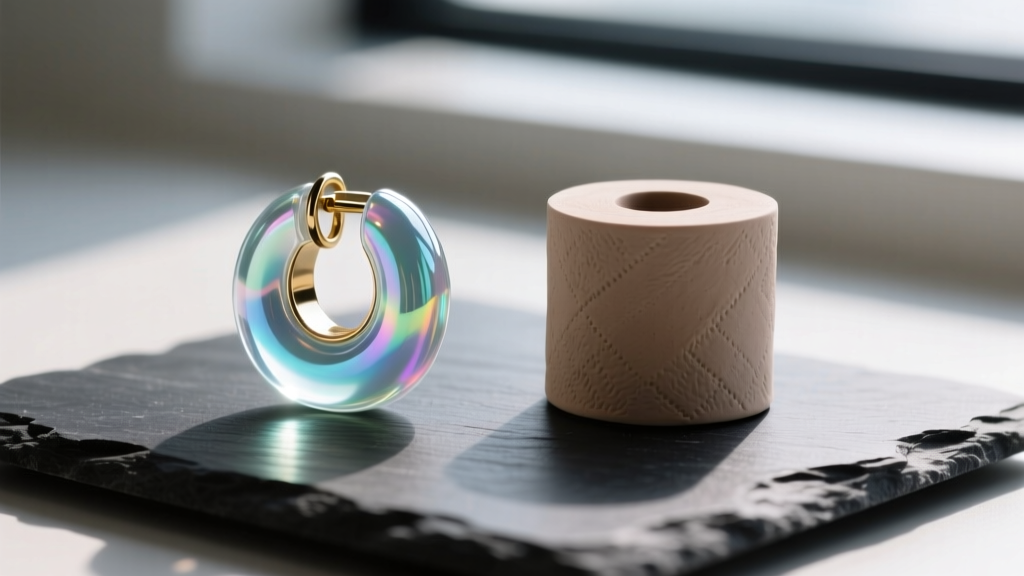
The most critical point of failure in novelty earrings is the hardware. Because toilet paper earrings are novelty items, many mass-market sellers cut costs by using nickel-plated brass or mystery-metal posts. This is a recipe for severe contact dermatitis. Furthermore, the novelty shape requires a secure, stable connection to the post to prevent the earring from drooping.
- Implant-Grade Titanium (ASTM F-136): The gold standard for sensitive ears. As outlined by the Association of Professional Piercers, ASTM F-136 titanium is biocompatible, lightweight, and completely nickel-free. Always demand titanium posts for novelty shapes that sit flush against the lobe.
- Niobium: An excellent, highly reactive-free alternative that can be anodized to match the metallic accents (like the cardboard tube core) of the earring design.
- Gauge Size: Standard lobe piercings accommodate 20-gauge (0.81mm) or 18-gauge (1.02mm) posts. Because toilet paper roll shapes can be slightly front-heavy, an 18-gauge post provides a thicker, more stable anchor that prevents the earring from tilting forward and stretching the bottom of the piercing fistula.
Weight Distribution and the "Pendulum Effect"
A toilet paper earring is essentially a horizontal cylinder. If the earring post is glued or embedded off-center on the top edge, gravity will force the earring to tilt. This not only ruins the visual aesthetic but places uneven, localized pressure on the lower edge of your piercing hole. Over time, this can lead to lobe thinning or migration.
Expert makers counteract this by using a "hollow-core" technique for the resin or clay cylinder, keeping the weight under 6 grams per earring, and perfectly centering the post hole. Additionally, the "unrolling tail" acts as a pendulum. If the tail is too long or made of heavy wire-reinforced clay, it will swing and catch on hair or scarves. Look for designs where the tail is angled slightly inward toward the neck, or where the maker uses flexible, lightweight silicone for the tail portion to prevent snagging.
Material and Hardware Comparison Chart
| Material Type | Average Weight | Stain Resistance | Best Hardware Pairing | Expected Price Range |
|---|---|---|---|---|
| Sealed Polymer Clay | 3g - 7g | High (if sealed properly) | 18G Titanium Flat Post | $22 - $45 |
| UV Resin (Hollow Cast) | 4g - 9g | Very High | 20G Titanium or Niobium | $18 - $35 |
| Layered Acrylic | 2g - 5g | Moderate (edges trap dirt) | Steel (often nickel-plated) | $5 - $14 |
Red Flags When Shopping
When browsing online marketplaces for toilet paper earrings, keep an eye out for these immediate warning signs:
- Unsealed Stamped Text: Many makers stamp funny quotes onto the unrolled paper tail using alcohol ink. If the listing does not mention a protective topcoat over the text, the ink will rub off onto your skin within a week of wear.
- "Surgical Steel" Claims: The term "surgical steel" is unregulated in the jewelry industry and often contains nickel. Always look for the specific designation of "Implant-Grade Titanium" or "ASTM F-136".
- Flat-Back Butterfly Clutches: Standard metal butterfly backs trap bacteria and dig into the neck when wearing bulky novelty shapes. Opt for makers who provide flat-back silicone O-rings or screw-back titanium fittings for security.
Care and Maintenance for Novelty Shapes
The crevice where the "unrolled tail" meets the main cylinder is a notorious trap for dead skin cells, sebum, and cosmetic powders. To clean your earrings, never use rubbing alcohol or harsh chemical solvents, as these will degrade the polyurethane sealant on polymer clay and cause UV resin to cloud or crack. Instead, use a soft, dry microfiber brush (like a clean makeup blending brush) to gently sweep out the crevices after every few wears. For deeper cleaning, a slightly damp cloth with a drop of mild, fragrance-free dish soap is sufficient. Always store them in a rigid jewelry box to prevent the delicate paper tails from snapping under the weight of heavier jewelry pieces.
Final Thoughts on Novelty Engineering
Toilet paper earrings are a fantastic way to inject humor and personality into your daily rotation, but they require a discerning eye to purchase successfully. By prioritizing implant-grade titanium hardware, demanding proper surface sealing on light-colored materials, and paying close attention to the weight distribution of the cylindrical body, you can enjoy your whimsical jewelry without sacrificing your ear health or comfort. Support indie artisans who treat novelty jewelry with the same structural rigor as fine jewelry, and your quirky pieces will last for years to come.


