The Ultimate Guide to Buying Sapphire Diamond Hoop Earrings
Discover what to look for when buying sapphire diamond hoop earrings. Learn about gemstone grading, metal settings, clasp security, and pricing.

The Intersection of Corundum and Carbon
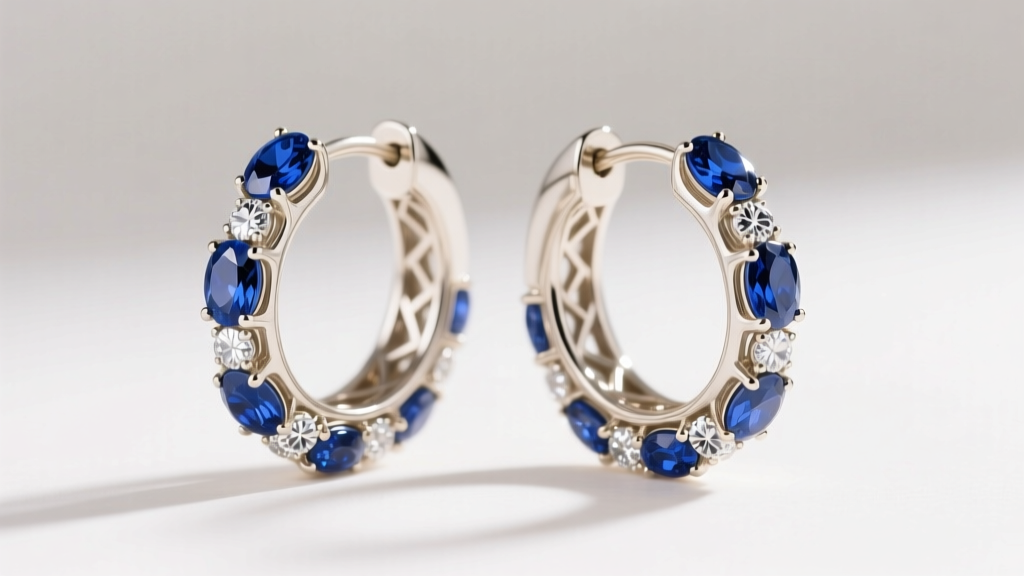
Few jewelry silhouettes command the room quite like a perfectly crafted pair of sapphire diamond hoop earrings. The dynamic contrast between the deep, velvety saturation of blue corundum (sapphire) and the high-frequency scintillation of diamonds creates a kinetic light show that moves with the wearer. However, as we navigate the 2026 fine jewelry market, the proliferation of varied gemstone treatments, lab-grown alternatives, and mass-manufactured settings means that buyers must be more discerning than ever. This comprehensive buying guide strips away the marketing fluff and focuses strictly on the gemological, structural, and mechanical details you need to evaluate before making a significant investment in sapphire and diamond hoops.
Decoding Sapphire Quality: Color, Clarity, and Origin
Unlike diamonds, where cut and clarity often dominate the valuation matrix, colored gemstones are judged primarily on color. The Gemological Institute of America (GIA) evaluates sapphire color based on three distinct metrics: hue, tone, and saturation.
Hue, Tone, and Saturation
For classic blue sapphires, the most prized hue is a pure, vivid blue to slightly violetish-blue. Tone refers to the lightness or darkness of the stone; a medium to medium-dark tone (often referred to in the trade as "Royal Blue" or "Cornflower Blue") allows the stone to retain its brilliance without looking inky or black in low light. Saturation is the intensity of the color. Because sapphires are highly pleochroic—meaning they display different colors when viewed from different crystal angles—master cutters must orient the table of the gem perfectly to maximize the blue face-up color. When inspecting sapphire hoops, look at the stones from multiple angles under both natural daylight and warm indoor lighting to ensure the color remains consistent and vibrant.
The Treatment Trap: Heat vs. Diffusion
It is an industry standard that over 90% of natural sapphires undergo traditional heat treatment to dissolve rutile silk inclusions and improve color saturation. This is a permanent, universally accepted practice that does not severely impact value. However, buyers must be extremely wary of beryllium diffusion (lattice diffusion). This process introduces light elements into the crystal lattice at extreme temperatures to artificially induce or enhance blue color. Beryllium-diffused sapphires are worth a fraction of the price of traditionally heated stones. Always demand a reputable lab report (from GIA, AGL, or Gübelin) that explicitly states "No indications of heating" or "Heated" rather than "Lattice Diffusion" or "Bulk Diffusion."
Diamond Accent Grading: The Melee Sweet Spot
The diamonds used in sapphire diamond hoop earrings are typically "melee" stones, ranging from 0.01 to 0.15 carats each. Because these stones are so small, applying strict VVS clarity or D-color grading standards is a waste of capital. Instead, focus on cut quality and color matching.
- Full-Cut vs. Single-Cut: Insist on full-cut melee diamonds (57 or 58 facets). Many mass-market jewelers use single-cut melee (17 or 18 facets) to save costs. Because hoops are constantly in motion, full-cut diamonds are essential to capture and reflect light dynamically.
- Clarity: SI1 to I1 clarity is the optimal sweet spot for melee. Inclusions in stones this small are invisible to the naked eye, provided they do not compromise the structural integrity of the diamond.
- Color Matching: If your hoops are set in white gold or platinum, ensure the melee diamonds are in the G-H color range so they do not look yellow next to the bright white metal. For yellow or rose gold settings, I-J color melee is perfectly acceptable and more cost-effective.
Metal Selection and Structural Integrity
Hoop earrings endure significant mechanical stress. They are pulled, snagged on clothing, and slept in. The choice of metal and the gauge (thickness) of the wire are critical for longevity.
| Metal Alloy | Durability & Scratch Resistance | Weight Profile | Best Use Case |
|---|---|---|---|
| 14k Gold (White/Yellow) | High (Excellent for daily wear) | Lightweight | Large diameter hoops, active lifestyles |
| 18k Gold (White/Yellow) | Moderate (Prone to micro-scratches) | Medium | Huggies, medium hoops, rich color depth |
| Platinum (950) | High (Develops a patina, doesn't lose metal) | Heavy | High-value settings, secure prong tension |
The Cheese-Cutter Effect: Pay close attention to the post—the wire that actually passes through your earlobe. If a hoop is heavy (laden with carats of sapphire and diamond) but features a thin 20-gauge (0.8mm) post, the weight will cause the wire to slice slowly through the earlobe tissue over time, a phenomenon jewelers call the "cheese-cutter effect." For any sapphire diamond hoop earring weighing more than 4 grams per earring, ensure the post is at least 18-gauge (1.0mm) or ideally 16-gauge (1.2mm).
Clasp Mechanisms: Securing Your Investment
A lost earring is a devastating financial and emotional blow. The clasp mechanism on a hoop is its primary security feature.
Hinged Snap (Click) Clasps
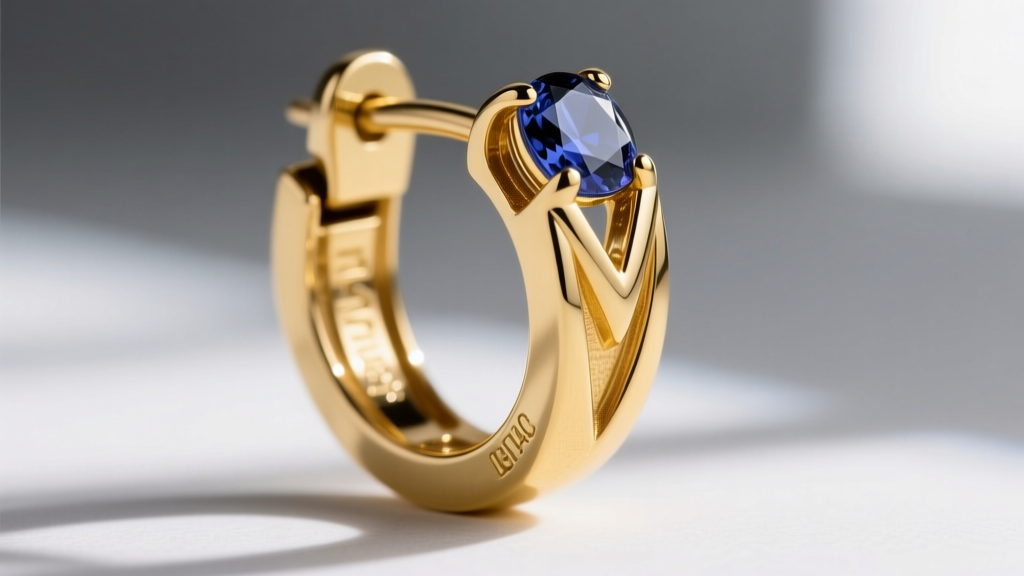
The most common mechanism for medium-to-large hoops. A hinged front post snaps into a V-groove on the back of the hoop. When shopping, test the hinge. It should open smoothly without lateral wobble and close with an audible, crisp "click." If the post feels loose in the groove, the earring will eventually pop open when snagged on a sweater.
Latch-Back Clasps
Often used for heavier, more elaborate sapphire hoops. A hinged wire passes through the ear and latches over a catch on the front of the earring. While highly secure, the front-facing catch can sometimes interrupt the continuous gemstone line of the design.
Omega Backs
Reserved for wide, substantial hoops or huggies that do not pass entirely through the earlobe. An omega clip hugs the back of the ear, often supported by a short post and friction back. These distribute weight beautifully across the earlobe, preventing stretching.
Pricing Tiers and Value Assessment
Understanding the market tiers prevents overpaying for mass-market goods or under-capitalizing on investment-grade pieces. According to data tracked by the American Gem Society (AGS), pricing for sapphire diamond hoops generally falls into three distinct categories:
- Entry Tier ($600 - $1,800): Features lab-created sapphires (flux-grown) or heavily included natural sapphires, set with single-cut I1-I2 melee diamonds in 10k or 14k gold. Excellent for fashion-forward buyers who prioritize size over gemological rarity.
- Mid Tier ($2,000 - $7,500): The sweet spot for most buyers. Features natural, traditionally heated Ceylon or Madagascar sapphires with good saturation, paired with full-cut SI1 melee diamonds in 14k or 18k gold. Expect excellent craftsmanship and secure hinged clasps.
- Investment Tier ($10,000 - $50,000+): Showcases unheated, certified Kashmir, Burmese, or top-tier Ceylon sapphires. The diamonds will be VVS/VS clarity and D-F color, set in platinum or 18k gold with custom-engineered, seamless inside-out settings.
Setting Styles: Front-Facing vs. Inside-Out
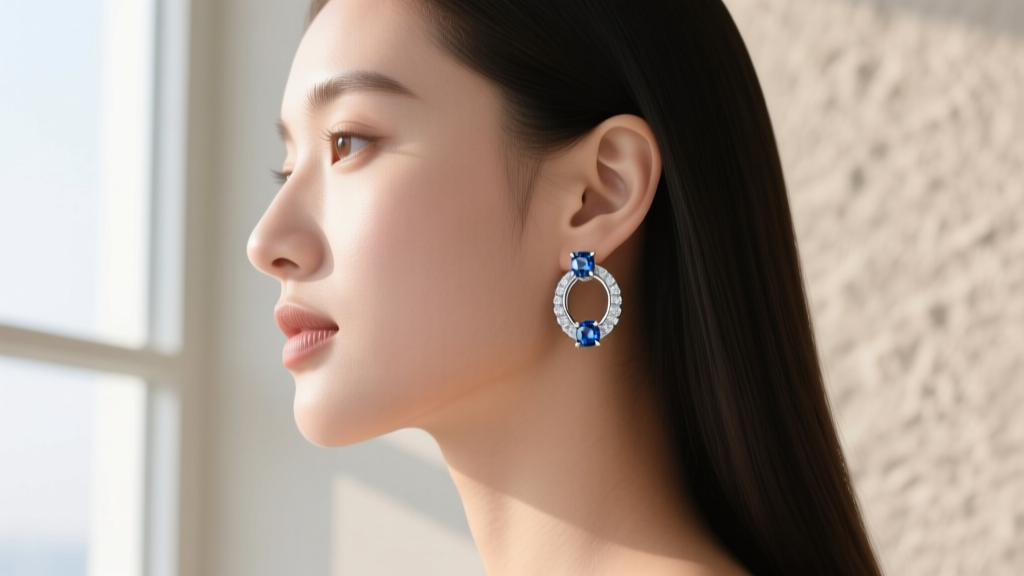
When selecting sapphire diamond hoop earrings, you will encounter two primary setting styles. Front-facing hoops feature gemstones set only on the outer hemisphere of the hoop. This is a classic, understated look that is generally lighter and less expensive. Inside-out hoops feature gemstones set on both the front and the inner curve of the hoop. This design creates the illusion of a continuous river of gems when viewed from the side or when the wearer moves their head. Inside-out settings require significantly more gemstones and complex metalwork, commanding a 30% to 50% premium over front-facing styles of the same diameter.
Final Pre-Purchase Checklist
Before finalizing your purchase, run the earrings through this rigorous quality assurance checklist:
- Lab Verification: Do natural sapphires over $2,000 come with a GIA, AGL, or Gübelin report confirming origin and treatment status?
- Prong Tension: Run a piece of silk fabric or a soft microfiber cloth over the gemstones. If it snags, the prongs are poorly finished and will eventually catch on your clothing, risking stone loss.
- Post Gauge: Is the ear wire thick enough (18g or 16g) to support the total weight of the hoop without causing lobe trauma?
- Clasp Audit: Does the hinge open to a full 90 degrees without resistance, and does it snap shut with a definitive, secure click?
- Color Consistency: Are the sapphires matched in tone and saturation? Even slight mismatches in blue hues are highly visible in a hoop silhouette.
By prioritizing structural integrity, precise gemological grading, and secure mechanical engineering, you ensure that your sapphire diamond hoop earrings will remain a secure, brilliant, and timeless staple in your jewelry wardrobe for decades to come.