Beginner's Guide to Buying Vintage Krementz Earrings
Discover how to identify, price, and care for vintage Krementz earrings. Learn hallmark meanings, gold-filled facts, and collector tips.

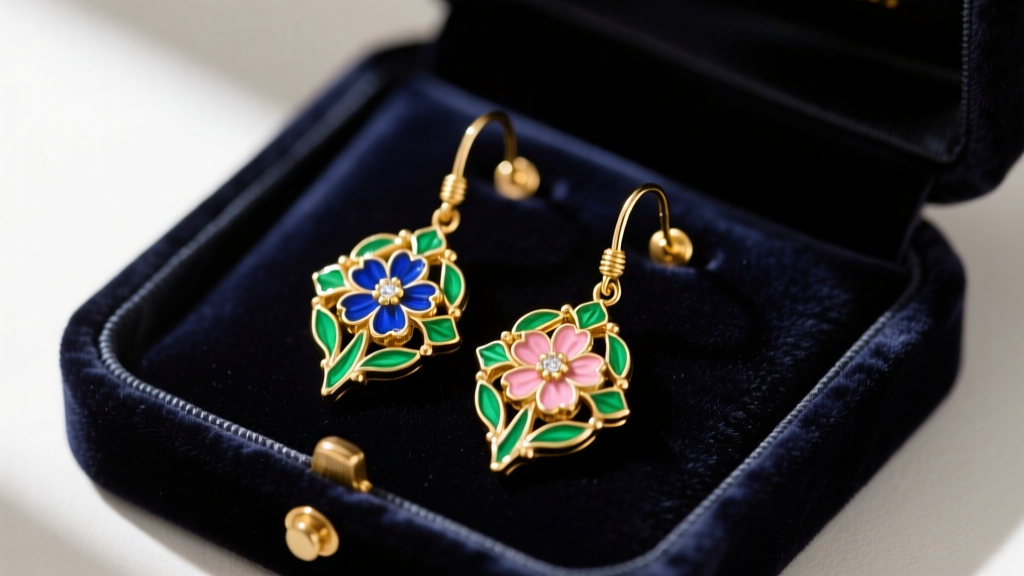
If you are stepping into the world of vintage and antique jewelry, you will inevitably encounter the name Krementz. Founded in 1866 in Newark, New Jersey—once the undisputed jewelry manufacturing capital of the United States—Krementz & Co. built a reputation for exceptional craftsmanship, particularly in gold-filled and solid gold pieces. For beginners, navigating the secondary market for vintage Krementz earrings can feel overwhelming. Between deciphering cryptic hallmarks, understanding the difference between gold-filled and gold-plated, and assessing fair market value, there is a lot to learn.
This comprehensive guide will walk you through everything you need to know to confidently identify, evaluate, and care for vintage Krementz earrings, ensuring you build a collection of heirloom-quality pieces that will last for generations.
The Legacy of Krementz & Co.
Before diving into the earrings themselves, it is crucial to understand the manufacturer's history. George Krementz originally founded the company to produce high-quality collar buttons, utilizing a unique one-piece construction method that revolutionized the industry. By the early 20th century, the company pivoted heavily into fine jewelry. According to the Newark Museum of Art, Newark-based manufacturers like Krementz were renowned for their heavy gold-filled (rolled gold plate) techniques, which far exceeded the industry standards of the era.
Unlike many contemporary manufacturers that relied on thin electroplating, Krementz utilized mechanical bonding to fuse thick layers of 14k or 18k gold to a brass core. This is why vintage Krementz earrings found in estate sales today often show remarkably little wear, even after a century of use.
Decoding the Hallmarks: How to Identify Authentic Pieces
Authentication is the most critical skill for a vintage jewelry beginner. Krementz was meticulous about stamping their pieces, but the hallmarks evolved over the decades.
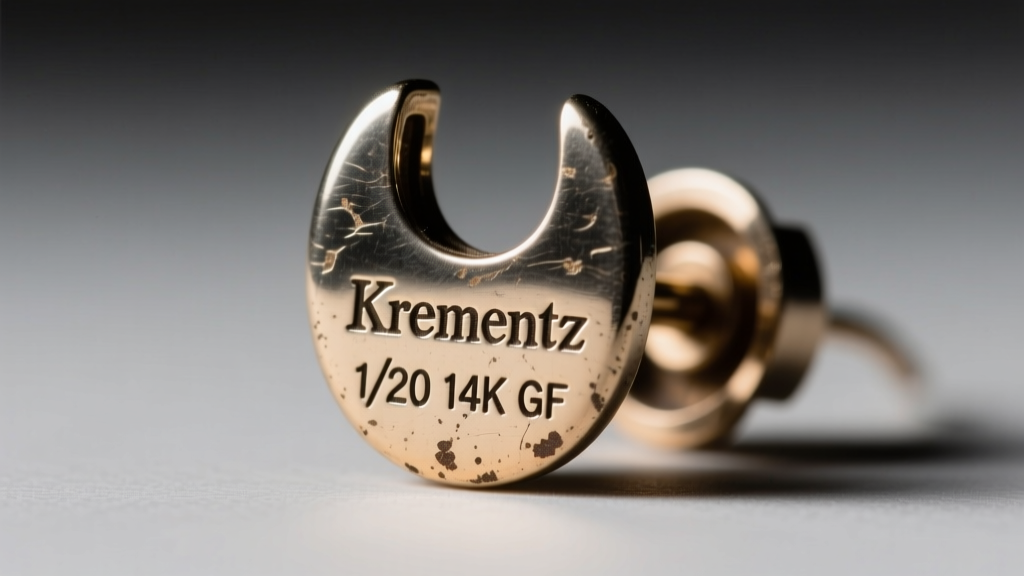
Common Krementz Stamps
- The Shield "K": Early to mid-20th-century pieces often feature a simple capital "K" stamped inside a shield or oval outline.
- The Script "Krementz": Post-1940s pieces frequently bear the full company name in a distinct, elegant script font.
- "1/20 14K GF": This is the most common material stamp. It indicates that 1/20th of the total weight of the item is solid 14-karat gold, mechanically bonded to the surface.
- "14K" or "18K": While famous for gold-filled jewelry, Krementz also produced extensive lines of solid gold earrings, particularly during the Art Deco and Retro periods (1920s–1940s).
Expert Tip: Always inspect the ear wire and the clutch (the back of the earring). Krementz manufactured their own findings. If the earring post is stamped "14K" but the butterfly clutch is unmarked or stamped with a modern Asian import mark, the original finding may have been replaced, which slightly diminishes the collector value.
Gold-Filled vs. Solid Gold: Understanding the Materials
Beginners often confuse "gold-filled" with "gold-plated." Understanding this distinction is vital when evaluating Krementz earrings. The Antique Jewelry University by Lang Antiques notes that gold-filled items must have a gold layer constituting at least 5% (or 1/20th) of the total weight. Gold-plated items, conversely, have a microscopic layer of gold applied via electroplating, which can rub off in months.
| Material Type | Krementz Stamp | Durability | Typical Vintage Use Case |
|---|---|---|---|
| Heavy Gold-Filled | 1/20 14K GF | Exceptional (50+ years) | Everyday studs, hoops, and dangles |
| Solid Gold | 14K / 18K | Lifetime / Heirloom | Art Deco geometric drops, gemstone settings |
| Gold Overlay | 1/10 10K GF | Very Good (20-30 years) | Mid-century costume-style clip-ons |
Anatomy of the Findings: Why Krementz Ear Wires Matter
One of the most overlooked aspects of vintage earrings is the "finding"—the structural component that secures the earring to the ear. Krementz was famous for its sturdy, well-tensioned French wires and secure screw-back mechanisms.
For lobe piercings, vintage Krementz French wires are typically crafted in 20-gauge or 21-gauge thickness. This is slightly thicker than the modern standard 22-gauge wire, meaning they provide excellent support for heavy drop earrings without bending or sagging the earlobe. If you are buying vintage clip-on earrings (which Krementz produced in massive quantities during the mid-century when piercing was less socially prevalent), look for their patented padded screw-backs, which were designed to distribute pressure evenly across the cartilage and lobe, preventing the pain associated with cheaper vintage clip-ons.
Pricing Guide: What Should You Pay in 2026?
The vintage jewelry market fluctuates, but Krementz remains a highly stable investment due to brand recognition and enduring quality. When shopping on platforms like Etsy, Ruby Lane, or 1stDibs, use this general pricing framework to ensure you are paying fair market value.
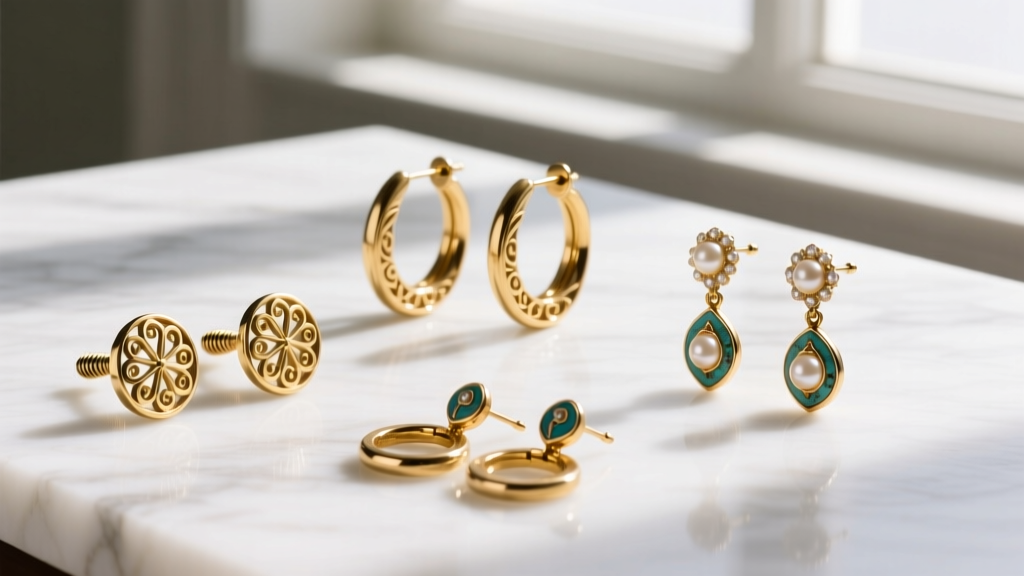
Market Tiers for Krementz Earrings
- Entry-Level ($35 – $85): Simple 14k gold-filled studs, small textured hoops, and plain wire dangles. These are abundant and make excellent everyday wearers.
- Mid-Tier ($120 – $350): Earrings featuring intricate metalwork, filigree designs, or semi-precious stones like amethyst, citrine, or marcasite. Mid-century enamel pieces also fall into this category.
- Collector/High-End ($450 – $1,200+): Solid 14k/18k gold Art Deco pieces, rare guilloché enamel designs, or earrings featuring high-quality natural pearls and old European cut diamonds.
Care and Maintenance for Vintage Ear Wires
Proper care is essential to preserve the thick gold layer on Krementz gold-filled earrings. Never use harsh chemical dips or silver polish, as these can strip the gold or cause the underlying brass core to oxidize rapidly if it reaches a microscopic scratch.
"The golden rule of vintage gold-filled jewelry is gentle friction. A soft, untreated jeweler's cloth is all you need to restore the original luster without compromising the mechanical bond of the gold layer."
Cleaning Protocol:
- Use a few drops of mild, phosphate-free dish soap in lukewarm water.
- Gently agitate the earrings with a baby-soft toothbrush, avoiding any glued-in stones (like coral or lapis lazuli).
- Rinse thoroughly under distilled water to prevent hard water spotting.
- Pat dry with a microfiber cloth and allow them to air dry completely before storing in an anti-tarnish pouch.
Warning regarding Ultrasonic Cleaners: While ultrasonic cleaners are safe for plain solid gold Krementz hoops, they will absolutely shatter vintage enamel work and can loosen the adhesive on mid-century rhinestone or pearl earrings. Always default to hand-cleaning unless you are 100% certain of the stone setting method.
Final Thoughts on Building Your Collection
Collecting vintage Krementz earrings is a rewarding journey into American jewelry history. By focusing on authentic hallmarks, understanding the superior mechanics of their findings, and respecting the material science of heavy gold-filled construction, you can curate a collection that is both historically significant and highly wearable. Take your time, scrutinize the ear wires, and invest in pieces that showcase the unparalleled craftsmanship that made Newark, New Jersey the jewelry capital of the world.


