Diamond Earrings Drop Settings: A Material Property Guide
Compare platinum, 18k gold, and titanium for diamond earrings drop settings. Discover durability, pricing, and metal properties for kinetic jewelry.

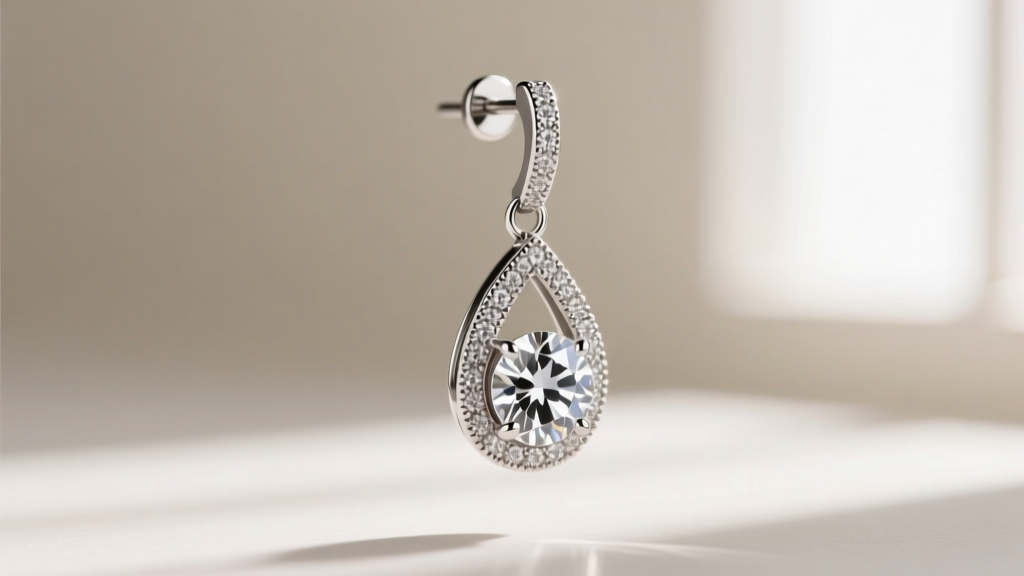
The Physics of the Pendulum: Why Material Matters for Drops
When evaluating a diamond earrings drop style, consumers often fixate exclusively on the 4Cs of the center stone. However, from a metallurgical and structural engineering perspective, the metal alloy used to construct the drop mechanism is just as critical to the piece's longevity. Unlike stud earrings, which sit flush against the earlobe and experience minimal sheer stress, drop earrings act as pendulums. Every nod, turn, and step transfers kinetic energy through the earring post, down the articulation links, and directly into the diamond's setting.
This continuous micro-kinetic stress exposes material weaknesses that remain hidden in static jewelry. A metal that performs beautifully in a rigid tennis bracelet may suffer from work-hardening, fatigue, or catastrophic prong failure when subjected to the swinging motion of a drop earring. In this comprehensive guide, we analyze the specific gravity, Vickers hardness, and tensile properties of the top metals used in diamond drop settings to help you make an informed, structurally sound investment.
Platinum (Pt950): The Heavyweight Champion of Security
Platinum, specifically the Pt950 alloy (95% platinum, 5% ruthenium or iridium), remains the undisputed industry standard for high-value diamond settings. According to data from Johnson Matthey, platinum's unique crystalline structure allows it to displace rather than wear away when scratched. This property, known as malleability without material loss, is crucial for the prongs securing a swinging drop diamond.
Specific Gravity and Lobe Impact
The primary drawback of platinum in a diamond earrings drop design is its density. With a specific gravity of 21.45 g/cm³, platinum is exceptionally heavy. For elongated drop earrings featuring multiple articulated links and substantial diamond baskets, the cumulative weight can cause earlobe fatigue or tearing over time. Jewelers often counteract this by incorporating silicone O-ring stabilizers or designing the top stud portion with a wider surface area to distribute the pendulum weight across a broader section of the earlobe.
Work Hardening and Prong Integrity
Platinum exhibits excellent work-hardening characteristics. When a platinum prong is bent during the setting process or slightly deformed by catching on clothing, it becomes harder and more rigid at the stress point. This means a bumped platinum prong on a drop earring is highly unlikely to snap; it will merely bend, keeping the diamond securely in its basket.
18K Gold Alloys: Balancing Warmth, Weight, and Wear
18K gold (75% pure gold alloyed with 25% copper, silver, zinc, or palladium) offers a lighter, more vibrant alternative to platinum. However, the specific alloy composition drastically alters how the metal behaves under the kinetic stress of a drop earring.
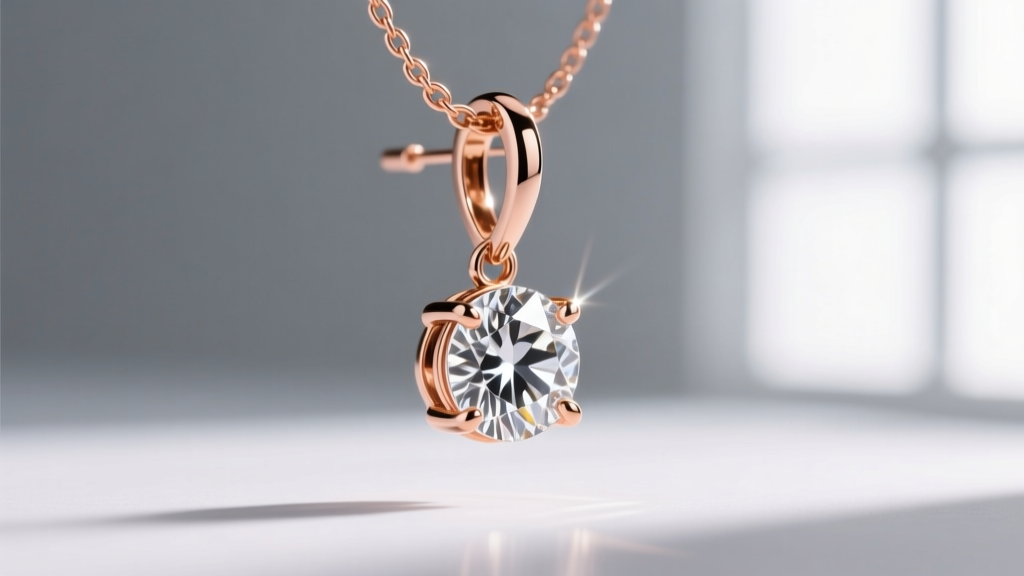
18K Yellow and Rose Gold
Alloyed primarily with copper and silver, 18K yellow and rose golds possess a Vickers hardness of approximately 130-140 HV. They are highly resistant to tarnish and do not require surface plating. However, unlike platinum, gold loses microscopic layers of metal when scratched or subjected to friction. In a drop earring, the articulation joints (where the top stud connects to the dangling drop) experience constant metal-on-metal friction. Over a decade of daily wear, an 18K gold jump ring or link can thin out, requiring professional re-tipping or soldering to prevent the drop from detaching.
The Rhodium Dilemma in 18K White Gold
18K white gold is alloyed with palladium or nickel to achieve a silver hue, but it naturally retains a faint yellowish-gray tint. To achieve a bright white finish, it is electroplated with rhodium. For a diamond earrings drop piece, the constant swinging motion causes the hair to repeatedly brush against the metal links and settings. This friction accelerates the wear of the rhodium plating, often revealing the warm undertone of the white gold beneath within just a few months of daily wear. If you choose white gold for kinetic drop earrings, budget for annual rhodium re-plating.
Grade 5 Titanium: The Modern Lightweight Alternative
For avant-garde, oversized, or dramatically elongated diamond drop earrings, aerospace-grade titanium (Ti-6Al-4V, also known as Grade 5) is emerging as a superior structural metal. With a specific gravity of just 4.43 g/cm³, titanium is nearly 80% lighter than platinum. This allows designers to create massive, shoulder-dusting diamond drop silhouettes that remain entirely comfortable for the earlobe.
The trade-off is repairability. Titanium has an extremely high melting point and is notoriously difficult to solder or resize using traditional jeweler's torches. If a titanium articulation link fractures or a prong is sheared off, the piece often requires laser welding or complete component replacement by a specialized manufacturer. Furthermore, the Gemological Institute of America (GIA) notes that the extreme hardness of titanium can make initial stone setting more challenging, requiring highly skilled bench jewelers.
Material Comparison Matrix: 2026 Market Data
The following table outlines the core physical properties and estimated market premiums for the primary metals used in diamond drop settings as of 2026.
| Metal Alloy | Specific Gravity | Vickers Hardness (HV) | Material Loss on Scratch | Avg. Setting Premium |
|---|---|---|---|---|
| Platinum (Pt950) | 21.45 g/cm³ | 125 - 135 | None (Displaces) | +35% to +50% |
| 18K White/Yellow Gold | 15.50 g/cm³ | 130 - 150 | Yes (Abrasive wear) | Baseline (1x) |
| 14K Gold Alloys | 13.00 g/cm³ | 150 - 170 | Yes (Abrasive wear) | -20% to -30% |
| Grade 5 Titanium | 4.43 g/cm³ | 334 - 350 | Minimal | Variable (Labor intensive) |
Prong Architecture and Kinetic Failure Modes
The structural integrity of a diamond earrings drop piece relies heavily on prong architecture. Because drop earrings swing freely, they are highly susceptible to snagging on sweaters, scarves, and hair. When a prong snags, it experiences sheer lateral force.
- V-Prongs: Essential for marquise, pear, or trillion-cut diamonds in drop settings. The V-prong encapsulates the sharp, fragile points of the diamond, preventing chipping if the earring swings and strikes a hard surface.
- Round/Claw Prongs: Standard for round brilliant drops. In platinum, a 1.2mm thick claw prong will bend upon snagging. In 14K or 18K gold, a thin claw prong may sheer off entirely if the metal has been work-hardened and embrittled by years of micro-bending.
- Bezel Settings: While a full bezel eliminates snagging risks entirely, it reduces light return in a drop earring. A half-bezel offers an excellent compromise, securing the diamond against lateral kinetic shocks while leaving the north and south poles open for maximum brilliance.
Managing Weight: Earlobe Biomechanics and Backings
A heavy metal combined with a substantial diamond carat weight creates a downward vector force that can stretch the earlobe piercing over time. If you opt for a dense platinum diamond earrings drop design exceeding 4.5 grams per earring, standard friction backs (butterfly backs) are entirely insufficient. The pendulum motion will slowly work a friction back off the post, leading to catastrophic loss.
Expert Recommendation: Always pair heavy metal drop earrings with La Pousette backs (which feature a mechanical locking trigger) or secure silicone O-rings that grip the post via high-friction tension. Additionally, consider using a silicone earlobe support patch behind the ear to distribute the kinetic load across a wider dermal area.
Expert Verdict: Choosing Your Metal
There is no universally perfect metal; the ideal choice depends on the specific silhouette of the drop earring and your lifestyle. If you are investing in a high-carat, heirloom-quality drop with a delicate, multi-link articulation chain, Platinum (Pt950) is non-negotiable for its superior prong security and fatigue resistance. If you prefer a warmer aesthetic and a lighter feel for a medium-sized drop, 18K Yellow or Rose Gold provides excellent durability without the maintenance of rhodium plating. Finally, for bold, architectural, or oversized drop statements where earlobe comfort is paramount, Grade 5 Titanium offers unparalleled strength-to-weight ratios, provided you accept the limitations regarding future repairs.


