How to Choose, Style, and Clean Diamond Cross Earrings
Learn how to choose the perfect diamond cross earrings, style them for any face shape, and clean them safely with our expert step-by-step guide.

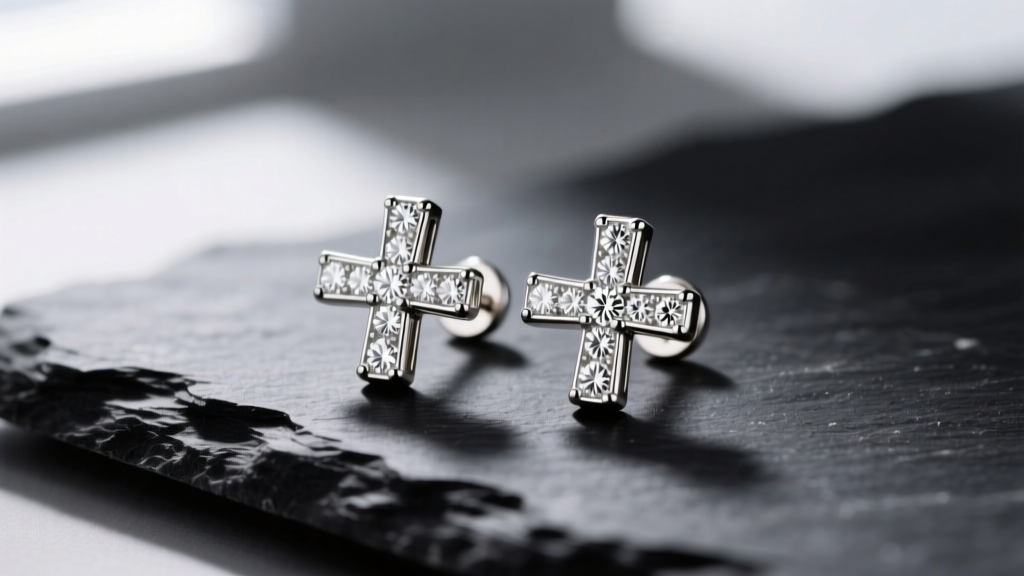
Diamond cross earrings are a timeless staple in fine jewelry, seamlessly blending personal symbolism with everyday elegance. Whether you are looking for a subtle 0.25-carat everyday stud or a bold, elongated cartilage piece, navigating the nuances of diamond quality, metal durability, and proper maintenance is essential. In 2026, the trend has shifted heavily toward micro-pave settings and mixed-metal stacking, making it more important than ever to understand exactly what you are buying and how to care for it. This comprehensive, step-by-step guide will walk you through selecting, sizing, and maintaining your diamond cross earrings like a seasoned gemologist.
Step 1: Choosing the Right Metal and Diamond Quality
The foundation of any high-quality diamond cross earring lies in its metal alloy and the grade of the diamonds used. Because cross earrings typically utilize melee diamonds (stones weighing less than 0.15 carats each), the grading rules differ slightly from those of large solitaire engagement rings.
Understanding Metal Grades and Durability
According to the Federal Trade Commission Jewelry Guides, gold purity must be accurately stamped. For daily-wear earrings, 14k gold (58.5% pure gold) is often the superior choice over 18k gold. It offers greater tensile strength, meaning the tiny prongs holding the melee diamonds are less likely to bend or wear down over time. If you prefer the richer, warmer hue of 18k gold (75% pure gold), opt for a bezel-set or channel-set cross design to protect the stones. For maximum security and hypoallergenic properties, Platinum (95% pure) is the ultimate standard, though it commands a 40-60% price premium.
Diamond Clarity and Color for Melee Stones
The Gemological Institute of America (GIA) notes that melee diamonds are rarely graded individually with full dossiers. Instead, they are sorted into parcels. For a diamond cross earring, you do not need VVS (Very Very Slightly Included) clarity. SI1 to SI2 clarity is completely eye-clean at this scale and will save you up to 30% on the total cost. For color, aim for G or H grades, which appear beautifully white when set in white gold or platinum, avoiding the noticeable yellow tint of J or K color diamonds.
| Total Carat Weight (TCW) | Approx. Dimensions | Ideal Metal Choice | Average Price Range |
|---|---|---|---|
| 0.25 ct | 8mm - 10mm | 14k Gold | $450 - $800 |
| 0.50 ct | 12mm - 15mm | 14k or 18k Gold | $900 - $1,800 |
| 1.00 ct | 18mm - 22mm | Platinum or 18k Gold | $2,200 - $5,000 |
Step 2: Sizing for Face Shape and Ear Placement
The visual impact of a cross earring changes dramatically based on its proportions and where it sits on the ear. Selecting the right size requires analyzing both your facial geometry and your piercing placement.
Pairing Proportions with Face Shapes
- Round Faces: Elongated, slender crosses (e.g., 18mm tall by 10mm wide) create a vertical line that visually lengthens the face and draws the eye downward.
- Square Faces: Wider, chunkier crosses or those with curved, rounded edges (like a Celtic cross design) help soften strong jawlines and add balance.
- Oval Faces: Highly versatile; almost any proportion works, though classic, perfectly symmetrical 15mm crosses offer a timeless, balanced look.
- Heart-Shaped Faces: Bottom-heavy crosses or teardrop-integrated cross designs complement a narrower chin beautifully.
Lobe vs. Cartilage Placement
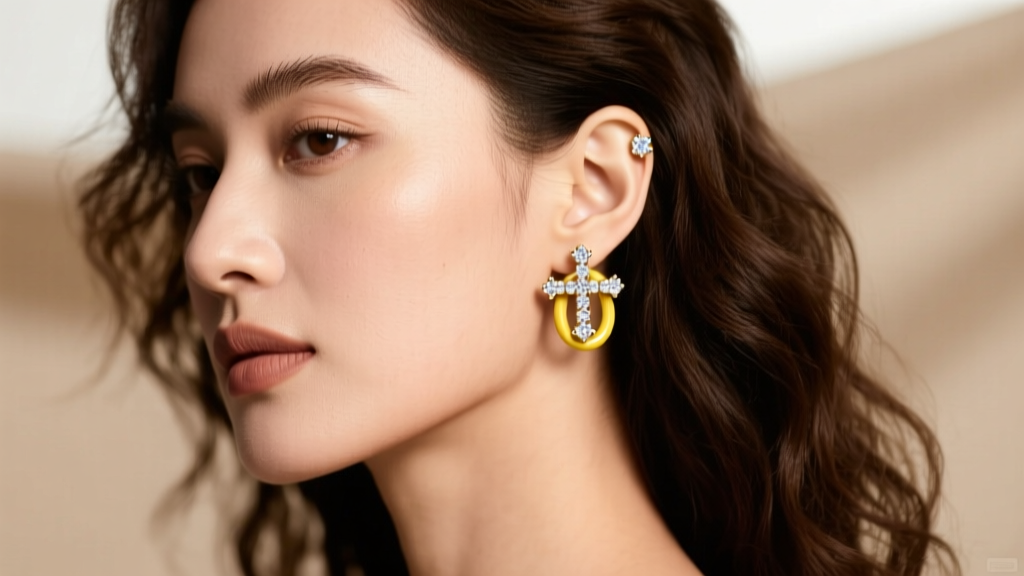
While standard lobe piercings can accommodate almost any size, placing a diamond cross on the helix or forward helix requires precise sizing. Cartilage crosses should generally be petite (6mm to 8mm) to prevent catching on hair or clothing. Furthermore, pay strict attention to the post gauge. Standard lobe posts are usually 20-gauge (0.8mm) or 18-gauge (1.0mm). Cartilage piercings are frequently 16-gauge (1.2mm). Attempting to force a 20g lobe earring into a 16g cartilage hole can cause tearing, while a 16g post in a standard lobe may feel uncomfortably heavy and require a specialized, larger earring back.
Step 3: Step-by-Step Cleaning and Maintenance Routine
Diamonds are naturally lipophilic, meaning they attract and hold onto oils from your skin, lotions, and hair products. A build-up of grease underneath the pavilion (the bottom of the diamond) will quickly make your cross earrings look dull and cloudy. Follow this expert-approved manual cleaning routine every two weeks.
The 5-Step Manual Cleaning Method
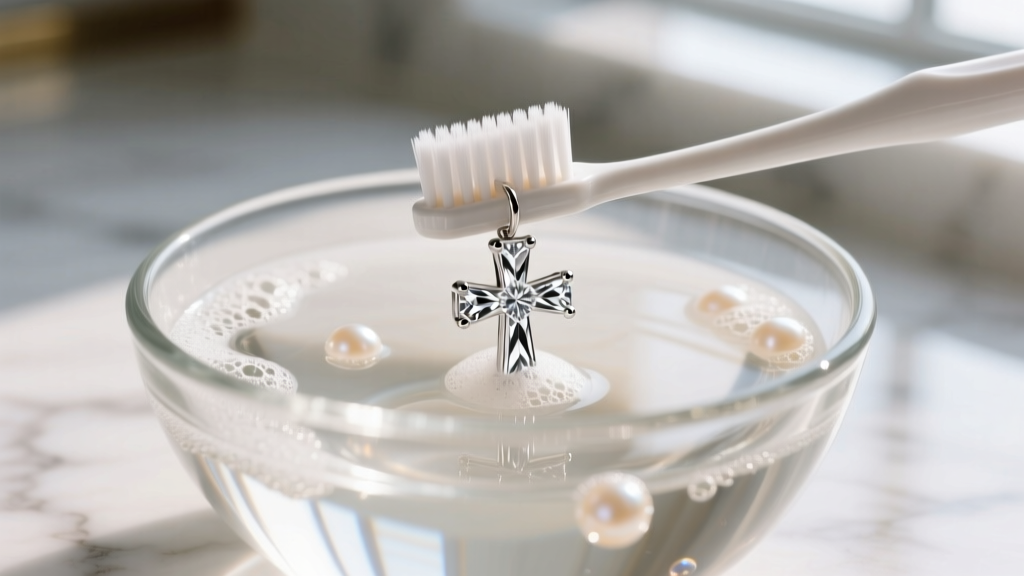
- Prepare the Solution: In a small glass bowl, mix one cup of warm distilled water (tap water contains minerals that can leave hard water spots) with three drops of a mild, degreasing dish soap like Dawn.
- Soak: Drop your diamond cross earrings into the solution and let them sit for exactly 15 minutes. This loosens hardened lotion and sebum trapped in the pave settings.
- Agitate Gently: Using a brand-new, extra-soft baby toothbrush, gently brush the earrings. Critical Tip: Focus heavily on the back of the settings and the post. Do not scrub aggressively in circular motions, as this can bend delicate shared prongs.
- Rinse: Rinse the earrings under a gentle stream of lukewarm distilled water. Always plug the drain or use a fine-mesh strainer to prevent accidental loss.
- Dry: Pat dry with a lint-free microfiber cloth. Avoid paper towels, as the wood fibers can scratch the gold and snag on the prongs.
Expert Warning on Ultrasonic Cleaners: While ultrasonic cleaners are fantastic for solid metal jewelry, they are highly risky for pave diamond cross earrings. The high-frequency vibrations can easily shake loose tiny melee diamonds if the prongs are even slightly worn. Stick to manual cleaning to ensure your stones remain secure.
Securing Your Investment: Earring Backs
For any diamond cross earring exceeding 0.50 TCW, standard friction backs (butterfly backs) are insufficient. The tension springs inside friction backs degrade over time, leading to lost earrings. Upgrade to La Pousette backs (which feature a locking mechanism similar to a watch clasp) or screw-backs to guarantee your valuable jewelry stays firmly in place.
Step 4: Styling and Stacking in 2026
The modern approach to fine jewelry is all about the "curated ear." Diamond cross earrings are no longer just standalone pieces; they are integral components of a larger styling narrative.
Creating a Balanced Ear Stack
If you are wearing a 15mm diamond cross stud in your primary lobe piercing, balance the visual weight by adding a 10mm gold huggie hoop in your second lobe hole. For the third hole or upper lobe, a simple 3mm bezel-set round diamond stud provides a subtle sparkle without competing with the intricate geometry of the cross. When mixing metals—a massive trend in 2026—try pairing a 14k yellow gold diamond cross with white gold or platinum hoops to create a deliberate, high-contrast aesthetic.
Conclusion
Diamond cross earrings are a meaningful and versatile addition to any jewelry collection. By prioritizing durable metals like 14k gold or platinum, selecting eye-clean SI1 melee diamonds, and adhering to a strict, gentle cleaning regimen, your earrings will maintain their brilliant fire for decades. Whether worn as a subtle nod to your faith in the cartilage or as a bold statement piece in the lobe, understanding the technical details ensures your investment is both beautiful and enduring.


