Bvlgari Diamond Earrings: Expert Grading & Auth Guide
Discover technical grading, authentication markers, and investment metrics for Bvlgari diamond earrings. An expert guide for serious collectors.

The Metallurgy and Diamond Standards of Bvlgari
When evaluating luxury jewelry, understanding the foundational materials is critical. Bvlgari diamond earrings are not merely assembled; they are engineered using proprietary metallurgical formulas and stringent gemological thresholds. The brand exclusively utilizes 18k gold (stamped 750), representing 75% pure gold alloyed with specific trace metals to achieve their signature hues. For instance, Bvlgari’s 18k rose gold utilizes a precise copper-to-silver ratio that yields a warm, Roman sunset tone, which resists the oxidation and darkening common in lower-tier rose gold alloys.
Regarding the diamonds themselves, Bvlgari operates with internal grading standards that often exceed baseline GIA requirements for melee stones. While the GIA Diamond Grading system provides the global framework, Bvlgari’s gemologists enforce a strict color threshold. Center stones in high jewelry pieces are typically restricted to the D-F (colorless) range, while pavé melee stones are heavily screened to eliminate any brown or green fluorescent tints, ensuring a uniform icy-white appearance across the entire earring surface. Clarity is similarly gated; you will not find SI1 or lower inclusions in their primary diamond collections, with most stones falling between VVS2 and VS1.
Technical Authentication: Spotting Superfakes in 2026
The secondary market for luxury jewelry has become increasingly complex. As of 2026, CNC-milled "superfakes" can replicate the exact gram weight and exterior dimensions of iconic Bvlgari diamond earrings. However, authentication requires looking beyond the surface and examining the micro-architecture of the piece. The most reliable failure point for counterfeiters lies in the laser engraving and hallmark kerning.
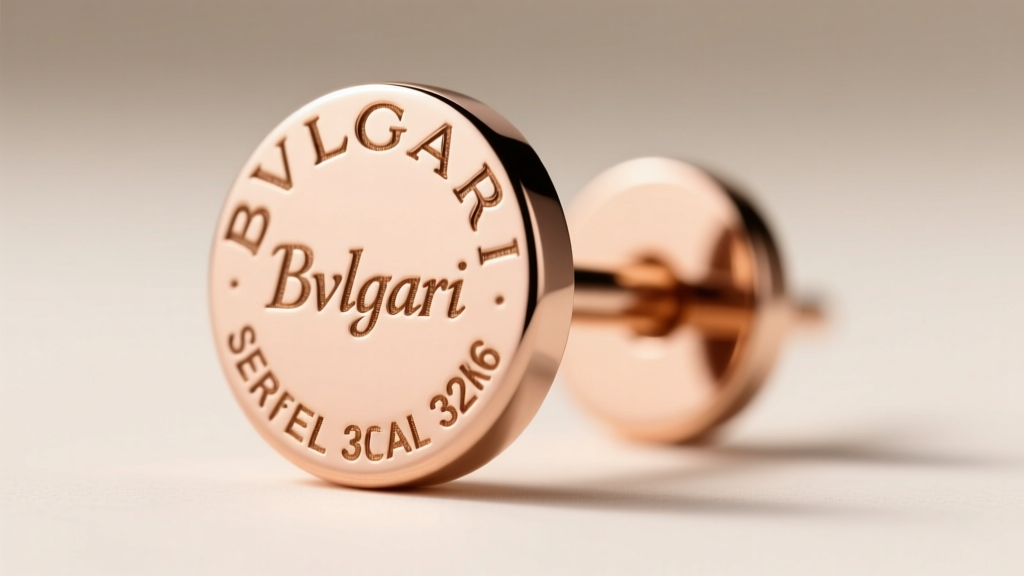
Genuine Bvlgari hallmarks are laser-etched using proprietary fonts with exact kerning (the spacing between letters). The double 'L' in BVLGARI and the spacing around the '750' purity mark are mathematically precise. Superfakes often use standard commercial fonts, resulting in slightly cramped or overly spaced characters. Furthermore, the serial number on the omega back or earring post should be deeply and cleanly etched, not shallowly scratched.
The Authentication Matrix: Genuine vs. Superfake
| Authentication Marker | Genuine Bvlgari Specification | Common Superfake Flaw |
|---|---|---|
| Logo Engraving Depth | Deep, crisp laser etching with sharp 90-degree interior corners. | Shallow, rounded interior corners due to standard rotary tooling. |
| Pavé Setting Architecture | Micro-bead settings with uniform, highly polished prongs; no visible glue. | Uneven bead sizes, dull prongs, or use of adhesive to secure melee stones. |
| Screw Back Threads | Smooth, continuous threading with a precise 45-degree pitch. | Rough, burred threads that catch or cross-thread easily. |
| Diamond Fluorescence | Strictly controlled; melee stones matched for identical UV reaction. | Mismatched fluorescence under UV light, causing a patchy appearance. |
Structural Engineering of Iconic Collections
Beyond the raw materials, the mechanical engineering of Bvlgari diamond earrings dictates their longevity and wearability. Different collections present unique structural profiles and specific failure modes that collectors and buyers must understand.
Serpenti: Articulation and Spring Tension
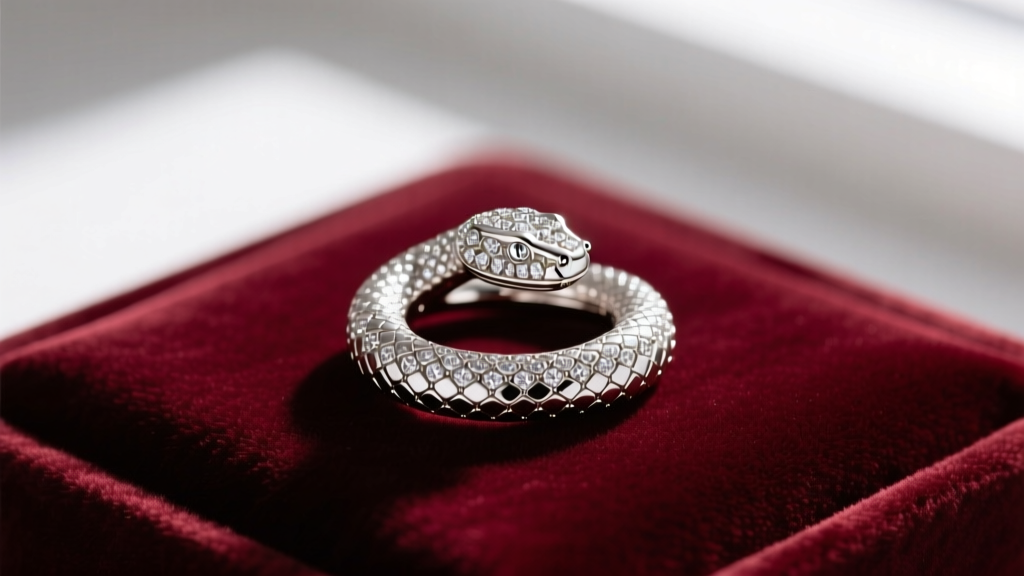
The Serpenti collection is renowned for its biomimetic articulation. Earrings in the Serpenti Viper or Spiga lines often feature hidden micro-springs that allow the gold and diamond scales to flex against the earlobe. The primary failure mode in vintage or heavily worn Serpenti pieces is spring fatigue. When inspecting a pre-owned pair, gently flex the articulated joints. They should offer smooth, consistent resistance and snap back to their neutral position without lateral wobble. If the snakehead droops or the tail feels loose, the internal tension spring requires professional recalibration by a certified Bvlgari High Jewelry technician.
Divas’ Dream: Bezel Vulnerabilities
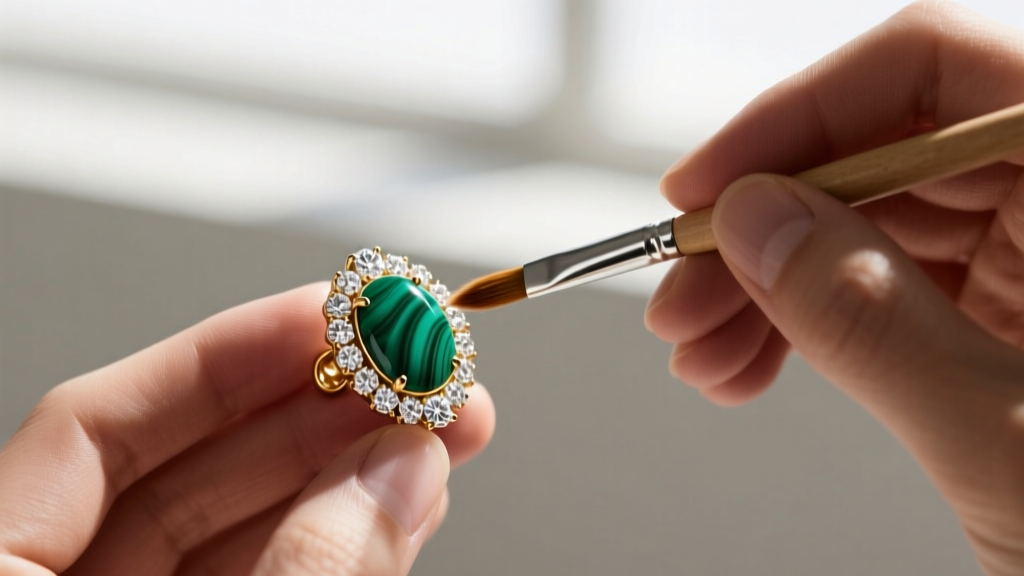
The Divas’ Dream fan motif relies heavily on openwork designs and delicate bezel settings. When diamonds are set alongside porous gemstones like malachite or onyx, the structural integrity of the bezel is paramount. The gold rim securing the diamond must be perfectly flush. A protruding bezel edge will not only catch on silk garments but also indicates improper setting tension, which can lead to stone loss over time. Collectors should run a microfiber cloth over the surface; it should glide without snagging on any metal prongs or bezels.
Maintenance Protocols and Ultrasonic Risks
Proper maintenance is critical to preserving the optical brilliance and structural integrity of Bvlgari diamond earrings. A common and catastrophic mistake made by owners is the use of ultrasonic cleaners. While ultrasonic cavitation is excellent for loosening dirt from plain diamond solitaires, it is highly destructive to multi-material Bvlgari pieces.
- Never use ultrasonics on Malachite or Onyx: The high-frequency acoustic waves will cause micro-fractures in these porous, banded stones, leading to irreversible cracking and color bleeding.
- Avoid harsh chemicals on Rhodium: Bvlgari’s 18k white gold is plated with a thick layer of rhodium. Frequent exposure to ammonia-based jewelry dips will strip this plating prematurely, exposing the naturally pale-yellow white gold alloy beneath.
- Optimal Cleaning Method: Use a solution of lukewarm distilled water and a few drops of pH-neutral dish soap. Agitate gently with a soft-bristled baby toothbrush, focusing on the pavilion (underside) of the diamonds where skin oils and cosmetics accumulate, blocking light return.
Market Valuation and Secondary Investment Metrics
Investing in luxury jewelry requires an understanding of depreciation curves and secondary market liquidity. Unlike unbranded diamond earrings, which lose a significant percentage of their retail value upon purchase, Bvlgari diamond earrings retain value through brand equity and verifiable provenance. According to auction data tracked by the Sotheby's Bvlgari Archive, iconic, diamond-heavy pieces from the Serpenti and High Jewelry lines can appreciate or hold steady against inflation, provided they include the original certificate of authenticity, branded packaging, and purchase receipt.
Entry-level pavé pieces (such as the B.zero1 diamond hoops) typically experience a 20% to 30% depreciation from retail when sold on the secondary market. However, limited-edition high jewelry pieces featuring center stones over 2.0 carats with D-color and IF-clarity grades often bypass this depreciation entirely, functioning as tangible alternative assets. When purchasing for investment, always prioritize pieces with intact, legible serial numbers, as a polished-out or illegible hallmark will instantly reduce the secondary market value by up to 50% due to authentication liabilities.


