C Hoop Earrings Buying Guide: Gauges, Closures, and Best Metals
Discover how to choose the perfect c hoop earrings. Learn about gauge sizes, secure closure types, and hypoallergenic metals for lobe and cartilage.
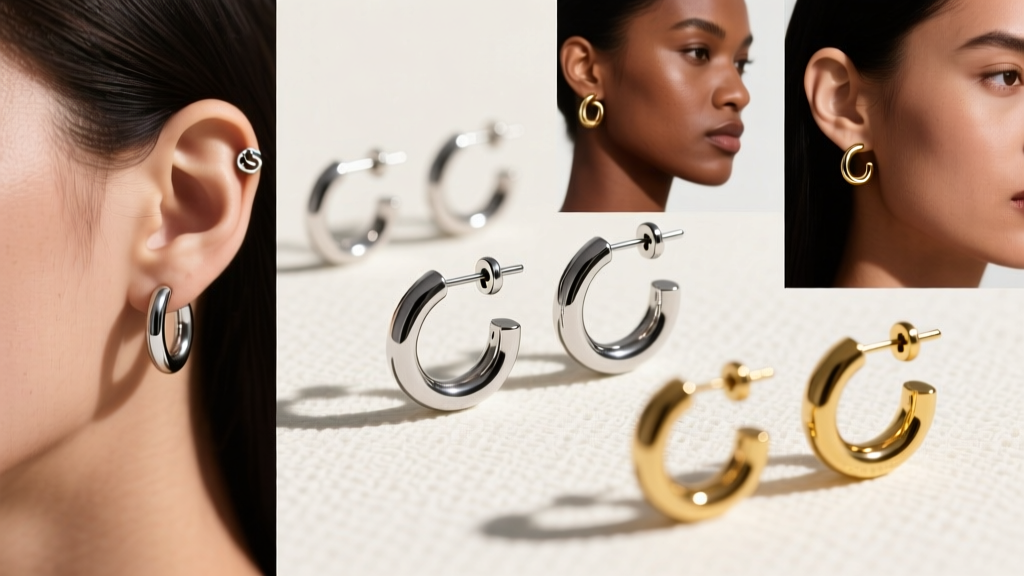
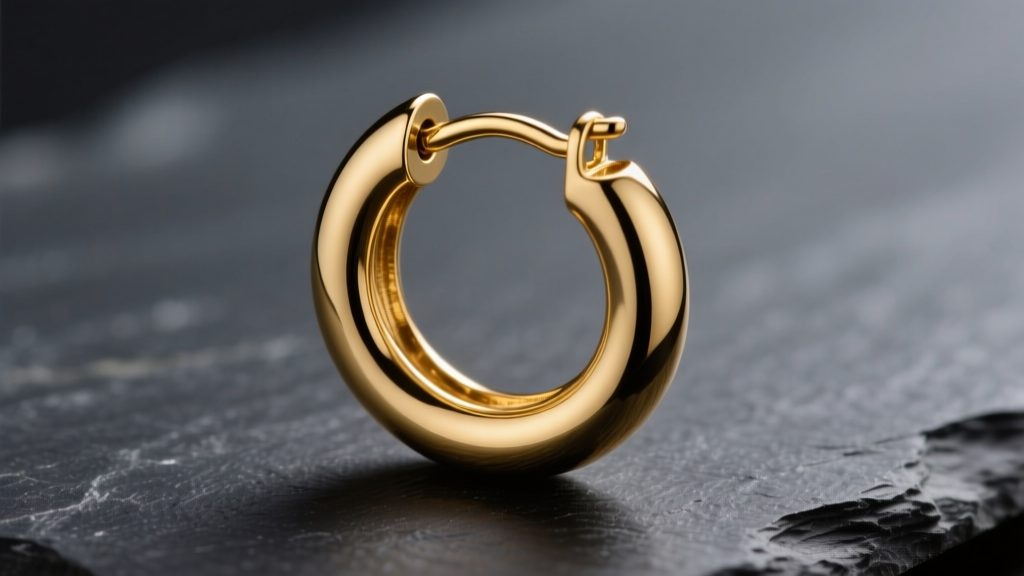
The jewelry landscape in 2026 has fully embraced the minimalist yet highly functional aesthetic of open silhouettes, and C hoop earrings are at the absolute forefront of this movement. Unlike traditional continuous hoops that form a complete circle, C hoops feature a deliberate gap, resembling the letter 'C'. This seemingly minor design alteration completely changes how the jewelry interacts with your piercing anatomy, making them a superior choice for specific cartilage placements and stacked lobe configurations. However, buying the right pair requires navigating a minefield of gauge sizes, closure mechanisms, and metal alloys. This comprehensive buying guide breaks down exactly what to look for when investing in C hoop earrings, ensuring a comfortable, secure, and irritation-free fit.
The Anatomy of C Hoop Earrings
To shop intelligently, you must first understand the structural geometry of C hoops. A standard clicker or continuous hoop relies on a full 360-degree circle to distribute weight and maintain its position. A C hoop, by contrast, relies on tension, friction, or a specialized hinged saddle to bridge the gap. This open design provides crucial 'breathing room' for piercings that are prone to swelling, or for placements where a full hoop would press awkwardly against the curvature of the ear. For instance, in a flat or conch piercing, a full hoop might dig into the adjacent helix ridge; a C hoop elegantly avoids this anatomical conflict.
Decoding Closure Mechanisms: Hinged vs. Tension
The most critical point of failure on any open earring is the closure. When browsing C hoop earrings, you will primarily encounter three mechanisms:
- Hinged Saddle (Snap Bar): The most common mechanism for lobe and lower cartilage hoops. A tiny curved bar snaps into a receiving tube. High-quality versions feature a satisfying 'click' and a flush seam that prevents hair snagging.
- Tension / Friction Fit: Often used in delicate, minimalist designs. The post relies on the natural spring tension of the metal to stay inside a hollow receiving tube. While seamless in appearance, these can fail if the metal fatigues or if the gauge is too thin (20G or higher).
- Threadless (Push-Pin) Ends: A favorite among professional piercers. A slightly bent pin is inserted into a hollow tube, creating immense internal friction. This is the most secure option for active lifestyles and heavy-gauge cartilage piercings.
The Critical Metrics: Gauge and Inner Diameter
Sizing is where 90% of consumers make purchasing errors. C hoop earrings are defined by two distinct measurements: wire gauge (thickness) and inner diameter (ID). If the ID is too small, the hoop will 'bind' against the tissue, causing irritation bumps. If the gauge is too thin for the piercing, the 'cheese-cutter effect' can occur, where the jewelry slowly migrates through the skin.
| Piercing Location | Standard Wire Gauge | Ideal Inner Diameter (ID) | Recommended Closure Type |
|---|---|---|---|
| Standard Lobe | 20G (0.8mm) or 18G (1.0mm) | 10mm - 15mm | Hinged Saddle |
| Helix / Outer Cartilage | 16G (1.2mm) | 8mm - 10mm | Threadless or Hinged |
| Tragus | 16G (1.2mm) | 6mm - 8mm | Tension Fit |
| Conch | 14G (1.6mm) or 16G (1.2mm) | 10mm - 14mm | Threadless |
Material Grades: Avoiding Contact Dermatitis
Because C hoops often sit tightly against the skin with minimal clearance, metal biocompatibility is non-negotiable. The American Academy of Dermatology identifies nickel as the leading culprit behind allergic contact dermatitis in jewelry wearers. Many cheap 'surgical steel' options contain up to 10% nickel, which can leach into the piercing channel when exposed to moisture and body heat.
For any fresh or easily irritated piercing, always default to implant-grade metals. The visual polish of high-end alloys also resists micro-scratches where bacteria tend to harbor.
According to the Association of Professional Piercers (APP), the only metals recommended for long-term wear in sensitive cartilage and lobe piercings are:
- Implant-Grade Titanium (ASTM F-136): Completely nickel-free, lightweight, and highly resistant to corrosion. The ultimate choice for sensitive ears.
- Solid 14k or 18k Gold: Must be alloyed without nickel (often using palladium or silver instead). Avoid gold-plated or gold-vermeil C hoops, as the friction of the closure mechanism will eventually wear away the plating, exposing base metals underneath.
Price Tiers and Brand Expectations
When shopping for C hoop earrings in 2026, pricing is a reliable indicator of manufacturing precision. The microscopic tolerances required for a seamless hinged saddle closure are expensive to machine.
- Fashion Tier ($15 - $35): Typically plated brass or stainless steel. Expect 20G or 18G wire. Closures may feel loose or snag on hair. Best reserved for fully healed, non-sensitive standard lobe piercings.
- Body Jewelry Tier ($40 - $90): Brands like Maria Tasha, BVLA, or NeoMetal. These offer ASTM F-136 titanium and precise 16G threading. The closures are engineered to last years without stretching.
- Fine Jewelry Tier ($150 - $500+): Solid 14k/18k gold from boutique designers. You are paying for the raw material weight and bespoke designs, such as C hoops featuring pavé diamond accents along the outer curve.
Troubleshooting Common Fit Issues
Even with the right metal, anatomical mismatches can cause frustration. Here is how to troubleshoot the most common C hoop complaints:
The Hoop Constantly Flips Upward
If your C hoop refuses to hang straight down and instead rotates to point outward, the inner diameter (ID) is too small for your tissue thickness. The jewelry is binding against the curve of your ear, forcing the open gap to rotate to the path of least resistance. The Fix: Size up your ID by 1mm to 2mm to allow the hoop to hang freely.
The Closure Snags on Hair and Sweaters
This indicates a poorly machined hinged saddle where the male and female components do not sit perfectly flush. Over time, skin cells and sebum can also build up in the microscopic seam. The Fix: Clean the closure weekly with a soft-bristled toothbrush and mild saline. If the metal itself is warped, retire the piece; a snagging closure will eventually cause a micro-tear in the fistula.
Irritation Bumps Near the Gap
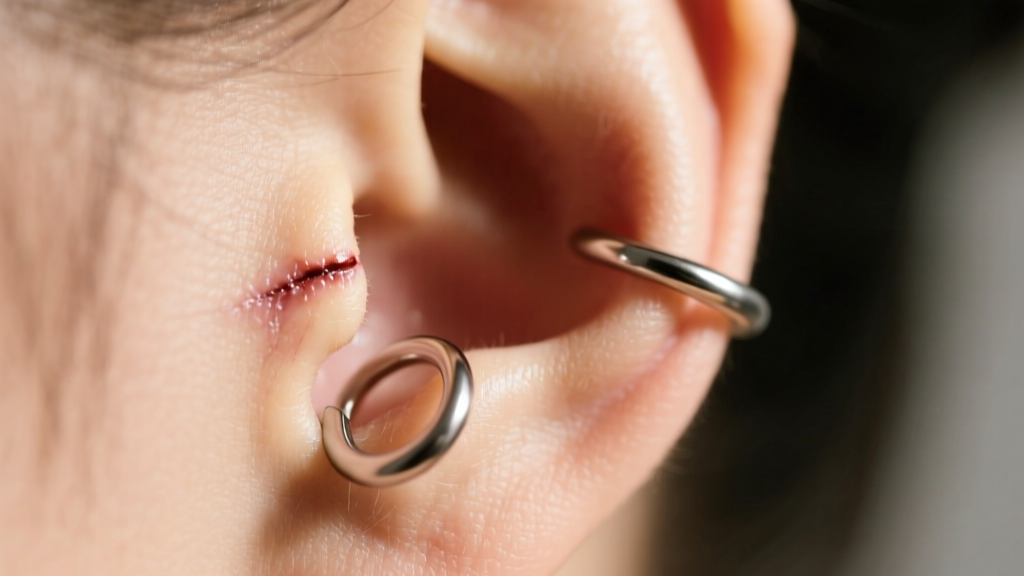
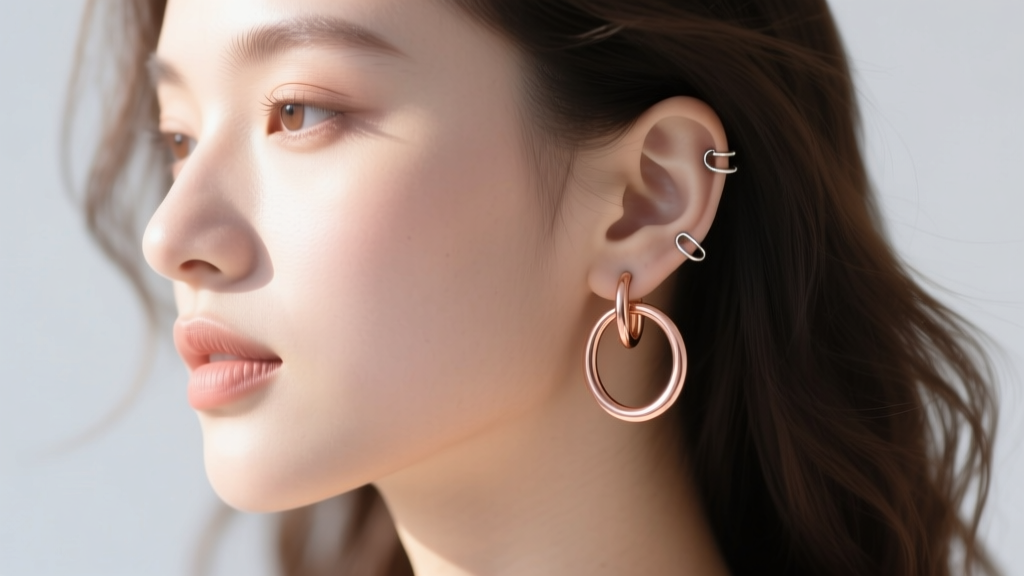
If you develop a localized bump exactly where the open ends of the 'C' rest against your skin, the jewelry may be resting at an improper angle, causing friction. Cartilage piercings are rarely perfectly straight; they often heal at slight inclines. The Fix: Consult a professional piercer to assess your piercing angle. You may need a custom-bent C hoop or a different jewelry style, like a flat-back labret stud, to accommodate your unique anatomy.
By prioritizing precise gauge sizing, biocompatible metals, and high-tolerance closures, your C hoop earrings will transition from a mere accessory to a comfortable, permanent fixture in your curated ear stack.


