The Cactus Earring Trend: 2026 Desert Chic Style Guide
Explore the 2026 cactus earring trend. Our style guide covers desert chic motifs, material grades, gauge sizes, and face-shape styling.

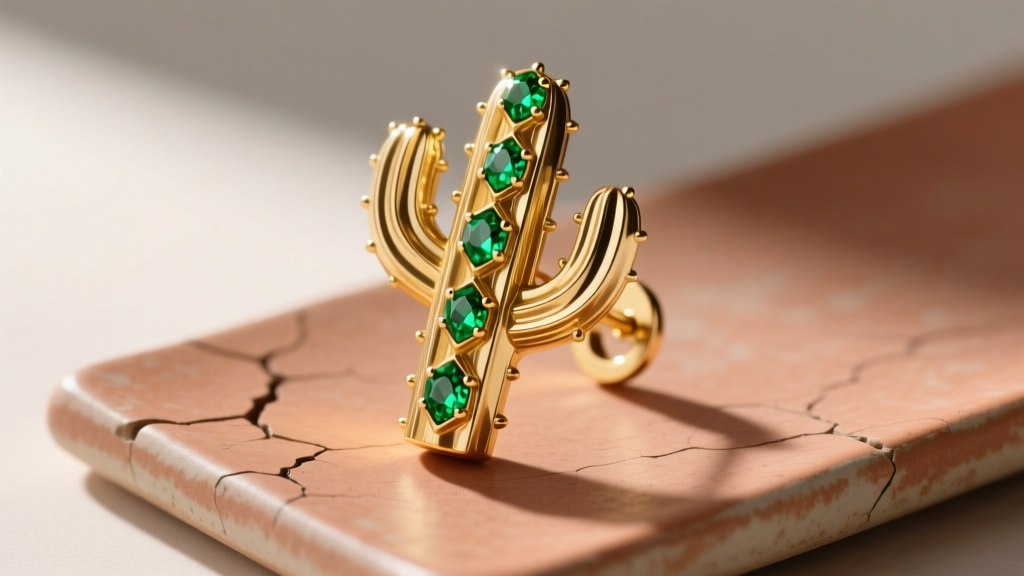
The botanical jewelry movement has undergone a radical transformation. While early iterations of nature-inspired accessories leaned heavily into delicate florals and fragile leaves, the 2026 landscape is dominated by the resilient, architectural beauty of desert flora. The modern cactus earring is no longer a novelty souvenir; it has evolved into a sophisticated staple of contemporary fine jewelry. Designers are now drawing from the structural geometry of xerophytes—translating the ribbed columns of the saguaro, the paddle-like segments of the prickly pear, and the spiraling rosettes of the agave into wearable, high-end art.
This shift toward 'Desert Modernism' reflects a broader cultural fascination with arid landscapes, sustainable resilience, and organic brutalism. Whether you are navigating the curated ear stack or seeking a singular statement piece for the lobe, understanding the material grades, anatomical fit, and styling frameworks of these desert motifs is essential for building a forward-thinking jewelry wardrobe.
The Evolution of the Cactus Earring: From Literal to Architectural
In previous years, cactus jewelry was often characterized by flat, stamped silhouettes or brightly colored cold enamel. Today, the trend has matured into three-dimensional, sculptural forms. According to trend forecasters and editorial platforms like Vogue Jewelry, the current aesthetic favors abstract interpretations over literal replicas. Jewelers are utilizing lost-wax casting techniques to create intricate, ribbed textures that mimic the water-storing pleats of desert succulents, resulting in pieces that play dynamically with light and shadow.
This architectural approach means that a cactus earring now serves as a structural anchor in an ear curation. The verticality of a saguaro motif provides a sleek, elongating effect, while the wide, geometric pads of an opuntia (prickly pear) offer a bold, modernist stud alternative to the traditional diamond or pearl.
Material Grades & Craftsmanship: What to Look for in 2026
When investing in botanical fine jewelry, the choice of metal and gemstone dictates both the longevity and the aesthetic impact of the piece. The 'spines' of a cactus earring require metals with specific tensile strength and Vickers hardness ratings to prevent bending or snagging.
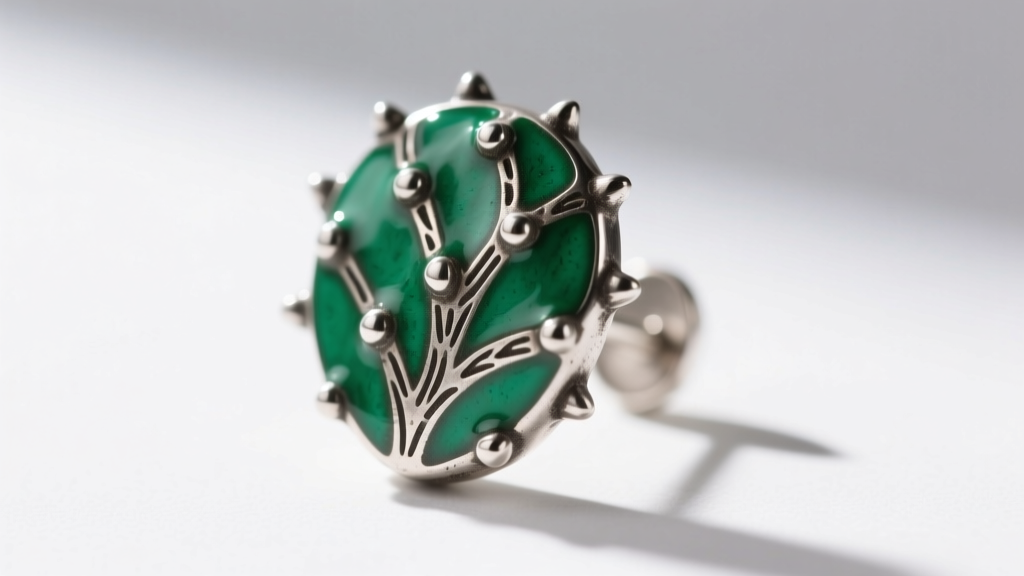
The Metals: Oxidized Silver vs. High-Karat Gold
- Oxidized 925 Sterling Silver: The premier choice for highly detailed, realistic cactus spines. The intentional oxidation (darkening) of the silver recesses creates stark contrast, making the tiny engraved or cast spines visually pop. However, silver is softer and requires careful storage to prevent the spines from bending.
- 14k Solid Gold: With a Vickers hardness of approximately 120-140 HV, 14k gold offers the ideal balance of durability and malleability for delicate cactus arm prongs. It is highly recommended for daily-wear cartilage pieces where friction against hair and clothing is common.
- 18k Solid Gold: Softer and richer in color, 18k gold is typically reserved for high-jewelry, stylized cactus motifs where the 'spines' are abstracted into smooth, sweeping curves rather than sharp points.
Gemstone Accents: Beyond the Standard Emerald
To capture the vibrant green of desert flora without the fragility of emerald (which ranks 7.5-8 on the Mohs scale and is prone to chipping), top-tier jewelers are turning to Tsavorite Garnet and Chrysoprase. Tsavorite, a grossular garnet, offers exceptional refractive index and brilliance, ranking 7-7.5 on the Mohs scale but with superior toughness due to its lack of cleavage planes. Chrysoprase, a chalcedony variant colored by nickel inclusions, provides a soft, opaque, apple-green cabochon finish that perfectly mimics the fleshy pads of a succulent.
| Material Tier | Typical Motif & Technique | Estimated Price Range | Best Placement |
|---|---|---|---|
| Oxidized Sterling Silver | Prickly Pear with Guilloché Enamel | $85 - $250 | Standard Lobe, Conch |
| 14k Solid Gold (Yellow) | Minimalist Saguaro Ribbed Column | $350 - $800 | Helix, Standard Lobe |
| 18k Gold & Tsavorite | Abstract Agave with Pavé Setting | $1,200 - $4,500+ | Statement Lobe Drop |
Anatomical Fit: Lobe vs. Cartilage Placements
The structural geometry of a cactus earring heavily dictates its ideal anatomical placement. A top-heavy saguaro drop will cause severe lobe fatigue and drooping if not properly supported, while a wide prickly pear stud may look disproportionate on a delicate helix.
Gauge Sizing and Post Mechanics
For standard lobe placements, designers typically utilize 18-gauge (1.0mm) or 20-gauge (0.8mm) posts. Because cactus motifs—especially elongated column designs—carry a higher center of gravity, it is critical to swap out standard friction backs for la pousette (butterfly clutch with a locking mechanism) or screw-backs. This prevents the earring from tilting forward and stretching the piercing fistula over time.
For cartilage placements (such as the helix or flat), the earring must be crafted as a flat-back labret or a clicker hoop. A 16-gauge (1.2mm) titanium or 14k gold post is the industry standard for cartilage, providing the necessary thickness to prevent the 'cheese-cutter effect' if the elongated cactus charm catches on a hairbrush or sweater. Flat-back discs (typically 4mm to 5mm in diameter) ensure the piece sits flush against the ear, minimizing sleep irritation.
Styling Framework: Face Shapes and Desert Motifs
Matching the geometry of your cactus earring to your face shape is the cornerstone of the 2026 desert chic aesthetic. The sharp lines and organic curves of succulents offer unique contouring opportunities.
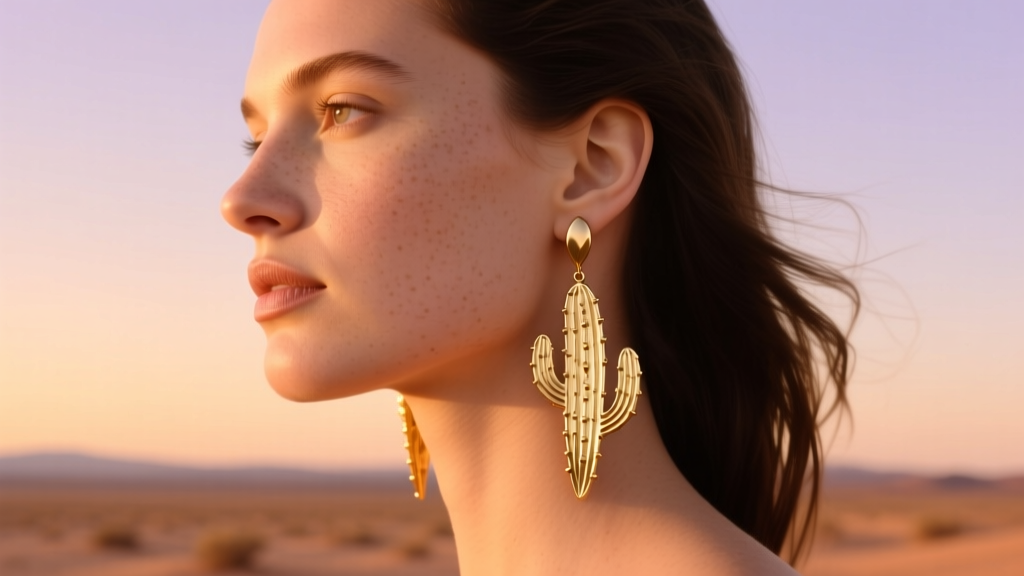
- Round Face Shapes: Opt for extreme verticality. Elongated, drop-style saguaro earrings or dangling agave spikes draw the eye downward, creating an illusion of length and sharpening the jawline. Avoid wide, circular prickly pear studs, which can emphasize facial width.
- Square Face Shapes: Soften a strong, angular jawline with curved, organic motifs. Prickly pear paddles featuring smooth, domed cabochon gemstones (like chrysoprase) or huggie hoops adorned with tiny, curved aloe vera charms provide a balancing, softening effect.
- Heart Face Shapes: Balance a wider forehead and narrower chin with bottom-heavy designs. Look for cactus ear cuffs that crawl upward along the cartilage, or teardrop-shaped barrel cactus dangles that add visual weight to the lower half of the face.
- Oval Face Shapes: The universal canvas. Oval faces can effortlessly carry the asymmetrical, avant-garde 'crawling vine' ear cuffs that feature interlocking agave leaves wrapping from the lobe up to the tragus.
Maintenance & Failure Modes of Botanical Jewelry
While visually stunning, the intricate topography of a cactus earring introduces specific maintenance challenges that collectors must navigate. The very details that make these pieces beautiful—the spines, the ribs, the pavé-set gems—are potential failure points if not cared for correctly.
The Snag Hazard and Prong Integrity
Cactus spines are essentially tiny, protruding prongs. In high-karat gold, these spines can easily bend or snap if caught on silk blouses, knitwear, or towels. Always put your cactus earrings in after dressing, and remove them before changing clothes. If a spine bends, do not attempt to bend it back into place with your fingers; the repeated stress will cause metal fatigue and eventual snapping. Take it to a jeweler for professional annealing and reshaping.
Cleaning Protocols: What to Avoid
Never use ultrasonic cleaners on cactus earrings that feature enamel work (common in prickly pear designs) or porous gemstone accents like turquoise or opal. The high-frequency vibrations can shatter cold enamel and cause micro-fractures in porous stones. Instead, use a specialized, soft-bristled detailing brush (like a baby toothbrush) dipped in a mild solution of warm water and phosphate-free dish soap to gently dislodge sebum and lotion from the deep ribbed crevices of the metal casting. Dry thoroughly with a microfiber cloth to prevent water spots on the high-polish areas.
By understanding the structural nuances, material science, and styling geometry behind the 2026 cactus earring trend, you can confidently integrate these desert-inspired masterpieces into your permanent jewelry rotation, ensuring they remain as resilient and striking as the flora that inspired them.


