Cameo Earrings: A Technical Guide to Shell Grades, Agates & Settings
Master the technical details of cameo earrings. Learn to grade Cassis rufa shells, identify sardonyx agates, and choose secure settings for heavy drops.

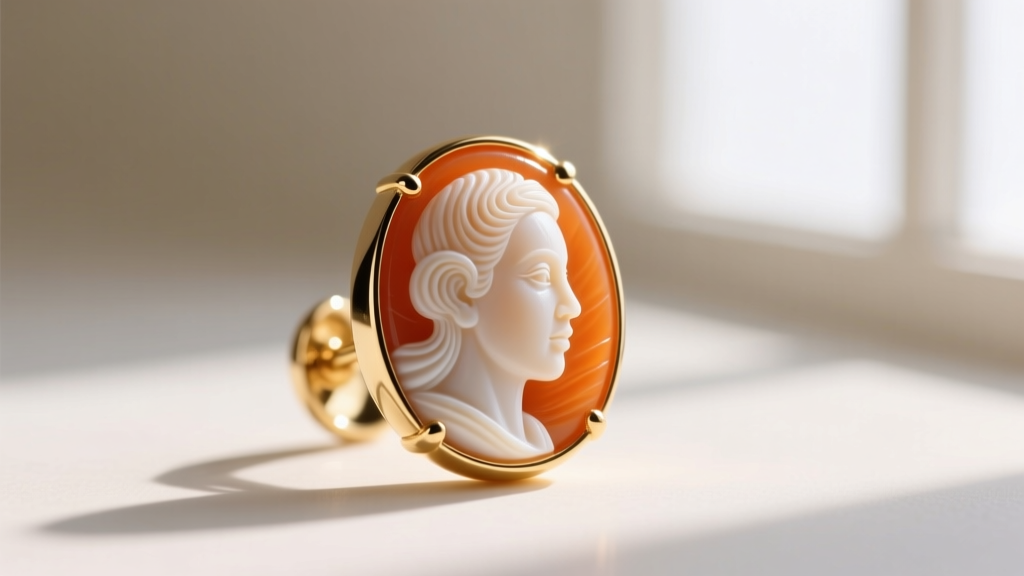
Cameo earrings represent one of the most technically demanding intersections of lapidary art and jewelry engineering. Unlike stamped metal or faceted gemstones, a cameo is a subtractive sculpture. Once a layer of shell or agate is carved away, it cannot be replaced. For the discerning collector and the master jeweler, understanding the material science, carving methodologies, and structural hardware required for cameo earrings is essential. This guide bypasses superficial style advice to deliver a deep technical dive into what separates a masterwork from a mass-produced trinket in the modern 2026 market.
The Material Science of Cameo Earrings: Shell vs. Agate
The foundation of any cameo earring is its raw material. The two dominant mediums—marine shell and hardstone agate—possess vastly different physical properties, dictating how they must be carved, set, and worn.
Shell Cameos: Grading the Cassis Family
Genuine shell cameos are carved from the Cassis family of marine gastropods. The undisputed gold standard for high-contrast earrings is Cypraecassis rufa (the Bullmouth Helmet shell). This species yields a dense calcium carbonate matrix with a rich, reddish-orange or chocolate-brown background and a stark white outer layer. According to the Gemological Institute of America (GIA), the sharp color boundary between these layers is what allows master carvers to create striking three-dimensional relief.
Lower-tier shell cameos often utilize Cassis madagascariensis (Emperor Helmet) or Strombus gigas (Queen Conch). While conch shells offer a beautiful pink hue, their crossed-lamellar microstructure makes them highly prone to micro-fractures and delamination when subjected to the lateral stress of earring settings.
Sardonyx Agate: The Hardstone Standard
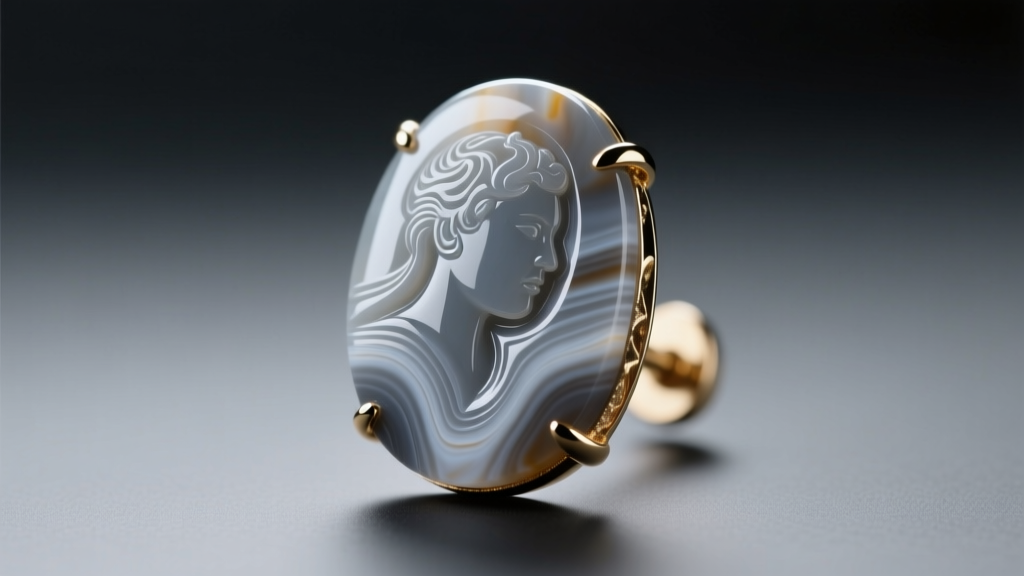
Agate cameos are carved from sardonyx, a banded variety of chalcedony featuring alternating layers of sard (brownish-red carnelian) and onyx (white or translucent gray). With a Mohs hardness of 6.5 to 7, sardonyx is exponentially harder than shell (Mohs 2.5-3). As noted by mineralogical databases like Mindat, the cryptocrystalline quartz structure of agate allows for extreme detail and razor-sharp undercuts without the risk of chipping along a cleavage plane. However, this hardness requires diamond-tipped burrs and significantly more carving time, making sardonyx cameo earrings a premium investment.
Carving Techniques: Hand-Engraved vs. CNC and Laser
The method of material removal fundamentally impacts the optical depth, value, and structural integrity of cameo earrings. In today's market, buyers must be able to distinguish between traditional hand-carving and automated manufacturing.
| Feature | Hand-Carved (Traditional) | CNC / Machine Carved | Laser Etched |
|---|---|---|---|
| Tools Used | Pneumatic gravers, bow drills, diamond scribes | 3-axis CNC routers with diamond burs | CO2 or Fiber Lasers |
| Undercut Depth | Deep, creating true 3D shadows | Uniform, limited by vertical burr access | None (strictly 2D surface burn) |
| Production Time | 40 to 120+ hours per pair | 2 to 4 hours per pair | Minutes per pair |
| Striations | Microscopic parallel tool marks visible at 10x | Concentric circular burr marks | Melted/resolidified surface ridges |
| Market Value | $400 - $10,000+ | $50 - $250 | $15 - $40 |
Hand-carved cameos feature deep undercuts—where the carver hollows out the material behind the subject's profile to create a floating effect. CNC machines struggle with severe undercuts due to the physical geometry of the spinning burr. Laser-etched "cameos" are not true cameos at all; they are merely surface engravings that lack any sculptural relief.
Structural Integrity: Settings and Hardware for Heavy Drops
Cameo earrings present a unique engineering challenge: they are often top-heavy, asymmetrical, and carved from brittle materials. A failure in the setting or hardware will result in the irreversible destruction of the carving if dropped.
Bezel vs. Collet Settings
Prong settings are categorically unsuited for shell cameos. The localized point-pressure of a metal prong against a Mohs 2.5 shell will inevitably cause stress fractures or edge chipping over time. The only acceptable settings for shell are rub-over bezels or collet settings, where a continuous band of metal (typically 14k or 18k gold) wraps entirely around the perimeter, distributing pressure evenly and protecting the fragile edges from lateral impacts. For sardonyx agate, which is much harder, low-profile bezels or specialized gallery-wire settings are preferred to maximize light entry into the translucent onyx layers.
Post Gauges and Clutch Mechanics
A standard fashion earring post is 20-gauge (0.81mm) or 22-gauge (0.64mm). A moderately sized sardonyx cameo drop earring can easily weigh 6 to 12 grams. A 20-gauge post supporting 10 grams of agate will bend under its own weight, causing the earring to droop forward and placing sheer stress on the earlobe piercing.
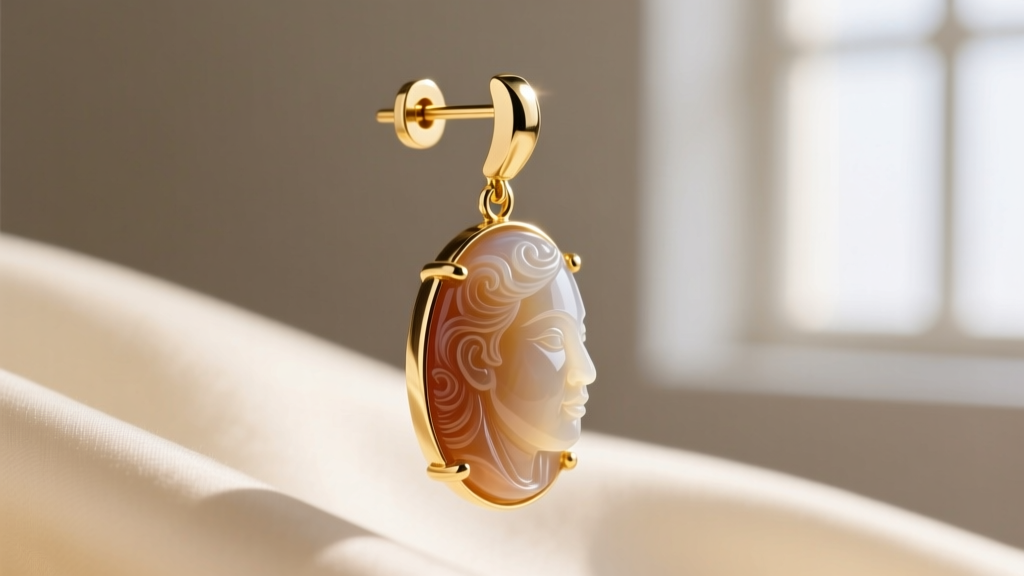
For cameo drops exceeding 4 grams, the hardware must be upgraded:
- Post Thickness: Minimum 18-gauge (1.02mm), ideally 16-gauge (1.29mm) for heavy agate pieces.
- Friction Backs: Standard butterfly clutches are insufficient. Use heavy-duty jumbo clutches with reinforced silicone inserts to prevent the metal from slipping.
- Alternative Mechanisms: Leverback wires or Omega-clip backs are vastly superior for heavy cameo earrings, as they distribute the weight across a wider surface area of the ear cartilage and lobe, preventing the dreaded "torn lobe" effect.
Authentication: Spotting Resin, Glass, and Composite Fakes
The secondary market and vintage sectors are flooded with simulated cameo earrings. Mastering a few non-destructive and minimally invasive tests is critical for authentication.
"The most reliable indicator of a genuine shell cameo is not just its visual warmth, but its thermal conductivity. Shell feels organically warm to the touch almost instantly, whereas glass and resin remain stubbornly cool."
- The Hot Pin Test (Resin vs. Shell): Heat a fine needle until red-hot and touch it to an inconspicuous area on the back of the cameo. If it melts, emits an acrid chemical smell, or leaves a permanent dent, it is a polymer resin. If it produces a faint smell of burnt hair or calcium and leaves a superficial white ash that wipes away, it is genuine shell. (Note: Never use this on agate, as thermal shock can fracture the stone).
- Magnification (Glass vs. Shell): Under a 10x jeweler's loupe, molded glass cameos will reveal rounded, softened edges in the deepest crevices where the mold could not capture sharp details. You may also spot microscopic air bubbles. Genuine shell will show sharp, crisp carving lines and natural parallel growth striations.
- UV Fluorescence: Many modern composite resins and polymer clays used in cheap cameo earrings will fluoresce brightly under long-wave (365nm) UV light due to optical brighteners. Natural shell and agate typically show inert to weak, chalky fluorescence.
Market Pricing and Collector Tiers
Understanding the pricing architecture of cameo earrings helps buyers identify true value versus inflated retail markups. The table below outlines the current market tiers for authenticated pieces.
| Tier | Material & Carving | Setting & Hardware | Estimated Price Range (USD) |
|---|---|---|---|
| Commercial | CNC-carved Cassis madagascariensis or resin | Gold-plated brass, 20g post, friction back | $40 - $150 |
| Mid-Tier / Artisan | Hand-carved Cypraecassis rufa shell | 14k solid gold bezel, 18g post, omega back | $350 - $900 |
| Collector / Heirloom | Hand-carved Sardonyx Agate (deep undercut) | 18k+ gold, diamond accents, 16g leverback | $1,500 - $12,000+ |
| Antique / Museum | 18th/19th-century signed masterworks | Original period settings, often silver-topped gold | $15,000 - $100,000+ |
When investing in mid-tier or collector-grade cameo earrings, always request a loupe inspection of the carving floor. The presence of cross-hatched graver marks and organic depth variations are the hallmarks of human artistry, ensuring your earrings are not just jewelry, but wearable sculpture engineered to last generations.


