2026 Gift Guide: Selecting the Right Carat Diamond Earrings
Discover our 2026 gift guide to carat diamond earrings. Learn how to match carat weight, cut, and setting to milestones, budgets, and personal styles.

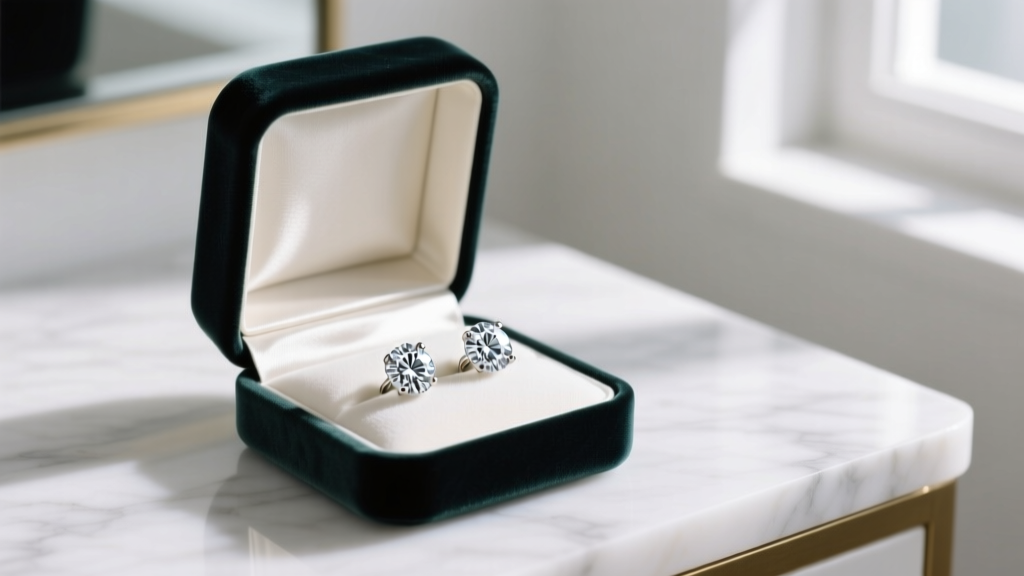
The Anatomy of a Perfect Gift: Understanding Total Carat Weight
Gifting diamond earrings is a timeless gesture, but navigating the terminology of carat weights can quickly turn a romantic endeavor into a confusing math problem. When shopping for carat diamond earrings, the most critical concept to master is Total Carat Weight (CTW) versus individual carat weight. If a jeweler advertises a pair of studs as '1.00 Carat Diamond Earrings,' they are almost always referring to the CTW. This means each individual earring weighs 0.50 carats. Understanding this distinction is vital for managing expectations and budget, as a single 1.00-carat diamond is exponentially rarer and more expensive than two 0.50-carat diamonds combined.
In 2026, the market has evolved significantly. While natural, earth-mined diamonds remain the traditional choice for heritage gifting, lab-grown diamonds have captured a massive share of the earring market. Because earrings are viewed from a distance and lack the direct, comparative scrutiny of an engagement ring center stone, lab-grown options offer a spectacular way to gift larger carat sizes without compromising on optical performance. According to the Gemological Institute of America (GIA), lab-grown diamonds possess the exact same physical, chemical, and optical properties as their mined counterparts, making them an exceptionally smart choice for milestone gifting.
Milestone Matching: Carat Sizes for Every Occasion
Matching the carat size to the occasion ensures your gift feels appropriately scaled to the moment. Here is a definitive 2026 framework for matching carat diamond earrings to life's major milestones:
- Graduation or First Major Career Milestone (0.25 to 0.50 CTW): This weight range offers a delicate, sophisticated sparkle that is perfect for everyday professional wear. A 0.50 CTW pair (0.25 per ear) measures roughly 4.1mm in diameter, providing a classic, understated elegance that won't overwhelm a younger recipient's features.
- 5th or 10th Wedding Anniversary (1.00 to 1.50 CTW): As noted in The Knot's diamond jewelry guides, these mid-tier anniversaries call for a noticeable upgrade. A 1.00 CTW pair (approx. 5.2mm per ear) hits the 'sweet spot' of visibility and luxury, offering substantial presence that catches the light beautifully across a dinner table.
- Push Presents or Major Decade Birthdays (2.00 to 3.00+ CTW): For monumental life events, larger carat weights make a profound statement. A 2.00 CTW pair (approx. 6.5mm per ear) or larger enters the realm of high jewelry. At this size, the physical weight of the earrings becomes a factor, necessitating specialized backings and secure settings to prevent earlobe drooping.
The 2026 Pricing Matrix: Natural vs. Lab-Grown
Budgeting for carat diamond earrings requires an understanding of the current market landscape. The price gap between natural and lab-grown diamonds has widened over the last few years, allowing gifters to allocate more budget toward premium settings or larger stones. Below is an estimated pricing guide for round brilliant cut, VS clarity, G-H color earrings in 14k white gold.
| Total Carat Weight (CTW) | Natural Earth-Mined (Est. Price) | Lab-Grown (Est. Price) | Best Gifting Scenario |
|---|---|---|---|
| 0.50 CTW | $800 - $1,400 | $250 - $450 | Graduation, Birthdays, Holidays |
| 1.00 CTW | $2,500 - $4,500 | $600 - $1,100 | Anniversaries, Valentine's Day |
| 2.00 CTW | $7,000 - $14,000 | $1,500 - $2,800 | Push Presents, Milestone Decades |
| 3.00 CTW | $15,000 - $30,000+ | $3,000 - $5,500 | Major Heritage Gifting |

Maximizing Visual Impact: Settings That Enhance Carat Size
If your budget limits you to a smaller carat weight, the right setting can create a powerful optical illusion, making the earrings appear significantly larger than their actual carat weight.
The Halo Illusion
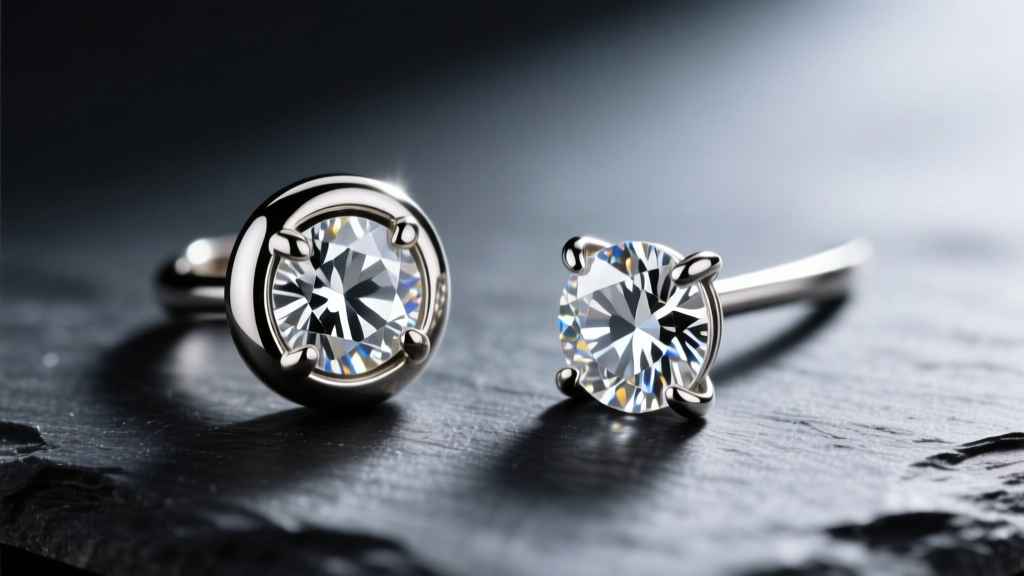
A halo setting surrounds the center diamond with a microscopic pavé border of smaller diamonds. A 0.50 CTW center stone encircled by a 0.15 CTW micro-pavé halo can visually mimic the footprint of a 1.25-carat solitaire stud. This is an incredibly popular choice for gifting, as it delivers maximum sparkle and perceived size while remaining budget-friendly.
Bezel and Semi-Bezel Settings
A thin metal rim (bezel) encircling the diamond adds a millimeter or more to the overall diameter of the earring. While a bezel doesn't add diamond weight, it creates a solid, continuous circle of brilliance that tricks the eye into perceiving a larger single stone. Furthermore, bezel settings are highly recommended for active recipients, as they eliminate the risk of prongs snagging on hair or clothing.
The Martini 3-Prong Setting
For solitaire studs, the 3-prong 'martini' setting allows more light to enter the diamond from the sides compared to a 4-prong basket setting. The minimal metal footprint makes the diamond appear to float on the earlobe, maximizing the visual dominance of the carat weight.
The 4Cs Re-calibrated Specifically for Earrings
When buying an engagement ring, buyers obsess over flawless clarity and colorless grades. However, earrings require a completely different grading strategy. Because they are worn on the sides of the head and viewed from a distance, you can strategically downgrade certain 'Cs' to afford a higher carat weight.
- Cut (Do Not Compromise): Cut dictates brilliance. Since earrings rely entirely on light return to catch the eye across a room, always insist on 'Excellent' or 'Ideal' cut grades. A poorly cut 1.00-carat diamond will look smaller and duller than an ideally cut 0.80-carat diamond.
- Color (G-H is the Sweet Spot): Unlike a ring worn against the white skin of the hand, earrings are framed by hair and skin tones. Near-colorless grades (G, H, and even I) face up completely white to the naked eye when set in white gold or platinum, saving you thousands of dollars compared to D-F colorless grades.
- Clarity (SI1 to VS2): Inclusions in earrings are virtually impossible to see without a jeweler's loupe. As long as the diamond is 'eye-clean' from a distance of two feet, SI1 or VS2 clarity is perfectly acceptable. For step-cuts like Emerald or Asscher shapes, bump the clarity to VS1, as their open facets hide inclusions poorly.
Hardware and Backings: The Unsung Heroes of Gifting
A common gifting failure is ignoring the earring backing. Heavy carat diamond earrings (anything over 1.50 CTW) will cause standard friction 'butterfly' backs to fail, leading to the earring drooping forward on the lobe or, worse, falling out and being lost. When gifting larger carat weights, ensure the earrings are fitted with specialized hardware:
- La Pousette Backings: Operating like a miniature camera shutter, these mechanical backings lock securely onto the post and are the gold standard for heavy, valuable diamond studs.
- Screw Backings: The post is threaded, and the backing screws on. While highly secure, they can be tedious to put on and take off, and the threads can wear down over years of use.
- Jumbo Friction Backs with Wider Posts: For mid-weight earrings, a thicker 18-gauge post paired with a wide, flat jumbo backing provides adequate support and prevents the 'heavy ear' droop.
Expert Sourcing and Certification
Never gift high-carat diamond earrings without independent verification. For natural diamonds, insist on a grading report from the GIA or AGS. For lab-grown diamonds, the International Gemological Institute (IGI) and the Gem Certification & Assurance Lab (GCAL) are the premier authorities, providing rigorous, laser-inscribed grading reports that guarantee the stone's origin and quality. Reputable online vendors like James Allen and Blue Nile provide high-resolution 360-degree videos, allowing you to inspect the exact pair of earrings before finalizing your gift.
Final Gifting Checklist
- Verify if the recipient's piercings are standard lobe or cartilage (cartilage requires shorter posts and lighter carat weights).
- Confirm the metal preference (14k/18k Yellow Gold, White Gold, or Platinum) by checking their existing daily-wear jewelry.
- Ensure the total carat weight aligns with the milestone and the recipient's personal style (minimalist vs. glamorous).
- Upgrade to La Pousette or screw backings if the CTW exceeds 1.50.
- Retain all original grading certificates and purchase documentation in a secure location for insurance purposes.


