Expert Care and Cleaning for 18k Gold Earrings Hoops
Discover expert cleaning methods and maintenance tips to keep your 18k gold earrings hoops tarnish-free, scratch-resistant, and brilliantly polished.

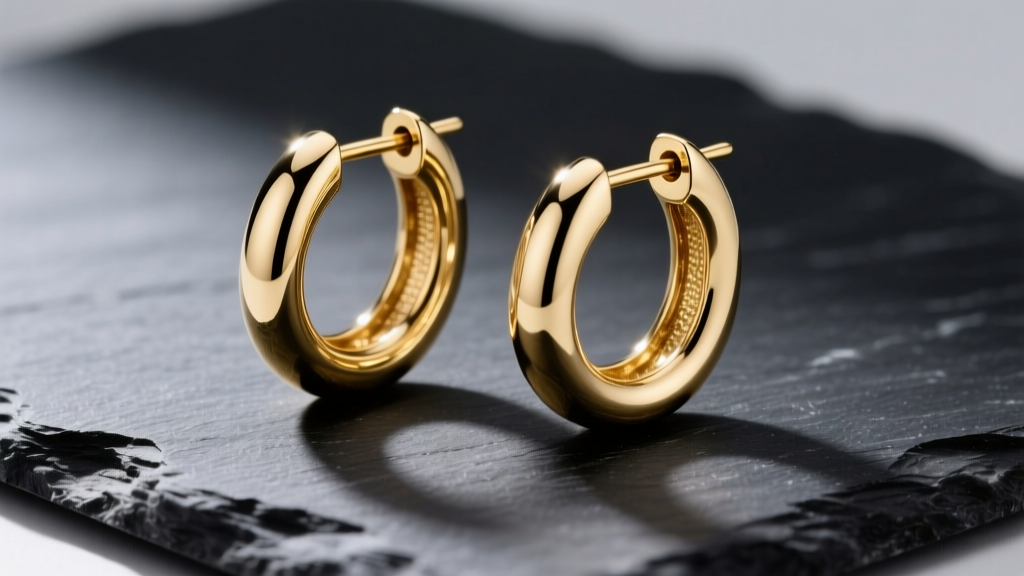
The Metallurgy of 18k Gold: Why Your Hoops Require Specialized Care
When you invest in fine jewelry, understanding the underlying metallurgy is the most critical step in establishing a proper maintenance routine. Unlike 14k gold, which contains 58.3% pure gold and a higher percentage of strengthening base metals, 18k gold earrings hoops are composed of exactly 75% pure gold and 25% alloy metals. These alloys—typically a precise blend of copper, silver, zinc, or palladium—are introduced to provide structural integrity and dictate the final color of the piece, whether it is yellow, white, or rose gold.
According to the Gemological Institute of America (GIA), the Vickers hardness of 18k yellow gold sits around 125 to 130 HV. This makes it noticeably softer and more malleable than 14k gold (which averages 135 to 140 HV) and significantly softer than platinum or titanium. Because 18k gold earrings hoops are often worn daily, this relative softness means they are highly susceptible to micro-scratches, surface abrasion, and gradual metal loss if subjected to harsh environmental factors or improper cleaning techniques. Whether your hoops are a delicate 20-gauge wire or a substantial 12-gauge tube, treating the metal with an understanding of its physical limitations is paramount.
Environmental Threats: What Degrades High-Karat Gold?
Pure gold is virtually inert, but the 25% alloy mix in your 18k gold earrings hoops is highly reactive to everyday chemicals. The most common environmental threats include:
- Chlorine and Halogens: Chlorine reacts aggressively with the copper and zinc alloys in 18k gold to cause stress corrosion cracking. This is particularly dangerous at the high-tension solder joints of hoop clasps and hinges, potentially leading to catastrophic structural failure.
- Sulfur Compounds: Found in hot springs, certain industrial environments, and even some rubber bands, sulfur reacts with silver and copper alloys to form dark silver sulfide or copper sulfide tarnish on the surface.
- Cosmetics and Skincare: Lotions, sunscreens, and makeup contain emulsifiers and micro-abrasives (like zinc oxide or titanium dioxide) that can create a dull, waxy film on the gold and physically scratch the polished surface over time.
- Human Perspiration: Sweat is mildly acidic and contains salts. Prolonged exposure without rinsing can lead to galvanic corrosion, especially in the crevices of textured or filigree hoop designs.
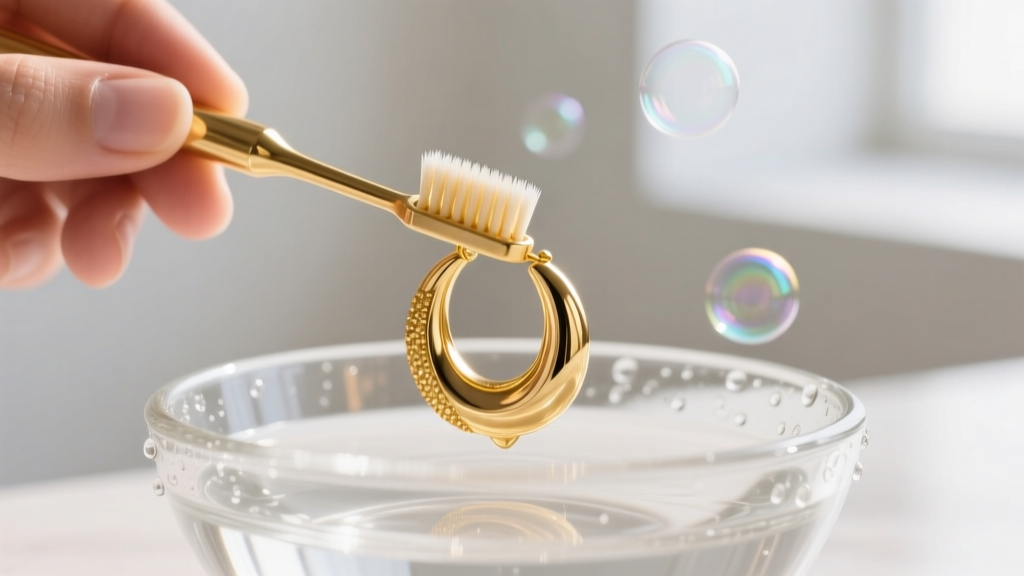
The Step-by-Step Cleaning Protocol for 18k Gold Hoops
To safely remove daily buildup without compromising the alloy integrity or scratching the finish, follow this precise cleaning methodology. Avoid generic jewelry dips, which often contain harsh thiourea compounds that can strip the natural patina and weaken solder points.
Materials Needed
- Phosphate-free, dye-free liquid dish detergent (e.g., original Dawn)
- Lukewarm distilled water (tap water contains chlorine and minerals that can leave spots)
- Extra-soft baby toothbrush (0.1mm bristle diameter) or a dedicated jewelry brush
- Lint-free microfiber cloth or 100% cotton flannel
- Wooden toothpick (for clasp crevices)
The Cleaning Process
- Prepare the Solution: Mix 1 part mild dish detergent with 10 parts lukewarm distilled water in a glass bowl. Avoid hot water, as extreme temperature shifts can stress gemstone settings if your hoops feature pavé diamonds.
- Soak: Submerge the 18k gold earrings hoops in the solution for exactly 3 to 5 minutes. This loosens sebum, dead skin cells, and cosmetic residue without requiring aggressive scrubbing.
- Agitate Gently: Using the extra-soft toothbrush, gently sweep the bristles along the contours of the hoop. Pay special attention to the interior curve and any textured detailing. Always brush in the direction of the metal grain if a brushed finish is present.
- Clear the Clasp Mechanism: Hoop earrings rely on mechanical friction. Use a wooden toothpick to carefully dislodge any compacted debris from the catch tube or hinge latch. Never use metal pins, as they will scratch the 18k gold.
- Rinse and Dry: Rinse thoroughly under a gentle stream of lukewarm distilled water. Pat dry immediately with the microfiber cloth. Do not air dry, as water spots will form on the high-karat surface.
Polishing and Ultrasonic Warnings: What to Avoid
There is a pervasive myth that more polishing equals better care. In reality, every time you polish 18k gold earrings hoops, you are removing a microscopic layer of metal.
Never use treated jeweler's rouge cloths on a weekly basis. Reserve chemically treated polishing cloths for once every six months to remove light oxidation. For daily buffing, use only an untreated, high-pile microfiber cloth.
Furthermore, ultrasonic cleaners pose a significant risk to 18k hoop earrings. The high-frequency cavitation bubbles generated by ultrasonic machines can easily fracture the delicate solder joints at the hoop's hinge or latch. If your hoops feature tension-set stones or micro-pavé diamonds, the ultrasonic vibrations can shake the stones loose from their settings. Stick to the manual soaking and brushing method outlined above for the safest, most effective results.
Chemical Compatibility Chart for 18k Gold Alloys
Understanding how specific household and environmental chemicals interact with the 25% alloy content in your 18k gold earrings hoops can help you prevent irreversible damage. Refer to this compatibility matrix before exposing your jewelry to unfamiliar substances.
| Substance / Chemical | Interaction with 18k Gold Alloys | Risk Level |
|---|---|---|
| Chlorine (Pools/Spas) | Causes stress corrosion cracking in copper/zinc alloys, severely weakening solder joints and clasps. | Severe |
| Bleach (Sodium Hypochlorite) | Oxidizes alloy metals rapidly, leading to permanent surface pitting and discoloration. | High |
| Hairspray & Perfume | Alcohol and aerosol propellants create a sticky film that traps abrasive dust particles against the gold. | Moderate |
| Saltwater (Ocean) | Salt crystals act as micro-abrasives; prolonged exposure accelerates galvanic corrosion at solder points. | Moderate |
| Acetone (Nail Polish Remover) | Does not harm the gold alloy, but will destroy any protective rhodium plating on 18k white gold hoops. | High (for White Gold) |
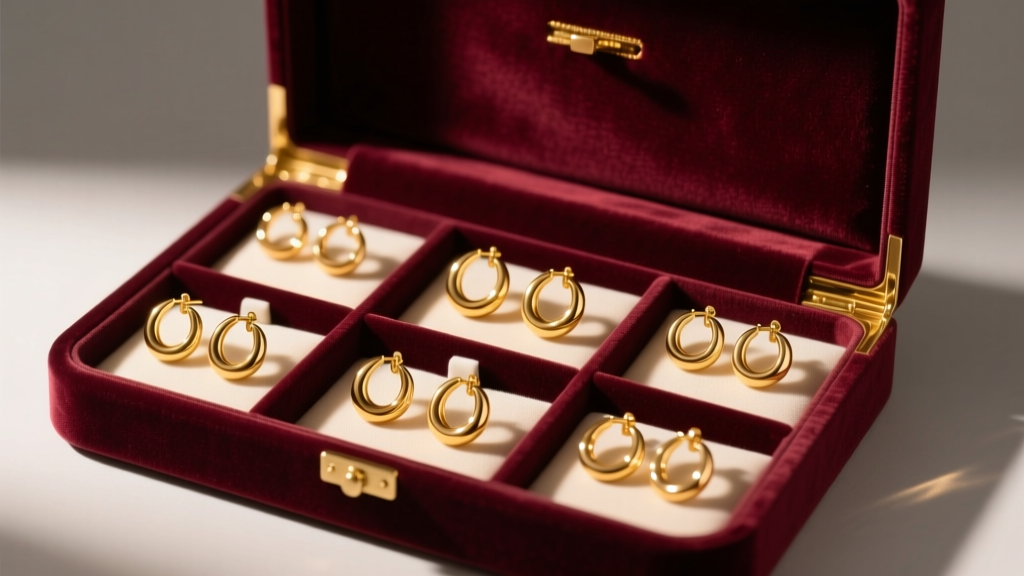
Strategic Storage and Clasp Maintenance
Proper storage is just as critical as the cleaning process. Because 18k gold is relatively soft, storing your hoops in a communal jewelry box where they can collide with diamonds, sapphires, or harder metals like tungsten will result in deep, irreversible gouges. The World Gold Council recommends storing fine gold pieces individually.
Store your 18k gold earrings hoops in individual soft flannel pouches or a jewelry box with dedicated, fabric-lined compartments. For large statement hoops, hang them on a padded jewelry stand to prevent the wire from bending under its own weight. For continuous or endless hoops, always ensure the clasp is fully closed before storage to prevent the tension wire from warping or catching on the fabric lining.
When to Seek Professional Jeweler Intervention
While routine cleaning and maintenance can be handled at home, certain scenarios require the expertise of a professional bench jeweler. If you notice that the catch tube on your hoop earrings is no longer gripping the post securely, or if the hinge feels loose and wobbly, do not attempt to bend the metal back into place yourself. The malleability of 18k gold means that repeated bending will cause work-hardening, eventually leading to a clean snap.
Additionally, if your 18k gold earrings hoops feature intricate filigree, milgrain detailing, or heavy oxidation (antiquing) applied by the designer, avoid aggressive brushing. Take them to a professional who can clean them using specialized steam techniques that preserve the intentional contrast and delicate metalwork. Schedule a professional inspection every 12 to 18 months to ensure all structural solder joints remain intact and secure.


