Troubleshooting Common Issues With Delicate Hart Earrings
Learn how to troubleshoot bent posts, stuck backs, and tarnish on delicate hart earrings with expert repair and cleaning techniques.

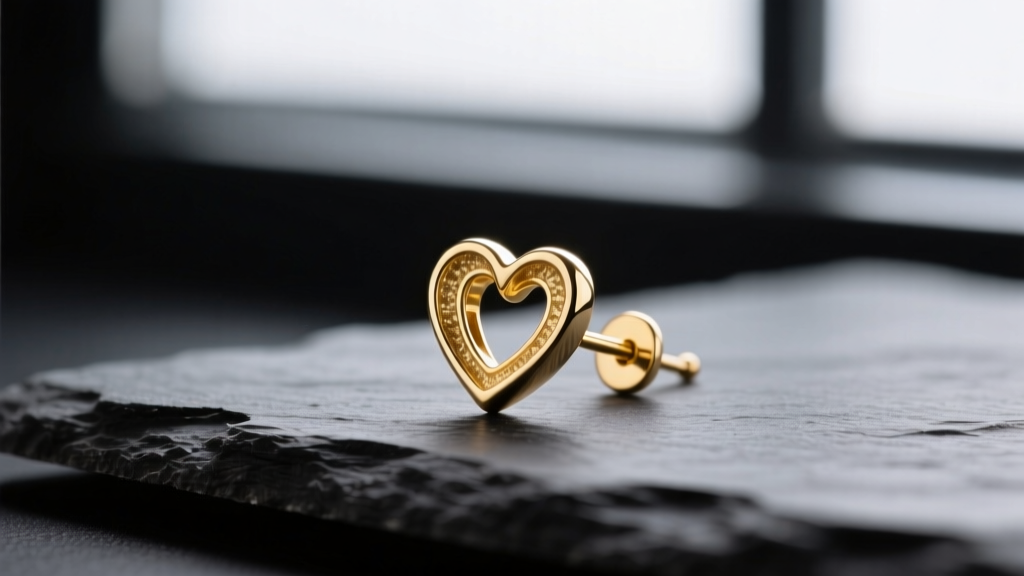
The Appeal and Fragility of Delicate Heart Silhouettes
The minimalist jewelry movement has cemented the heart shape as a timeless staple, but the physical reality of wearing ultra-fine jewelry often clashes with its delicate aesthetic. When you invest in a pair of dainty hart earrings, you are usually purchasing a design that prioritizes a subtle, barely-there silhouette. While visually stunning, this design philosophy introduces specific structural vulnerabilities. The inner cleft of the heart shape traps debris, the thin wire used for the posts bends under minimal pressure, and the lightweight nature of the earrings causes friction backs to fail prematurely.
As of 2026, direct-to-consumer jewelry brands have popularized 925 sterling silver and 14k gold vermeil as the standard materials for these pieces. While beautiful, these metals require specific care and troubleshooting knowledge to maintain their integrity. In this comprehensive guide, we will break down the most common mechanical and chemical failures associated with delicate heart-shaped earrings and provide professional, actionable solutions to fix them at home.
The Metallurgy of Bent Posts: Why They Bend and How to Fix Them
The most frequent complaint regarding lightweight stud earrings is a bent post. To understand why this happens, we must look at the gauge of the wire and the metallurgical hardness of the alloy. Most delicate hart earrings utilize a 22-gauge (0.64mm) or, at best, a 20-gauge (0.81mm) post to maintain a dainty profile. According to the Gemological Institute of America (GIA), standard annealed 925 sterling silver has a Vickers hardness of roughly 60 to 70 HV. This makes it exceptionally soft and malleable.
When you apply lateral pressure—such as sleeping in your earrings, pulling a sweater over your head, or even pressing too hard when inserting the friction back—a 22-gauge sterling silver post will easily yield and bend. Once bent, repeatedly trying to straighten it with your fingers introduces metal fatigue, eventually causing the post to snap entirely.
The Professional Straightening Method
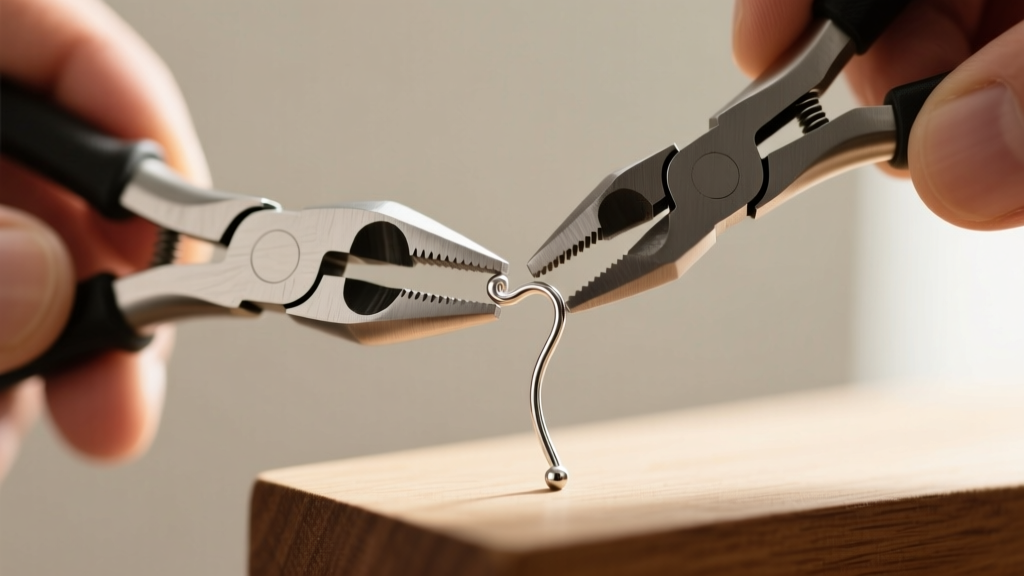
Never use standard steel jewelry pliers to straighten a silver or gold post; the hardened steel teeth will gouge, scratch, and weaken the precious metal. Instead, you need a pair of nylon-jaw pliers, widely available from professional suppliers like Rio Grande.
- Step 1: Secure the earring face-down on a soft microfiber cloth to protect the finish.
- Step 2: Grip the bent post with the nylon-jaw pliers as close to the base (the solder joint) as possible.
- Step 3: Apply gentle, steady pressure to coax the wire back to a 90-degree angle. Do not snap it back quickly.
- Step 4: Roll the post across a flat steel bench block. If it wobbles, it is still slightly bent. Repeat the process until it rolls perfectly true.
Friction Back Failures and Secure Upgrades
The standard 'butterfly' or scroll friction back relies entirely on the tension of the metal wings gripping the notches on the earring post. Over time, the metal wings experience fatigue and spread apart, losing their grip. This is especially problematic for lightweight hart earrings, which can easily slip out of the earlobe if the back loosens, often without the wearer noticing.
Upgrading to Locking Mechanisms
If your earrings are valuable or hold sentimental weight, discard the standard friction backs and upgrade to a secure locking system. The industry gold standard is the La Pousette locking back. Originally designed for high-value diamond studs, La Pousette backs feature a spring-loaded internal mechanism that clicks securely over a specially grooved post. While they require a slightly thicker post (usually 18-gauge), they guarantee the earring will not fall off.
For a more budget-friendly and immediate fix, purchase medical-grade silicone O-rings. Look for O-rings with an outer diameter of 3mm and an inner diameter of 1mm. These slide over the post and create a high-friction barrier that prevents the earring from slipping, while also providing a comfortable cushion between the metal back and your earlobe.
Tarnish and Sebum Traps in the Heart Cleft
The geometry of a heart shape inherently features an inner 'V' or cleft at the top center. This sharp inward angle acts as a magnet for sebum (skin oils), dead skin cells, cosmetic residues, and environmental sulfur. When these organic compounds mix with the copper alloyed in 925 sterling silver, they accelerate the formation of silver sulfide, resulting in stubborn, dark tarnish that is incredibly difficult to reach with a standard polishing cloth.
Choosing the Right Cleaning Method
Not all cleaning methods are safe for all finishes. Many modern hart earrings feature a 14k gold vermeil finish (a thick layer of gold over sterling silver) or micro-pave diamond settings. Using the wrong cleaning technique can strip the gold or loosen the stones. Below is a decision matrix for safely cleaning your earrings based on their material composition.
| Cleaning Method | Sterling Silver (Solid) | 14k Gold Vermeil | Solid 14k/18k Gold | Pave / Micro-Set Stones |
|---|---|---|---|---|
| Ultrasonic Cleaner (40kHz) | Safe & Highly Effective | Risky (can strip plating) | Safe | Dangerous (vibrations loosen stones) |
| Chemical Dips (Thiourea) | Effective but harsh | Never Use (strips gold) | Unnecessary | Safe for stones, harsh on metal |
| Warm Soap & Soft Brush | Safe (mild results) | Highly Recommended | Highly Recommended | Highly Recommended |
| Silver Polishing Cloth | Safe for flat surfaces | Never Use (abrasive) | Safe | Avoid near stone settings |
The Deep-Clean Protocol for the Inner Cleft
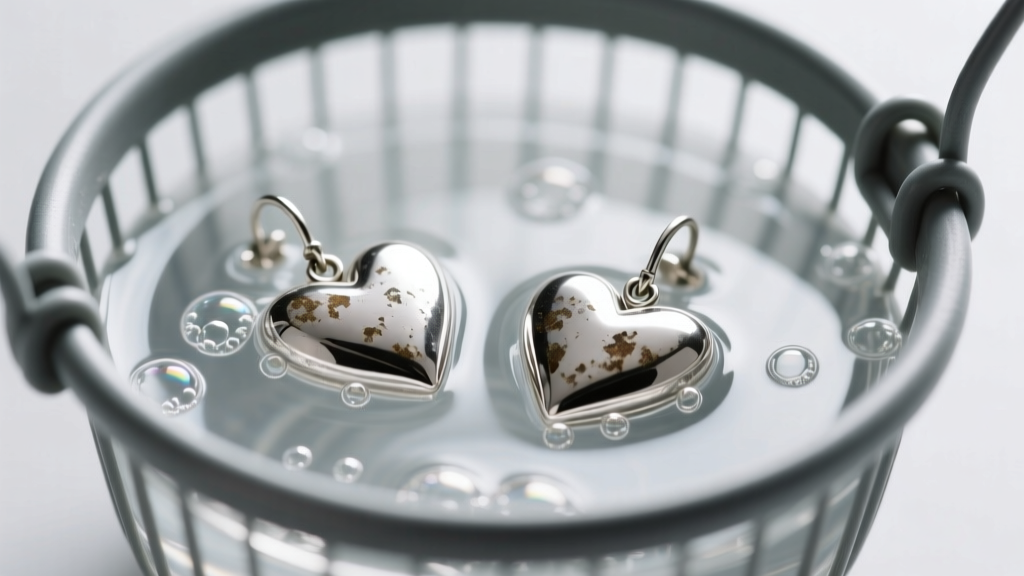
To safely remove the compacted sebum and tarnish from the inner cleft of your hart earrings without damaging vermeil or stone settings, use the warm soap and soft brush method. Mix a few drops of mild, phosphate-free dish soap into a bowl of warm distilled water. Let the earrings soak for exactly 10 minutes to soften the organic debris. Then, using an extra-soft baby toothbrush, gently agitate the bristles directly into the cleft. Rinse with distilled water (tap water contains minerals that can cause water spots) and dry immediately with a lint-free microfiber cloth. The Silver Institute recommends avoiding paper towels, as the wood fibers can cause micro-scratches on highly polished silver surfaces.
Jump Ring Fatigue on Heart Drop Styles
If your jewelry consists of drop or dangle styles rather than studs, the connection point between the ear wire and the heart charm is a critical failure point. This connection is typically made using a jump ring. In mass-produced delicate jewelry, manufacturers often use 'butt-joint' jump rings where the two ends of the wire simply meet but are not soldered closed.
Over time, the natural movement of a dangle earring causes the jump ring to twist. If the ring is pulled open laterally, it will eventually snap or slip through the loop of the ear wire, resulting in a lost earring. To troubleshoot and prevent this, inspect the jump ring with a jeweler's loupe. If you see a gap, you must close it properly.
Never pull the ends of a jump ring apart outward like a door; this permanently distorts the circle and weakens the metal. Instead, use two pairs of flat-nose pliers. Grip each side of the split and twist your wrists in opposite directions laterally. This preserves the perfect circular shape while allowing you to open and close the ring securely. For a permanent fix, take your hart earrings to a local bench jeweler to have the jump ring laser-welded or soldered shut, a service that typically costs less than $15 and guarantees the charm will never detach.
Summary: Preserving Your Delicate Jewelry
Owning delicate jewelry requires a shift in how we interact with our accessories. By understanding the metallurgical limits of thin-gauge silver posts, upgrading to secure locking backs, and employing targeted cleaning techniques for complex geometric shapes, you can ensure your favorite pieces remain in pristine condition. Troubleshooting these common issues at home not only saves you the cost of replacements but also deepens your appreciation for the craftsmanship involved in fine jewelry design.


