Troubleshooting Gold Croissant Earrings: Fixes & Care
Learn how to fix dents, clean, and prevent damage to your gold croissant earrings. Expert troubleshooting for hollow and solid hoop styles.

The Anatomy of a Croissant Earring: Why They Fail
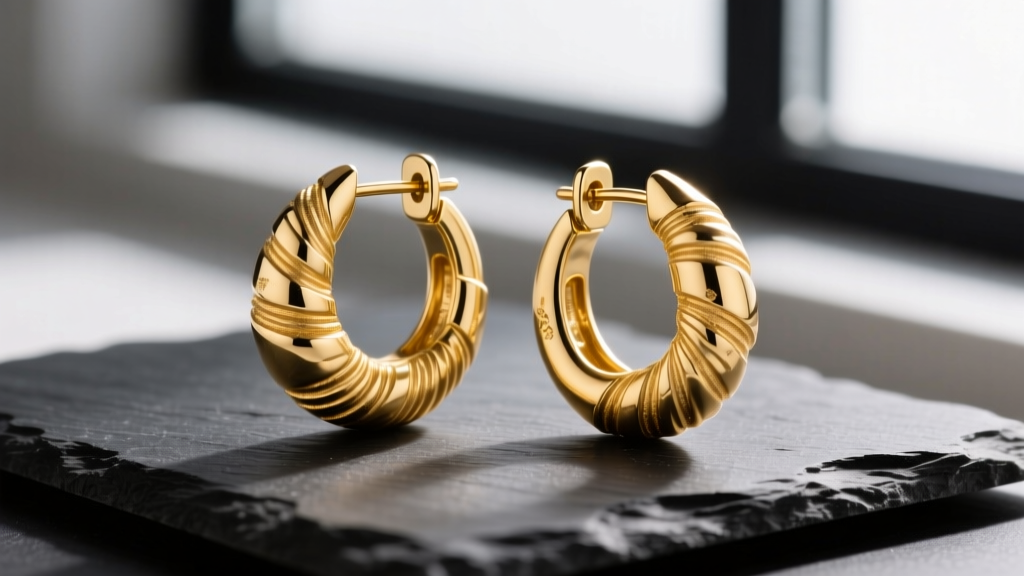
Gold croissant earrings have remained a dominant force in jewelry trends through 2026, celebrated for their chunky, ribbed, and tubular silhouettes. However, their unique geometry and manufacturing processes create specific structural vulnerabilities that standard hoop earrings do not share. To effectively troubleshoot these pieces, you must first understand how they are made.
Most oversized gold croissant earrings are created using a process called electroforming. This technique involves depositing gold onto a wax or resin mold, which is later melted away, leaving a hollow, lightweight gold shell. While this prevents the earrings from being unbearably heavy, it leaves the gold walls paper-thin in certain areas. Stamped croissant earrings, made by soldering two hollow halves together, are slightly more durable but still prone to specific failure modes at the seams.
According to the Gemological Institute of America (GIA), the karat weight of the gold also plays a massive role in structural integrity. While 18k gold offers a richer, deeper yellow hue, its lower Vickers hardness makes it highly susceptible to denting and clasp warping. For the high-torque hinges and posts of chunky croissant hoops, 14k gold is vastly superior due to its alloyed durability.
Troubleshooting Common Croissant Earring Disasters
1. The Dreaded Dent: Can You Fix It?
Because electroformed croissant earrings are essentially hollow gold shells, dropping them on a hard surface like bathroom tile will almost certainly result in a dent. Never attempt to pop a dent out with a needle or pin. This will puncture the gold shell, ruining the piece and allowing moisture to become trapped inside, leading to internal corrosion.
The Fix: Take the earring to a professional jeweler who specializes in hollow jewelry. Modern 2026 repair techniques involve injecting a specialized, clear jewelry-grade epoxy resin into the hollow cavity through the post hole or a microscopic drilled access point. Once the resin cures, the jeweler can gently apply localized, low-heat pressure to push the dent outward. The hardened resin then acts as an internal scaffolding, preventing the dent from recurring.
2. Post Breakage at the Solder Joint
The most critical stress point on a croissant earring is the solder joint where the post meets the tubular body. The chunky weight of the hoop acts as a lever, placing immense shear stress on this connection.
- The Failure: The post snaps cleanly off the hollow tube.
- The Danger: Traditional torch soldering requires high heat that will instantly melt or warp the thin electroformed gold shell.
- The Fix: You must seek a jeweler equipped with a laser welder. Laser welding uses a highly focused beam of light to fuse the metal in a fraction of a second, generating virtually no ambient heat. This allows the jeweler to reattach the post or add a reinforcing gold plate to the joint without damaging the hollow croissant body.
3. Hinge and Clasp Tension Loss
Hinged snap-back clasps on heavy hoops frequently lose their "click" over time. If your croissant earring feels loose or falls open, do not repeatedly squeeze the hinge with pliers, as this will snap the hinge pin. Instead, clean the hinge mechanism with a drop of isopropyl alcohol to remove trapped skin oils and debris. If the tension is still lost, a jeweler can gently adjust the male and female tension tabs using specialized non-marring nylon jaw pliers.
Preventative Care: Cleaning Without Causing Damage
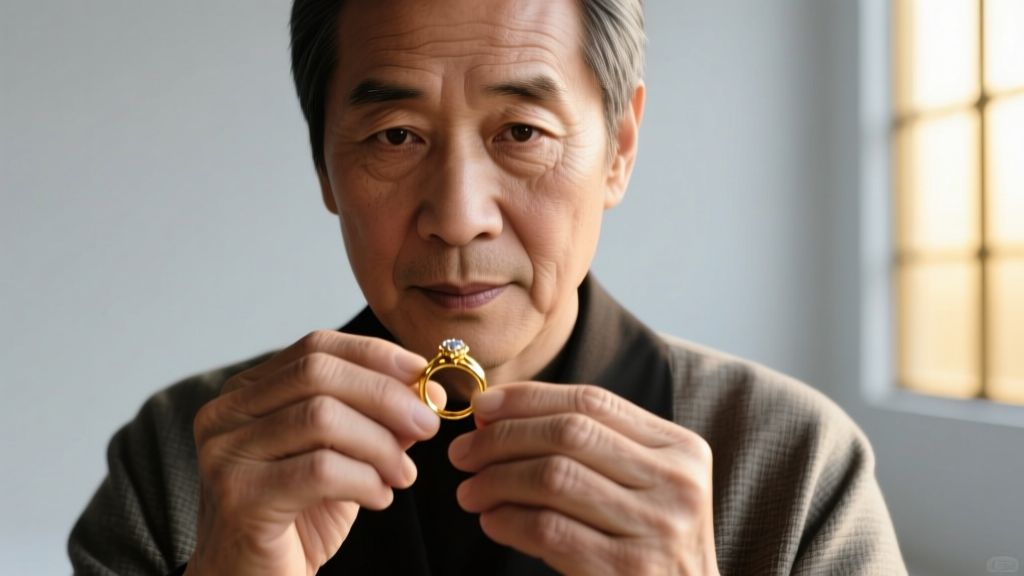
The most common mistake owners make with gold croissant earrings is using the wrong cleaning method. The ribbed texture of the croissant design traps lotions, perfumes, and dead skin cells, making them look dull quickly. However, you must avoid standard jewelry cleaning appliances.
| Cleaning Method | Safety for Croissant Earrings | Why? |
|---|---|---|
| Ultrasonic Cleaners | NEVER USE | High-frequency cavitation bubbles implode against the metal, which will shatter or cause micro-fractures in hollow electroformed gold. |
| Steam Cleaners | AVOID | High-pressure steam can force moisture inside the hollow tube through microscopic seams, leading to internal tarnish and structural weakening. |
| Warm Soapy Water | SAFE | A soft-bristled baby toothbrush with mild dish soap safely lifts debris from the ribbed grooves without risking structural damage. |
| Polishing Cloths | USE WITH CAUTION | Great for the outer surface, but never push hard into the grooves, as the cloth can snag on microscopic solder seams. |
For a deep clean, soak the earrings in a bowl of warm water and a few drops of ammonia-free dish soap for 10 minutes. Gently brush the ribbed grooves, rinse under lukewarm tap water, and immediately dry with a microfiber cloth to prevent water spots. As recommended by Jewelers of America, always remove hollow gold jewelry before swimming or applying heavy cosmetics to preserve the finish and structural seams.
Lobe Support Strategies for Chunky Hoops
Even when hollow, large gold croissant earrings carry enough weight to cause the "cheese cutter" effect, where the post slowly slices through the earlobe over time. This is exacerbated if the earrings are manufactured with thin 20-gauge (0.81mm) or standard 18-gauge (1.02mm) posts.
Troubleshooting Lobe Stretching:
- Check the Gauge: When purchasing or repairing croissant earrings, always request a 16-gauge (1.29mm) post. The slightly thicker wire distributes the weight over a larger surface area of the piercing, drastically reducing downward pressure.
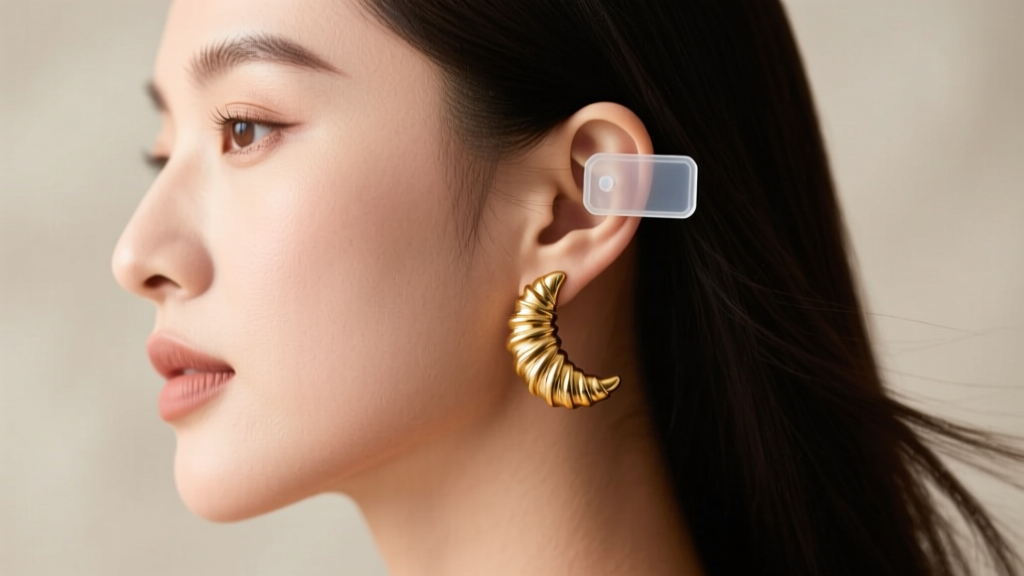
- Use Support Patches: Apply clear silicone earring support patches (often called "Ouch Patches") to the back of the earlobe. These adhesive discs provide a wide, supportive backing that prevents the earring back from pulling through the tissue.
- Upgrade the Backing: Ditch standard butterfly friction backs, which easily slip off heavy hoops. Swap them for heavy-duty silicone O-rings or locking clutch backs that grip the post grooves securely.
When to See a Professional Jeweler
While daily maintenance and careful wear can prevent most issues, gold croissant earrings are inherently delicate due to their hollow construction. You should immediately consult a master jeweler if you notice any of the following warning signs:
Warning Signs: A visible crease or hairline fracture near the hinge; a rattling sound when you shake the earring (indicating internal debris or a broken internal support); or a post that wobbles laterally when secured in the clasp. Ignoring these signs will inevitably lead to the catastrophic loss of the earring.
By understanding the material science behind electroformed gold and adopting these targeted troubleshooting techniques, you can ensure your gold croissant earrings remain a staple in your rotation for years to come, retaining both their structural integrity and their high-polish brilliance.


