What Is a Stud Earring? The Ultimate Anatomy & Style Guide
Discover what is a stud earring, from post anatomy and gauge sizes to material grades and styling tips for every ear placement.

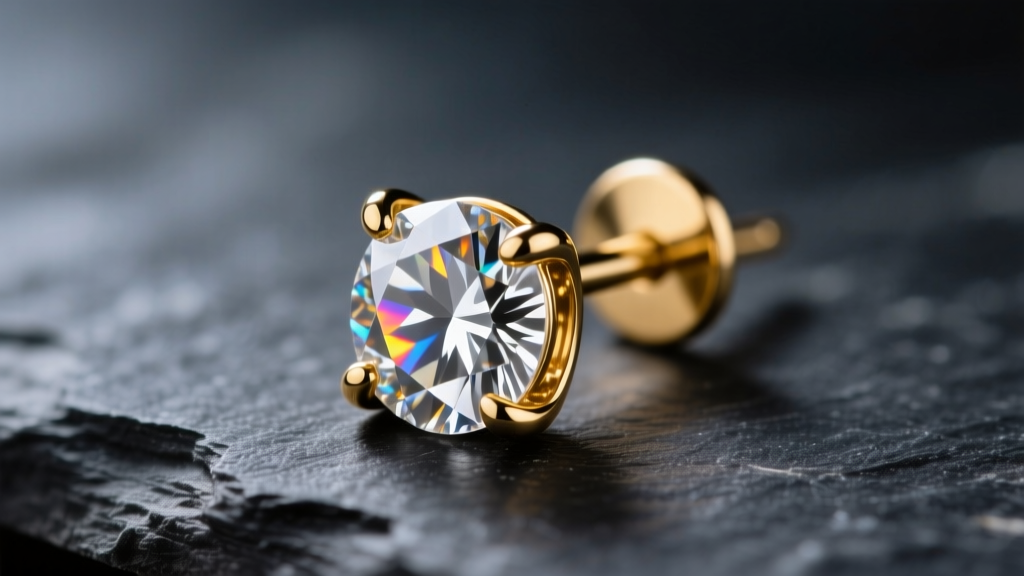
Defining the Classic: What Is a Stud Earring?
At its core, a stud earring is a piece of jewelry designed to sit directly on the earlobe or cartilage without dangling or hooping. It consists of a decorative front face, a post that passes through the piercing, and a backing mechanism to secure it in place. While the concept seems simple, understanding what is a stud earring requires looking past the surface. In the modern jewelry landscape, studs are far from basic; they are highly engineered micro-sculptures that demand precision in gauge sizing, material science, and ergonomic design.
Whether you are exploring fine jewelry investments or navigating the healing process of a fresh cartilage piercing, the anatomy of your stud dictates both its aesthetic appeal and its biological compatibility with your body. Let us break down the structural elements, material grades, and styling frameworks that define the stud earring category today.
The Anatomy of a Stud: Posts, Backs, and Settings
The longevity and comfort of a stud earring rely heavily on its structural anatomy. A poorly engineered post or backing can lead to irritation bumps, allergic contact dermatitis, or lost gemstones.
Post Gauges and Lengths
The 'gauge' refers to the thickness of the post. Wearing the incorrect gauge can cause the 'cheese-cutter effect,' where a post that is too thin slowly migrates through the tissue. Below is the standard sizing framework utilized by professional piercers and fine jewelers:
| Piercing Location | Standard Gauge | Millimeter Equivalent | Standard Post Length |
|---|---|---|---|
| Standard Earlobe | 20g or 18g | 0.81mm - 1.02mm | 6mm (1/4 inch) |
| Helix / Cartilage | 16g | 1.29mm | 6mm - 8mm (1/4 to 5/16 inch) |
| Tragus / Conch | 16g or 14g | 1.29mm - 1.60mm | 6mm - 8mm (1/4 to 5/16 inch) |
Friction Backs vs. Threaded vs. Push-Pin
The backing mechanism is where most commercial studs fail. Traditional butterfly friction backs rely on tension and a grooved post. They are notorious for trapping dead skin cells, harboring bacteria, and poking the neck during sleep. According to the Association of Professional Piercers (APP), flat-back labrets with internal threading or threadless (push-pin) tension systems are vastly superior. Internal threading ensures the screw mechanism is on the decorative end, leaving the post perfectly smooth so it does not tear the fistula (the piercing tunnel) during insertion.
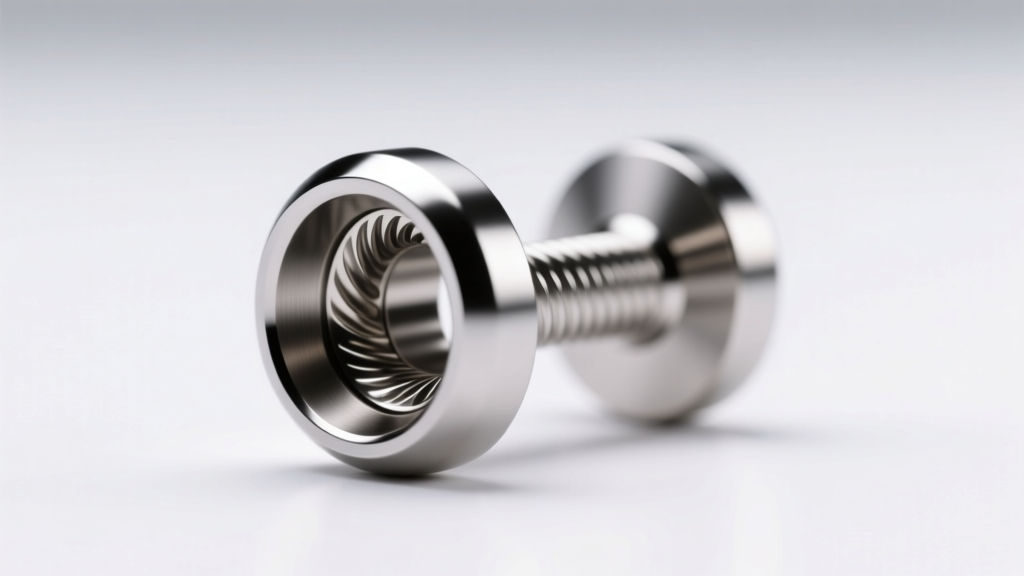
Material Grades: Hypoallergenic Standards
When evaluating high-quality studs, material purity is non-negotiable. The term 'hypoallergenic' is largely unregulated in the jewelry industry, making it a deceptive marketing buzzword. Instead, look for specific metallurgical standards.
- Implant-Grade Titanium (ASTM F136): The absolute gold standard for fresh piercings and hyper-sensitive ears. It contains zero nickel and is biocompatible, meaning the body will not reject it or react to it.
- 316L Surgical Steel: Often marketed as safe, but it contains up to 10% nickel. While acceptable for fully healed lobes in some individuals, it is a primary culprit for contact dermatitis in cartilage piercings.
- 14k and 18k Solid Gold: Ideal for healed piercings. However, you must ensure the gold is alloyed without nickel. Reputable fine jewelers use palladium or silver as alloying metals to maintain a nickel-free composition.
- Niobium: A highly reactive metal that can be anodized into vibrant colors without using dyes or platings. Excellent for those with severe metal sensitivities.
Curated Placements: Lobe vs. Cartilage Studs
The physical location of the piercing dictates the required anatomy of the stud. Earlobe tissue is soft, vascular, and forgiving, allowing for standard butterfly backs and lighter decorative faces. Cartilage, however, is dense, avascular, and prone to prolonged swelling.
Helix and Tragus Specifics
For a helix or tragus placement, a flat-back labret stud is mandatory. The flat disc sits flush against the back of the ear, eliminating the pressure points caused by butterfly backs. Furthermore, the decorative face must be low-profile. High-set gemstones or large prongs can catch on hairbrushes and headphones, leading to trauma bumps (hypertrophic scarring) on the cartilage.
Troubleshooting Common Stud Earring Failures
Even the most expensive studs can fail if the mechanics are misunderstood. Here is a diagnostic guide for common issues:
- The Stud Keeps Slanting Forward: This occurs when the post is too long for the tissue thickness, or the decorative face is too heavy for the gauge. Switch to a shorter post (e.g., from 8mm to 6mm) or choose a bezel setting over a heavy prong setting to lower the center of gravity.
- Irritation Bumps Around the Post: Often caused by the angle of the piercing combined with a rigid, straight post. If the piercing was done at a steep angle, a standard straight labret will put pressure on the fistula. Consult a piercer about using a slightly longer post to accommodate the swelling, or evaluate if the jewelry material contains hidden nickel.
- Loss of Gemstones: Prong-set stones in micro-studs frequently catch on knitwear. For active lifestyles, bezel-set studs (where a rim of metal completely encircles the gemstone) offer vastly superior security and a smoother silhouette.
Style & Trend Analysis: The Evolution of the Stud
While the anatomy of the stud remains rooted in function, its stylistic application has evolved dramatically. The traditional matched pair of diamond solitaires is now just one option in a broader styling framework.
The Curated Ear Constellation
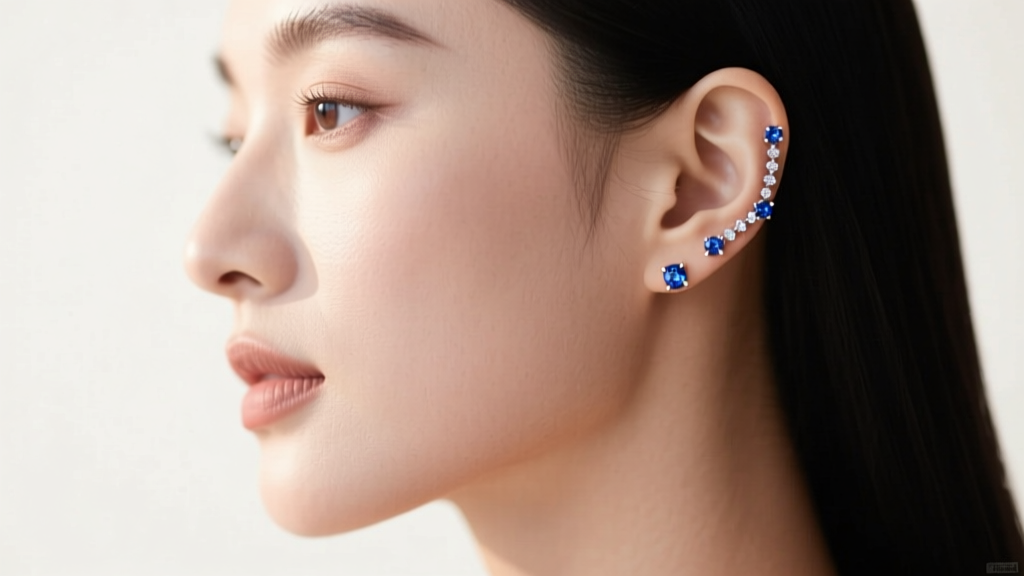
The 'curated ear' relies heavily on the stud earring. Stylists now use micro-studs (ranging from 1.5mm to 3mm) to create constellations across the helix, flat, and lobe. The trend relies on asymmetry and varied gemstone cuts—mixing round brilliants with marquise and pear shapes to create an organic, celestial map across the ear.
Convertible and Jacket Studs
Modularity is a major trend in contemporary fine jewelry. Earring jackets and cuffs allow a simple gold ball stud to be transformed. A jacket sits behind the earlobe, wrapping around the bottom edge with pavé diamonds or geometric gold shapes, while an ear cuff snaps onto the upper cartilage, visually connecting to the lobe stud via a delicate, detachable chain.
Floating Illusions and Asymmetry
Jewelers are increasingly utilizing clear quartz or invisible nylon thread elements to create 'floating' gemstone studs that appear to hover on the earlobe without visible metal settings. Additionally, the rigid rule of matching pairs has been entirely discarded in favor of intentional asymmetry—pairing a large, maximalist floral stud in one lobe with a curated stack of three micro-bezel studs in the opposite ear.
Conclusion
Understanding what is a stud earring goes far beyond recognizing a simple post and backing. It requires an appreciation for metallurgical safety, precise gauge sizing, and ergonomic design. Whether you are selecting an ASTM F136 titanium labret for a fresh helix piercing or investing in a pair of 18k nickel-free gold diamond solitaires, prioritizing structural integrity ensures your jewelry remains both beautiful and biologically harmonious for decades to come. For further education on gemstone quality in fine jewelry studs, refer to the grading standards established by the Gemological Institute of America (GIA).


