Halo Stud Earrings Value Guide: 2026 Pricing & Quality
Discover the true value of halo stud earrings in 2026. We break down pricing tiers, metal grades, stone options, and structural flaws to avoid.

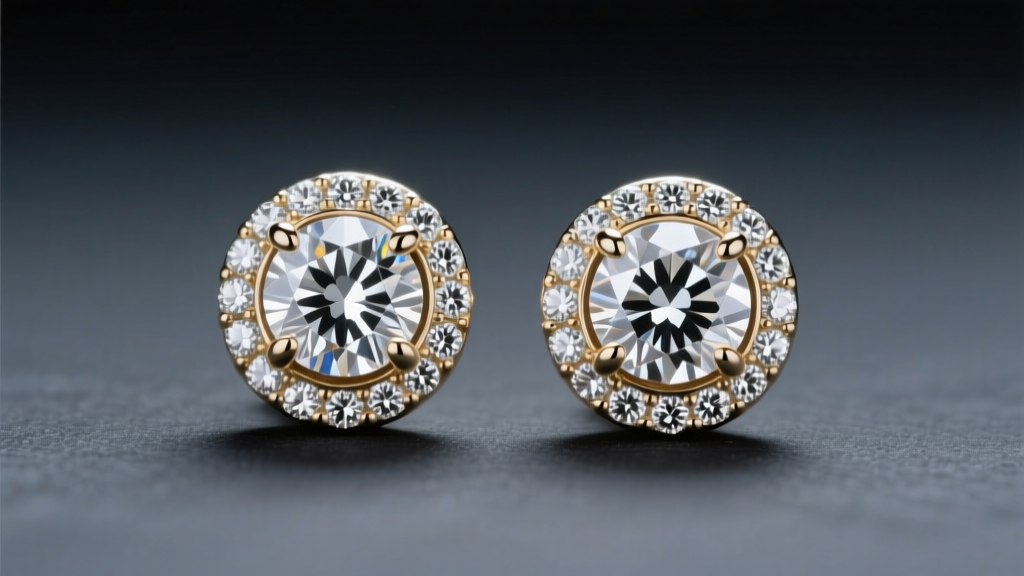
The True Cost of Halo Stud Earrings in 2026
Navigating the fine jewelry market requires a sharp eye for value, especially when evaluating pieces that rely on complex craftsmanship. Halo stud earrings remain one of the most popular choices for maximizing visual impact without the exponential cost of a massive single solitaire. However, as we move through 2026, the pricing landscape has shifted dramatically. The plummeting cost of lab-grown diamonds has disrupted traditional pricing models, while advancements in simulant stones have narrowed the visual gap. Yet, a lower price tag on the center stone often masks severe compromises in metallurgical integrity and micro-pave setting quality.
At Jewel Style Radar, we believe true value is the intersection of optical brilliance, structural longevity, and fair market pricing. A halo earring is not just a center stone; it is a complex architectural feat. The halo itself adds roughly 1.5mm to 2.5mm of visual diameter. For context, a 0.50-carat round brilliant center stone (approximately 5.0mm in diameter) surrounded by a tight micro-pave halo will mimic the footprint of a 1.25-carat solitaire (roughly 7.0mm). This optical illusion is the core value proposition of the halo design, but achieving it without sacrificing the health of your earlobe requires a deep understanding of gauge sizes, setting types, and metal alloys.
Material Breakdown: Where Your Money Actually Goes
Center Stone Valuation: Lab vs. Natural vs. Simulant
The center stone dictates the baseline price, but the 2026 market demands a recalibration of expectations. According to the Gemological Institute of America (GIA), lab-grown diamonds possess the exact same chemical and optical properties as mined diamonds. In 2026, a high-quality (VS clarity, F-G color) lab-grown diamond costs between $300 and $500 per carat, compared to $3,500+ for its natural equivalent. For halo studs, where the surrounding melee stones distract from minor inclusions, you can safely drop to an SI1 clarity grade for the center stone, saving an additional 15% without any visible compromise to the naked eye.
Moissanite remains a strong budget contender at roughly $80 to $120 per carat, offering higher refractive index (more 'fire' or rainbow flashes) than diamond. However, cubic zirconia (CZ), while incredibly cheap at under $5 per carat, is a poor long-term investment for a halo setting. CZ is softer (8.5 on the Mohs scale vs. 10 for diamond) and will accumulate microscopic scratches within months, causing the stone to look cloudy and dull, entirely defeating the purpose of a brilliant halo design.
Metallurgical Realities: The Hidden Cost of White Gold
When budgeting for halo stud earrings, the metal alloy is a frequent trap for unwary buyers. 14k white gold is the industry standard for 'accessible luxury,' but it comes with hidden maintenance costs. Standard 14k white gold is alloyed with nickel to achieve a white color, which causes contact dermatitis in roughly 15% of the population. Furthermore, it requires rhodium plating every 12 to 18 months to maintain its bright white luster, costing $40 to $60 per service. Over a decade, this maintenance erodes the initial budget savings.
The Value Play: 18k white gold alloyed with palladium is naturally whiter, hypoallergenic, and requires significantly less frequent plating. While the upfront cost is 20% to 30% higher than 14k nickel-alloyed gold, the long-term cost of ownership is vastly superior. For those with the budget, 950 Platinum is the ultimate heirloom metal. Because halo stud earrings are relatively lightweight (typically requiring only 2.5 to 4 grams of metal), the platinum upgrade over 18k gold is often a mere $150 to $250, offering unmatched density and prong security.
Structural Integrity: The Hidden Costs of Cheap Settings
The most common failure mode in budget halo earrings is not the center stone falling out; it is the loss of the tiny melee stones in the halo, or the catastrophic bending of the earring post. Understanding the mechanics of the setting is crucial for assessing true value.
The Micro-Pave Vulnerability
The stones in a halo are held in place by micro-beads or tiny prongs pulled from the surrounding metal. In mass-produced, budget-tier earrings, these beads are often machine-stamped or poorly burnished. Daily friction, hair washing, and the application of lotions gradually wear these microscopic beads down. According to the Jewelers of America, ultrasonic cleaning—a common at-home jewelry care method—can actually shake loose poorly set micro-pave stones. When evaluating a halo stud, inspect the halo under a loupe. The beads should be perfectly rounded and symmetrical, not flat or scraped.
Post Gauge and Setting Architecture
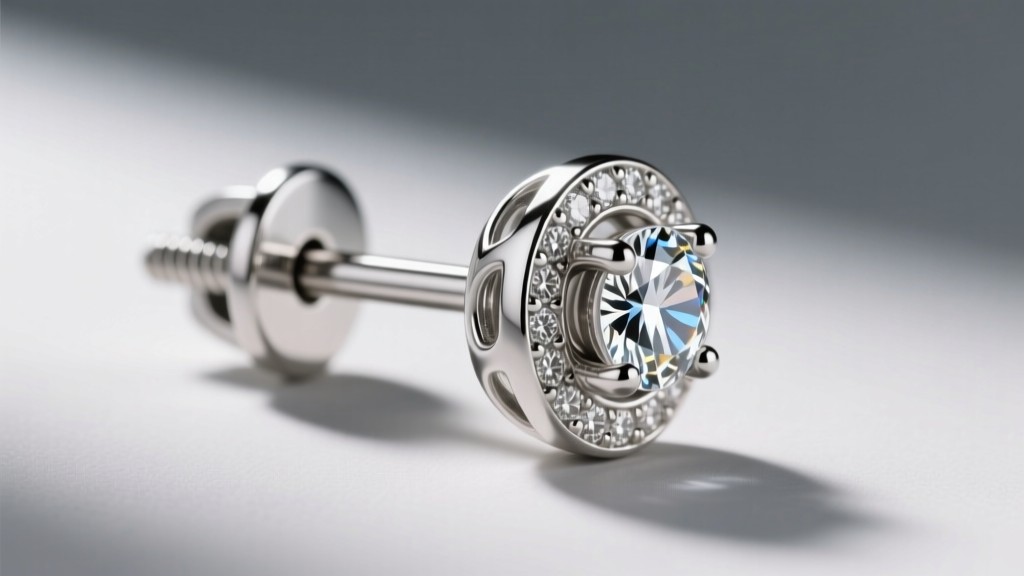
A heavy halo basket creates a pendulum effect on the earlobe. Budget manufacturers cut costs by using 22-gauge (0.64mm) or 20-gauge (0.81mm) wire for the post. A halo earring with a total carat weight over 1.00 carat will cause a 20-gauge post to bend, droop, and eventually stretch the ear piercing permanently. Always demand an 18-gauge (1.02mm) or 16-gauge (1.29mm) post for halo studs.
Additionally, avoid 'martini' (3-prong, wide-base) settings for halos. The wide base of a martini setting pushes uncomfortably against the earlobe and creates a high center of gravity. A 4-prong 'basket' or 'crown' setting sits flatter against the ear, distributing the weight more evenly and protecting the delicate halo stones from lateral impacts.
2026 Halo Stud Pricing Matrix & Value Tiers
To help you benchmark quotes from jewelers, we have compiled a comprehensive pricing matrix based on current 2026 market averages for a standard 1.00-carat total weight (CTW) halo stud earring pair (approx. 0.50ct center + 0.50ct halo per pair).
| Value Tier | Center Stone | Metal & Post Gauge | Setting & Backing | Expected Price Range | Longevity |
|---|---|---|---|---|---|
| Tier 1: Fast Fashion | Cubic Zirconia | 10k or 14k Gold Plated / 22g Post | Glued or Stamped Micro-Pave / Friction Back | $80 - $250 | 6-12 Months (High failure rate) |
| Tier 2: Accessible Luxury | Lab-Grown Diamond (SI1/G) | 14k White Gold (Nickel) / 20g Post | Cast Basket / Standard Butterfly Back | $600 - $950 | 3-5 Years (Requires rhodium & prong tipping) |
| Tier 3: The Value Sweet Spot | Lab-Grown Diamond (VS/F) | 18k Palladium White Gold / 18g Post | Hand-Set Basket / La Pousette Click-Back | $1,100 - $1,600 | 10+ Years (Heirloom quality) |
| Tier 4: Heritage Investment | Natural Mined Diamond (VS/G) | 950 Platinum / 16g Post | Hand-Fabricated Crown / Screw-Back | $3,800 - $5,500+ | Lifetime (Generational durability) |
The Jewel Style Radar Verdict: Maximizing Your Investment
When conducting a budget and value assessment for halo stud earrings, the goal is to avoid paying premium prices for structural liabilities. The 'Value Sweet Spot' in 2026 lies firmly in Tier 3. By opting for high-grade lab-grown diamonds, you free up significant capital to invest in the architecture of the earring itself.
Your Pre-Purchase Checklist:
- Verify the Post Gauge: Refuse to purchase halo studs over 0.75 CTW if the post is thinner than 18-gauge. The weight of the halo will ruin your piercing over time.
- Check the Backing Mechanism: Heavy halos require secure backs. Standard friction 'butterfly' backs will slip. Insist on screw-backs or La Pousette push-click locking backs to prevent losing your investment.
- Inspect the Halo Gap: Look closely at where the halo meets the center stone. There should be a seamless transition with minimal visible metal. A large gap ruins the optical illusion of a single, massive stone.
- Demand a Nickel-Free Alloy: If buying white gold, explicitly ask if the alloy contains nickel. Earlobes are highly sensitive, and chronic exposure to nickel alloys can lead to acquired contact dermatitis, forcing you to abandon the earrings entirely.
Expert Insight: The true value of a halo stud earring is not determined by the carat weight alone, but by the precision of the micro-pave setting and the structural integrity of the post. A perfectly set 0.75-carat lab-grown halo on an 18-gauge platinum post will outlast, outshine, and ultimately provide a better return on investment than a poorly crafted 2.00-carat natural diamond halo on a flimsy 22-gauge stamped wire.
By prioritizing metallurgical stability and optical precision over inflated natural diamond premiums, you can secure a pair of halo stud earrings that offer relentless brilliance and structural resilience for decades to come.


