How to Safely Clean and Care for Emerald Green Color Earrings
Learn expert tips to safely clean and maintain your emerald green color earrings. Discover safe solutions for natural gems, CZ, and metal settings.

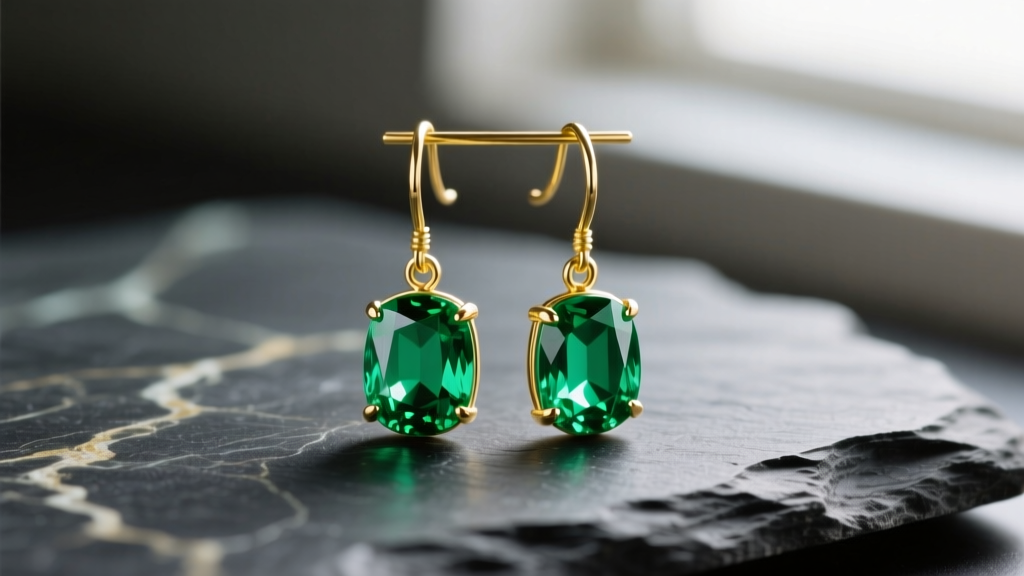
Emerald green color earrings remain one of the most coveted accessories in fine jewelry, offering a rich, verdant hue that flatters every skin tone. However, the term 'emerald green' encompasses a wide spectrum of materials, from heavily included natural emeralds to flawless green sapphires, tsavorite garnets, and even cubic zirconia or enamel. When it comes to care, maintenance, and cleaning, treating all green earrings the same way is a recipe for disaster. A cleaning method that safely restores the brilliance of a green sapphire could completely destroy a natural emerald.
In this comprehensive guide, we break down the exact, gemologist-approved protocols for cleaning and maintaining your emerald green color earrings, ensuring they retain their fire, color saturation, and structural integrity for decades to come.
The Hidden Vulnerabilities of Emerald Green Gemstones
Before applying any cleaning solution, you must identify the exact material providing the green color in your earrings. Natural emeralds (a variety of the mineral beryl) rank between 7.5 and 8 on the Mohs scale of hardness. While this makes them relatively scratch-resistant, their toughness—the ability to resist breaking or chipping—is notoriously poor due to 'jardin', the French term for the natural, moss-like inclusions and internal fractures present in almost all natural emeralds.
According to the Gemological Institute of America (GIA), over 90% of natural emeralds on the market are fracture-filled with oils (like cedar oil) or synthetic resins (like Opticon) to improve clarity and stability. These treatments mask the internal fractures by matching the refractive index of the beryl. If you expose treated emeralds to high heat, harsh chemicals, or ultrasonic vibrations, the filler will melt, boil out, or fracture the stone entirely, leaving you with a cloudy, heavily fractured, and significantly devalued gemstone.
Natural Emerald vs. Simulant Durability
- Natural Emerald: High vulnerability to heat, chemicals, and ultrasonic cavitation. Requires gentle, manual cleaning only.
- Tsavorite Garnet: Untreated, highly durable (Mohs 7-7.5), and generally safe for mild ultrasonic cleaning, though steam is discouraged to prevent thermal shock.
- Green Sapphire: Exceptionally durable (Mohs 9). Can withstand ultrasonics and steam, provided the stone is not fracture-filled with lead glass.
- Green Cubic Zirconia (CZ): Mohs 8-8.5. Safe for ultrasonics, but highly oleophilic (attracts grease), requiring frequent degreasing.
Step-by-Step Cleaning Protocol for Natural Emeralds
If your emerald green color earrings feature natural, oil- or resin-treated emeralds, you must abandon modern jewelry cleaning gadgets. Ultrasonic cleaners operate at frequencies between 20,000 and 40,000 Hz, creating microscopic cavitation bubbles that implode with enough localized force to shatter an included emerald from the inside out. Similarly, steam cleaners introduce sudden thermal shock and heat that will melt fracture fillers.
The Lukewarm Soak Method
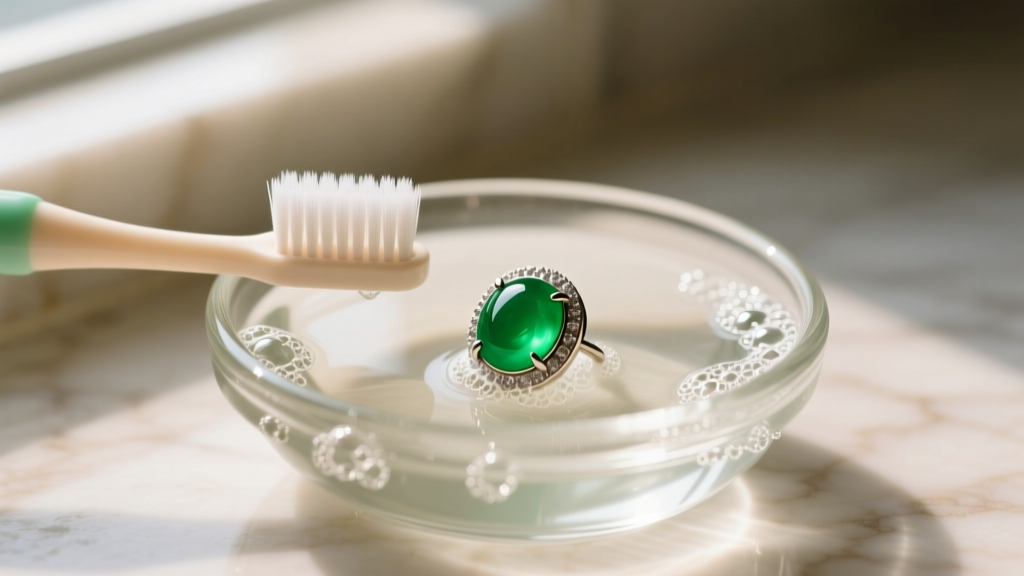
- Prepare the Solution: In a small glass bowl, mix three parts lukewarm (never hot) distilled water with one part mild, ammonia-free dish soap (such as original Dawn). Avoid soaps with heavy moisturizers or citrus degreasers, which can strip cedar oil treatments.
- Soak Briefly: Submerge the earrings for exactly 3 to 5 minutes. Do not exceed this time, as prolonged water exposure can degrade older oil treatments.
- Gentle Agitation: Using an extra-soft baby toothbrush or a dedicated, ultra-soft makeup brush, gently sweep over the metal settings and the back of the gemstone (the pavilion). Never scrub the crown (top) of the emerald with abrasive pressure.
- The Distilled Rinse: Rinse the earrings under a gentle stream of distilled water. Tap water contains chlorine and hard minerals that can leave cloudy spots on the metal and dull the stone's luster.
- Drying: Pat the earrings dry with a lint-free microfiber cloth. Use a wooden toothpick or a blast of compressed air to remove trapped moisture from beneath the prongs, which can cause the metal setting to tarnish over time.
Caring for Emerald Green Simulants and Enamel
If your earrings feature emerald-colored simulants or decorative enamel, the maintenance matrix changes entirely. Below is a quick-reference chart to help you identify the safest cleaning methodology based on your specific green material.
| Material | Mohs Hardness | Ultrasonic Safe? | Steam Safe? | Primary Risk Factor |
|---|---|---|---|---|
| Natural Emerald (Oiled) | 7.5 - 8.0 | No | No | Stripping of oil/resin fillers; stone shattering |
| Tsavorite Garnet | 7.0 - 7.5 | Yes (Mild) | No | Thermal shock from rapid temperature changes |
| Green Sapphire | 9.0 | Yes | Yes | Lead-glass filled stones degrading in acid/heat |
| Green Cubic Zirconia | 8.0 - 8.5 | Yes | Yes | Grease buildup causing severe cloudiness |
| Green Vitreous Enamel | 5.0 - 6.0 | No | No | Micro-scratches; cracking from metal flexing |
For green enamel earrings, avoid all liquid soaps. Instead, use a dry, clean microfiber cloth to buff away skin oils. If smudges persist, slightly dampen the cloth with plain water and wipe gently. Never use silver polish or chemical dips on enamel, as the sulfur and acids will permanently etch the glass-like surface.
Metal Setting Maintenance: Prongs, Bezels, and Alloys
The gemstone is only half the equation; the metal securing your emerald green color earrings requires equal attention. The most common failure mode for drop and dangle earrings is prong lifting, which leads to catastrophic stone loss.
The Tap Test for Prong Security
Every three months, perform the 'tap test'. Hold the earring firmly by the post or hook. Using a non-marring tool like a wooden toothpick or plastic tweezers, gently tap the center of the green gemstone. A high-pitched, solid 'click' indicates the stone is seated properly. A dull 'rattle' or buzzing sound means the prongs have pulled away from the stone's girdle. If you hear a rattle, cease wearing the earrings immediately and take them to a bench jeweler for a prong re-tipping.
Alloy-Specific Cleaning Considerations
- 18k Yellow Gold: High gold content (75%) makes this alloy softer and more prone to scratching and prong lifting. Polish with a jeweler's cloth, but avoid aggressive buffing which removes metal over time.
- Sterling Silver (925): Contains 7.5% copper, which reacts with ambient sulfur to form black silver sulfide (tarnish). Use a specialized silver polishing cloth, but keep the cloth away from natural emeralds, as the mild abrasives in the cloth can scratch the stone's polish.
- White Gold: Usually rhodium-plated to achieve a bright white finish. Frequent cleaning with harsh chemicals will strip the rhodium, exposing the slightly yellowish gold alloy beneath. Re-plate white gold earrings every 12 to 18 months.
Storage and Daily Wear Best Practices
Preventative care drastically reduces the need for deep cleaning. The American Gem Society universally recommends the 'last on, first off' rule for fine jewelry.
Always put your emerald green color earrings on after applying makeup, hairspray, perfume, and lotions. The alcohols and polymers in hairspray can degrade emerald oil treatments, while cosmetics can create a stubborn, greasy film on the back of the gemstone that blocks light return and kills the stone's brilliance.
Proper Storage Environments
Never toss your earrings into a communal jewelry box. Emeralds, despite their inclusions, are hard enough to scratch softer gems like pearls, opals, or turquoise. Conversely, diamonds and sapphires will easily scratch your emeralds. Store each pair of earrings individually in a soft, anti-tarnish flannel pouch or a dedicated compartment lined with untreated felt. If your earrings feature sterling silver settings, place a small piece of a 3M anti-tarnish strip inside the storage pouch to absorb ambient sulfur gases and prevent blackening.
By understanding the specific material composition of your emerald green color earrings and adhering to these targeted, gemologist-approved maintenance protocols, you will protect both the structural integrity and the vibrant color saturation of your jewelry for a lifetime of wear.


