Expert Care & Cleaning Tips for Garnet Drop Earrings
Learn expert cleaning and maintenance tips for garnet drop earrings. Protect your gemstones and metal settings with our detailed care guide.
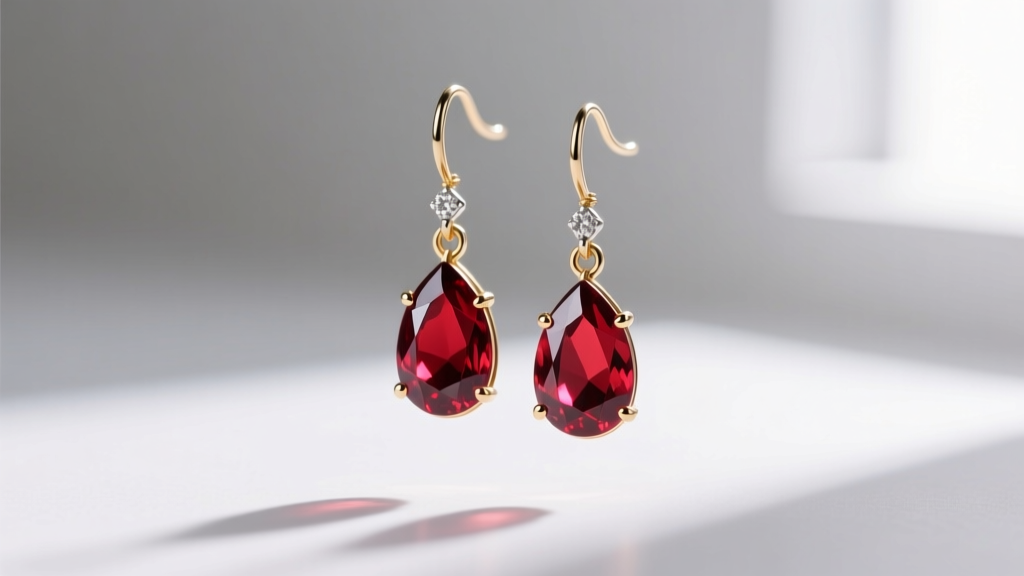
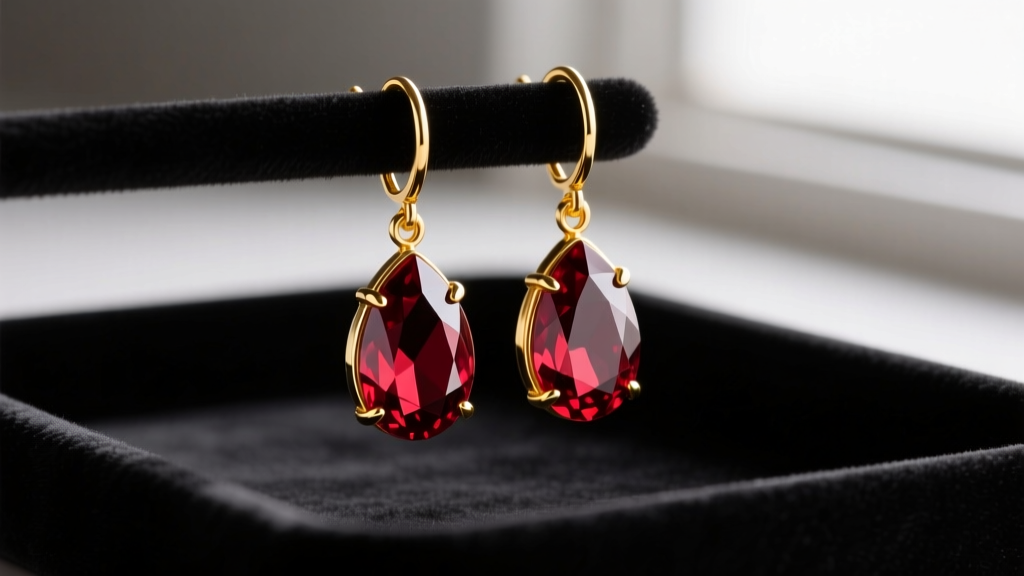
Garnet drop earrings offer a mesmerizing blend of movement, light refraction, and deep, rich color. Whether you own classic almandine drops, vibrant green tsavorites, or rare color-change varieties, these dynamic pieces require specialized maintenance. Because drop earrings swing and dangle, they are uniquely susceptible to environmental debris, skin oils, and accidental impacts. Understanding the specific gemological properties of garnet, combined with the mechanical realities of drop earring settings, is essential for preserving their brilliance and structural integrity.
The Anatomy of Drop Earrings and Dirt Accumulation
Unlike studs that sit flush against the earlobe, drop earrings feature complex articulation points. The connection between the primary stud (or hook) and the dangling garnet element usually involves a jump ring, a hinge, or a delicate chain link. These microscopic crevices are prime traps for sebum, dead skin cells, lotions, and airborne dust. Over time, this accumulation forms a hardened barrier that not only dulls the metal but blocks light from entering the pavilion of the garnet, significantly reducing its natural fire and brilliance.
To maintain the kinetic beauty of your garnet drop earrings, you must incorporate targeted cleaning techniques that address these specific mechanical joints, ensuring the drop mechanism remains fluid and the gemstone remains optically clear.
Garnet Varieties and Their Specific Vulnerabilities
The term 'garnet' refers to a complex silicate mineral group rather than a single gemstone. According to the Gemological Institute of America (GIA), different garnet species possess varying degrees of hardness and internal characteristics that dictate how they should be cleaned. While most garnets are entirely natural and untreated—meaning you do not have to worry about dissolving fracture-filling oils as you would with emeralds—their internal inclusion structures require careful consideration.
| Garnet Variety | Mohs Hardness | Inclusion Risks | Cleaning Recommendation |
|---|---|---|---|
| Almandine / Pyrope | 7.0 - 7.5 | Low; generally eye-clean | Standard warm soapy water soak |
| Tsavorite | 6.5 - 7.0 | Moderate; internal stress fractures possible | Gentle surface wiping; avoid thermal shock |
| Demantoid | 6.5 - 7.0 | High; 'horsetail' inclusions can be fragile | Mild soap, zero ultrasonic vibration |
| Color-Change | 7.0 - 7.5 | Low to Moderate | Standard warm soapy water soak |
Step-by-Step Cleaning Routine for Garnet Drops
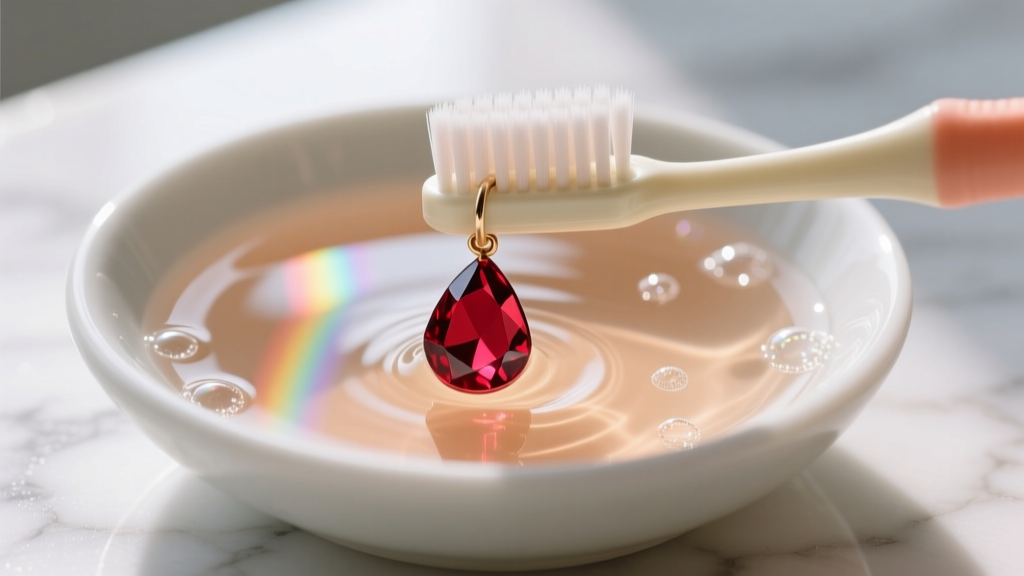
For routine maintenance of almandine and pyrope garnet drop earrings, a gentle at-home cleaning regimen is highly effective. Follow this precise methodology to restore luster without risking damage to the gemstone or the metal setting.
- Prepare the Solution: Fill a small glass bowl with lukewarm distilled water. Add two drops of phosphate-free, mild dish soap (such as original Dawn). Avoid hot water, as extreme thermal shifts can cause internal stress fractures in sensitive garnet varieties.
- Soak Briefly: Submerge the earrings for exactly 3 to 5 minutes. This softens the sebum trapped in the jump rings and prong settings without compromising the metal.
- Agitate Gently: Using a baby toothbrush or an extra-soft interdental brush, gently sweep the bristles across the crown and pavilion of the garnet. Pay special attention to the articulation point where the drop connects to the hook, using a wooden toothpick to carefully dislodge stubborn debris from the jump ring.
- Rinse and Dry: Rinse thoroughly under a gentle stream of lukewarm water. Ensure the drain is securely plugged. Pat dry with a lint-free microfiber cloth, ensuring no moisture remains trapped beneath the gallery wire of the setting.
What to Avoid: Ultrasonic and Steam Cleaners
Never place demantoid or tsavorite garnet drop earrings in an ultrasonic cleaner. The high-frequency vibrations can easily shatter stones with internal liquid inclusions or cause existing microscopic fractures to propagate, resulting in catastrophic gem failure.
Furthermore, steam cleaners introduce rapid, extreme temperature changes. Because garnets can be sensitive to thermal shock, the sudden blast of high-heat steam can cause the stone to crack internally. Stick to manual, low-impact cleaning methods to guarantee the longevity of your jewelry.
Metal Setting Maintenance: Silver vs. Gold
The metal housing your garnet drops requires its own specific care protocol. The articulation and movement of drop earrings cause friction at the connection points, which can accelerate wear on softer metals.
Sterling Silver Settings
Sterling silver (925) is highly susceptible to tarnishing when exposed to sulfur compounds in the air and the natural acidity of human sweat. For silver garnet drops, use a specialized silver polishing cloth infused with anti-tarnish agents. Never use liquid silver dips, as the harsh chemicals can become trapped in the porous crevices of the drop mechanism and eventually degrade the gemstone's polish. If your silver earrings feature rhodium plating to prevent tarnish, be aware that the friction from the earring backs and hooks will wear this plating away within 12 to 18 months, requiring professional replating.
14k and 18k Gold Settings
Gold alloys are far more resistant to corrosion, but they are not impervious to chemical damage. Exposure to chlorine (in swimming pools or household bleach) can cause a phenomenon known as stress corrosion cracking in gold alloys, particularly at the soldered joints of the drop earring's jump rings. Always remove your gold garnet earrings before swimming or cleaning. To restore shine, a simple buff with a clean jeweler's cloth is usually sufficient.
Storage and Prevention of Micro-Abrasions
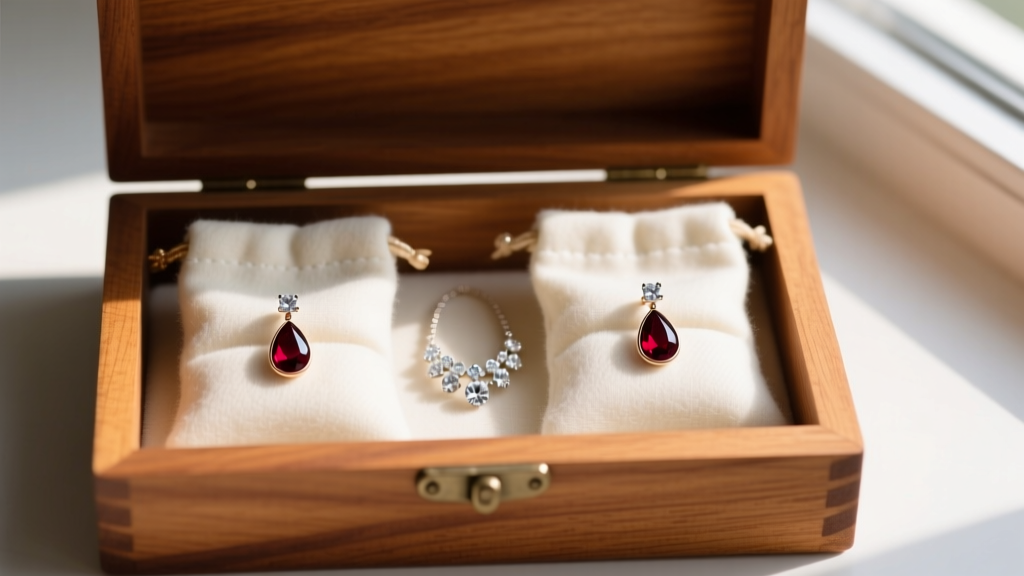
Proper storage is just as critical as active cleaning. On the Mohs scale of mineral hardness, garnet ranges from 6.5 to 7.5. While this makes it relatively durable for daily wear, it is significantly softer than diamonds (10), sapphires (9), and even topaz (8). If you toss your garnet drop earrings into a communal jewelry box alongside diamond studs or sapphire rings, the harder gems will easily scratch the surface of the garnet and mar the metal settings.
To prevent micro-abrasions and tangling—a common issue with the hooks and chains of drop earrings—store each piece individually. Utilize soft flannel pouches or dedicated compartments lined with anti-tarnish fabric. For French wire drop earrings, thread the hook through a small piece of flexible silicone tubing or a specialized earring holder to prevent the wire from bending or catching on other items.
When to Seek Professional Jeweler Services
While at-home care maintains the visual appeal of your garnet drop earrings, structural maintenance requires a professional touch. The constant swinging motion of drop earrings places repetitive stress on the prongs holding the gemstone and the soldered joints of the drop mechanism.
According to GIA's official care guidelines, you should have your fine jewelry inspected by a certified bench jeweler at least once a year. During this visit, the jeweler will perform the following critical checks:
- Prong Retipping: Over time, prongs wear thin from friction against clothing and hair. A jeweler will use a microscope to check for prong lift and add new metal to secure the garnet.
- Jump Ring Integrity: The tiny ring connecting the stud to the drop can slowly pull apart due to the weight and momentum of the dangling stone. A jeweler will ensure the solder joint remains completely closed.
- Stone Tightening: Even if the prongs look intact, the gemstone can become loose within the bezel or gallery. Professional tightening prevents the garnet from popping out and being lost.
By combining meticulous at-home cleaning with proactive professional inspections, your garnet drop earrings will remain a secure, brilliant, and captivating accessory for decades to come.


