Expert Care & Cleaning Tips for Gold Ball Drop Earrings
Discover expert cleaning methods and maintenance tips to keep your gold ball drop earrings tarnish-free, scratch-resistant, and brilliantly polished.

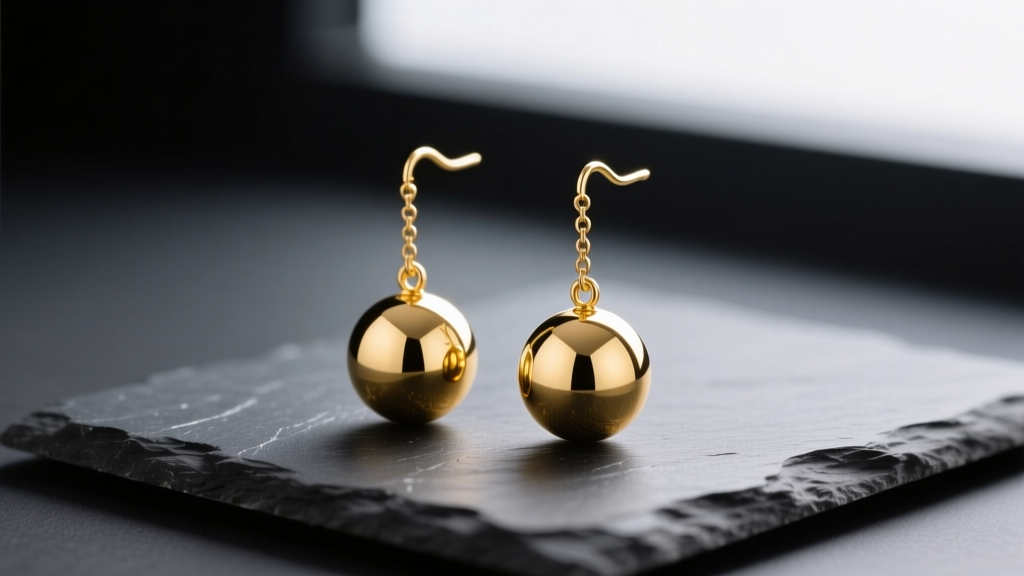
Gold ball drop earrings combine the timeless appeal of spherical geometry with the kinetic movement of a drop silhouette. However, this specific design introduces unique maintenance challenges. The spherical surface acts as a convex mirror, magnifying every micro-scratch, fingerprint, and trace of oxidation. Meanwhile, the drop mechanism—whether a French wire, leverback, or post-and-clutch—creates hidden crevices where sebum, dead skin cells, and environmental pollutants accumulate. To maintain the optical purity and structural integrity of your gold ball drop earrings, you must adopt a metallurgically informed approach to care and maintenance.
The Anatomy of Tarnish and Wear on Spherical Drops
Unlike flat or textured surfaces, the high-polish finish of a gold ball reflects light uniformly. This means that even a 5-micron scratch will disrupt the light path, creating a visible dull spot. According to the Gemological Institute of America (GIA), pure gold is exceptionally soft, rating just 2.5 to 3 on the Mohs hardness scale. To create durable jewelry, gold is alloyed with metals like copper, silver, and zinc. While these alloys increase tensile strength, they also introduce chemical vulnerabilities. Copper, heavily used in 14K rose and yellow gold, is highly susceptible to oxidation when exposed to sulfur compounds in the air or household chemicals, resulting in a dark, tarnished film that clings stubbornly to the curved underside of the drop ball.
Daily Maintenance: Preventing Micro-Scratches
The most effective way to preserve the mirror finish of your gold ball drop earrings is through rigorous daily handling protocols. Never store your earrings loose in a jewelry box where they can collide with harder gemstones like diamonds (Mohs 10) or sapphires (Mohs 9). Even contact with other gold pieces can cause friction scratches.
Adopt the "Last On, First Off" rule. Gold is highly reactive to the chemicals found in perfumes, hairsprays, and lotions. Aerosolized cosmetics can create a microscopic, cloudy film over the gold ball, dulling its reflective properties. By putting your earrings on after your beauty routine is complete, you prevent this chemical buildup. When removing them, wipe the spherical surface gently with a clean, lint-free microfiber cloth to remove the day's accumulation of natural skin oils and acidic sweat, which can slowly etch the alloyed metals over time.
Deep Cleaning Protocols by Karat Grade
When daily wiping is no longer sufficient to restore the luster of your gold ball drop earrings, a deep wet-cleaning is required. However, the cleaning agent must be matched to the specific karat grade of your earrings. Using harsh chemicals on high-karat gold can damage the surface, while using overly gentle solutions on low-karat gold will fail to remove copper oxidation.
| Karat Grade | Gold Purity | Primary Alloys | Tarnish Risk | Scratch Risk | Recommended Cleaner |
|---|---|---|---|---|---|
| 10K | 41.7% | High Copper/Zinc | High | Low | Mild Ammonia Solution (1 part ammonia to 6 parts water) |
| 14K | 58.5% | Moderate Copper/Silver | Moderate | Moderate | Dish Soap & Distilled Water |
| 18K | 75.0% | Silver/Copper | Low | High | pH-Neutral Jewelry Bath |
| 22K | 91.6% | Trace Alloys | Very Low | Very High | Warm Water & Microfiber Only |
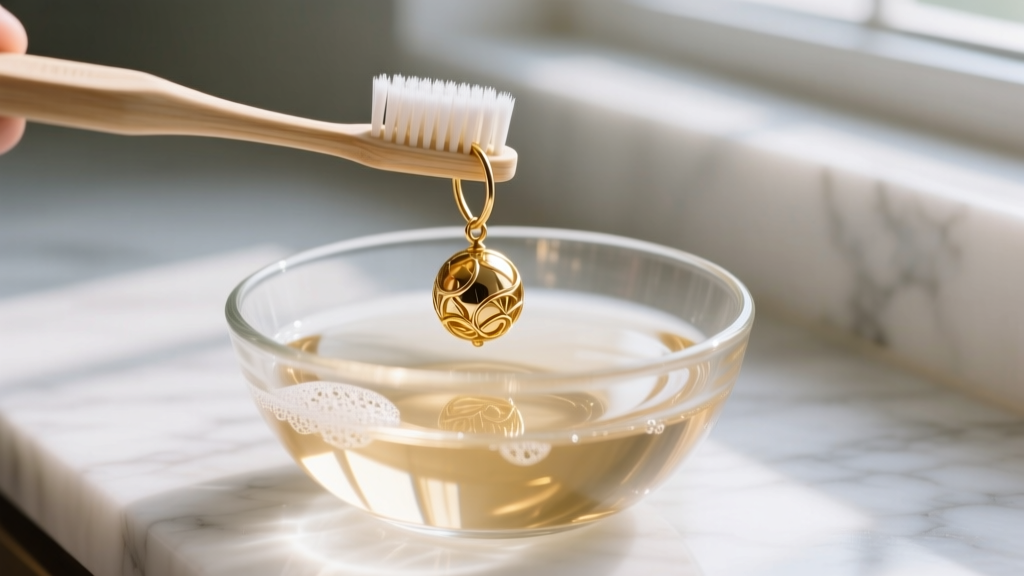
For the most common 14K and 18K gold ball drop earrings, a solution of warm distilled water and a few drops of phosphate-free dish soap is ideal. Soak the earrings for 15 minutes to loosen sebum trapped in the drop wire mechanism. Use an extra-soft baby toothbrush to gently agitate the area where the wire enters the ball or the jump ring. Rinse thoroughly with distilled water—never tap water, as the chlorine and dissolved minerals can leave water spots on the spherical surface.
The Hollow vs. Solid Gold Ball Dilemma
A critical consideration in cleaning gold ball drop earrings is determining whether the spheres are solid or hollow. Large gold balls (typically 8mm and above) are frequently created via electroforming to keep the earrings lightweight and affordable. Jewelers of America strongly warns against using ultrasonic cleaners on hollow gold jewelry. The high-frequency acoustic cavitation can cause microscopic fractures in the thin gold shell, or worse, force water through an invisible seam. Once trapped inside, the water cannot evaporate, leading to a permanent rattling sound and internal degradation. Always stick to manual soaking and gentle brushing for hollow drop earrings.
Restoring the Luster: Polishing Spherical Surfaces
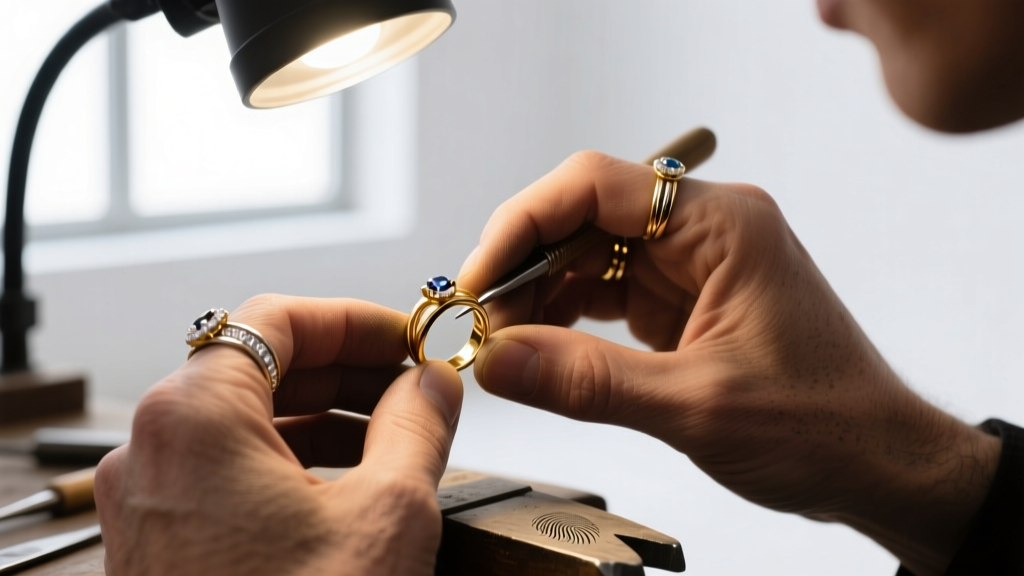
Over time, unavoidable micro-scratches will cloud the mirror finish of your gold balls. Polishing a sphere requires specific techniques to avoid creating flat spots or directional scratch patterns that catch the light awkwardly. Never use paper towels or tissue paper to buff your earrings; these materials contain wood fibers that are hard enough to scratch 18K gold.
Instead, use a high-quality jeweler's rouge cloth impregnated with fine iron oxide. When polishing the ball, use continuous, overlapping circular motions. Linear wiping will create parallel striations that become highly visible on a curved, reflective surface. Apply minimal pressure—let the chemical polishing agents in the cloth do the work. If your drop earrings feature a matte or brushed finish on the ball, do not use a rouge cloth, as it will inadvertently polish the textured surface into a shiny patch, ruining the original design intent. Instead, use a clean, untreated Selvyt cloth to gently lift oils without altering the surface texture. For deep scratches that catch your fingernail, professional laser welding and re-polishing by a master jeweler is the only viable remedy; DIY sanding will inevitably distort the perfect spherical geometry.
Mechanical Failures: Securing the Drop Mechanism
The aesthetic appeal of gold ball drop earrings relies entirely on their movement, which puts mechanical stress on the connecting hardware. The most common drop wires are 20-gauge (0.81mm) or 18-gauge (1.02mm) French wires. Repeatedly bending the wire to insert it into the earlobe causes "work hardening," a metallurgical phenomenon where the crystal lattice of the gold alloy becomes brittle. Eventually, the wire will snap at the point of maximum stress, usually right at the curve of the fishhook.
To prevent this, always insert and remove French wires with a straight, linear motion rather than pivoting them. If you prefer leverback drops, the tiny hinge mechanism is a magnet for debris. Once a month, use a wooden toothpick to gently clear out the hinge gap, and apply a microscopic drop of synthetic watch oil to the pin to ensure smooth opening and closing. For post-and-clutch drop styles, the friction notch on the post can wear down over time, causing the heavy gold ball to droop forward on the earlobe. A jeweler can easily re-cut this notch or swap the clutch for a secure silicone or flat-disc back, which provides a wider surface area to support the weight of the drop sphere. By understanding both the chemical and mechanical vulnerabilities of your gold ball drop earrings, you can ensure they remain a flawless, kinetic statement piece for decades.


