Cleaning Blue Square Earrings: Enamel, Resin & Gemstone Care
Discover expert cleaning and maintenance tips for blue square earrings. Learn how to safely care for enamel, lapis, sapphire, and resin geometric styles.

The Unique Challenge of Square Geometries and Blue Materials
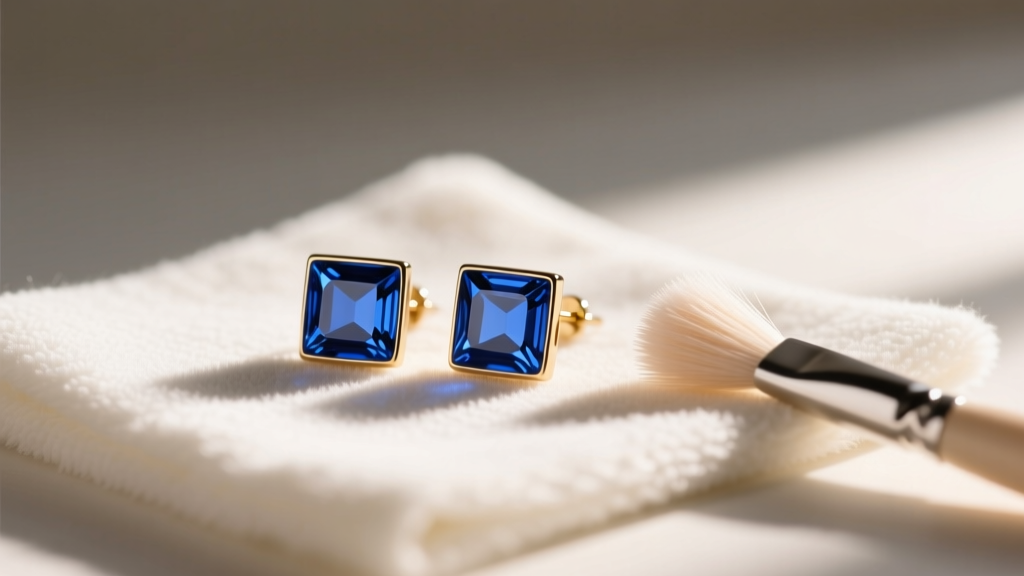
When it comes to jewelry maintenance, shape and color dictate the cleaning protocol just as much as the base metal. Blue square earrings present a highly specific set of maintenance challenges that round or clear gemstone pieces simply do not face. The striking visual appeal of a geometric square relies on crisp, sharp lines and a uniform distribution of color. However, those sharp 90-degree interior angles are notorious traps for sebum, dead skin cells, cosmetic residues, and environmental dust.
Furthermore, the "blue" in your earrings could be achieved through vastly different methods: vitreous enamel, cold epoxy resin, natural lapis lazuli, treated blue topaz, or anodized titanium. Applying a generic jewelry cleaning solution to these varied materials can result in catastrophic damage, from dissolving resin to etching natural stone matrices. According to the Association of Professional Piercers (APP), improper cleaning of jewelry trapped in the earlobe's geometry can also lead to localized contact dermatitis and piercing irritation. This comprehensive guide breaks down the exact material science and mechanical techniques required to keep your blue square earrings pristine, vibrant, and safe for long-term wear.
Material-Specific Cleaning Protocols
Before you reach for a polishing cloth or an ultrasonic cleaner, you must identify the exact material that provides the blue hue in your square earrings. The Mohs hardness scale and chemical reactivity will dictate your approach.
Enamel and Resin: The Delicate Squares
Geometric blue square studs are frequently crafted using enamel. It is critical to distinguish between vitreous enamel (glass fused to metal at high temperatures) and cold enamel (an epoxy-based resin). Vitreous enamel is relatively durable (Mohs 5-6) and can withstand mild soap and water, but it is highly susceptible to chipping if struck against hard surfaces. Cold enamel, however, is essentially plastic. It is highly sensitive to solvents. If you use rubbing alcohol, hand sanitizer, or commercial silver dips on cold enamel, the chemical reaction will break down the epoxy chains, leaving the blue surface cloudy, sticky, and permanently ruined. For both types, stick to a pH-neutral dish soap (like Dawn) and lukewarm water.
Natural Gemstones: Lapis Lazuli vs. Sapphire
Lapis lazuli is a popular choice for opaque blue square cabochons. However, lapis is a rock, not a single mineral. It contains lazurite (the blue component), calcite (white streaks), and pyrite (gold flecks). The Gemological Institute of America (GIA) explicitly warns against using acidic cleaners or ultrasonic machines on lapis lazuli. The calcite matrix is highly reactive to acids; even mild DIY cleaners like diluted vinegar or lemon juice will etch the calcite, leaving permanent white pitting on the surface of your square stone.
Conversely, if your blue square earrings feature princess-cut sapphires (corundum, Mohs 9), the stone itself is incredibly hard. However, the GIA Sapphire Care Guidelines note that many commercial-grade blue sapphires are fracture-filled with lead glass to improve clarity. Ultrasonic vibrations and mild acids (like ammonia-based window cleaners) will shatter or dissolve this glass filling, leaving the stone looking fractured and cloudy. Always assume a sapphire is fracture-filled unless accompanied by a reputable gemological certificate.
Anodized Titanium: Preserving the Oxide Layer
If your blue square huggies or hoops are made of titanium, the blue color is likely not a dye or a stone, but an anodized oxide layer created by running an electrical current through the metal in an electrolytic bath. This layer is incredibly thin. Using abrasive polishing cloths (such as Sunshine cloths embedded with jeweler's rouge) will literally scrub the blue oxide layer off, revealing the dull grey titanium underneath. Clean anodized titanium strictly with warm water, mild soap, and a microfiber cloth.
The Corner-Clearing Technique: Tools and Steps
The 90-degree corners of square settings and bezels are where the "earring cheese" (a mix of sebum, keratin, and soap scum) accumulates. This buildup not only dulls the jewelry but can harbor bacteria. Here is the professional protocol for clearing geometric corners without scratching the metal or the stone.
Essential Tools
- Soft-Bristle Infant Toothbrush: Adult toothbrushes often have bristles that are too stiff and can micro-scratch soft metals like 24k gold plating or high-polish silver.
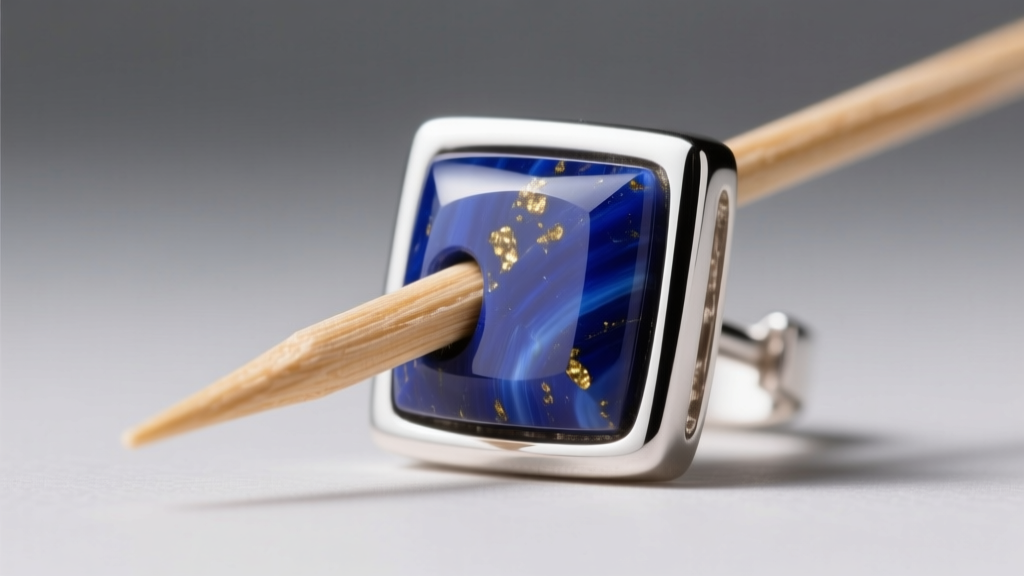
- Wooden Toothpicks or Orange Sticks: Never use metal needles, safety pins, or tweezers to pick debris out of a square corner. Metal-on-metal contact will gouge the bezel setting.
- Interdental Brushes (0.4mm - 0.6mm): The angled bristles are perfect for sweeping the interior corners of square huggies and geometric hoops.
- pH-Neutral Liquid Dish Soap: Avoid bar soaps, which contain fatty acids that leave a filmy residue on gemstones.
Step-by-Step Cleaning Process
- Pre-Soak: Mix a few drops of pH-neutral dish soap into a bowl of lukewarm (not hot) water. Submerge the earrings for 5 to 10 minutes to soften the sebum buildup in the square corners.
- Mechanical Agitation: Take the infant toothbrush and gently brush the back of the earring and the setting prongs. Use a circular motion, allowing the bristles to sweep into the 90-degree angles.
- Corner Picking: If hardened debris remains in the bezel corner, gently insert the tip of a wooden toothpick. Apply lateral pressure against the metal bezel, not downward pressure against the stone, to lift the debris out.
- Rinse and Dry: Rinse thoroughly under lukewarm running water. Pat dry with a lint-free microfiber cloth. Do not air dry, as water spots will ruin the optical clarity of faceted square stones.
Maintenance Matrix: What to Avoid
To prevent irreversible damage to your blue square earrings, consult this quick-reference matrix before applying any cleaning product or mechanical action.
| Material Type | Safe Cleaning Method | Strictly Avoid | Failure Mode |
|---|---|---|---|
| Cold Enamel / Resin | Mild soap, lukewarm water, microfiber | Alcohol, hand sanitizer, acetone | Surface clouding, sticky degradation |
| Lapis Lazuli | Damp cloth, dry immediately | Acids, ultrasonic cleaners, steam | Calcite etching, pyrite rusting |
| Fracture-Filled Sapphire | Warm soapy water, soft brush | Ultrasonic, ammonia, harsh dips | Lead-glass filling dissolution |
| Anodized Titanium | Warm water, gentle soap, pat dry | Abrasive polishing cloths, ultrasonic | Oxide layer removal (color loss) |
| Vitreous Enamel | Soapy water, soft brush | Hard impacts, ultrasonic (if cracked) | Chipping, glass fracturing |
Storage and Long-Term Preservation
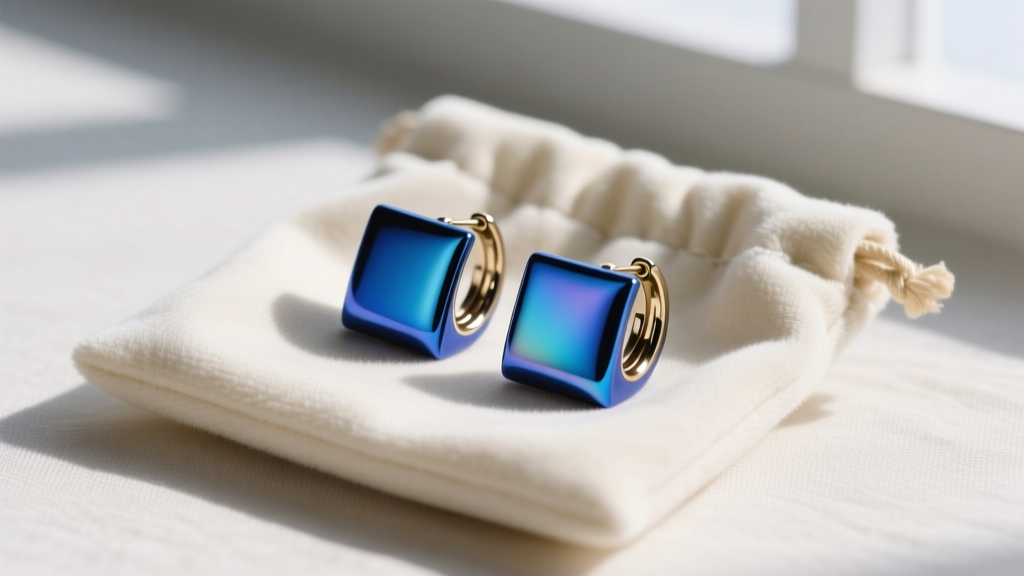
Proper storage is just as critical as the cleaning process, particularly for maintaining the vibrant blue hues and the structural integrity of square edges. Square earrings, especially those with sharp princess-cut stones or protruding geometric bezels, can easily scratch softer jewelry pieces if tossed into a communal jewelry box.
UV Protection for Resin and Enamel
If your blue square earrings are made of cold enamel or dyed resin, prolonged exposure to ultraviolet (UV) light will cause photo-degradation. The UV rays break the chemical bonds in the dye molecules, causing the vibrant blue to fade into a sickly yellow or pale green over time. Always store these pieces in a closed drawer or an opaque jewelry box, never on a vanity tray exposed to direct sunlight.
Anti-Tarnish Protocols for Silver Settings
Many blue square earrings feature sterling silver bezels or prongs. Silver tarnishes when it reacts with sulfur compounds in the air, forming a black layer of silver sulfide. This tarnish is particularly difficult to remove from the sharp interior corners of a square setting without using abrasive pastes that could damage the adjacent blue stone. Store your silver and blue stone earrings in individual anti-tarnish flannel pouches or ziplock bags with 3M anti-tarnish strips. This creates a micro-environment that neutralizes sulfur gases, keeping the silver bright and eliminating the need for aggressive chemical polishing.
Frequently Asked Questions
Can I use an ultrasonic cleaner on my blue gemstone square earrings?
Unless you have absolute certainty that your blue gemstone is a solid, untreated sapphire or blue topaz without any fracture fillings, you should avoid ultrasonic cleaners. The high-frequency vibrations can easily shatter the sharp 90-degree corners of square-cut stones, especially if they have internal inclusions or have been treated with oils or resins (common in lapis and turquoise). Furthermore, if the square stone is held in by a delicate tension setting or glued into a bezel, the ultrasonic waves will shake the adhesive loose, causing the stone to fall out.
Why is the blue color fading on my titanium square hoops?
Anodized titanium gets its blue color from the thickness of the oxide layer on the surface, which refracts light to create specific colors. If the blue is fading or turning grey, it means the oxide layer is being physically worn away. This is usually caused by friction against clothing, sleeping in the earrings, or using abrasive polishing cloths. While the titanium remains safe for sensitive ears, the color cannot be restored at home; it requires professional re-anodizing by a jeweler.


