Piercing Earrings Studs: A Technical Anatomy & Healing Guide
Discover the technical anatomy of piercing earrings studs. Learn about ASTM F136 titanium, threadless mechanisms, and proper post lengths for healing.

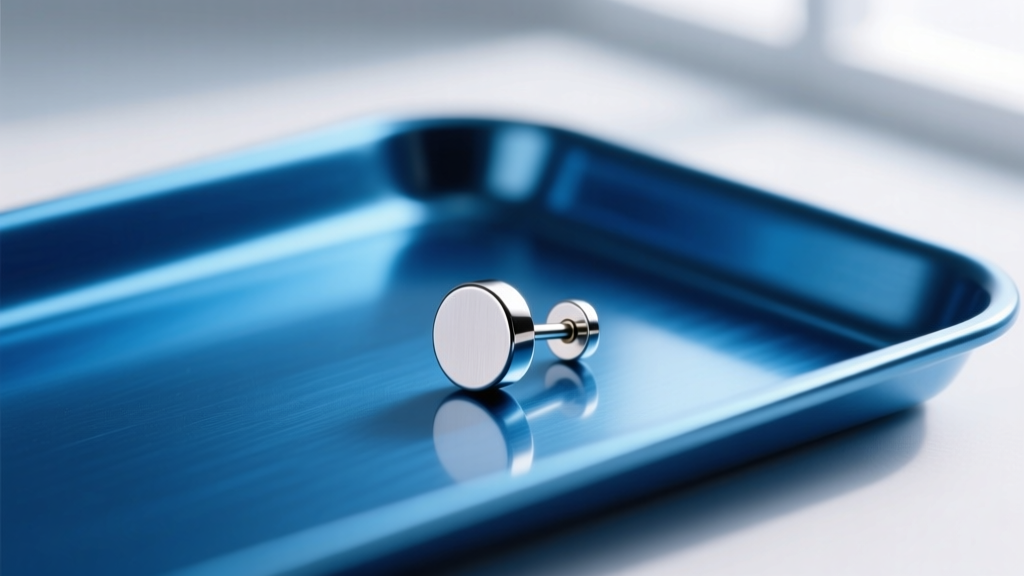
When navigating the complex world of body modification, the hardware you choose dictates the biological success of the procedure. While fashion jewelry prioritizes aesthetics, professional piercing earrings studs are engineered as temporary medical implants. The difference between a seamless healing process and a prolonged battle with hypertrophic scarring, contact dermatitis, or migration lies entirely in the metallurgical composition, mechanical threading, and dimensional tolerances of the jewelry.
This technical deep dive dissects the exact specifications required for initial healing and long-term retention in both earlobe and cartilage piercings, moving beyond generic advice into the biomechanics of fistula formation.
The Biomechanics of Fresh Piercings: Why Standard Studs Fail
A fresh piercing is not merely a hole; it is an acute puncture wound that the body attempts to heal by forming a fistula (a tube of scar tissue). Standard commercial studs—often sold with butterfly clutches and manufactured from mystery alloys—introduce three critical failure points during this vulnerable stage:
- Micro-movement: Butterfly backings fail to secure the post rigidly, allowing the jewelry to pivot. This continuous motion tears the fragile, newly formed epithelial cells lining the fistula.
- Compression Necrosis: Standard friction posts are often too short to accommodate the localized edema (swelling) that peaks 48 to 72 hours post-procedure. The backing compresses the tissue, restricting blood flow and causing necrosis.
- Bacterial Harborage: The intricate crevices of a butterfly clutch trap sebum, dead skin cells, and moisture, creating an anaerobic breeding ground for Staphylococcus aureus and Pseudomonas.
Metallurgy Matters: Decoding Implant-Grade Alloys
The term "surgical steel" is largely a marketing misnomer. Most commercial "surgical steel" (typically 316L stainless steel) contains up to 10-14% nickel, a known sensitizer that triggers allergic contact dermatitis in up to 20% of the population. For piercing earrings studs intended for fresh wounds, you must look for specific ASTM (American Society for Testing and Materials) designations.
| Material | ASTM Standard | Nickel Content | Avg Price Range (Per Stud) | Best Application |
|---|---|---|---|---|
| Implant-Grade Titanium | F136 (Ti-6Al-4V ELI) | 0.0% (Nickel-Free) | $35 - $85 | Initial healing, hypersensitive skin, cartilage |
| Niobium | Unalloyed (No ASTM) | 0.0% (Nickel-Free) | $40 - $90 | Initial healing, anodized color variations |
| Implant-Grade Steel | F138 | 10% - 14% (Bound) | $25 - $60 | Healed lobes (only if no nickel allergy) |
| Solid Gold | 14k or 18k (Palladium Alloy) | Varies (Must be verified) | $80 - $250+ | Healed piercings, long-term luxury wear |
According to the Association of Professional Piercers (APP), ASTM F136 titanium is the gold standard for initial piercings. Its ELI (Extra Low Interstitial) designation means it has reduced levels of oxygen, nitrogen, carbon, and iron, granting it superior biocompatibility and corrosion resistance inside the human body.
The Threading Debate: Threadless vs. Internally Threaded
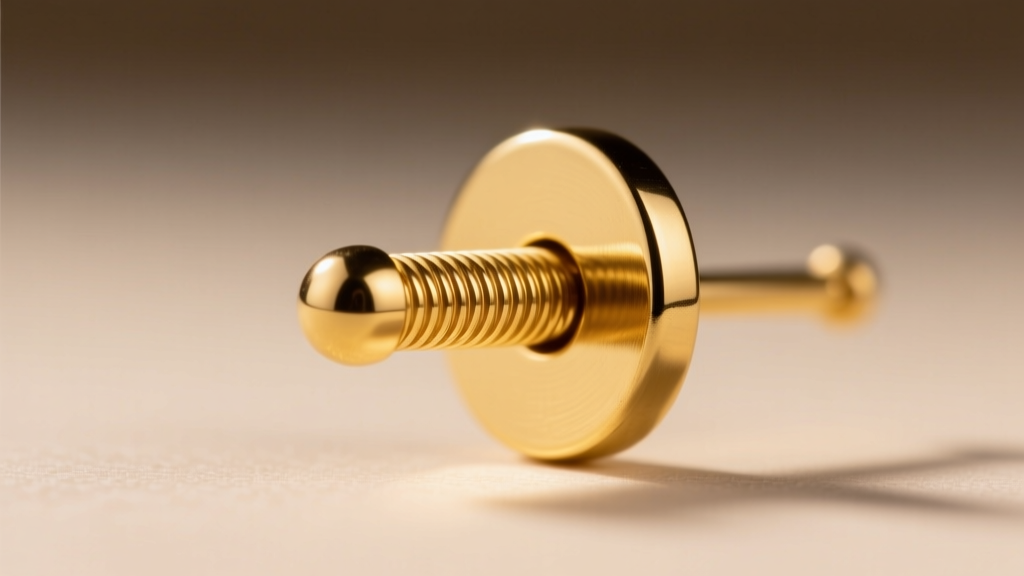
The mechanism by which the decorative end attaches to the post is just as critical as the metal itself. Externally threaded jewelry—where the screw pattern is cut into the post that passes through the skin—is universally condemned by professional piercers. Dragging sharp, jagged threads through a healing fistula causes micro-lacerations, leading to irritation bumps and delayed healing.
How Press-Fit (Threadless) Mechanisms Work
Threadless piercing earrings studs utilize a tension-fit system. The pin on the decorative end is manufactured from a slightly softer grade of titanium or gold. Before insertion, the piercer bends the pin at a precise 5 to 10-degree angle. When pushed into the hollow shaft of the post, the metal's natural memory attempts to straighten, creating immense outward friction against the inner wall of the post. This results in a secure hold that will not unscrew or vibrate loose, while maintaining a completely smooth exterior surface.
Internally Threaded Alternatives
If a threaded option is required, internally threaded studs are the only acceptable alternative. Here, the threads are located on the inside of the decorative end, and the post features a smooth, machined pin that screws into it. This ensures the surface passing through the tissue is flawlessly smooth, preventing tissue trauma during insertion or removal.
Gauge, Post Length, and Swelling Tolerances
Selecting the correct dimensions for piercing earrings studs requires an understanding of tissue displacement and the "cheese-cutter effect."
Understanding Gauge Thickness
- 20G (0.81mm): Standard for commercial fashion earrings. Too thin for fresh piercings; the high pressure per square inch can cause the jewelry to slice through the tissue under stress.
- 18G (1.02mm): The minimum acceptable gauge for standard earlobe piercings, offering a balance of stability and aesthetics.
- 16G (1.29mm): The industry standard for most cartilage piercings (helix, forward helix, tragus) and increasingly preferred for lobes to prevent migration and tearing.
- 14G (1.63mm): Reserved for high-stress areas like the conch or industrial piercings where maximum structural integrity is required.
Calculating Post Length for Edema
A fresh piercing will swell. If a 1/4" (6mm) post is used on a fresh helix piercing, the tissue will expand past the backing, embedding the jewelry and requiring emergency surgical intervention. Professional piercers utilize specific post lengths to accommodate this biological response:
- Initial Healing (Weeks 1-6): 5/16" (8mm) or 3/8" (10mm) posts are installed to allow for peak edema.
- Downsizing (Weeks 6+): Once swelling subsides, the wearer must return to the studio to "downsize" to a 1/4" (6mm) or 5/32" (5mm) post. Failing to downsize leaves excess post length, which catches on hair and clothing, introducing angled pressure that causes the fistula to heal crookedly.
The Flat Back Revolution: Endorsing Labret-Style Backings
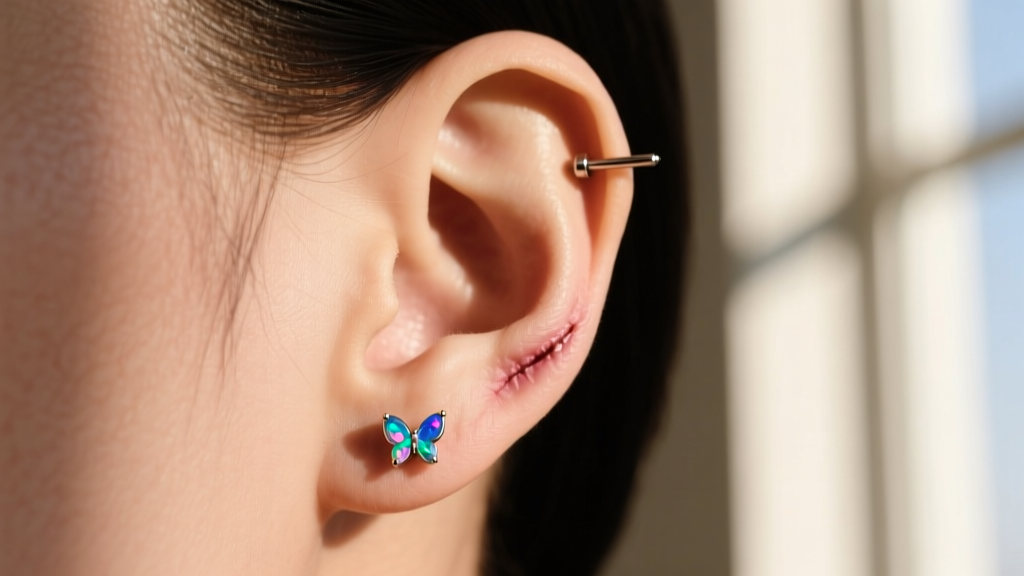
The anatomy of the backing dictates the angle of the piercing channel. Traditional friction posts with butterfly backs sit perpendicular to the tissue but often dig into the posterior side of the earlobe or cartilage, especially when sleeping. This localized pressure forces the jewelry to sit at an angle, resulting in a fistula that heals crookedly.
Modern piercing earrings studs utilize a flat back (often referred to as a labret back). Machined from a single piece of titanium, the flat disc rests flush against the posterior tissue. This design distributes pressure evenly across a wider surface area, eliminating pressure necrosis and ensuring the jewelry remains perfectly perpendicular to the tissue plane during sleep and daily movement. Furthermore, the solid disc prevents the accumulation of debris, making hygienic maintenance significantly easier during the 6-to-12-month healing window.
Troubleshooting: Piercing Bumps and Contact Dermatitis
Even with perfect technique, complications can arise. Understanding the differential diagnosis between common piercing anomalies is crucial for proper intervention.
Hypertrophic Scarring (Irritation Bumps): Often mistaken for keloids, these are localized, raised bumps of scar tissue that form adjacent to the piercing site. They are almost exclusively caused by mechanical irritation: sleeping on the piercing, snagging the jewelry, or leaving the initial long post in for too long after swelling has subsided. Treatment involves correcting the jewelry angle, downsizing the post, and applying sterile saline compresses.
Allergic Contact Dermatitis: If the tissue surrounding the piercing becomes intensely itchy, red, and weeping, the culprit is likely a nickel allergy. As noted by dermatological research on contact dermatitis, nickel is the most common metal allergen. The only cure is the immediate removal of the offending alloy and replacement with verified ASTM F136 titanium or pure niobium.
By treating your initial jewelry selection as a precise medical decision rather than a mere fashion choice, you establish the biological foundation for a perfectly healed, lifelong piercing.


