Silver Chandelier Earrings: 2026 Alloy & Metal Guide
Compare 925 sterling, Argentium, and plated metals for silver chandelier earrings. Expert insights on wire gauges, weight, and tarnish resistance.

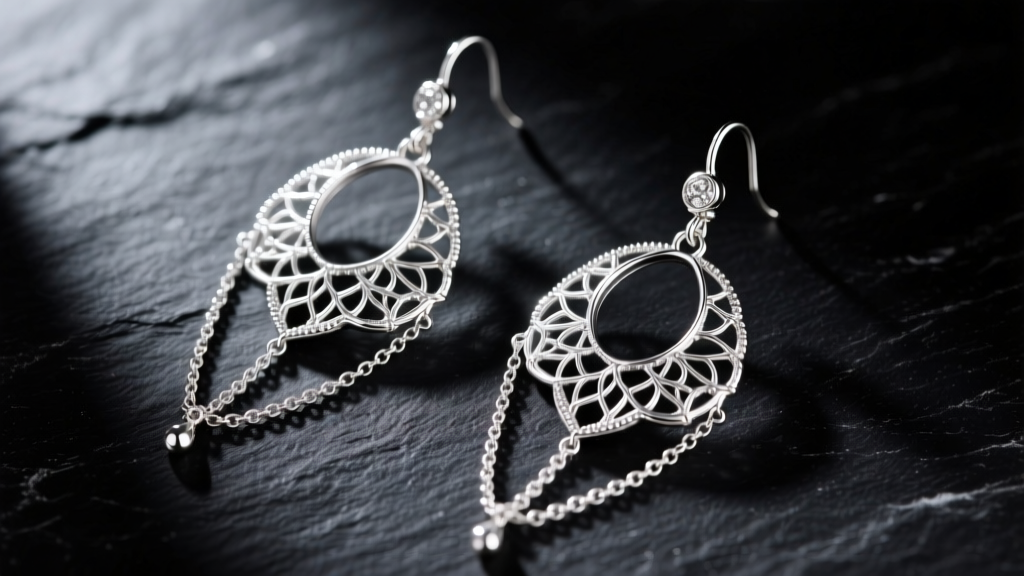
The Anatomy and Physics of Silver Chandelier Earrings
Chandelier earrings are the undisputed showstoppers of the jewelry world. Characterized by their multi-tiered, cascading designs, these statement pieces rely on complex kinetic movement to catch the light and frame the face. However, their intricate architecture—comprising dozens of jump rings, wire wraps, and dangling elements—makes them uniquely vulnerable to material fatigue, tarnish buildup, and structural failure. When shopping for silver chandelier earrings in 2026, understanding the specific metallurgical properties of the silver alloy used is not just a matter of prestige; it is a critical factor in the longevity, weight, and wearability of the piece.
Unlike simple stud earrings, chandelier designs exert dynamic leverage on the earlobe. Every time you turn your head, the kinetic energy transfers through the earring wire and down the cascading tiers. If the silver alloy is too soft, the structural loops will warp. If the alloy contains high levels of reactive base metals, the hidden crevices of the filigree will rapidly oxidize, turning your intricate jewelry black and requiring aggressive cleaning that can damage delicate wirework. To make an informed investment, we must look past the generic "silver" label and examine the exact alloy compositions, wire gauges, and structural engineering that separate heirloom-quality chandeliers from disposable fast fashion.
925 Sterling vs. Argentium: The Core Alloy Comparison
Pure silver (999 fine silver) is entirely too soft for the structural demands of chandelier earrings. It would bend under its own weight and fail at the jump ring connections. Therefore, jewelers rely on silver alloys. The two dominant players in the high-end market are traditional 925 Sterling Silver and the modern marvel, Argentium Silver.
Traditional 925 Sterling Silver consists of 92.5% pure silver and 7.5% copper. The copper provides necessary tensile strength, allowing jewelers to draw the wire thin enough for delicate filigree while maintaining enough rigidity to hold the earring's shape. However, copper is highly reactive. When exposed to sulfur in the air and the natural acidity of human skin, the copper in sterling silver rapidly forms silver sulfide—the black tarnish that plagues intricate jewelry. Furthermore, when sterling silver is heated during the soldering process, the copper reacts with oxygen to form "firescale," a deep purple-grey stain that requires extensive polishing to remove.
Argentium Silver (935 or 960) is a patented, modern alloy that replaces a portion of the copper with the metalloid germanium. According to metallurgical data from leading jewelry suppliers like Rio Grande, the addition of germanium fundamentally changes the behavior of the silver. It creates a transparent, self-healing oxide layer on the surface that drastically slows tarnish formation. More importantly for chandelier earrings, Argentium is highly resistant to firescale and can be fusion-welded without traditional solder, creating seamless, incredibly strong jump rings that will never pull apart under kinetic stress.
| Property | 925 Sterling Silver | Argentium 935/960 | Britannia 958 |
|---|---|---|---|
| Composition | 92.5% Ag, 7.5% Cu | 93.5%+ Ag, Cu, Ge | 95.8% Ag, 4.2% Cu |
| Tarnish Resistance | Low (Requires frequent polishing) | Exceptional (Tarnishes very slowly) | Moderate |
| Tensile Strength | High (Excellent for wire wrapping) | Very High (Superior durability) | Low (Too soft for jump rings) |
| Firescale Risk | High during soldering | Virtually eliminated | Moderate |
| Best Chandelier Use | Main frames, ear wires | Seamless jump rings, heirloom pieces | Cast decorative elements only |
Structural Integrity: Wire Gauges and Soldering Points
The most common point of failure in silver chandelier earrings is not the metal itself, but the gauge (thickness) of the wire used in critical stress points. The Gemological Institute of America (GIA) and master jewelers emphasize that kinetic jewelry requires strict adherence to wire gauge standards to prevent catastrophic loss of the earring.
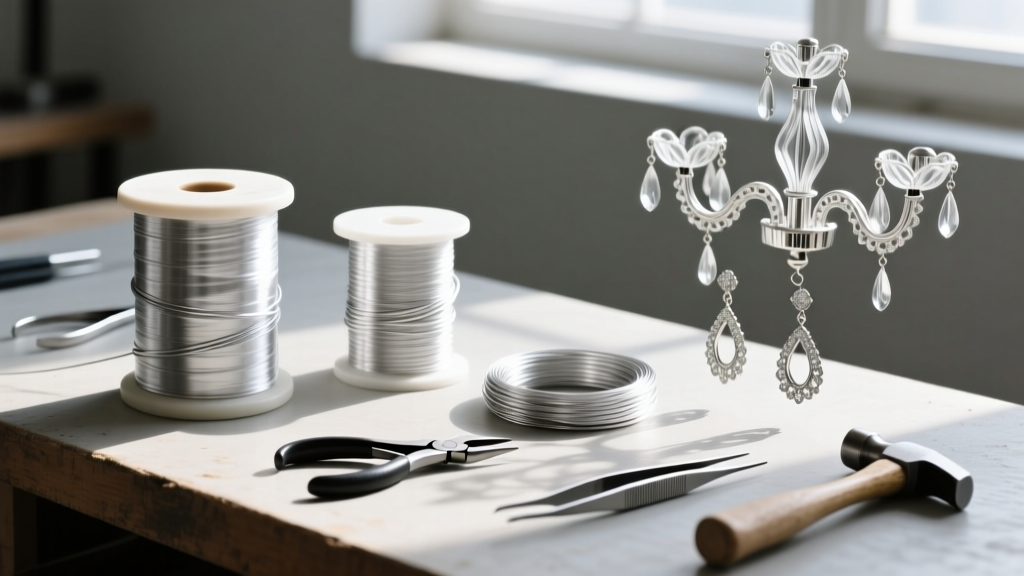
The Chandelier Wire Gauge Cheat Sheet
- 18-Gauge to 20-Gauge (Ear Wires & Main Frames): The fishhook or leverback wire that passes through the earlobe must be at least 20-gauge (0.81mm), preferably 18-gauge (1.02mm) for heavy designs. Thinner wires will bend open under the swinging weight, causing the earring to fall out. The primary structural frame holding the tiers must also be 20g or 18g half-hard wire.
- 22-Gauge (Jump Rings & Connectors): The rings connecting the main frame to the dangling tiers should be 22-gauge (0.64mm). Crucially, these must be either soldered closed or work-hardened. If they are merely butt-closed (where the two ends just touch), the kinetic swinging will eventually work the metal back and forth, popping the ring open.
- 24-Gauge to 26-Gauge (Decorative Wraps & Dangles): The delicate, lace-like filigree and the small wire-wrapped beads that give chandelier earrings their intricate beauty are best executed in 24g to 26g dead-soft wire. This thin wire is strictly decorative and should never bear structural load.
Expert Insight: Always inspect the jump rings on a chandelier earring before purchasing. If you can see a visible seam that hasn't been fused or soldered, the earring is highly susceptible to breaking during normal wear.
The Hidden Dangers of Silver-Plated and "Tibetan Silver"
In the pursuit of affordable statement jewelry, many consumers fall prey to misleading material descriptions. "Tibetan Silver," "Tribal Silver," and "Alpaca Silver" contain absolutely zero elemental silver. These are typically base metal alloys of copper, nickel, zinc, and lead. For heavy chandelier earrings, these materials are a dual threat: they are highly allergenic (nickel contact dermatitis is a severe risk for stretched earlobes) and they possess poor tensile memory, meaning once a base-metal ear wire bends, it stays bent.
Silver-plated brass or copper chandelier earrings present a different, yet equally frustrating, failure mode. While they look identical to 925 sterling upon first purchase, the friction at the jump ring connections will quickly wear away the microscopic layer of silver plating. Within months, the underlying brass will oxidize, leaving unsightly green and black powdery residue on your neck and clothing. Furthermore, you cannot polish silver-plated chandeliers aggressively; doing so will strip the plating entirely, ruining the piece. For intricate designs with dozens of moving parts, solid silver alloys are the only viable long-term option.
Maintenance: Cleaning Intricate Crevices Without Damage
The very beauty of chandelier earrings—the deep, layered filigree and tightly coiled wire wraps—makes them a nightmare to clean using traditional methods. Silver polishing cloths are entirely useless here, as they cannot reach the inner crevices where sulfur and skin oils accumulate. Liquid silver dips (thiourea-based chemicals) are equally problematic; they are notoriously difficult to rinse out of tight wire coils, and the trapped chemicals will eventually cause the silver to turn a chalky, irreversible grey.
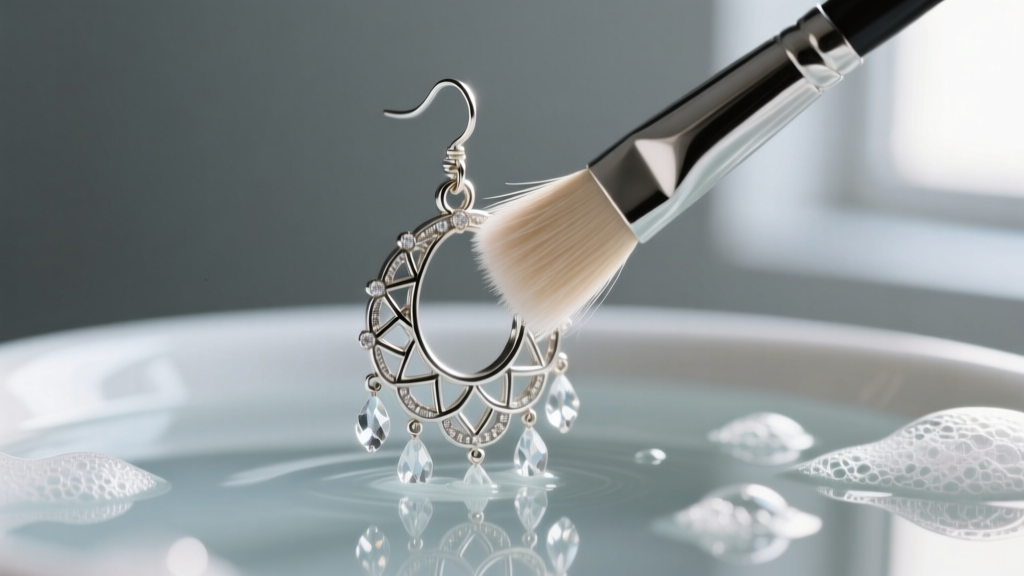
For 925 sterling and Argentium chandelier earrings, the safest and most effective deep-cleaning method is an electrochemical bath. Line a glass bowl with aluminum foil (shiny side up), add a tablespoon of baking soda and a pinch of salt, and pour in boiling water. Submerge your silver chandelier earrings for 3 to 5 minutes. The ion exchange reaction pulls the silver sulfide (tarnish) off the jewelry and transfers it to the aluminum foil, reaching every microscopic crevice without any physical abrasion. Rinse thoroughly with distilled water and dry completely with a microfiber cloth. Note: Never use this method if your chandelier earrings feature porous gemstones like turquoise, opal, or pearls, as the alkaline solution and heat will destroy them.
Expert Buying Framework: The 15-Gram Rule
When evaluating silver chandelier earrings, material purity is only half the battle; biomechanics dictate the rest. The human earlobe is not designed to bear heavy, swinging loads indefinitely. Prolonged wear of heavy earrings leads to "earlobe ptosis" (stretching and thinning of the piercing hole).
The 15-Gram Rule: For all-day comfort and to prevent permanent lobe stretching, a single chandelier earring should ideally weigh no more than 12 to 15 grams. Because silver is relatively lightweight compared to brass or steel, large, voluminous silver chandeliers can often stay within this safe weight limit, provided the jeweler has used hollow tubing or flattened wire for the main structural tiers rather than thick, solid round wire.
Before finalizing your purchase, run through this expert checklist: 1. Hallmark Verification: Look for the ".925" or ".935" stamp, usually located on the back of the earring wire or the top tier's main loop. 2. Ear Wire Thickness: Visually confirm the ear wire is robust (18g-20g) and features a secure closure, like a sturdy French wire with a silicone stopper or a locking leverback. 3. Kinetic Test: Gently shake the earring. Listen for a harsh, metallic clinking. High-quality chandeliers are engineered with slightly varied wire lengths or tiny rubber O-rings hidden in the jump rings to dampen sound and reduce metal-on-metal friction wear. 4. Weight Check: If buying in person, use a digital pocket scale. If the pair exceeds 30 grams total, reserve them for short-duration evening wear only.
By prioritizing advanced alloys like Argentium, demanding correct wire gauges, and respecting the biomechanical limits of the earlobe, you can acquire silver chandelier earrings that are not only breathtakingly beautiful but engineered to last a lifetime.


