Michal Negrin Earrings Care: Cleaning & Maintenance Guide
Discover expert care, cleaning, and maintenance tips for Michal Negrin earrings. Learn how to protect vintage patinas, crystals, and enamel details.

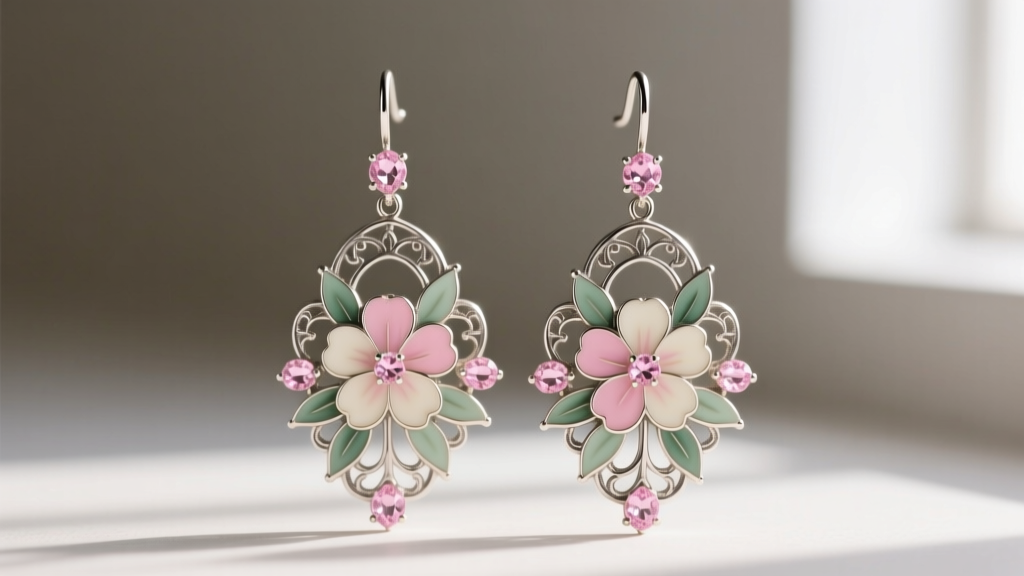
Michal Negrin earrings are widely celebrated for their romantic, Victorian-inspired aesthetics and intricate mixed-media craftsmanship. However, owning a pair of these wearable art pieces comes with a unique set of maintenance challenges. Unlike solid gold or simple sterling silver studs, Michal Negrin designs frequently combine oxidized brass base metals, delicate cold enamel, precision-cut Swarovski crystals, and occasionally lace or resin elements. Standard jewelry cleaning methods—like ultrasonic baths or commercial silver dips—will permanently destroy the intentional antiquing and delicate coatings on these pieces.
To preserve the structural integrity and visual depth of your collection, you must adopt a specialized care regimen. This comprehensive guide breaks down the exact anatomy of these earrings, the specific vulnerabilities of their materials, and the professional-grade protocols required to clean and store them safely in 2026 and beyond.
The Anatomy and Material Vulnerabilities
Understanding what your earrings are made of is the first step in proper conservation. Michal Negrin jewelry typically starts with a brass base, which is chosen for its excellent casting properties, allowing for the brand's signature elaborate filigree and floral motifs. This brass is then plated with silver or gold.
The defining characteristic of the brand's metalwork is the intentional oxidation (often referred to as a patina or antiquing). A darkening agent is applied to the metal and then polished off the high points, leaving the recesses dark. This creates a high-contrast, vintage look. If you use a chemical tarnish remover, you will strip this dark oxidation from the recesses, leaving the earring looking flat, overly bright, and fundamentally altered from the designer's original vision.
Furthermore, the crystals used are typically high-grade precision-cut glass (such as Swarovski), often featuring specialized vacuum coatings like Aurora Borealis (AB). These coatings are incredibly thin and can be degraded by harsh solvents, alcohol, or ammonia. The hand-painted floral details are usually achieved using cold enamel (an epoxy-based resin), which is highly sensitive to heat, acetone, and prolonged moisture exposure.
The Golden Rules of Daily Wear
Preventative care is always superior to reactive cleaning. Because the materials are highly reactive to everyday chemicals, how you wear your Michal Negrin earrings dictates how long they will last.
- The 'Last On, First Off' Rule: Always put your earrings on after applying perfume, hairspray, lotions, and makeup. The alcohol and aerosolized chemicals in cosmetics will rapidly degrade the crystal coatings and cause the brass base to corrode if it penetrates microscopic gaps in the plating.
- Avoid High Humidity and Water: Never wear these earrings in the shower, swimming pool, or sauna. Chlorine and saltwater are highly corrosive to brass and silver plating. Furthermore, water can seep beneath the crystal settings, causing the underlying brass to oxidize and expand, which can eventually push the crystals out of their prongs.
- Manage the Weight: Many Michal Negrin chandelier and drop earrings are substantial in weight. To prevent the brass posts from bending and to avoid stretching your earlobes, always use high-quality silicone friction backs or supportive earlobe patches (like Lobe Wonder) to distribute the weight evenly.
Step-by-Step Cleaning Protocol
When your earrings accumulate skin oils, dust, or environmental grime, you must clean them using a gentle, mechanical approach rather than a chemical one. According to conservation guidelines from the Victoria and Albert Museum regarding vintage and costume jewelry, mechanical removal of dirt is always preferred over chemical dissolution for mixed-media pieces.
Step 1: Dry Dusting the Filigree
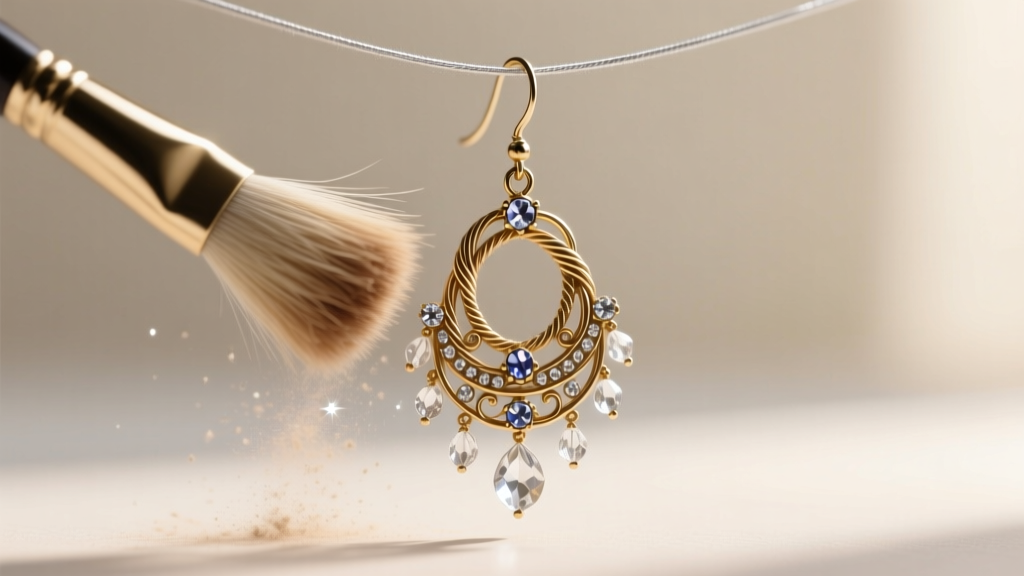
Before introducing any moisture, remove loose particulate matter. Use a clean, soft horsehair detailing brush (often used for camera lenses or fine antiques). Gently sweep the brush through the intricate brass filigree, behind the crystal settings, and along the earring posts. This prevents abrasive dust from scratching the plating during the wet cleaning phase.
Step 2: Polishing the Metal (Without Stripping Patina)
Never use liquid silver polishes or treated rouge cloths, as these contain micro-abrasives and chemical tarnish-removers that will strip the antiqued recesses. Instead, use a pristine, untreated microfiber cloth. Gently buff only the raised, high-polish areas of the metal. If the earrings are heavily soiled with skin oils, slightly dampen a cotton swab with distilled water (never tap water, which contains chlorine and minerals) and carefully trace the raised metal lines, immediately drying with a dry swab.
Step 3: Reviving the Crystals
Skin oils will quickly dull the brilliance of faceted glass crystals. To restore their sparkle without damaging the AB or metallic coatings, use a lint-free optical cleaning cloth. If a crystal is exceptionally greasy, breathe lightly on it to create a gentle, chemical-free condensation, and immediately wipe it with the optical cloth. The Gemological Institute of America (GIA) advises against using ultrasonic cleaners for any treated or coated gems, as the high-frequency vibrations can shatter the glass or cause the delicate prongs of costume jewelry to bend and release the stones.
Cleaning Agents: What to Avoid vs. What to Use
To eliminate any guesswork, refer to this quick-reference table before reaching for a cleaning product.
| Cleaning Agent / Method | Verdict | Reasoning & Material Impact |
|---|---|---|
| Commercial Silver Dips | NEVER USE | Strips intentional oxidation (patina) from recesses, ruining the vintage contrast. |
| Ultrasonic Cleaners | NEVER USE | Vibrations loosen glue and prongs; heat and chemicals shatter coated crystals. |
| Rubbing Alcohol / Acetone | NEVER USE | Dissolves cold enamel (resin) and strips Aurora Borealis crystal coatings. |
| Distilled Water + Cotton Swab | SAFE | Mineral-free moisture safely lifts skin oils from metal and glass without chemical reactions. |
| Untreated Microfiber Cloth | SAFE | Lifts oils and dust mechanically without scratching soft silver/gold plating. |
| Soft Horsehair Brush | SAFE | Dislodges trapped debris from deep filigree without bending delicate brass prongs. |
Proper Storage to Prevent Oxidation and Scratches
How you store your Michal Negrin earrings when they are not being worn is just as critical as how you clean them. Brass and silver plating are highly susceptible to atmospheric tarnishing, which is accelerated by humidity and sulfur in the air.
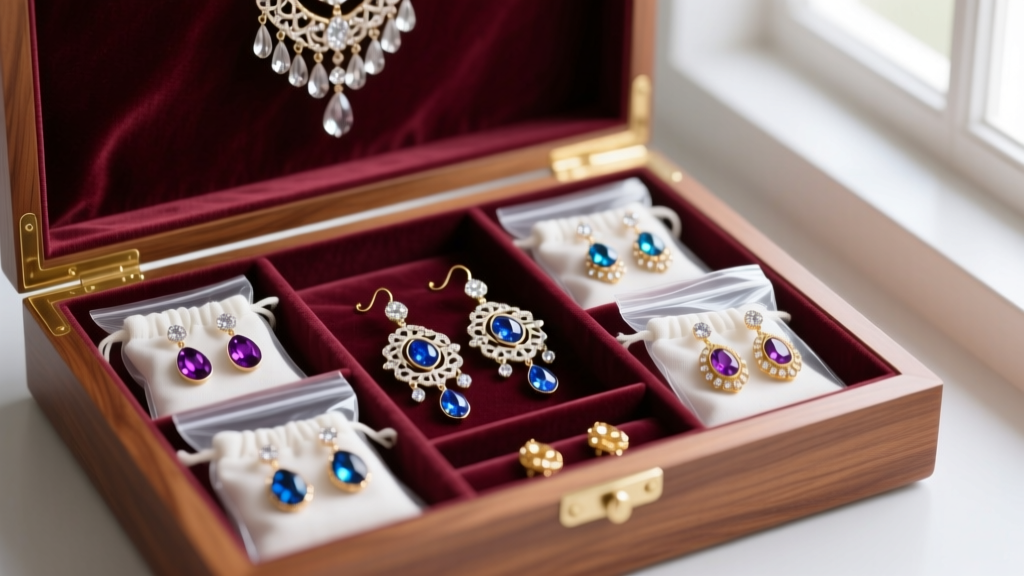
Do not store these earrings in PVC (polyvinyl chloride) plastic bags or standard cardboard boxes. PVC off-gasses chemicals over time that actively promote severe tarnishing and can cause the plastic to fuse to the enamel or resin components. Instead, use archival-quality polyethylene ziplock bags. Before sealing the bag, place a 3M anti-tarnish strip inside. These strips absorb sulfur gases and atmospheric pollutants, effectively pausing the oxidation process for up to 12 months.
Furthermore, because the earrings feature protruding crystals and delicate lace or resin flowers, they must be stored individually. If placed in a communal jewelry box, the metal posts of one earring can easily scratch the plating of another, or crush fragile cold-enamel petals. Wrap each pair in a soft, anti-tarnish flannel pouch before placing them in the polyethylene bag.
Troubleshooting and Professional Restoration
Despite meticulous care, vintage-style costume jewelry may eventually require professional intervention. If a crystal falls out, do not attempt to glue it back in with standard cyanoacrylate (Super Glue). Super glue emits fumes that create a permanent, cloudy white haze on the surface of glass crystals and can melt cold enamel. Instead, take the piece to a jeweler who specializes in costume jewelry and uses specialized UV-curing optical adhesives.
If the silver or gold plating begins to wear through to the brass base—usually occurring on the high-friction areas of the earring post or the backs of the clasps—the piece will require re-plating. This is a delicate process, as the jeweler must first carefully mask or remove the crystals and enamel before the electroplating bath, as the chemicals and electricity involved would destroy the decorative elements. Always seek a restoration specialist who explicitly advertises experience with mixed-media, antiqued fashion jewelry to ensure the signature Michal Negrin patina is accurately recreated.


