Expert Care and Cleaning for Gold Indian Earrings
Discover expert cleaning, storage, and maintenance tips for gold Indian earrings. Learn how to safely care for 22k, Kundan, and Meenakari styles.

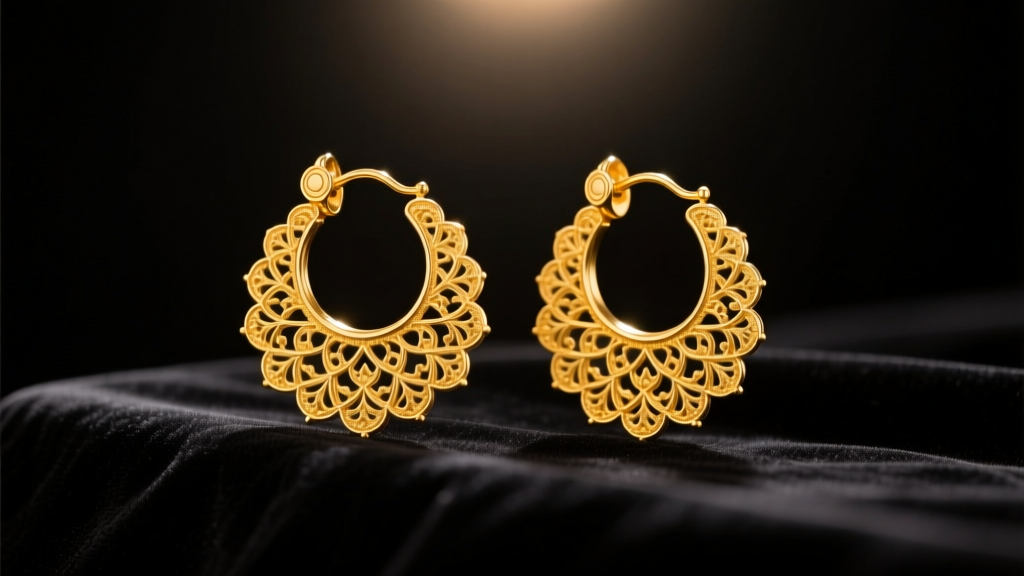
Gold Indian earrings are more than just accessories; they are intricate works of art, often passed down through generations as family heirlooms. From the sweeping, bell-shaped jhumkas to the elaborate temple jewelry of the south, these pieces feature unique metallurgical profiles and delicate embellishments that demand specialized care. Standard Western jewelry cleaning methods can easily ruin the structural integrity and historical value of these pieces. Whether you own solid 22k gold dangles or intricate Kundan studs, understanding the specific material science behind your jewelry is the first step in preserving its legacy.
The Unique Metallurgy of Indian Gold Jewelry
To properly care for gold Indian earrings, you must first understand their composition. While most Western everyday jewelry is crafted in 14k (58.3% pure gold) or 18k (75% pure gold), traditional Indian jewelry is predominantly crafted in 22k gold (91.6% pure).
On the Mohs scale of mineral hardness, pure 24k gold is exceptionally soft (around 2.5). By alloying it with small amounts of copper, silver, or zinc to create 22k gold, artisans achieve a balance between the rich, buttery yellow hue of pure gold and the structural durability needed to hold intricate shapes. However, 22k gold remains significantly softer than 14k gold. This means your earrings are highly susceptible to micro-scratches, warping under pressure, and surface abrasion if cleaned with harsh bristles or abrasive compounds.
Expert Insight: The high copper content in some 22k and 18k Indian gold alloys can lead to surface oxidation (tarnish) when exposed to high humidity and sulfur compounds in the air. This is a natural chemical reaction, not a sign of poor quality, and can be safely reversed.
Step-by-Step Cleaning Protocol for Solid Gold Pieces
For solid gold Indian earrings without fragile gemstone settings or enamel work, a gentle, chemistry-safe approach is required. According to the Victoria and Albert Museum's conservation guidelines, mild surfactants and distilled water are the safest agents for historical gold artifacts.
The Safe Soak Method
- Prepare the Solution: Mix three drops of phosphate-free, mild dish soap (like Dawn) into a bowl of lukewarm distilled water. Avoid tap water, as the chlorine and dissolved minerals can leave microscopic hard water spots on high-karat gold.
- Soak Briefly: Submerge your solid gold earrings for exactly 3 to 5 minutes. This loosens sebum, dead skin cells, and cosmetic residue trapped in the filigree work.
- Agitate Gently: Use an extra-soft baby toothbrush (never a standard adult toothbrush, even if labeled 'soft') to gently sweep the bristles across the textured surfaces. Always brush in the direction of the metal's grain or design flow.
- Rinse and Dry: Rinse under a gentle stream of distilled water. Pat dry immediately with a lint-free microfiber cloth, then allow them to air dry completely on a paper towel before storage.
Specialized Care for Embellished Styles
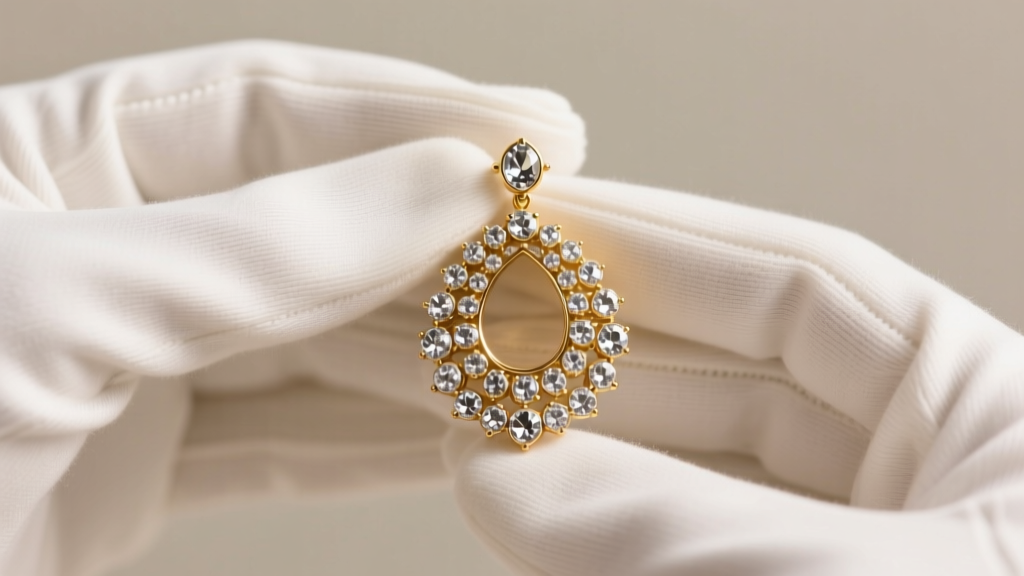
The most critical mistakes in jewelry maintenance occur when owners treat embellished gold Indian earrings exactly like solid gold pieces. Traditional Indian techniques utilize organic adhesives and delicate foils that are instantly destroyed by water and chemicals.
Kundan and Polki Jewelry
Kundan setting involves placing uncut diamonds (Polki) or glass into a framework of 24k gold foil and lac (a natural, tree-based resin). Never submerge Kundan earrings in water. Moisture will cause the lac to turn white, expand, and eventually push the stones out of their settings. Furthermore, the 24k gold foil behind the stones is microscopic and will tear if brushed. Clean Kundan pieces exclusively with a dry, soft-bristled makeup brush to dust off the surface, and use a dry cotton swab to gently lift oils from the diamond surfaces.
Meenakari (Enamel) Work
Meenakari involves fusing colored glass powder to the gold surface at high temperatures. While the enamel itself is durable, it is highly susceptible to thermal shock. Exposing Meenakari earrings to hot water or sudden temperature changes can cause the glass enamel to craze (develop micro-cracks) or pop off the gold base. Always use room-temperature distilled water when cleaning the reverse side of Meenakari pieces, and avoid any polishing cloths that contain chemical abrasives, which will dull the glass finish.
Temple Jewelry and Oxidized Details
Traditional South Indian temple jewelry often features deliberate oxidation in the recessed areas to provide contrast and highlight the raised motifs of deities and peacocks. Using standard gold polishing dips or aggressive rubbing will strip this intentional patina, leaving the piece looking flat and historically inaccurate. Use a cotton swab to clean only the raised, polished areas, leaving the dark recesses untouched.
The 'Never Do This' Checklist
To protect the structural and monetary value of your collection, avoid these common cleaning pitfalls. The Gemological Institute of America (GIA) frequently warns against the misuse of commercial cleaners on high-karat and antique jewelry.
| Cleaning Method | Why It Destroys Indian Gold Earrings |
|---|---|
| Ultrasonic Cleaners | High-frequency vibrations will shatter fragile Polki diamonds, crack Meenakari enamel, and shake loose the lac backing in Kundan settings. |
| Ammonia-Based Dips | Ammonia reacts aggressively with the copper and silver alloys in 22k gold, causing surface pitting, stress corrosion cracking, and permanent discoloration. |
| Toothpaste and Baking Soda | These are highly abrasive. They will scratch the soft 22k gold surface, creating micro-grooves that trap more dirt and dull the luster over time. |
| Steam Cleaners | The intense heat and pressure will melt the organic lac resin used in traditional stone settings and cause thermal shock to enamel work. |
Long-Term Storage and Humidity Control
Proper storage is 80% of the maintenance battle. Gold Indian earrings, particularly those with heavy dangles or delicate screw-backs, must be stored in a way that prevents physical tangling and chemical degradation.
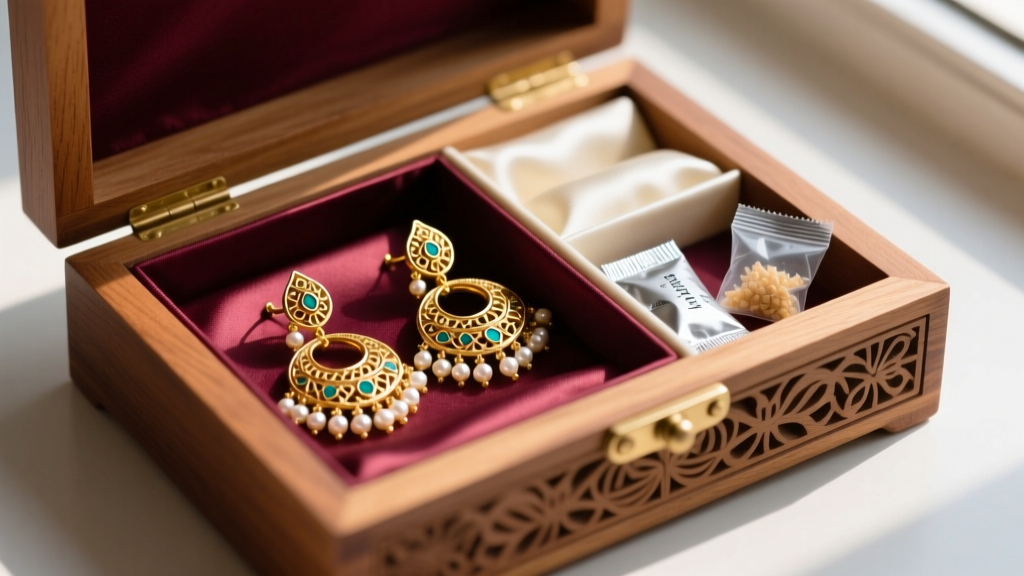
- Individual Pouches: Store each pair in its own soft, unbleached cotton or silk pouch. Never drop multiple pairs into a single box compartment, as the heavy 22k gold will easily scratch and dent upon contact.
- Humidity Control: High humidity accelerates the oxidation of the copper alloys in the gold. Store your jewelry in a room with a Relative Humidity (RH) between 40% and 50%. Include small, indicating silica gel packets in your storage boxes to absorb ambient moisture.
- Anti-Tarnish Strips: Place 3M anti-tarnish strips (which absorb sulfur and hydrogen sulfide gases from the air) inside your jewelry boxes. Replace these strips every 3 to 6 months depending on your local climate.
- Support the Hooks: For heavy jhumkas or chandbalis, stuff the hollow bell portions with acid-free tissue paper to prevent them from being crushed under their own weight over time.
When to Seek Professional Restoration
While routine cleaning can be done at home, certain issues require the hands of a master karigar (traditional artisan). If you notice a Kundan stone lifting, a Meenakari chip, or a hairline fracture in a 22k gold ear wire, stop wearing the piece immediately. Attempting to bend a weakened 22k gold wire back into shape will cause metal fatigue and a complete snap. Seek out a jeweler who specializes in heritage Indian jewelry restoration, as they possess the specific tools and traditional materials (like natural lac and 24k foil) required to repair the piece without compromising its authenticity.


