Protect Your Jewelry: Wooden Earring Holder Care Tips
Learn how to properly clean and maintain a wooden earring holder to prevent metal tarnish, protect delicate finishes, and organize your collection safely.

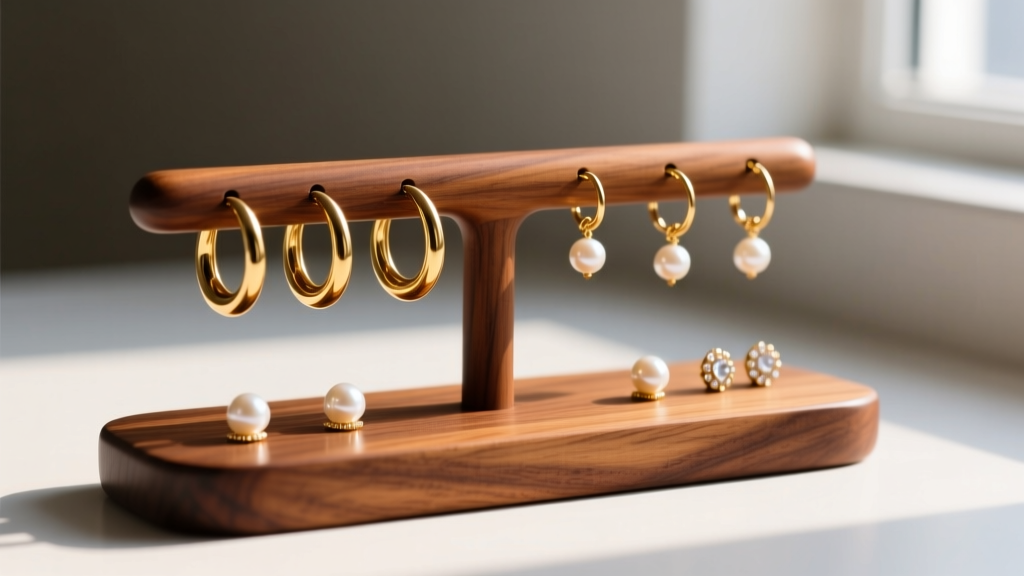
The Hidden Dangers of Improper Jewelry Storage
A beautifully crafted wooden earring holder is more than just a vanity accessory; it is a functional tool that dictates the longevity of your jewelry. However, many collectors treat these displays as static furniture rather than active preservation environments. Wood is a hygroscopic material, meaning it absorbs and releases moisture from the surrounding air. When left untreated or improperly cleaned, the microscopic pores in the wood can trap ambient humidity, skin oils, and environmental pollutants. Over time, this creates a microclimate that accelerates the oxidation of sterling silver, degrades the rhodium plating on white gold, and can even cause the posts of your favorite studs to bend or snap.
To protect your investment, maintaining your wooden earring holder requires an understanding of material chemistry, proper cleaning solvents, and strategic sealing techniques. Below, we detail the exact protocols used by jewelry conservators to ensure your display remains safe for everything from delicate 20-gauge diamond studs to heavy, oversized brass hoops.
Why Wood? Understanding Material Interactions
Not all woods are created equal when it comes to jewelry storage. The primary culprit behind accelerated metal tarnish in wooden displays is tannic acid. Tannins are naturally occurring polyphenols found in many tree species. When tannins interact with moisture and the sulfur compounds present in the air, they create a highly corrosive environment for copper alloys, sterling silver, and brass. According to The Wood Database, woods like oak and chestnut possess high acidity levels that can literally eat away at delicate metal finishes over time if the wood is not properly sealed.
Acidic Woods vs. Neutral Woods
If you own a wooden earring holder made from White Oak or Red Oak, it is imperative that the wood has been sealed with an archival-grade barrier. Unsealed oak will off-gas acetic acid, which causes a distinct, irreversible pitting on silver and copper earrings. Conversely, woods like Black Walnut, Maple, and Cherry are relatively neutral and pose a much lower risk to your jewelry, provided they are kept free of dust and skin oils.
| Wood Species | Tannin/Acid Level | Tarnish Risk for Silver | Best For |
|---|---|---|---|
| Black Walnut | Low | Minimal | All fine jewelry, antique studs |
| White Oak | High | Severe | Costume jewelry, sealed displays only |
| Bamboo | Low (Grass) | Low (Check glues) | Heavy hoops, modern dangles |
| Cherry | Medium | Moderate | Gold, platinum, gemstone drops |
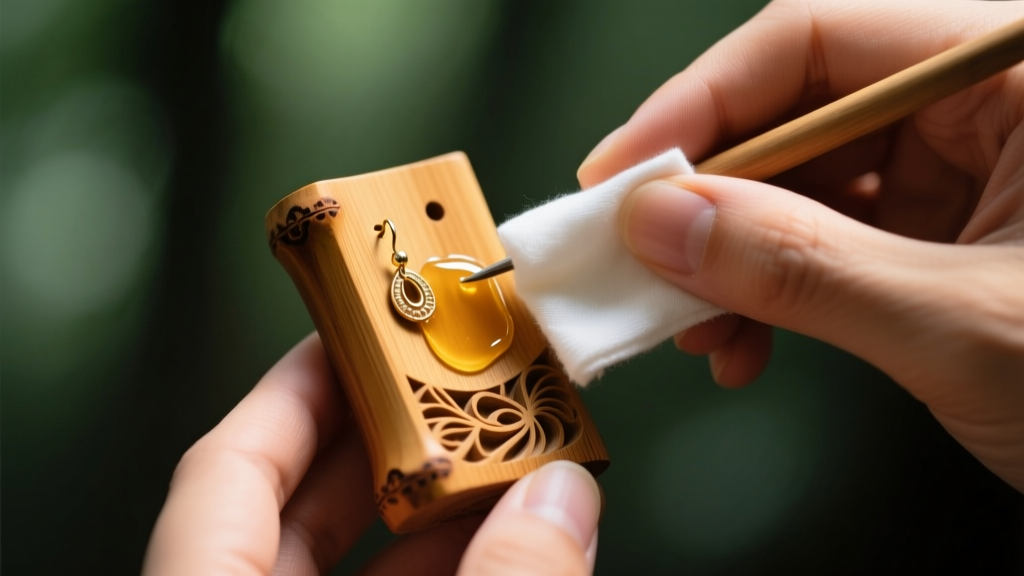
Step-by-Step Cleaning Guide for Wooden Holders
Never use water, glass cleaner, or all-purpose household sprays on a wooden earring holder. Water will raise the grain of the wood, creating a rough surface that can scratch the high-polish finish of your gold hoops or snag the delicate chains of drop earrings. Furthermore, the ammonia found in glass cleaners will strip the protective oils from the wood, leaving it brittle and prone to warping.
Tools Required
- Ultra-soft horsehair detailing brush
- Lint-free microfiber cloths
- Food-grade mineral oil or pure naphtha (for deep cleaning)
- Cotton swabs
The Cleaning Process
- Dry Dusting: Remove all earrings from the holder. Use the horsehair brush to gently sweep out the post holes and crevices. Dust contains microscopic silica particles that act like sandpaper against both the wood finish and your jewelry.
- Solvent Wipe (If Sticky): If the base of the holder has accumulated sticky residue from lotions or perfume, lightly dampen a microfiber cloth with pure naphtha. Wipe the affected area gently. Naphtha evaporates rapidly and will not raise the wood grain.
- Post Hole Maintenance: Dip a cotton swab in rubbing alcohol and carefully swab the inside of the earring post holes. This removes accumulated dead skin cells and sebum, which are highly acidic and can cause the metal posts of your earrings to corrode or become stuck in the wood.
- Buffing: Use a dry, clean microfiber cloth to buff the entire surface of the holder until it feels completely smooth and dry to the touch.
Sealing and Oiling: Protecting the Wood and Your Earrings
Once your wooden earring holder is clean, it must be sealed to prevent moisture exchange and halt any acidic off-gassing. While many people reach for linseed oil or olive oil, these organic oils will eventually oxidize, turn rancid, and emit gases that can damage porous gemstones like turquoise, opals, and pearls often found in dangle earrings.
Conservator's Tip: For the ultimate protection, use a microcrystalline wax, such as Renaissance Wax. Originally developed by the British Museum for artifact preservation, this wax is completely pH-neutral, non-yellowing, and creates an impermeable barrier against hydrogen sulfide—the primary gas responsible for silver tarnish.
Application Method: Apply a microscopically thin layer of microcrystalline wax using a soft cotton pad. Allow it to haze for exactly 15 minutes, then buff it vigorously with a clean cloth. Crucial: Let the wooden holder cure in a well-ventilated room for 24 to 48 hours before placing your earrings back on the display. This ensures that any trace solvents in the wax have fully evaporated, protecting sensitive gemstones from chemical clouding.
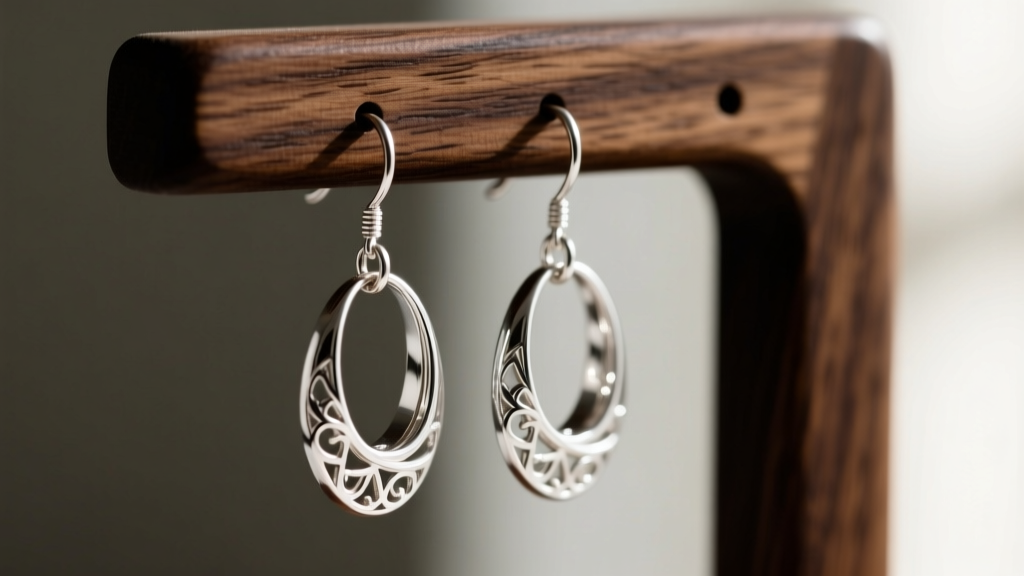
Earring-Specific Storage Best Practices
How you interact with your wooden earring holder directly impacts the structural integrity of your jewelry. Different earring styles require different handling techniques when being mounted or removed from wooden displays.
Managing Heavy Dangles and Hoops
Large, heavy brass or silver hoops can cause the top tier of a wooden holder to sag or warp over time if the wood is thin. Always distribute the weight evenly across the display. When inserting thick-gauge hoops (14g or 12g) into wooden slots, never force them. If the wood has swollen due to high ambient humidity, forcing the metal can cause the earring's solder joint to snap. If a slot is too tight, gently widen it with a piece of fine-grit (600) sandpaper wrapped around a toothpick.
Protecting Delicate Studs
Standard earring posts are typically 20-gauge (0.81mm) or 18-gauge (1.02mm). Repeatedly jamming these thin posts into unlined wooden holes will cause micro-abrasions on the metal, weakening the post and eventually leading to bending. To prevent this, apply a tiny drop of clear, flexible silicone caulk inside the post holes of your wooden holder. Once dried, this provides a soft, grippy cushion that holds the studs securely without scratching the metal or stressing the earring's backing clutch.
Troubleshooting Common Wooden Holder Issues
Even with meticulous care, environmental factors can cause issues with wooden displays. Here is how to troubleshoot the most common problems:
- Warping or Leaning: If your holder begins to lean, it has absorbed uneven moisture. Place the holder in a room with a dehumidifier set to 45% relative humidity for three days. Place a heavy, flat book on the warped section to gently coax it back into alignment.
- White Water Rings: If a wet glass or damp earring leaves a white ring on the wood, the moisture is trapped in the wax finish, not the wood itself. Gently rub the spot with a cloth dampened with a 50/50 mix of white vinegar and water, then immediately re-wax the area.
- Stuck Earring Posts: If a silver or gold post becomes stuck in the wood due to corrosion or swelling, do not pull the earring by the gemstone setting. Apply a single drop of mineral oil to the base of the post where it meets the wood. Wait ten minutes for capillary action to draw the oil into the pore, then gently twist and pull the earring from the metal post, not the decorative head.
Conclusion
A wooden earring holder is a beautiful, functional piece that deserves the same level of care as the jewelry it displays. By understanding the chemical interactions between wood tannins and precious metals, utilizing proper dry-cleaning techniques, and sealing the wood with archival-grade microcrystalline wax, you create a safe, stable environment for your collection. Regular maintenance not only preserves the rich patina of the wood but ensures that your sterling silver, gold, and gemstone earrings remain pristine, untarnished, and ready to wear at a moment's notice.


