Expert Care Guide: Cleaning Large Drop Earrings Safely
Learn expert techniques to clean, store, and maintain large drop earrings. Protect gemstones, prevent metal tarnish, and extend their lifespan.

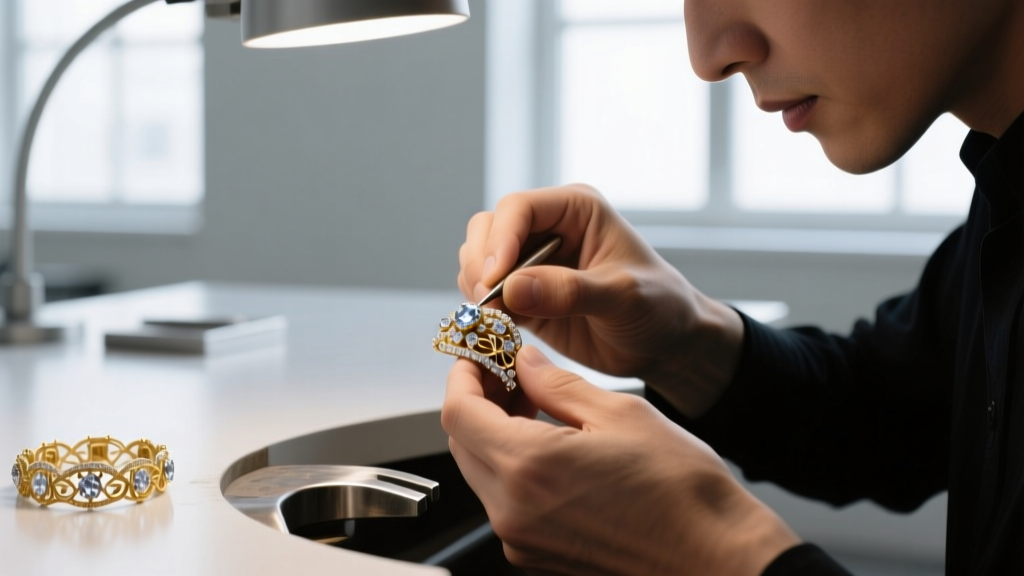
Large drop earrings are unparalleled statement pieces, drawing the eye and elongating the neck. However, their extended length and inherent weight make them uniquely susceptible to structural stress, snagging, and environmental tarnishing. Unlike simple studs, a two-inch drop earring acts as a lever, placing continuous torque on the ear wire and gemstone settings. Proper maintenance is not just about keeping them shiny; it is about preserving their structural integrity so you never lose a precious stone or bend a delicate wire.
This comprehensive guide dives deep into the metallurgy, gemology, and mechanics of caring for your collection, ensuring your favorite pieces remain secure and brilliant for decades.
The Anatomy of Stress: Why Drop Earrings Need Special Care
Before applying any cleaning solution, it is vital to understand the physical vulnerabilities of large drop earrings. Most high-quality drops utilize a 20-gauge or 22-gauge ear wire. When a heavy gemstone or metal dangle is attached, everyday movements—such as turning your head, taking off a sweater, or even sleeping in them—can cause microscopic metal fatigue at the loop where the drop connects to the ear wire.
Furthermore, the settings on drop earrings often feature intricate pavé or delicate prongs that catch on fabrics. According to the Gemological Institute of America (GIA), regular inspection of these stress points is just as critical as the cleaning process itself. A bent prong on a dangling stone will lose its tension much faster than one on a secure ring, leading to catastrophic stone loss.
Material-Specific Cleaning Protocols
Not all metals and gemstones react the same way to cleaning agents. Using an ultrasonic cleaner on the wrong stone can destroy it in minutes. Below is a professional grading chart for safely cleaning various materials commonly found in drop earrings.
| Material / Gemstone | Recommended Cleaning Method | Strictly Avoid |
|---|---|---|
| 14k/18k Gold & Diamonds | Warm water, mild dish soap (e.g., Dawn), soft baby toothbrush | Chlorine bleach, harsh abrasives |
| Sterling Silver (Plain) | Electrochemical aluminum foil bath or specialized silver polish cloth | Ultrasonic cleaners (can cause pitting) |
| Pearls & Coral | Damp microfiber cloth only; wipe immediately after wearing | Ammonia, ultrasonic, steam, soaking |
| Opals & Turquoise | Dry, soft lint-free cloth | Any liquids, heat, ultrasonic waves |
| Emeralds (Fracture-filled) | Lukewarm water and a drop of mild soap; gentle wiping | Ultrasonic, steam, hot water (removes oils) |
The Professional Deep-Cleaning Routine
For non-porous stones like diamonds, sapphires, and rubies set in gold or platinum, a deep clean will restore their optical brilliance. Over time, lotions, sebum, and hairspray create a film on the pavilion (the bottom facets) of the gemstone, drastically reducing light return.
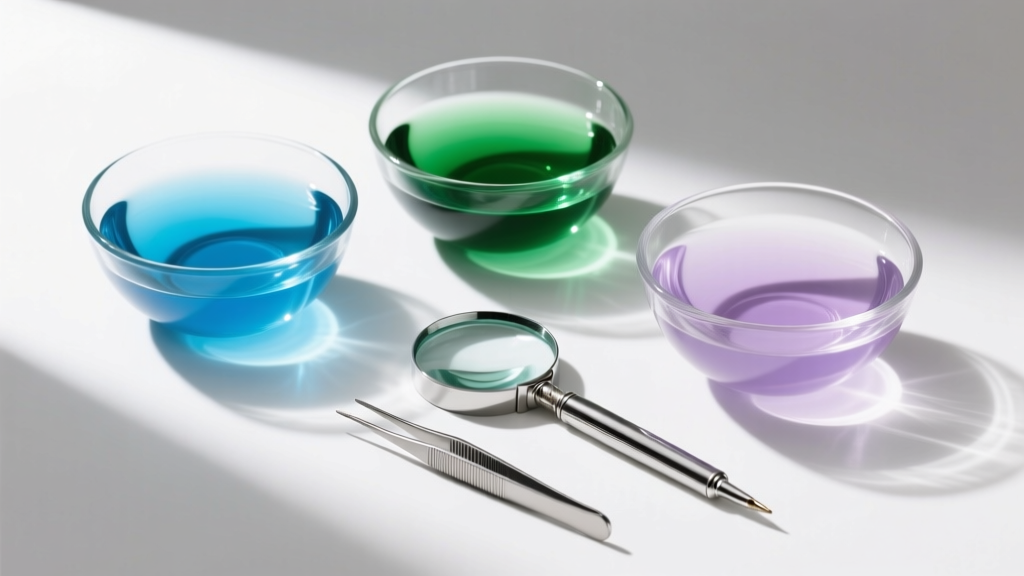
Step 1: The Basin Prep
Never clean jewelry over an open drain. Line a small glass bowl with a soft silicone mat or a folded washcloth. Fill it with lukewarm water and a few drops of ammonia-free, phosphate-free dish soap. Avoid hot water, as sudden thermal shocks can fracture certain treated gemstones.
Step 2: The Soak and Agitation
Submerge your gold or platinum large drop earrings for 15 to 20 minutes. This softens hardened cosmetic debris. After soaking, use a brand-new, extra-soft baby toothbrush to gently agitate the area around the prongs and the jump rings connecting the drop to the ear wire. Brush from the back of the setting forward to push dirt out, rather than packing it deeper into the setting.
Step 3: The Rinse and Dry
Rinse the earrings under a gentle stream of lukewarm water. Pat them dry with a lint-free microfiber cloth. Do not use paper towels or tissues, as the wood pulp fibers can scratch high-polish gold and snag on micro-prongs.
The Electrochemical Hack for Sterling Silver Drops
Sterling silver large drop earrings are notorious for tarnishing due to the copper alloy (usually 7.5%) reacting with sulfur in the air. Polishing them with abrasive cloths removes a microscopic layer of silver every time. Instead, jewelers use an electrochemical reduction bath that reverses the tarnish without removing any metal.
The Method:
- Line a glass bowl with aluminum foil, dull side facing up.
- Place your tarnished silver drops on the foil (they must touch the foil).
- Boil water and pour it over the jewelry.
- Add 1 tablespoon of baking soda and 1 tablespoon of non-iodized salt per cup of water.
- Let it sit for 3 to 5 minutes. You will smell sulfur (rotten eggs) as the silver sulfide transfers to the aluminum.
- Remove with plastic tongs, rinse thoroughly, and buff with a soft cloth.
Warning: Never use this method if your silver drops feature glued-in gemstones, pearls, or oxidized (intentionally blackened) detailing, as the bath will strip the intentional patina.
Structural Maintenance: Loupes, Prongs, and Backs
Cleaning is only half the battle. The American Gem Society (AGS) recommends inspecting high-value jewelry every six months. For large drop earrings, this interval should be shortened to three months due to the kinetic stress they endure.
The 10x Triplet Loupe Inspection
Invest in a 10x triplet jeweler's loupe. Examine the jump rings—the tiny circular loops connecting the ear wire to the drop. If the gap in the jump ring is visible or twisted, it needs to be closed with jewelry pliers. Next, check the prongs holding your gemstones. They should be smooth, rounded, and sitting flush against the stone's crown. If a prong is lifted or flat, it is a critical failure point.
Upgrading Earring Backs for Heavy Drops
Large drop earrings often exceed 8 to 12 grams. Standard friction push-backs (butterfly clutches) are insufficient for this weight; they will slide down the ear post, causing the earring to droop forward and eventually fall off. To secure heavy drops, upgrade to screw-backs or silicone disc backers (often called 'monster backs' or earlobe support patches). These wide silicone discs distribute the weight of the drop across a larger surface area of the earlobe, preventing the dreaded 'earring droop' and providing a secure friction grip that standard metal clutches cannot match.
Proper Storage to Prevent Bending and Tangling
Tossing large drop earrings into a standard jewelry box is a recipe for disaster. The elongated wires will easily bend out of shape, and the drops will tangle with chains and other pieces, potentially snapping delicate wire-wraps.
Ideal Storage Solutions:
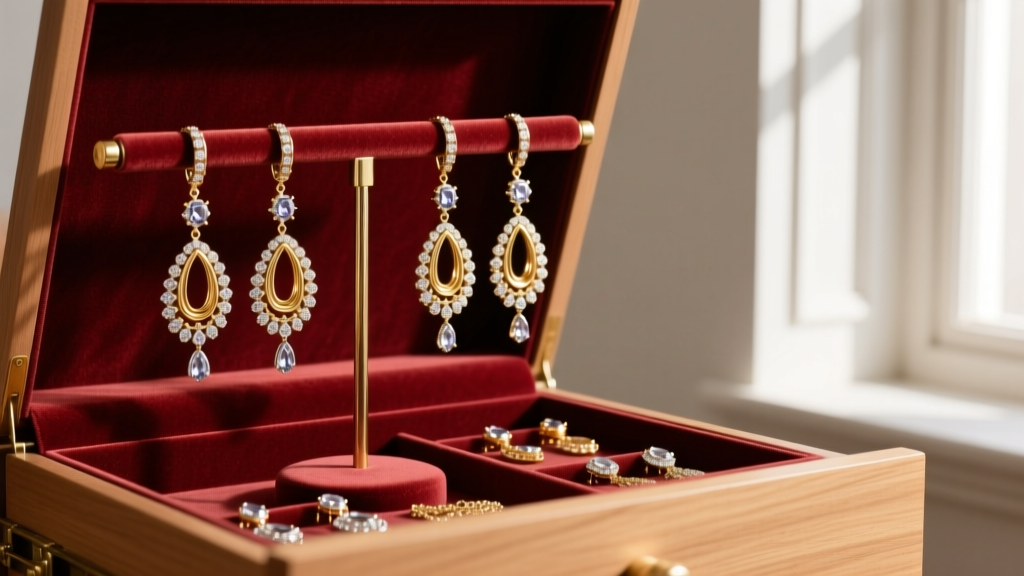
- T-Bar Stands: For everyday wear, hang your drops on padded T-bar stands. This keeps the ear wires perfectly shaped and prevents the gemstones from scratching against hard surfaces.
- Individual Pouches: For travel or drawer storage, place each pair in its own anti-tarnish flannel pouch. Ensure the ear wire is closed securely before placing it in the pouch to prevent it from piercing the fabric or scratching the stone.
- Silica Gel Packets: If you live in a high-humidity environment, drop a small silica gel packet into your jewelry drawer or storage box to absorb ambient moisture and drastically slow down the oxidation of silver and copper alloys.
By treating your large drop earrings not just as accessories, but as precision-crafted mechanical and gemological artifacts, you ensure they remain breathtaking and structurally sound for a lifetime of wear.


