Beaded Feather Earrings: The Ultimate Buying Guide
Discover how to choose the perfect beaded feather earrings. Learn about feather types, bead materials, hardware gauges, and expert care tips.

The Renaissance of Bohemian Jewelry in 2026
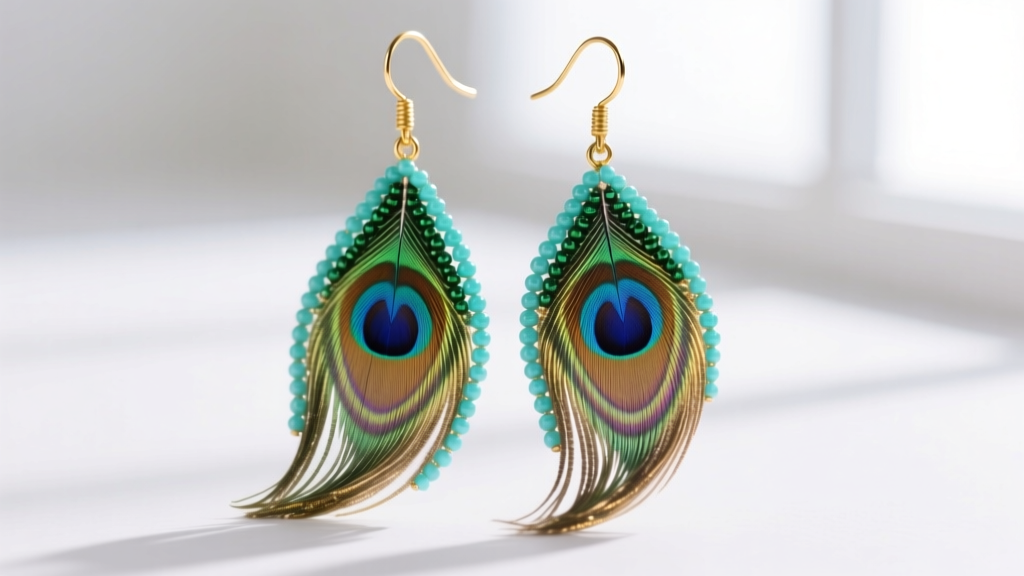
Beaded feather earrings have transcended their festival-only roots to become a staple of contemporary bohemian and eclectic wardrobes. As we navigate the jewelry trends of 2026, the demand for organic textures paired with structured, artisanal beadwork has surged. However, not all beaded feather earrings are created equal. The intersection of delicate organic materials and heavy mineral beads presents unique engineering challenges. This comprehensive buying guide will equip you with the expert knowledge needed to evaluate craftsmanship, material integrity, and ergonomic design before making your next purchase.
Anatomy of the Craft: Feathers and Beads
Selecting the Right Feather
The foundation of these earrings is the feather, which is primarily composed of keratin. The type of feather dictates the earring's movement, durability, and visual weight. Pheasant feathers (specifically ring-necked) are the industry favorite due to their natural banding, stiff central quill (rachis), and lightweight barbs. Turkey flats offer a broader, more dramatic silhouette but require robust hardware to support their wider surface area, which can catch the wind and pull on the earlobe. Ostrich herl provides a fluffy, luxurious texture but is highly fragile and prone to matting. For vegan or cruelty-free buyers, high-end synthetic microfiber fringes are now available; these mimic the drape of natural feathers while offering superior resistance to humidity and skin oils.
Bead Composition and Kinetic Weight
The beads used in these designs serve as both an aesthetic anchor and a structural counterweight. Artisan jewelers frequently utilize Miyuki or Toho glass seed beads (size 11/0 or 8/0) to create intricate, lightweight colorwork that does not overwhelm the feather's delicate barbs. Conversely, semi-precious stones like turquoise, lapis lazuli, or amethyst add a grounding, earthy element. However, heavy stone beads introduce a "pendulum effect." If an 8mm turquoise round is attached to the very tip of an unsupported feather, the kinetic energy generated by walking will eventually snap the keratin shaft. Look for designs where heavier beads are threaded directly onto the wire wrapping near the quill's base, acting as "station beads" rather than dangling weights.
The Critical Role of Attachment Engineering
The most common failure point in beaded feather earrings is the junction where the organic quill meets the metal hardware. Mass-produced, commercial earrings often use glue-on crimp ends or metal caps filled with cyanoacrylate adhesive. This method is fundamentally flawed for long-term wear; the adhesive degrades rapidly when exposed to sebum, humidity, hairspray, and the natural flexing of the feather.
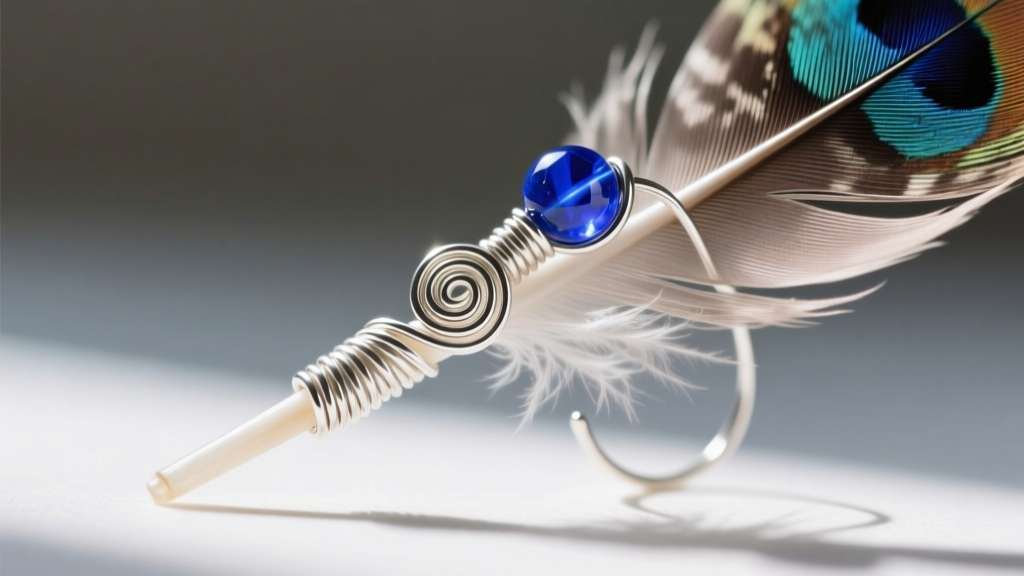
The hallmark of true artisan quality is the wire-wrapped quill. In this technique, the top inch of the feather's rachis is tightly bound with 24-gauge or 26-gauge dead-soft wire (usually sterling silver or gold-filled) directly to a jump ring or the ear wire itself. This mechanical bond distributes stress evenly across the quill and is completely impervious to moisture and skin oils. When inspecting a pair of beaded feather earrings, always flip them over and examine the top junction. If you see a blob of glue or a smooth metal cap with no visible wire binding, leave them on the rack.
Hardware, Gauges, and Hypoallergenic Standards
Because beaded feathers can become surprisingly heavy depending on the stone accents, the gauge (thickness) of the ear wire is a critical safety consideration. Standard lobe piercings are typically 20-gauge or 18-gauge. For these specific dangles, a 20-gauge (0.81mm) ear wire is the optimal sweet spot. Avoid 22-gauge (0.64mm) wires; they are too thin and can cause the "cheese-cutter effect," where the thin wire slowly slices through the earlobe tissue under the weight of swinging beads.
Furthermore, metal purity is non-negotiable for sensitive ears. The Federal Trade Commission (FTC) Jewelry Guides strictly regulate metal stamping, yet the market remains flooded with mislabeled "Tibetan Silver" or generic "alloy" findings that contain high levels of nickel and zinc. Always opt for verified hypoallergenic metals.
| Hardware Metal | Nickel Content | Durability & Traits | Price Tier |
|---|---|---|---|
| ASTM F136 Titanium | 0% | Implant-grade, extremely lightweight, highly durable | $$ |
| Niobium | 0% | Hypoallergenic, can be anodized to vibrant colors | $ |
| 14k / 18k Gold | Trace (Alloy dependent) | Premium finish, avoid white gold if nickel-sensitive | $$$ |
| Surgical Steel (316L) | 8-12% | Durable but can trigger contact dermatitis | $ |
| "Tibetan" Alloy | Unknown / High | Prone to rapid tarnishing, high allergy risk | $ |
Styling by Face Shape and Ear Placement
Beaded feather earrings are inherently dynamic, drawing the eye with every movement. To maximize their flattering effect, consider your face shape:
- Round and Square Faces: Opt for elongated, vertical dangles (3 inches or longer) featuring slender pheasant feathers and vertically stacked seed beads. This creates an optical illusion that elongates the neck and softens strong jawlines.
- Oblong and Long Faces: Choose shorter, wider "cluster" styles. Earrings that feature horizontally fanned turkey feathers paired with chunky, wide turquoise beads add necessary visual width and balance to the face.
- Ear Placement: These earrings are strictly designed for earlobe piercings. The swinging weight and kinetic pull make them entirely unsuitable for cartilage piercings (such as the helix or flat), where gravity and movement can cause severe irritation, migration, or tearing of the delicate cartilage tissue.

Maintenance: Preserving Keratin and Porous Gems
Caring for beaded feather earrings requires a dual approach, as you are managing both organic keratin and potentially porous minerals. Feathers are highly susceptible to moisture and crushing. If your earrings get caught in the rain or exposed to heavy humidity, the barbs may separate and curl. To fix this, gently stroke the feather back into its natural alignment and use a hair dryer on the cool, low-air setting to gently re-fluff the vane structure. Never use heat, as it will singe and permanently deform the keratin.
When cleaning the beadwork, you must identify the stone. According to the Gemological Institute of America (GIA), porous gems like turquoise, lapis lazuli, and malachite should never be submerged in water, exposed to harsh chemicals, or placed in ultrasonic cleaners. Wipe stone beads gently with a dry, untreated microfiber cloth. Finally, storage is paramount. Never toss these earrings into a crowded jewelry box where the feathers will be crushed and bent beyond repair. Store them hanging from a dedicated rack, or lay them completely flat in a silk-lined compartment.
Final Verdict: The Buyer's Checklist
Before purchasing your next pair of beaded feather earrings, run through this quick expert checklist to ensure you are investing in a quality piece:
- Attachment: Is the quill wire-wrapped, or is it relying on a glued crimp cap?
- Hardware Gauge: Is the ear wire at least 20-gauge to support the weight of the beads without slicing the earlobe?
- Metal Purity: Is the metal verified as nickel-free (Titanium, Niobium, or high-karat Gold)?
- Weight Distribution: Are heavy stone beads secured near the base, or are they dangling precariously from the fragile tip of the feather?
By prioritizing structural engineering and material integrity over fast-fashion aesthetics, you can secure a pair of beaded feather earrings that will remain a vibrant, intact part of your jewelry rotation for years to come.