Square Huggie Earrings: The Ultimate Sizing & Buying Guide
Master the art of buying square huggie earrings. Learn exact gauge sizes, inner diameter sizing, clasp mechanics, and material grades for the perfect fit.
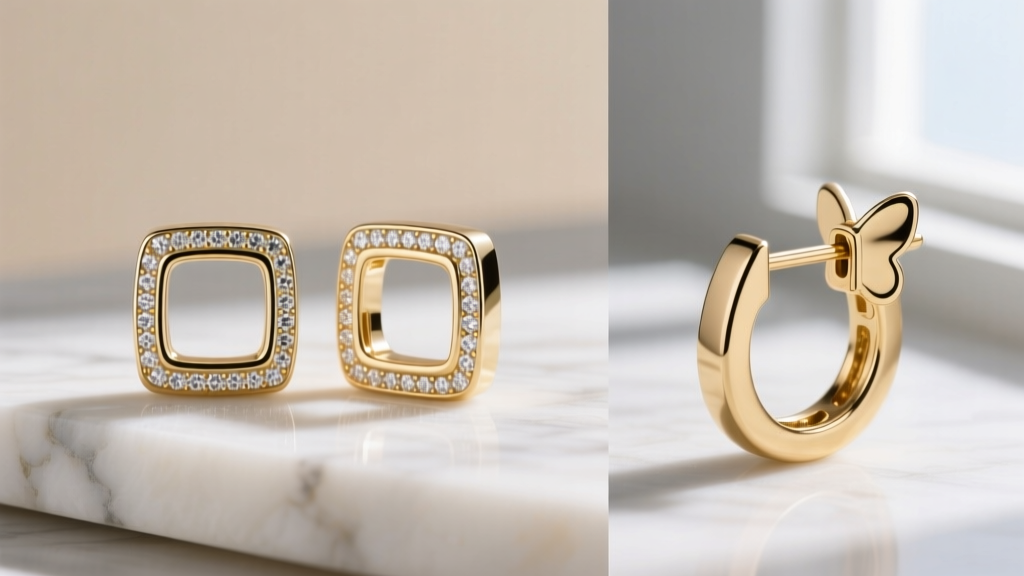
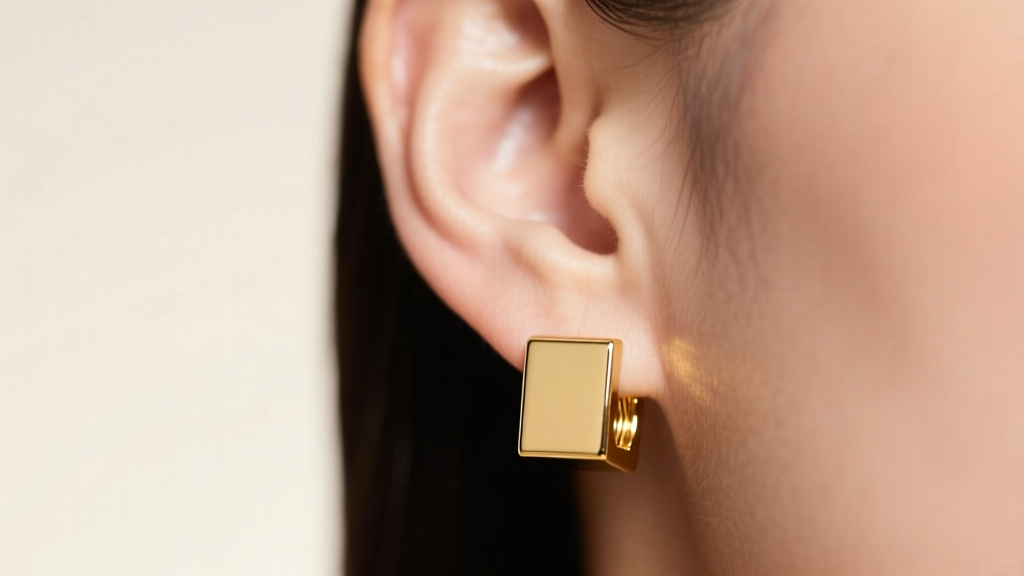
Square huggie earrings have completely disrupted the traditional ear curation landscape. Moving away from the endless sea of perfectly round hoops, the modern jewelry consumer is gravitating toward architectural, geometric silhouettes that offer a subtle but undeniable edge. However, buying a square huggie is not as simple as picking your favorite metal and clicking 'add to cart.' The geometry of a square introduces unique mechanical stresses, sizing anomalies, and wear patterns that round hoops simply do not possess.
As a senior jewelry stylist, I have evaluated hundreds of geometric ear pieces. This comprehensive buying guide will walk you through the exact specifications, material grades, and hidden failure modes you must consider before investing in square huggie earrings in 2026.
The Anatomy of a Perfect Square Huggie
Before discussing sizing, we must distinguish between the two primary types of square huggies available on the market. The terminology is often misused by retailers, leading to poor purchasing decisions.
Wire Profile vs. Overall Silhouette
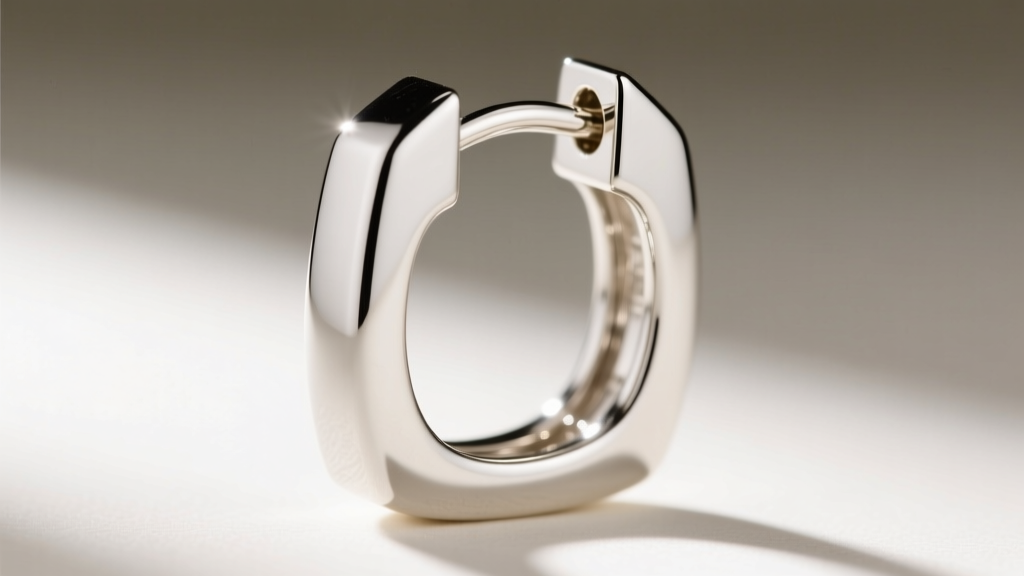
The first style is the square tube huggie. In this design, the wire itself is extruded as a square prism. When you look at the earring from the front, you see a flat, architectural plane that catches light brilliantly. The second style is the squared silhouette, where a traditional round or oval wire is bent into a square or rectangular shape.
For maximum durability and a premium aesthetic, the square tube profile is superior. The flat surfaces allow for precise pave diamond setting and offer a heavier, more luxurious drape. However, sharp 90-degree corners on a square tube can snag on hair and knitwear. Always look for a beveled edge or chamfered corner finish, where the sharp outer edges are slightly softened by a master polisher without losing the geometric illusion.
The Diagonal Reach Problem (Crucial Sizing Math)
This is the most common reason buyers return square huggies. A standard round huggie with a 10mm Outer Diameter (OD) has a maximum reach of exactly 10mm in every direction. A square huggie measuring 10x10mm, however, has a diagonal reach of 14.14mm (calculated via the Pythagorean theorem: 10 × √2).
If you have a standard-to-thick earlobe, that extra 4mm of corner reach will cause the bottom corner of the earring to dig into your neck or jawline when you lie down or hug someone. Therefore, when transitioning from round to square huggies, you must size down in nominal width to maintain the same physical clearance.
Sizing Matrix: Inner Diameter vs. Earlobe Thickness
To achieve the signature 'hug' without choking the earlobe or causing the corners to pinch your skin, you must match the Inner Diameter (ID) to your specific lobe thickness. Below is the definitive sizing matrix for square huggies.
| Earlobe Thickness | Recommended Inner Diameter (ID) | Max Outer Width (Corner-to-Corner) | Best Clasp Type |
|---|---|---|---|
| Thin (under 6mm) | 8mm - 9mm | 11.3mm | Hinged Snap |
| Standard (6mm - 9mm) | 10mm - 11mm | 12.7mm - 14.1mm | Clicker Hinge |
| Thick (10mm+) | 12mm - 14mm | 15.5mm - 18.3mm | Custom Post / Omega |
Note: Always measure the ID, not the OD. Reputable jewelers will list the inner clearance. If a brand only lists '12mm square huggies' without specifying ID, assume they mean OD, and expect a very tight fit on the corners.
Material Grades & Pricing Tiers
Because square huggies rely on rigid hinges and precise geometric alignment, the metallurgical properties of your chosen metal are paramount. Soft metals will warp, destroying the clean lines of the square.
- 14k Solid Gold ($180 - $350): The undisputed workhorse for geometric jewelry. Alloyed with copper, silver, and zinc, 14k gold possesses a higher Vickers hardness than 18k gold. This makes it highly resistant to the torque and bending forces applied to the corners of a square hoop. It is the best choice for everyday, sleep-in huggies.
- 18k Solid Gold ($400 - $800+): Offers a richer, deeper yellow hue and higher hypoallergenic properties. However, it is softer. If you buy 18k square huggies, ensure the wire gauge is at least 16G (1.2mm) to prevent the bottom edge from warping into a trapezoid over time.
- ASTM F136 Titanium ($40 - $150): According to the Association of Professional Piercers, implant-grade titanium is the gold standard for sensitive skin and fresh piercings. Titanium square huggies are incredibly lightweight, preventing the 'earlobe drag' that heavier geometric pieces can cause.
- Platinum 950 ($900 - $2,500+): Dense, heavy, and virtually impervious to tarnish. Platinum is ideal if your square huggies feature intricate diamond pave, as the prongs will not wear down over decades of use.
Clasp Mechanics and Torque Twist
The hinge is the Achilles heel of any huggie, but it is especially vulnerable in square designs. When you open a round hinged hoop, the force distributes evenly along the curve. When you open a square hoop by pulling the bottom corner, you introduce severe asymmetrical torque. Over time, this 'torque twist' will warp the internal hinge pin, causing the earring to sit crookedly or fail to snap shut.
'Never buy a square huggie with a simple friction post and omega back. The bulk of the omega back ruins the clean geometric line, and the post will inevitably bend under the angular leverage of the square frame. Always opt for a hidden hinged clicker with a reinforced internal steel or titanium pin.' — Master Jeweler & Bench Technician
If you are purchasing diamond-encrusted square huggies, pay close attention to the corner stones. The Gemological Institute of America (GIA) notes that melee diamonds (under 0.15 carats) are vulnerable to chipping at the girdle if struck. Ensure the corners of the square feature bezel settings or reinforced corner beads rather than delicate shared prongs, which leave the diamond edges exposed to impact.
Common Failure Modes & How to Avoid Them
To ensure your investment lasts a lifetime, be aware of these three specific failure modes unique to square huggies:
1. The Corner Snag
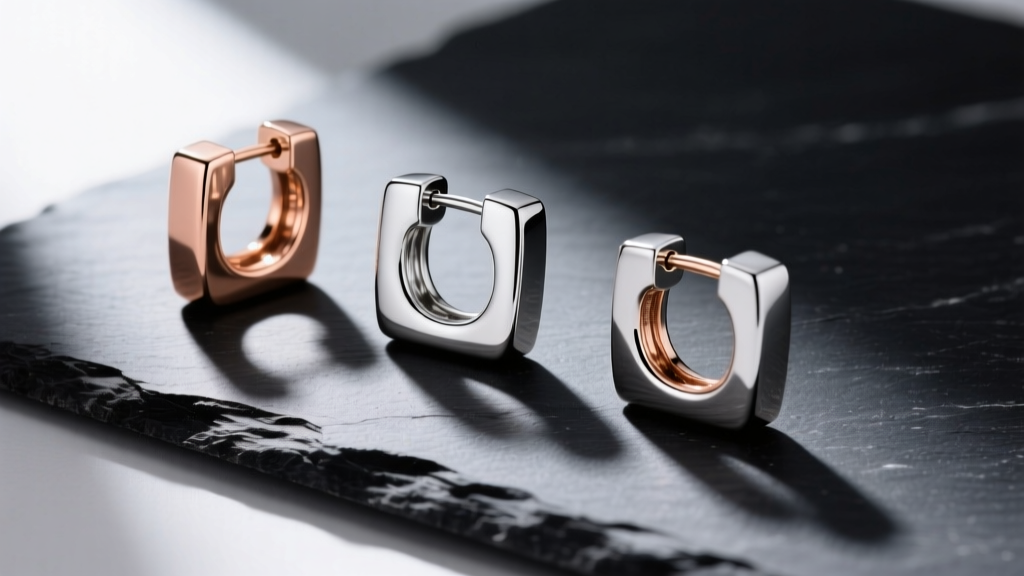
Some square huggies are designed to hang like a diamond shape (with a point facing down). While visually striking, the downward-facing point acts as a hook, catching on turtlenecks, scarves, and long hair. For daily wear, always choose a square huggie that sits flat, with sides parallel to the ground.
2. Plating Wear on Hinges
Gold vermeil or plated brass square huggies are a poor investment. The rigid snapping motion required to close a geometric shape causes high friction at the hinge. Plating will wear off at the joint within months, exposing base metals that can cause contact dermatitis. Always buy solid metals for hinged geometric pieces.
3. Gauge Size Mismatches
Standard lobe piercings are typically 18G (1.0mm) or 16G (1.2mm). Many delicate square huggies are manufactured at 20G (0.8mm) to save on gold weight. A 20G wire in a heavy square frame will act like a cheese wire, slowly migrating through your earlobe due to the pendulum effect of the square's weight. Stick strictly to 16G or 14G (1.6mm) wire thicknesses.
Final Verdict: What to Buy
Square huggie earrings are a masterclass in modern, architectural jewelry styling. They provide the effortless wearability of a classic hoop with the striking, light-catching facets of a geometric ring. When shopping, prioritize a 14k or 18k solid gold construction, demand a hidden clicker hinge to combat torque twist, and remember to size down your nominal width to account for the diagonal reach of the corners. By focusing on these precise mechanical and metallurgical details, you will secure a pair of square huggies that sit perfectly, wear comfortably, and elevate your ear curation for decades to come.


