Complete Care Guide for Solid Stud Ball Earrings Gold
Discover expert cleaning and maintenance tips for stud ball earrings gold. Learn safe solutions, polishing methods, and storage hacks for a lasting shine.

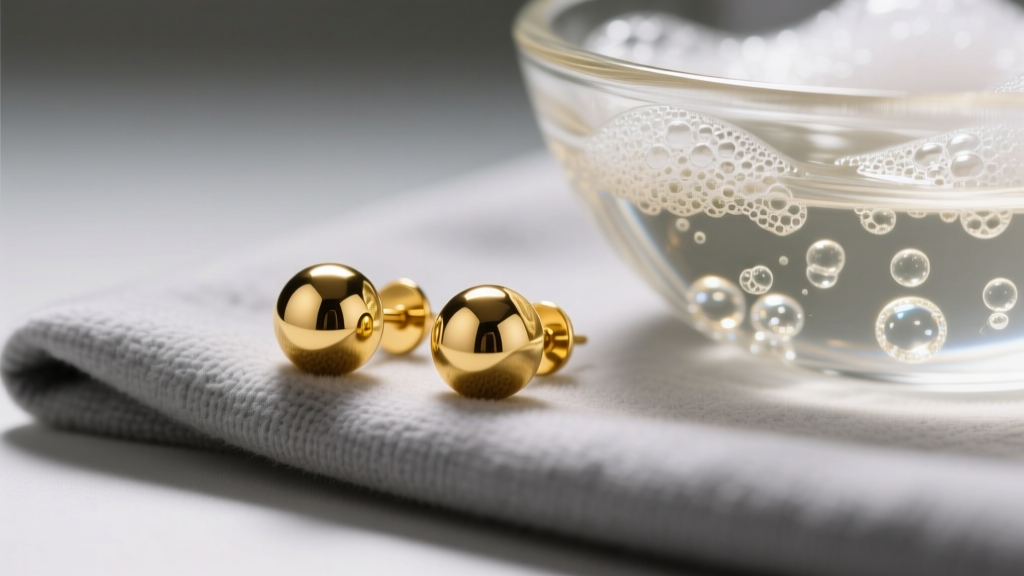
Gold ball studs are a cornerstone of minimalist jewelry, offering a timeless, high-shine finish that catches the light with every movement. However, because of their highly polished surface and the intricate mechanics of their backing, they require specific maintenance to retain their mirror-like luster. Whether you wear 14k or 18k, proper care is essential to prevent micro-scratches, tarnish, and post damage. This comprehensive guide covers the metallurgy, cleaning protocols, and storage strategies necessary to keep your gold studs pristine.
The Anatomy of Gold Ball Studs: Where Dirt Hides
To effectively clean your earrings, you must understand where debris accumulates. A standard ball stud consists of three main components: the spherical front, the straight post, and the friction back (commonly known as a butterfly clutch). Standard posts for these earrings are typically 20-gauge (0.81mm) or 18-gauge (1.02mm).
The most problematic area for hygiene and buildup is the butterfly clutch. The tiny scrollwork and the central groove designed to grip the post notch act as magnets for sebum, dead skin cells, hair products, and environmental dust. Over time, this organic matter hardens, creating a breeding ground for bacteria and causing the metal to appear dull. Furthermore, the solder joint or laser-welded seam where the post meets the ball is a microscopic crevice that traps lotions and perfumes, which can degrade the alloy over time if left uncleaned.
Gold Karat Guide: How Purity Affects Maintenance
Not all gold reacts to cleaning agents and daily wear in the same way. Pure gold (24k) is virtually immune to tarnish but is far too soft for jewelry posts, which would bend under the slightest pressure. Therefore, gold is alloyed with metals like copper, silver, and zinc. According to the Gemological Institute of America (GIA), these alloy metals dictate the earring's durability, color, and cleaning requirements.
| Gold Karat | Gold Purity | Durability & Scratch Resistance | Cleaning Frequency & Notes |
|---|---|---|---|
| 10K | 41.7% | Highest; very resistant to bending | Monthly; higher alloy content makes it more prone to tarnish and oxidation. |
| 14K | 58.5% | High; ideal for daily wear posts | Bi-weekly; excellent balance of shine and structural integrity. |
| 18K | 75.0% | Moderate; richer color, softer post | Weekly; shows fingerprints and oils faster due to higher pure gold content. |
| 22K/24K | 91-99% | Very soft; posts bend easily | As needed; avoid any abrasive rubbing to prevent deep scratching. |
Step-by-Step Cleaning Routine for Stud Ball Earrings Gold
For routine maintenance, avoid commercial liquid dips, which often contain harsh thiourea compounds that can strip the high-polish finish and leave a porous surface. Instead, rely on a gentle, surfactant-based cleaning method recommended by the American Gem Society (AGS).
1. Preparation and Soaking
Fill a small glass bowl with warm (not hot) water and add three drops of a mild, phosphate-free dish soap. Phosphate-free soaps are crucial because phosphates can leave a cloudy film on high-karat gold. Submerge both the earrings and their butterfly backs in the solution and let them soak for 15 to 20 minutes. This softens the hardened sebum and cosmetic residue trapped in the clutch scrollwork.
2. Agitation
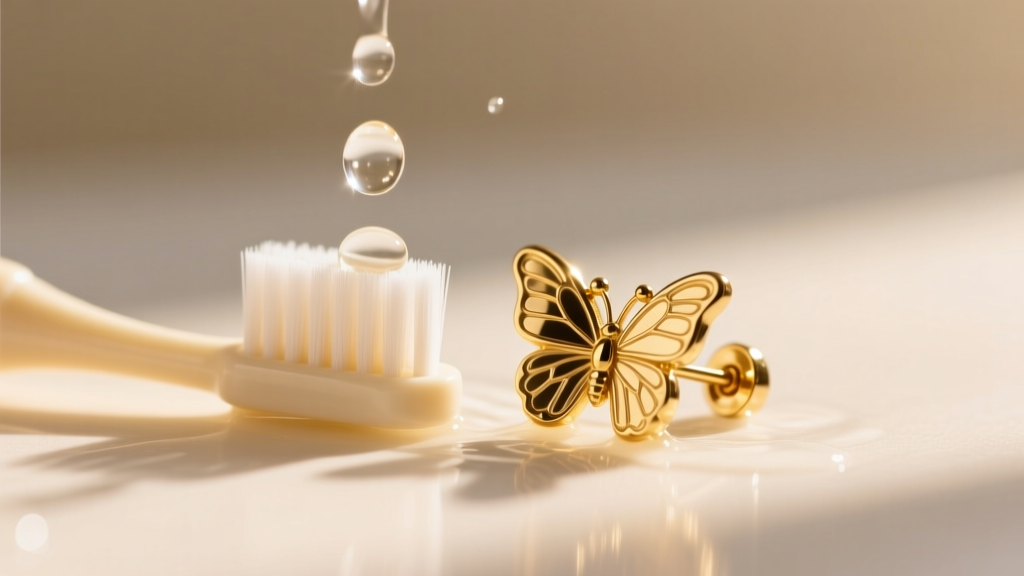
Remove the earrings and use a soft-bristled baby toothbrush to gently sweep the surface of the ball. Never use a medium or hard-bristled brush. Gold is a relatively soft metal, and stiff bristles can create micro-scratches that diffuse light, making the ball look matte rather than mirrored. Pay special attention to the post groove and the inside of the butterfly back, using a wooden toothpick or a soft interdental brush to dislodge stubborn debris from the clutch mechanism.
3. Rinsing and Drying
Rinse the earrings under lukewarm running water. If you live in an area with hard water, perform a final rinse using distilled water. Hard water contains calcium and magnesium ions that leave microscopic white spots on gold when air-dried. Pat the earrings dry with a lint-free microfiber cloth. Avoid paper towels or cotton balls, as their wood pulp fibers can cause microscopic abrasions and leave lint caught in the butterfly clutch.
What to Avoid: Common Cleaning Mistakes
Maintaining the structural integrity and finish of your gold jewelry requires avoiding common household hazards. The most destructive substance for gold alloys is chlorine. When 14k or 18k gold is exposed to chlorine (found in swimming pools, hot tubs, and household bleach), it triggers a chemical reaction with the copper and silver alloys. This leads to stress corrosion cracking, a phenomenon where the metal becomes brittle and the post can snap off the ball at the solder joint. Always remove your earrings before swimming or cleaning with bleach-based products.
Another common mistake is using toothpaste as a DIY polishing agent. Toothpaste contains hydrated silica and calcium carbonate, which rank between 3 and 4 on the Mohs hardness scale. While softer than diamonds, these abrasives are harder than gold (which sits at 2.5 to 3 on the Mohs scale) and will permanently scratch the mirror finish of your ball studs.
Polishing and Restoring the High-Shine Finish
Even with meticulous cleaning, daily wear will eventually introduce fine surface scratches to the gold ball. To restore the high-shine finish without removing excessive layers of gold, use a treated jeweler's rouge cloth (such as a Sunshine cloth). These cloths are impregnated with microscopic polishing compounds and anti-tarnish agents.
Gently buff the spherical surface using small, circular motions. Do not pull the cloth tightly across the post, as the friction can bend a delicate 20-gauge wire. For deep gouges or significant dulling, the earrings should be taken to a professional jeweler for a motorized buffing wheel treatment, which safely removes a microscopic layer of gold to reveal a flawless surface beneath.
Proper Storage and Daily Wear Maintenance
How you store your earrings is just as critical as how you clean them. Tossing gold studs loosely into a jewelry box guarantees that the harder steel or gemstone components of other jewelry will scratch the soft gold balls. Furthermore, loose storage increases the risk of losing the friction backs.
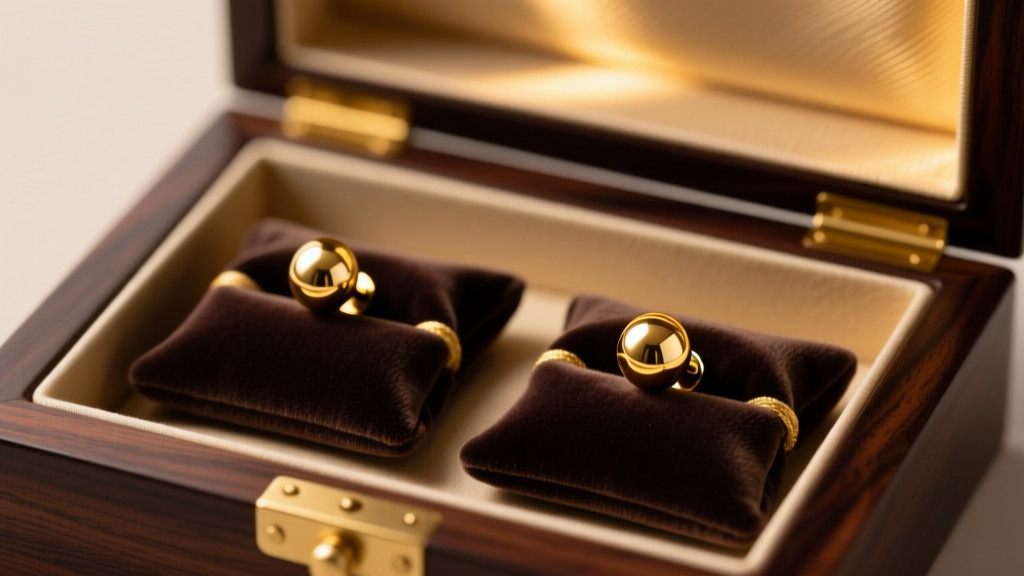
Always store your studs in individual soft velvet or satin pouches. If your jewelry box has a dedicated stud compartment with a fabric roll, ensure the posts are pushed through the fabric so the balls do not touch one another. Finally, adopt the "last on, first off" rule: put your gold earrings on after applying hairspray, perfume, and lotions, and take them off first when you begin your evening skincare routine to minimize chemical exposure and product buildup.


