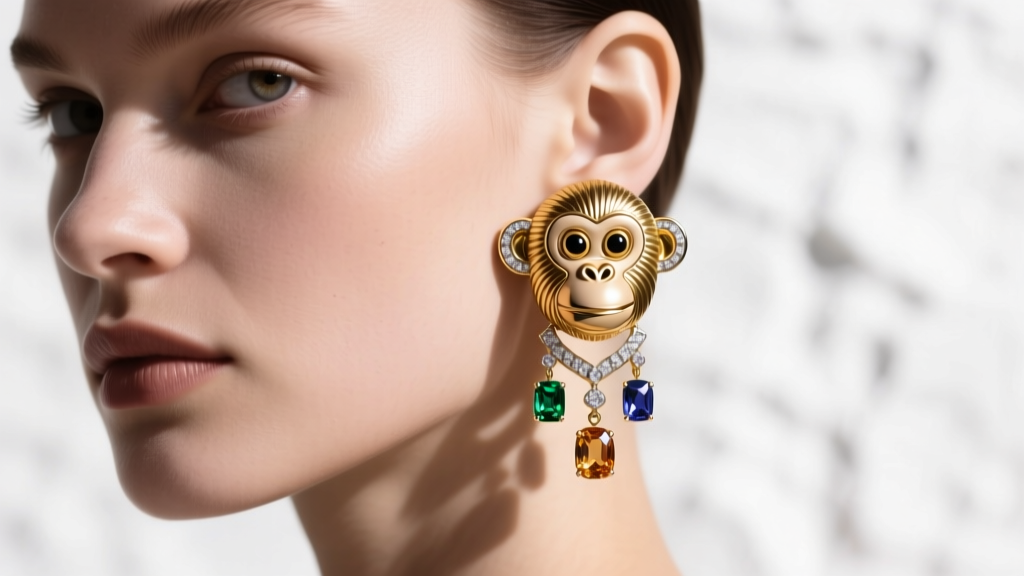
Ultimate Care Guide for Traditional Mexican Earrings
Learn expert cleaning and maintenance tips for traditional Mexican earrings, including Taxco silver, filigree, and porous gemstones like turquoise.

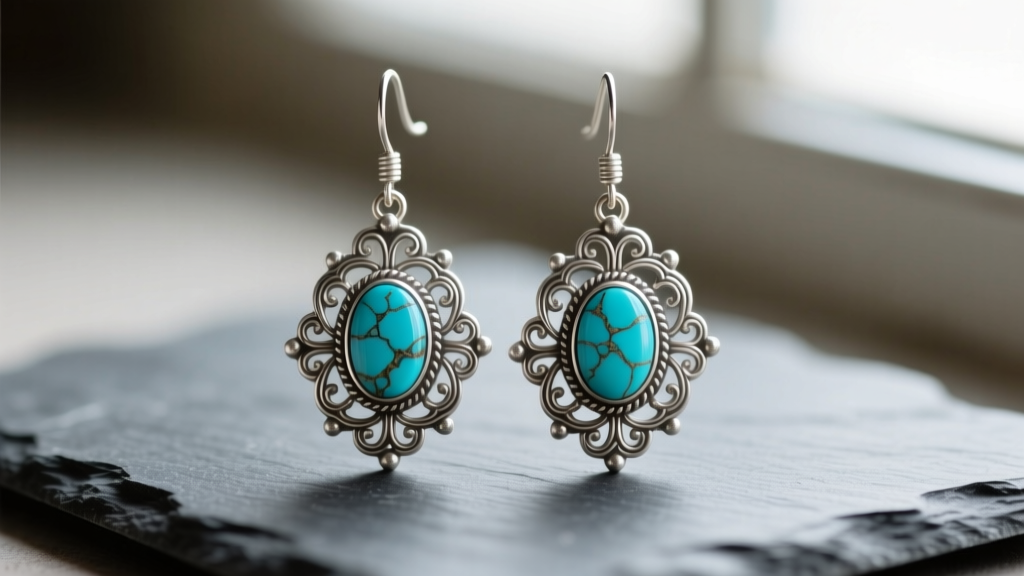
The Artistry and Metallurgy of Mexican Silver
Owning a pair of traditional Mexican earrings means possessing a piece of wearable history. From the intricate filigree (filigrana) of Oaxaca to the bold, modernist silver designs of Taxco, these pieces require specialized care that goes far beyond standard jewelry maintenance. To properly care for these artifacts, you must first understand the specific metallurgy and gemology involved in their creation.
Most vintage and contemporary traditional Mexican earrings are crafted from sterling silver, but the alloy ratios vary significantly. While the global standard for sterling is .925 (92.5% silver, 7.5% copper), many mid-century Mexican silversmiths utilized .950 or even .980 silver. This higher purity yields a softer metal that is highly resistant to deep tarnishing but significantly more prone to scratching, warping, and bending. When cleaning .950 silver ear wires or delicate bezels, you must apply minimal physical pressure to avoid altering the structural integrity of the earring.
"Vintage Mexican silver pieces bearing the Eagle Assay mark (used between 1948 and 1979) often feature unique alloy blends. The higher the silver content, the softer the metal, requiring a gentler touch during polishing to preserve the maker's original hallmarks."
The Porous Stone Problem: Turquoise, Coral, and Obsidian
Traditional Mexican earrings frequently incorporate regional gemstones such as natural turquoise, red coral, jade, and obsidian. The most critical mistake collectors make is treating these stones like diamonds or sapphires. Turquoise and coral are highly porous organic and semi-organic materials. On the Mohs hardness scale, turquoise ranks between 5 and 6, while coral is even softer at 3.5 to 4.
According to the Gemological Institute of America (GIA), porous gemstones can absorb liquids, oils, and chemicals, leading to irreversible discoloration or structural degradation. Never use commercial silver dip solutions, ammonia, or ultrasonic cleaners on traditional Mexican earrings featuring these stones. The high-frequency cavitation of an ultrasonic cleaner can easily fracture a turquoise cabochon or shatter a delicate obsidian inlay, while chemical dips will strip the natural waxes and oils that give the stone its vibrant color.
Step-by-Step Cleaning Guide for Filigree and Solid Silver
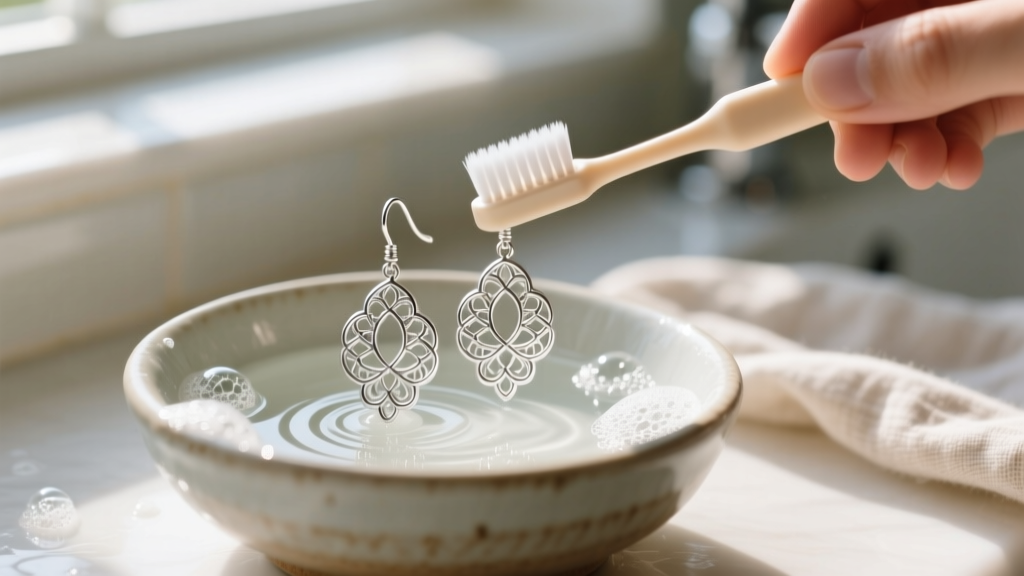
Filigree work involves twisting and curling fine threads of silver into intricate lace-like patterns. The primary challenge with filigree earrings is that standard silver polishing cloths snag on the microscopic wire loops, leaving behind unsightly cotton fibers that are nearly impossible to remove. Instead of rubbing, use a flushing and gentle agitation method.
- Prepare a Mild Solution: Mix a few drops of phosphate-free, non-citrus dish soap (like original blue Dawn) into a bowl of lukewarm distilled water. Avoid hot water, which can shock temperature-sensitive stones like opals or heavily treated turquoise.
- Agitate Gently: Submerge the silver portions of the earrings. If the earrings feature glued-in stones, avoid submerging them entirely; instead, dip only the silver sections to prevent dissolving the jewelry adhesive.
- Use the Right Tool: Take an ultra-soft baby toothbrush or a clean, soft-bristled makeup blending brush. Gently sweep the bristles through the filigree wires to dislodge trapped sebum, dead skin cells, and environmental dust.
- Rinse and Dry: Rinse the earrings under a gentle stream of lukewarm distilled water. Immediately pat them dry with a lint-free microfiber cloth. Use a hair dryer on the 'cool' setting to blast moisture out of the tightest filigree crevices, preventing water spots and localized oxidation.
Gemstone Maintenance Matrix
Different stones require vastly different maintenance routines. Use the chart below to identify the safest care protocol for the specific gemstones in your traditional Mexican earrings.
| Gemstone | Mohs Hardness | Safe Cleaning Method | What to Strictly Avoid |
|---|---|---|---|
| Natural Turquoise | 5.0 - 6.0 | Damp microfiber cloth wipe | Ultrasonics, silver dips, oils, lotions |
| Red Coral | 3.5 - 4.0 | Dry, soft brush only | Water immersion, acids, perfumes |
| Jade (Jadeite/Nephrite) | 6.5 - 7.0 | Mild soapy water, soft brush | Steam cleaners, harsh abrasives |
| Obsidian | 5.0 - 5.5 | Microfiber cloth, glass cleaner | Hard impacts, ultrasonic cavitation |
| Amethyst | 7.0 | Warm soapy water, soft brush | Prolonged direct UV sunlight (causes fading) |
Storage and Environmental Controls
Silver tarnish is not a flaw; it is a chemical reaction. Sterling silver tarnishes when the copper alloy reacts with hydrogen sulfide (H2S) and sulfur dioxide in the ambient air, forming a layer of black silver sulfide. High humidity accelerates this process exponentially. If you live in a coastal or highly humid environment, your traditional Mexican earrings will oxidize much faster.
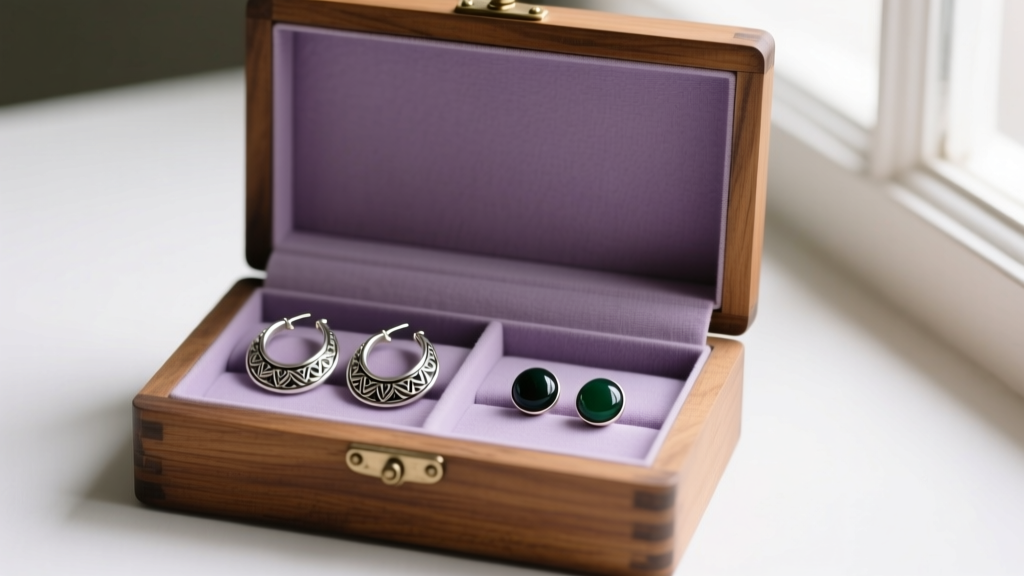
To combat this, abandon standard jewelry boxes. Instead, store your earrings in airtight ziplock bags made of non-abrasive polyethylene. Inside each bag, place a 3M anti-tarnish strip or a small packet of activated charcoal. These materials act as sacrificial scavengers, absorbing the sulfur compounds in the trapped air before they can reach your silver. For display purposes, line your jewelry drawers with Pacific Silvercloth, a specialized flannel embedded with microscopic silver particles that intercept tarnish-causing gases.
When to Seek a Professional Silversmith
While routine cleaning can be done at home, structural maintenance requires a professional. Because traditional Mexican earrings often feature hand-soldered ear wires and delicate bezel settings, they are susceptible to specific failure modes over decades of wear.
- Ear Wire Thinning: The friction of inserting and removing the earring through the earlobe gradually wears down the silver ear wire. If the wire becomes thinner than 18-gauge (1.02mm), it risks snapping. A jeweler can easily re-tire or replace the wire using matching .925 or .950 stock.
- Bezel Lifting: Temperature fluctuations and minor impacts can cause the thin silver bezel walls holding a turquoise or jade cabochon to lift away from the stone. If you can slide a piece of paper between the metal and the stone, the bezel needs to be professionally burnished and tightened to prevent the gemstone from falling out and shattering.
- Filigree Soldering: If a filigree wire snaps, do not attempt to glue it. Cyanoacrylate (super glue) will cloud the silver and ruin adjacent porous stones. A master silversmith will use a micro-torch and hard silver solder to seamlessly rejoin the wire without melting the surrounding intricate lacework.
By understanding the unique material properties of Taxco silver and regional gemstones, you can ensure that your traditional Mexican earrings remain vibrant, structurally sound, and ready to be passed down to the next generation of collectors. For further reading on preserving precious metals, the Silver Institute offers excellent foundational guidelines on alloy maintenance.