Care Guide: Girl With A Pearl Earring But As An Animal Earrings
Learn how to safely clean and maintain your intricate girl with a pearl earring but as an animal enamel and pearl earrings without damaging the finish.

The Intersection of Art History and Whimsical Jewelry Care
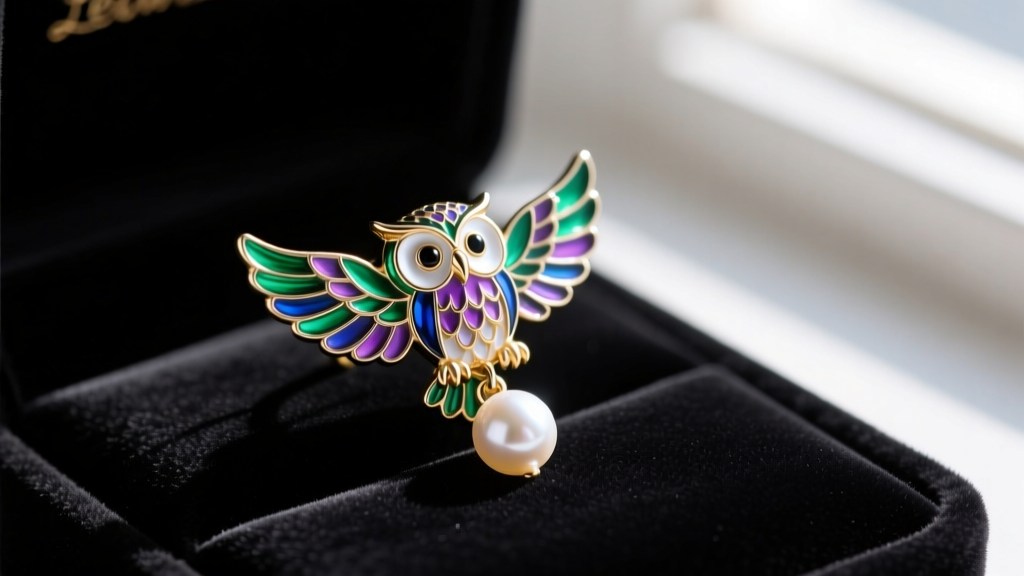
The 2026 resurgence of art-history novelty fine jewelry has brought us some truly spectacular designs. Among the most highly sought-after pieces this season is the viral girl with a pearl earring but as an animal collection. These intricate studs and drop earrings reimagine Johannes Vermeer’s iconic Dutch Golden Age portraiture through a whimsical menagerie of enamel foxes, owls, and cats, all sporting lustrous, dangling pearl drops. While they are a phenomenal conversation starter and a brilliant nod to classical art, their complex material composition makes them notoriously difficult to maintain.
Cleaning a multi-material earring requires a deep understanding of gemological and metallurgical vulnerabilities. You are not just cleaning metal; you are managing the delicate intersection of vitreous enamel, organic calcium carbonate (the pearl), and gold vermeil. Using the wrong cleaning method will not just dull your jewelry—it will cause irreversible structural failure.
Anatomy of Your Earrings: A Material Breakdown
To properly care for your earrings, you must first understand the specific materials involved in their construction and how they react to environmental stressors:
- Vitreous or Cold Enamel: The colorful animal motifs are typically crafted from either kiln-fired vitreous enamel (fused glass) or modern cold enamel (epoxy resin). Both are highly susceptible to thermal shock and chemical stripping.
- Akoya or High-Luster Freshwater Pearls: Pearls are organic gems composed of nacre (calcium carbonate and conchiolin). They rank at a mere 2.5 to 4.5 on the Mohs hardness scale and are highly porous, meaning they easily absorb acids, oils, and harsh chemicals.
- 18k Gold Vermeil Base: Authentic pieces use a sterling silver base plated with at least 2.5 microns of 18k gold. Abrasive polishing will strip this micron layer, exposing the silver underneath to rapid oxidation.
Critical Cleaning Rules: What to Avoid at All Costs
Before we discuss the proper protocol, we must establish the absolute boundaries of enamel and pearl care. According to the Gemological Institute of America (GIA), organic gems require entirely different care paradigms than crystalline stones.
"Never subject pearls or enameled jewelry to ultrasonic or steam cleaning. The cavitation bubbles in an ultrasonic cleaner will shatter the enamel and strip the pearl's nacre, while steam will cause immediate thermal shock and clouding."
Banned Cleaning Agents:
- Ammonia & Bleach: These will dissolve the conchiolin protein in the pearl, causing it to flake and lose its orient (iridescence) permanently.
- Alcohol & Hand Sanitizer: Will cause cold enamel to become brittle and cloudy, and will strip the protective wax coatings often applied to pearls.
- Baking Soda & Toothpaste: Highly abrasive. These will scratch the gold vermeil and create micro-fissures in the enamel glaze where dirt will permanently lodge.
Step-by-Step Maintenance Protocol
Follow this precise, conservation-grade cleaning method to safely remove sebum, cosmetics, and environmental dust from your earrings without compromising the delicate animal motifs or the pearl drops.
1. Preparation of the Cleaning Solution
Do not use tap water. Tap water contains chlorine and fluoride, which can react with the sterling silver base if it reaches the pearl's drill hole. Mix 8 ounces of lukewarm distilled water with exactly one drop of pH-neutral, phosphate-free dish soap (avoid moisturizing soaps, as they leave a lipid film that dulls the pearl's luster).
2. Targeted Agitation
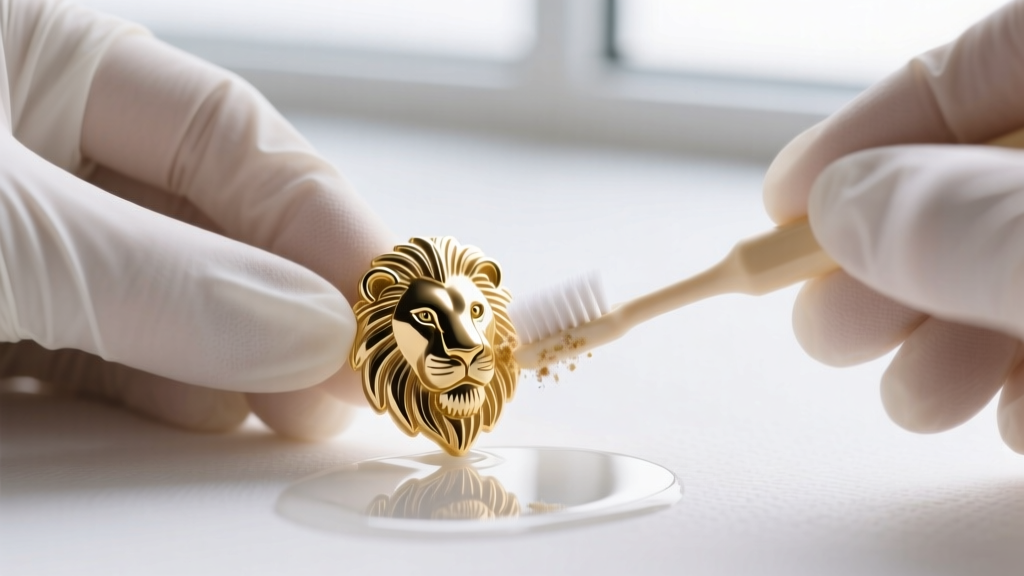
Dip an extra-soft, infant-grade toothbrush into the solution. Gently flick the bristles over the enamel animal motif, working in the direction of the metal cloisons (the tiny gold or silver wires separating the enamel colors). Crucial: Avoid scrubbing the area immediately surrounding the pearl's drill hole. Water trapped in the drill hole can cause galvanic corrosion between the metal post and the pearl nucleus.
3. Pearl-Specific Wiping
Do not submerge the pearl. Instead, dampen a lint-free microfiber cloth with the distilled water solution and gently wipe the surface of the pearl. This removes acidic skin oils and hairspray residue without risking water infiltration.
4. The Drying Phase
Pat the metal and enamel dry with a fresh microfiber cloth. Allow the earrings to air-dry completely on a paper towel in a low-humidity room for at least two hours before storing. Storing damp vermeil accelerates silver sulfide tarnishing.
Material Vulnerability Matrix
Use this reference table to troubleshoot specific issues you may encounter with your art-inspired earrings.
| Material Component | Primary Vulnerability | Visual Failure Mode | Preventative Action |
|---|---|---|---|
| Vitreous Enamel | Thermal Shock / Impact | Hairline cracks, chipping at edges | Avoid hot water; store away from heavy items |
| Akoya / Freshwater Pearl | Acids / Cosmetics | Loss of luster, chalky white spots | Put earrings on last, after perfume/hairspray |
| 18k Gold Vermeil | Friction / Sulfur | Darkening, exposing silver base | Use only microfiber; store with anti-tarnish strips |
| Pearl Drill Hole | Moisture Trapping | Verdigris buildup, post weakening | Never submerge; ensure 100% dry before storage |
Long-Term Storage and Wearability Rules
The Victoria and Albert Museum (V&A) notes that enameled objects require strict climate control to prevent the metal base from expanding and contracting, which pops the glass enamel out of its setting. Your jewelry box environment is just as critical as your cleaning routine.
The "Last On, First Off" Rule
Because the girl with a pearl earring but as an animal designs feature prominent pearl drops, they must be the very last thing you put on when getting dressed and the first thing you take off. Hairspray, perfume, and setting powders contain alcohols and aerosolized polymers that will create a microscopic, cloudy film over the pearl's nacre that is nearly impossible to remove without professional repolishing.
Proper Archival Storage
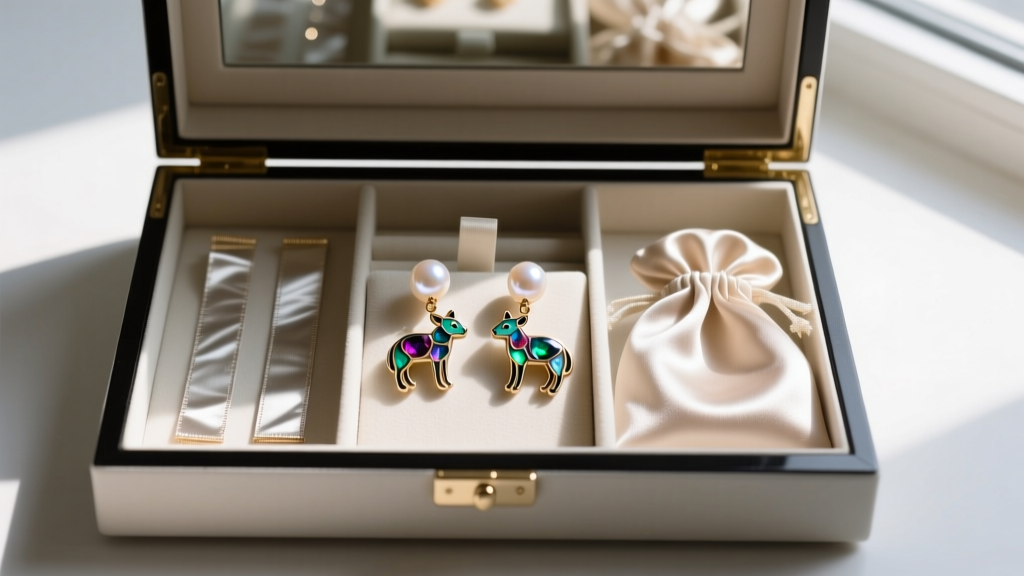
Never store these earrings in standard cotton jewelry rolls or polyvinyl chloride (PVC) plastic bags. Cotton contains trace sulfur, which rapidly tarnishes the sterling silver base of the vermeil, while PVC emits gases that degrade cold enamel. Instead, store each earring individually in an untreated silk pouch or a polyethylene zip-bag containing a 3M anti-tarnish strip. For optimal preservation, include a small silica gel desiccant packet in your jewelry box to maintain a relative humidity below 45%, preventing both metal oxidation and organic gem dehydration.
Restoring Pearl Luster Safely
If your pearl drop has already lost its orient due to accidental acid exposure (such as sweat or perfume), do not attempt to buff it. The London Assay Office and various gemological labs warn that buffing organic gems removes the very layers of nacre that create their beauty. Instead, lightly dampen a soft cloth with a tiny drop of pure, food-grade mineral oil and gently wipe the pearl. This temporarily fills micro-abrasions and restores a healthy, hydrated-looking luster until a professional jeweler can assess the stone. With meticulous care, your whimsical, art-inspired menagerie will remain a vibrant, lustrous staple of your collection for decades to come.


