How to Style & Authenticate American Indian Feather Earrings
Learn how to authenticate, style, and care for American Indian feather earrings. Expert tips on silver grades, stone types, and lobe support.

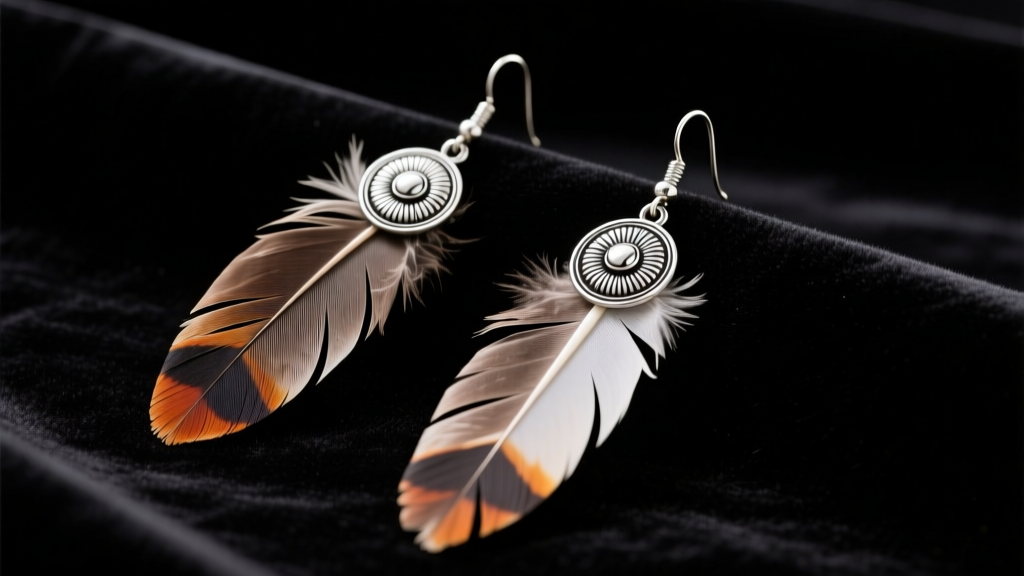
American Indian feather earrings represent a stunning intersection of natural movement, masterful silversmithing, and deep cultural heritage. Whether you are drawn to the intricate petit point turquoise work of Zuni artisans or the bold, sandcast silver designs of Navajo jewelers, adding feathers to the mix creates a dynamic dangle earring that catches the light and the breeze. However, because of their unique material composition and cultural significance, these pieces require specific knowledge to authenticate, style, and maintain.
In this comprehensive guide, we break down the legalities of authentic Native American jewelry, provide a structural framework for wearing heavy dangles without damaging your earlobes, and outline a meticulous step-by-step cleaning routine to preserve both the silver and the plumage.
Understanding Authenticity and Federal Legalities
Before purchasing American Indian feather earrings, it is critical to understand the federal laws governing their sale and materials. The Indian Arts and Crafts Board enforces the Indian Arts and Crafts Act of 1990, which makes it illegal to offer or display for sale any art or craft product in a manner that falsely suggests it is Indian-produced. Genuine pieces must be crafted by a member of a State or Federally recognized American Indian tribe or an Alaska Native village.
The Eagle Feather Law
A common misconception is that commercial American Indian feather earrings feature eagle feathers. Under the Bald and Golden Eagle Protection Act, it is strictly illegal to buy, sell, or trade eagle feathers. Only enrolled members of federally recognized tribes may possess them for religious or cultural use. Therefore, authentic commercial earrings utilize high-quality, ethically sourced feathers from turkeys, pheasants, roosters (hackle feathers), or guinea fowl. If a commercial vendor claims their earrings feature genuine eagle feathers, they are either violating federal law or misrepresenting their materials.
Managing Weight and Earlobe Stress
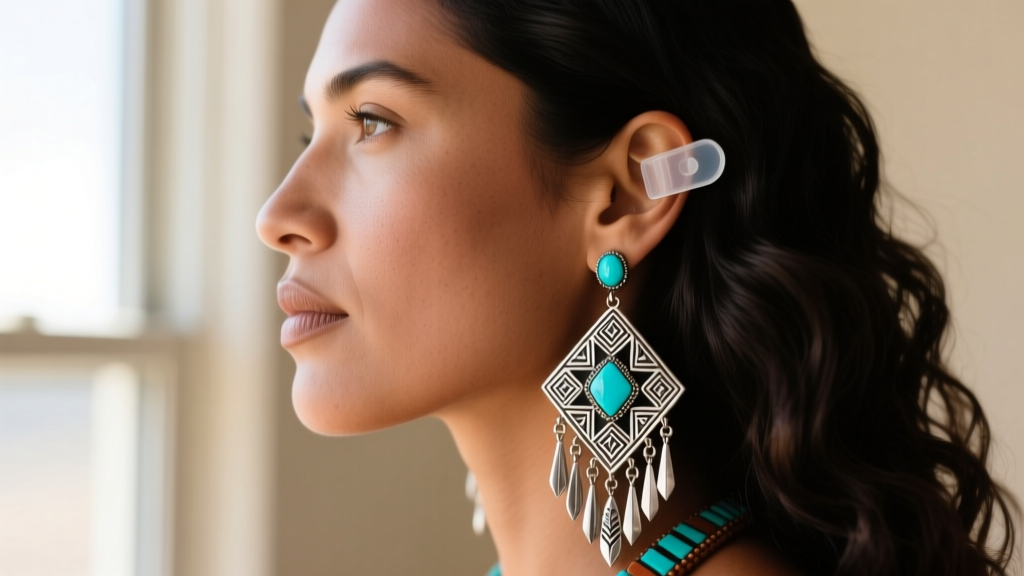
Authentic Native American silverwork is substantial. A pair of sterling silver conchos paired with turquoise drops and layered turkey feathers can easily weigh between 15 and 35 grams per earring. Standard commercial earrings are typically made with 20-gauge or 22-gauge wire, which will slowly slice through the earlobe under this kind of weight, leading to irreversible stretching or tearing.
Step-by-Step Lobe Support Strategy
- Check the Wire Gauge: Inspect the ear wire. For heavy American Indian dangles, you want a minimum of 18-gauge wire, ideally 16-gauge for pieces exceeding 20 grams. Thicker wire distributes the weight across a wider surface area of the piercing fistula.
- Apply Silicone Support Patches: Before inserting the earring, peel a medical-grade silicone earring support patch (such as BlingDots or LobeWonder) and place it behind your earlobe. Push the ear wire through the earring and then through the patch's pre-punched hole.
- Secure with a Jumbo Backing: Use a wide, flat silicone jumbo earring back rather than a standard metal butterfly clutch. The broad surface area prevents the heavy earring from drooping forward, keeping the feather drops aligned perfectly with your jawline.
Material Breakdown: Silver, Stone, and Plume
To truly appreciate and care for your earrings, you must understand the specific materials used by Indigenous artisans. The Gemological Institute of America (GIA) notes that turquoise is a highly porous phosphate mineral, meaning its treatment and origin drastically affect its durability when paired with organic materials like feathers.
| Turquoise Mine | Color Profile | Matrix Pattern | Treatment & Durability |
|---|---|---|---|
| Sleeping Beauty (AZ) | Uniform, vivid sky blue | None to minimal | Usually stabilized with epoxy; highly durable and resists oils. |
| Kingman (AZ) | Light to deep blue | Prominent brown or black webbing | Often stabilized; natural stones are softer and porous. |
| Royston (NV) | Blue to emerald green | Heavy, dramatic brown matrix | Natural stones require strict avoidance of lotions and perfumes. |
| #8 (NV) | Light blue to blue-green | Golden-brown spiderweb | Rare and highly collectible; usually left natural and fragile. |
Note: Always look for the artist's hallmark stamped on the back of the sterling silver (.925) components to verify provenance.
Step-by-Step Cleaning and Storage Routine
Cleaning American Indian feather earrings requires a bifurcated approach: you must polish the metal and stone without exposing the organic feathers to moisture or harsh chemicals. Silver tarnishes when exposed to sulfur and humidity, while feathers degrade when exposed to natural skin oils and water.
Phase 1: Dry Dusting the Feathers
Never use water, steam, or chemical cleaners on the feathers. Instead, use a clean, dry makeup blending brush (like a soft kabuki brush) to gently sweep away dust, pollen, and skin cells from the barbs of the feather. Always brush in the direction of the feather's natural grain, from the quill down to the tip.
Phase 2: Polishing the Silver and Stone
- Wrap the feathers loosely in a dry, clean microfiber cloth to protect them from accidental contact with polishing compounds.
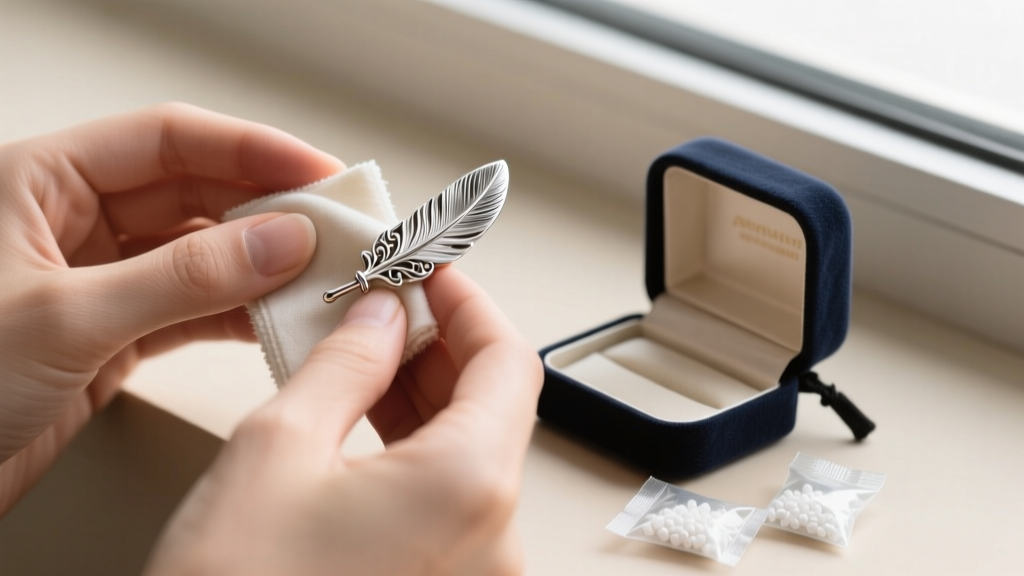
- Use a treated silver polishing cloth (such as a Sunshine Cloth) to gently rub the sterling silver conchos and ear wires. Do not use liquid silver dips, as they will destroy the turquoise and stain the feathers.
- Wipe the turquoise stones with a barely damp (not wet) lint-free cloth to remove skin oils. Dry immediately.
Phase 3: Climate-Controlled Storage
Store your earrings in a sealed, anti-tarnish ziplock bag. Place a small silica gel desiccant packet inside the bag to control humidity, which protects both the silver from oxidizing and the feathers from molding or losing their structural integrity. Always store them hanging or lying completely flat; bending the feathers in a crowded jewelry box will cause permanent creasing.
Troubleshooting Common Wear Issues
Even with meticulous care, wearable art encounters friction and environmental stress. Here is how to handle the most common issues specific to Native American feather and silver dangles.
- Bent or Frayed Feathers: If a turkey or hackle feather becomes creased, you can gently reshape it using ambient steam. Boil a kettle and hold the feather about 12 inches away from the steam for 3 to 5 seconds. The moisture will relax the keratin structure. Gently stroke the barbs back into place with your fingers and let it air dry. Do not use a hot iron.
- Loose Turquoise Bezel Settings: Native American artisans often use a sawtooth or smooth silver bezel to secure the stone. If you notice the turquoise rattling or the silver pulling away, stop wearing the earring immediately. Take it to a professional bench jeweler who specializes in Native American jewelry to have the bezel pushed back down. Attempting to bend the silver yourself can crack the porous stone.
- Green Skin Discoloration: If the sterling silver ear wire turns your skin green, it is not a sign of fake silver. It is a natural chemical reaction between the copper alloy in the .925 sterling silver and your skin's acidity. Wipe the ear wire with a cotton swab dipped in rubbing alcohol before each wear to remove the oxidized layer.
By respecting the cultural origins, understanding the physical limitations of the materials, and adhering to a strict maintenance routine, your American Indian feather earrings will remain a breathtaking, kinetic staple in your jewelry collection for decades.


