Celine Earrings Pearl Materials: Real vs Faux Properties
Analyze the material properties of Celine earrings pearl collections, comparing fashion glass pearls and fine Akoya nacre for smart buying.

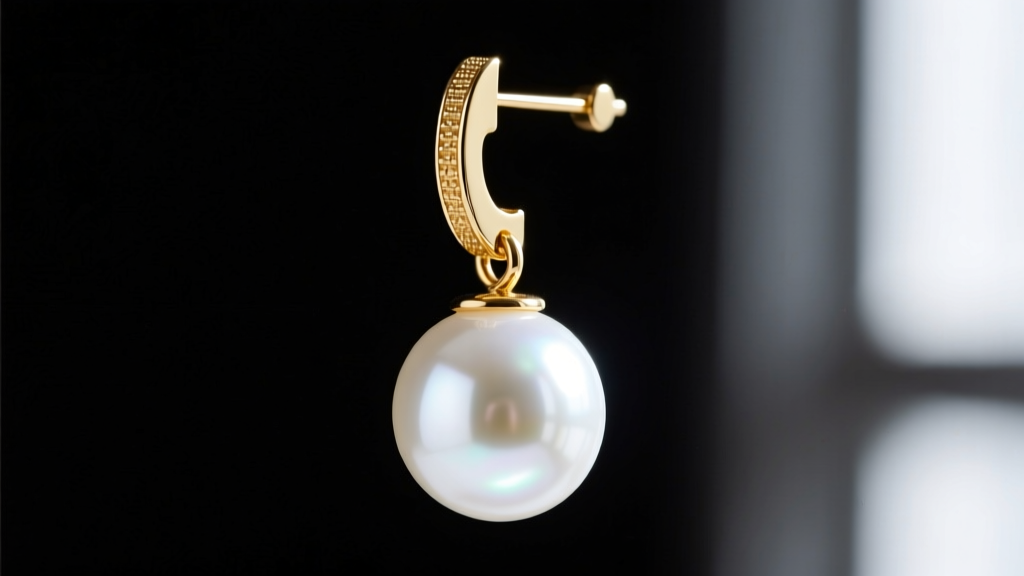
The Anatomy of Celine Pearl Earrings: Fashion vs. Fine
When evaluating the luxury market, understanding the material composition of your accessories is paramount. The celine earrings pearl collections are highly sought after, yet buyers often conflate the brand's fashion jewelry (costume) lines with their fine jewelry offerings. From a materials science perspective, these two categories represent entirely different physical properties, failure modes, and care requirements. This guide deconstructs the gemological and metallurgical realities of Celine's pearl earrings, providing a framework for authentication, longevity, and material appreciation.
Fashion Jewelry: The Science of High-End Faux Pearls
The majority of Celine's iconic runway and boutique fashion earrings—such as the Triomphe logo drops and oversized hoop accents—utilize high-end faux pearls. Unlike cheap plastic beads, luxury fashion houses employ lead-free glass cores with a specific gravity of approximately 2.5, giving them a weight and thermal conductivity that closely mimics genuine pearls. The pearlescent effect is achieved through advanced coating technologies.
Coating Composition and Optical Properties
Historically, luxury faux pearls were coated with essence d'orient, a suspension of guanine crystals derived from fish scales. Today, Celine and similar maisons more frequently use synthetic bismuth oxychloride (BiOCl) or titanium dioxide (TiO2) layered over mica. These compounds possess a high refractive index (bismuth oxychloride sits at roughly 2.15), creating the deep, mirror-like luster characteristic of Celine's fashion pearls. However, because this is a surface coating rather than a structural matrix, the Mohs hardness of the surface is highly variable and prone to micro-scratching compared to the glass core beneath.
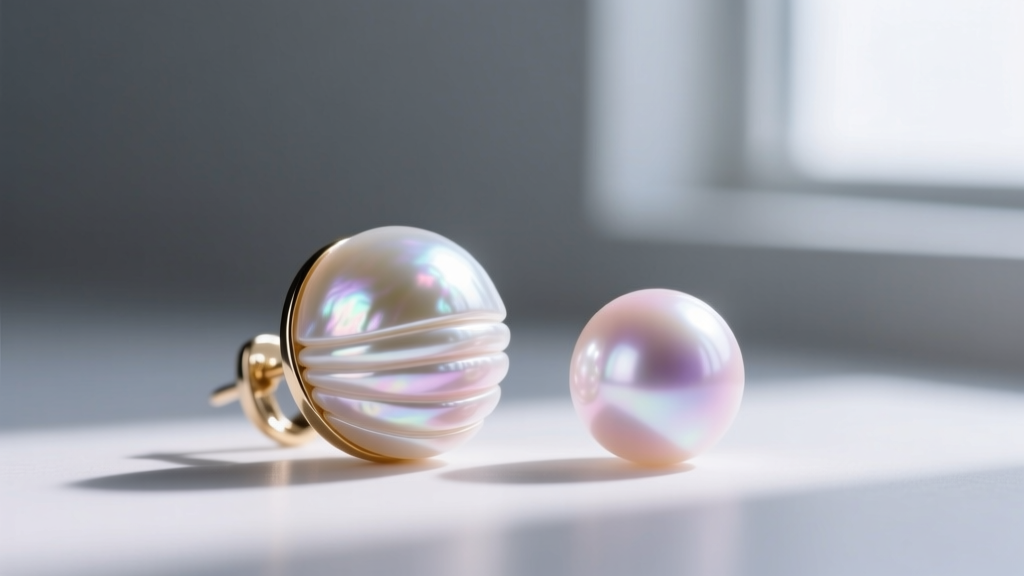
Fine Jewelry: Genuine Nacre and Akoya Properties
Celine’s fine jewelry division operates under entirely different gemological standards. When you encounter genuine pearls in their fine collections, they are typically high-grade Akoya or premium freshwater pearls. According to the GIA Pearl Quality Factors, the value and durability of these organic gems are dictated by nacre thickness and aragonite platelet alignment.
Nacre Thickness and Structural Integrity
Genuine pearls used in luxury fine earrings boast a nacre thickness ranging from 0.4mm to over 0.8mm. This nacre is a biomineral composite consisting of microscopic aragonite (calcium carbonate) platelets bound together by conchiolin, an organic protein. This 'brick and mortar' structure gives genuine pearls a Mohs hardness of 2.5 to 4.5. While softer than the glass core of a faux pearl, genuine nacre is less brittle and will not chip or flake in the same manner as a synthetic coating when subjected to minor impacts. Instead, genuine pearls exhibit a deep, inner glow (orient) caused by light diffracting through the overlapping aragonite layers, a property that synthetic coatings struggle to replicate perfectly.
Base Metals and Plating: What Holds the Pearl?
The setting and post materials are just as critical as the pearl itself. The structural integrity of the earring dictates its lifespan and hypoallergenic properties.
Fashion Line: Brass and Micron Plating
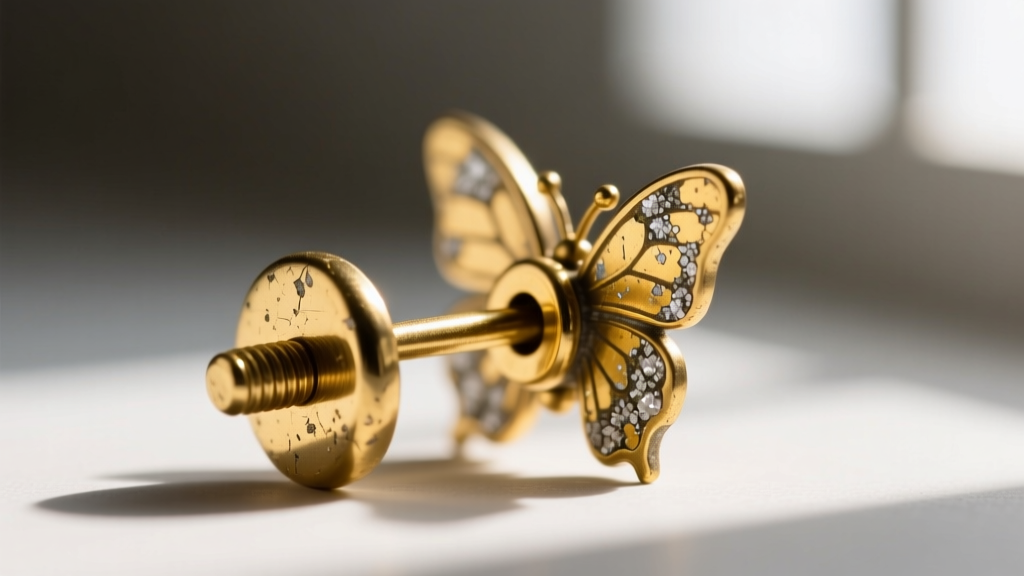
Celine's fashion earrings typically utilize a brass alloy (copper and zinc) as the base metal. Brass is chosen for its excellent machinability and structural rigidity. To achieve the luxury finish, the brass is electroplated with gold or palladium. Under FTC Jewelry Guides, standard gold electroplating must be at least 0.175 microns thick, but luxury houses often apply 0.5 to 1.5 microns. While visually identical to solid gold initially, this microscopic layer is subject to friction wear, particularly at the post and butterfly back junction.
Fine Line: Solid 18k Gold Alloys
The fine jewelry pearl earrings are cast or forged in solid 18k gold (75% pure gold, alloyed with silver, copper, or palladium for tensile strength). Solid 18k gold eliminates the risk of plating wear and provides superior resistance to galvanic corrosion, ensuring the structural integrity of the earring post for generations.
Material Comparison Chart
| Property | Celine Fashion Pearl (Costume) | Celine Fine Pearl (Fine Jewelry) |
|---|---|---|
| Pearl Core | Lead-Free Glass (SG ~2.5) | Organic Nucleus (Shell bead or tissue) |
| Surface Layer | Bismuth Oxychloride / Guanine Coating | Genuine Aragonite/Conchiolin Nacre |
| Base Metal | Brass (Cu-Zn Alloy) | Solid 18k Gold (75% Au) |
| Metal Finish | 0.5 - 1.5μm Gold/Palladium Plating | Solid Alloy (No plating) |
| Primary Failure Mode | Coating delamination, plating wear | Nacre etching, post bending |
| Approx. Price Range | $450 - $950 USD | $3,500 - $12,000+ USD |
Failure Modes: How Celine Pearl Earrings Degrade
Understanding how these materials fail allows owners to implement preventative maintenance. The degradation pathways for fashion versus fine pearl earrings are distinctly different.
- Coating Delamination (Fashion): Because the pearlescent coating is applied to a rigid glass core, dropping the earring on a hard surface like marble or tile can cause the brittle bismuth oxychloride layer to micro-fracture and flake, exposing the opaque glass beneath.
- Galvanic Corrosion and Verdigris (Fashion): When the gold plating on the brass post wears thin from the friction of insertion, the underlying copper in the brass reacts with the chlorides and lactic acid in human sweat. This creates copper chloride (verdigris), a green patina that can stain the earlobe and cause contact dermatitis.
- Acid Etching (Fine): Genuine nacre is highly susceptible to acidic environments. Human sweat has a pH ranging from 4.5 to 7.0. Prolonged exposure to acidic sweat without wiping the pearls will slowly dissolve the calcium carbonate matrix, resulting in a permanent loss of luster and a chalky surface texture.
Actionable Care Framework for Pearl Materials
To maximize the lifespan of your celine earrings pearl pieces, you must tailor your care routine to the specific material composition of the earring.
For Fashion (Glass & Plated Brass) Earrings
Never use ultrasonic cleaners or chemical jewelry dips. The high-frequency cavitation of an ultrasonic cleaner will strip the pearlescent coating from a glass bead in minutes. Instead, clean the pearls with a dry, lint-free microfiber cloth. To protect the gold plating on the brass base, minimize contact with perfumes, lotions, and hairsprays, which contain alcohols and solvents that can accelerate the degradation of the micron-thin plating layer. Store them in their original flannel pouches to prevent the glass pearls from scratching against harder metal components.
For Fine (Genuine Nacre & Solid Gold) Earrings
Genuine pearls require a specific humidity level (ideally 40% to 50%) to prevent the conchiolin protein from dehydrating and cracking. After wearing, gently wipe the nacre with a slightly damp, soft cotton cloth to remove acidic sweat and sebum, then allow them to air dry completely before storing. Avoid storing genuine pearls in airtight plastic bags or safety deposit boxes for extended periods, as the lack of ambient moisture will cause the nacre to craze and peel away from the nucleus. The solid 18k gold settings can be professionally polished if scratched, a luxury not afforded to plated fashion pieces.
Conclusion
Whether you are investing in the avant-garde appeal of Celine's glass pearl fashion earrings or the heirloom quality of their fine Akoya collections, recognizing the underlying material science transforms how you wear and care for your jewelry. By respecting the distinct physical properties of synthetic coatings versus organic nacre, and understanding the metallurgical limits of plated brass versus solid gold, you can ensure your luxury earrings maintain their structural integrity and visual brilliance for years to come.


