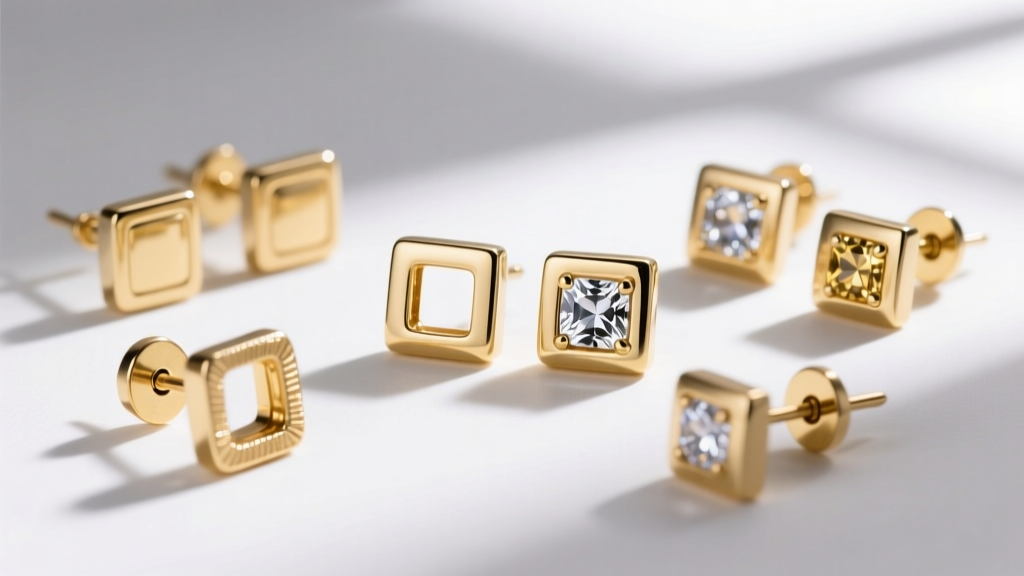
Best Earrings for Stack Curation: 2026 Trend Analysis
Discover the top earrings for stack curation in 2026. Expert trend analysis on gauge sizes, metal pairings, and lobe-to-helix styling frameworks.

The Evolution of the Curated Ear in 2026
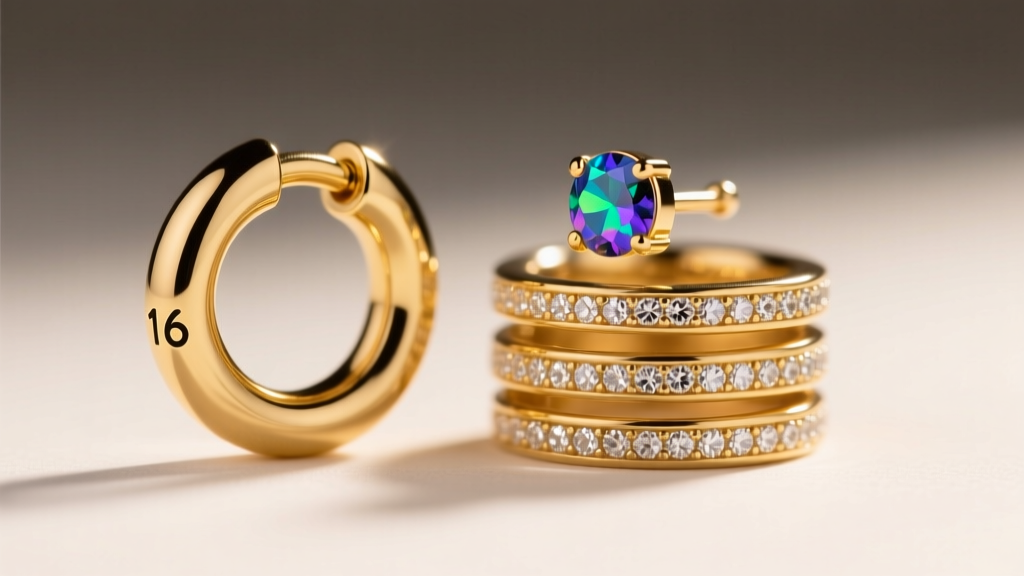
The era of haphazardly piercing the ear and stuffing it with mismatched jewelry is officially over. As we navigate the style landscape of 2026, the search for the perfect earrings for stack curation has evolved into an architectural discipline. Today’s trend analysis reveals a definitive shift from maximalist chaos to intentional, anatomical mapping. Modern curators and professional piercers are prioritizing visual weight distribution, metallurgical compatibility, and precise spatial geometry. Whether you are building a constellation lobe layout or a sleek helix-to-tragus bridge, selecting the right earrings for stack configurations requires a deep understanding of both aesthetic flow and biological constraints.
In this comprehensive 2026 trend report, we break down the exact gauge sizes, material grades, and structural frameworks necessary to build a stack that is not only visually striking but biologically sustainable for long-term wear.
Gauge Sizing and Spatial Mapping
The most common failure point in amateur ear stacking is ignoring gauge thickness and spatial mathematics. When selecting earrings for stack layouts, you must account for the physical footprint of the jewelry head and the distance between fistulas (the piercing holes).
The Golden Rule of Spacing
For a standard multi-lobe stack, the minimum distance between piercing centers should be 6mm to 8mm. If your piercings are spaced closer than 5mm, you are physically restricted to micro-studs (2mm-3mm heads). Attempting to force 5mm huggies or standard threadless ends into tightly clustered lobes will result in overlapping jewelry, which traps moisture, breeds bacteria, and causes chronic contact dermatitis.
Gauge Standards and the 'Cheese-Cutter' Effect
- 20-Gauge (0.81mm): Standard for basic lobe piercings. Best for delicate, lightweight threadless pins and micro-prong studs.
- 18-Gauge (1.02mm): The 2026 sweet spot for lobe stacks. It provides enough structural integrity to support medium-weight huggies and charm hoops without risking migration.
- 16-Gauge (1.29mm): The absolute standard for cartilage (helix, conch, tragus). Using 18g or 20g jewelry in a 16g cartilage piercing creates a 'cheese-cutter' effect, where the thin wire slowly slices through the tissue due to pressure necrosis.
Material Synergy: Mixing Metals Safely
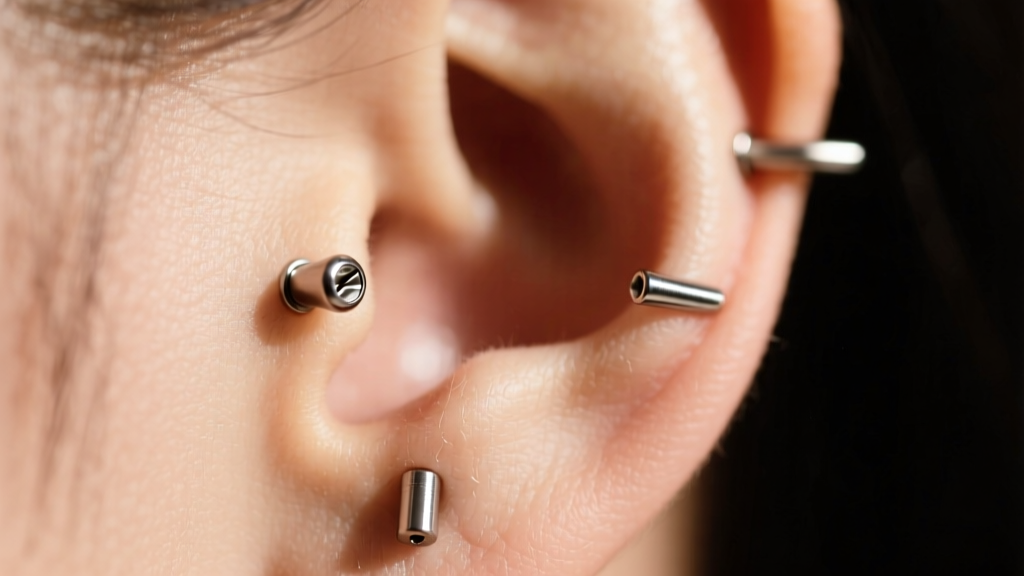
A major trend for 2026 is mixed-metal stacks—pairing warm yellow gold with cool platinum or titanium tones. However, mixing metals in a single ear requires an understanding of galvanic reactions and alloy compositions. When selecting earrings for stack combinations, the base metal touching the skin must remain consistent to prevent allergic reactions.
According to the Association of Professional Piercers (APP), the only metals recommended for long-term wear in curated stacks are ASTM F-136 implant-grade titanium, niobium, and 14k or 18k solid gold that is explicitly nickel-free. Avoid gold-plated brass or sterling silver for cartilage stacks; the copper and nickel content frequently triggers localized eczema and cartilage bumps when exposed to the micro-abrasions of daily wear.
Pro Tip: If you want the look of mixed metals without the biological risk, utilize PVD (Physical Vapor Deposition) coated titanium. A black PVD titanium labret paired with a yellow gold anodized titanium helix hoop gives the illusion of mixed metals while keeping the base material 100% biocompatible.
The 2026 Stack Archetypes
Based on current high-end jewelry market data and piercing studio requests, three distinct archetypes are dominating the earrings for stack trend cycle this year.
| Archetype Name | Key Pieces & Placement | Aesthetic Vibe | Avg. Investment Range |
|---|---|---|---|
| The Orbital Arc | Conch hoop, mid-helix hoop, upper lobe huggie | Fluid, continuous, architectural | $450 - $1,200 |
| The Constellation | 5+ micro threadless studs (2mm-3mm gems) scattered across lobe and lower helix | Delicate, celestial, minimalist | $300 - $800 |
| The Industrial Edge | 14g industrial barbell, flat conch stud, tragus hoop | Bold, structural, grunge-revival | $250 - $600 |
Troubleshooting Stack Fatigue and Migration
Even the most beautifully curated ear can fail if the biomechanics are ignored. 'Stack fatigue' refers to the tissue inflammation caused by wearing heavy or improperly fitted jewelry across multiple piercings simultaneously.
Identifying Pressure Necrosis
If you sleep in tight huggies or clicker hoops, the rigid metal presses against the pillow, driving the post into the back of the ear. Over time, this causes the tissue to swell around the jewelry, leading to embedding. For 2026, the industry standard for sleeping in a stack is to swap all hoops and butterfly-back studs for flat-back labrets. A 16-gauge titanium flat-back with a bezel-set gemstone eliminates posterior pressure entirely, allowing the ear to rest flush against a pillow.
Managing Contact Dermatitis
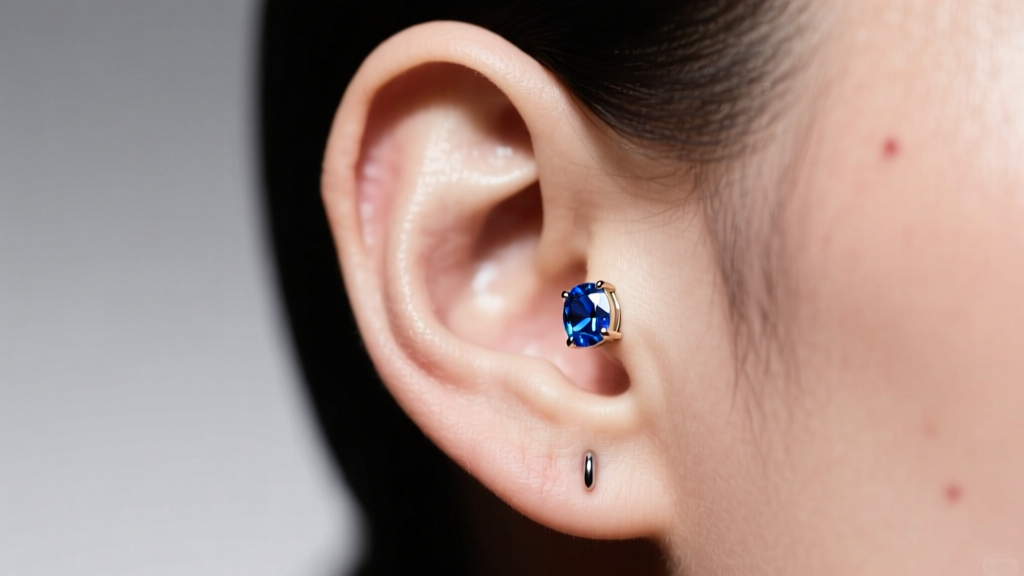
Redness, flaking, and itching between piercings are rarely infections; they are usually contact dermatitis triggered by nickel alloys or trapped moisture. As noted in dermatological studies on nickel-induced allergic contact dermatitis, even trace amounts of nickel in 'hypoallergenic' white gold can trigger severe reactions in a dense stack where jewelry constantly rubs against adjacent skin folds. Always demand a mill certificate or XRF (X-ray fluorescence) scan from your jeweler when purchasing white gold earrings for stack layouts.
Curating Your Layout: A Step-by-Step Framework
To build a cohesive stack, professional piercers use the Anchor-Bridge-Accent framework. Do not buy random earrings for stack projects; plan the layout using this hierarchy:
- The Anchor (Visual Weight): This is your largest piece, usually placed in the conch or the primary lobe piercing. Think a 10mm bezel-set labret or a textured gold huggie. It grounds the entire composition.
- The Bridge (Flow): These pieces connect the anchor to the outer edges of the ear. Medium-sized hoops in the helix or mid-lobe serve as transitional elements that guide the eye upward or downward.
- The Accent (Detail): The smallest pieces, placed in the tragus, rook, or upper helix. Micro-gem threadless ends (1.5mm to 2mm) provide a subtle sparkle that rewards close inspection without overwhelming the anchor.
By adhering to strict gauge sizing, prioritizing ASTM-certified biocompatible metals, and utilizing the Anchor-Bridge-Accent framework, your 2026 ear curation will transcend fleeting trends and become a permanent, comfortable, and stunning anatomical masterpiece.