How to Clean, Store, and Maintain Lots of Earrings Safely
Learn expert methods to clean, organize, and store lots of earrings. Discover material-specific care, gemstone safety, and anti-tarnish storage tips.

The Burden and Beauty of a Large Earring Collection
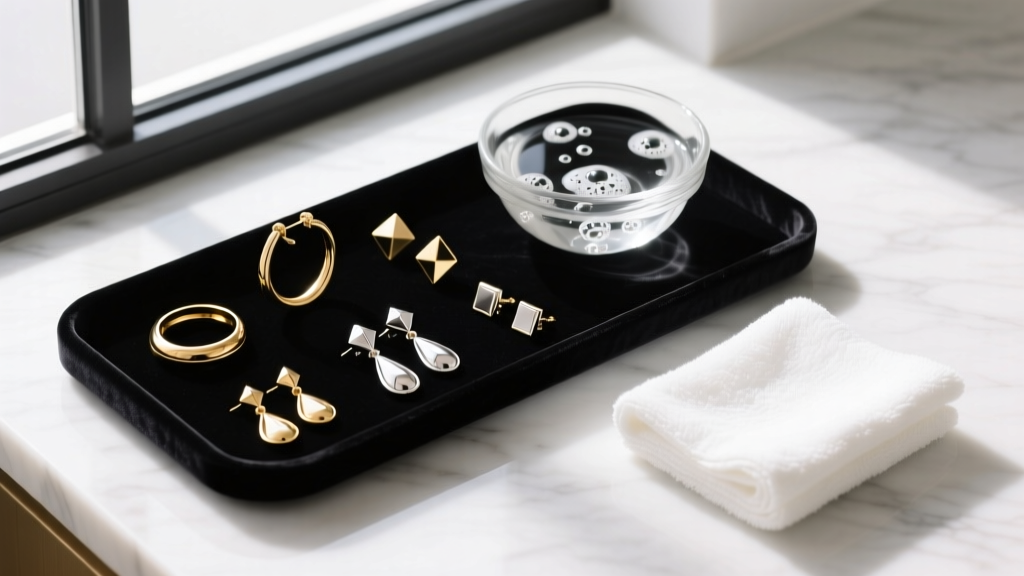
Curating a jewelry box filled with lots of earrings is a rewarding endeavor, but it introduces a unique set of maintenance challenges. When you own dozens of pairs—ranging from delicate 20-gauge gold studs to heavy sterling silver hoops and cartilage huggies—standard cleaning routines fall short. Improper care leads to tangled chains, scratched gemstones, oxidized metals, and lost friction backs. To protect your investment and ensure every piece is ready to wear, you need a systematic, material-specific approach to cleaning, sanitizing, and storage. This guide provides professional-level protocols to maintain a large earring collection without causing accidental damage.
The Triage Phase: Sorting by Material and Mohs Hardness
Before a single drop of cleaning solution touches your jewelry, you must sort your collection. Mixing metals and gemstones during the cleaning process is a primary cause of accidental damage.
- Sort by Metal: Separate sterling silver, karat gold (10k, 14k, 18k), platinum, and titanium. Each requires a different chemical approach.
- Sort by Gemstone Hardness: The Mohs scale of mineral hardness dictates what can be safely cleaned together. Diamonds (10) and sapphires (9) will easily scratch opals (5.5-6.5) and pearls (2.5-4.5) if they are agitated together in an ultrasonic cleaner or a soaking bowl.
- Sort by Gauge and Threading: Group your body jewelry by thickness (e.g., 18g/1.0mm, 16g/1.2mm, 14g/1.6mm). Keep internally threaded and threadless (push-pin) pieces separate from standard friction-back lobe studs to prevent cross-threading and lost components.
Metal-Specific Cleaning Protocols
Different alloys react differently to chemicals, heat, and abrasion. Here is how to tackle the most common metals found in a large collection.
Sterling Silver: The Electrochemical Tarnish Removal
Sterling silver (92.5% silver, 7.5% copper) tarnishes when the copper reacts with airborne sulfur and moisture. Avoid abrasive silver polishes, which strip away microscopic layers of metal and ruin oxidized (antiqued) details.
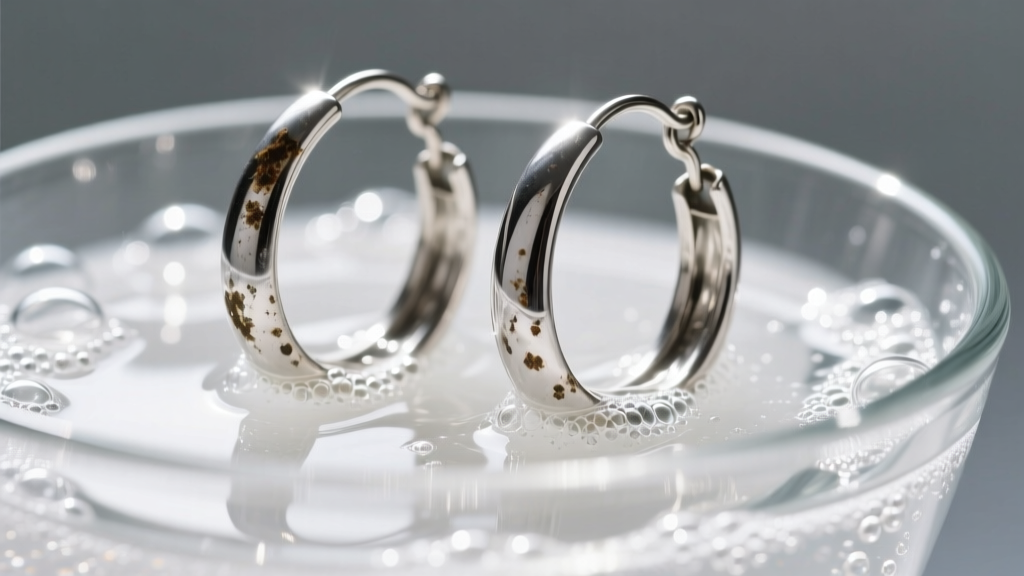
The Foil Bath Method: Line a glass bowl with aluminum foil (shiny side up). Add 1 tablespoon of baking soda and 1 tablespoon of sea salt. Pour boiling water over the mixture to activate it. Submerge your tarnished silver earrings for 3 to 5 minutes. The electrochemical reaction safely transfers the sulfur from the silver to the foil. Rinse with distilled water and pat dry with a microfiber cloth.
14k and 18k Gold: Removing Daily Sebum and Grime
Gold does not tarnish, but it easily accumulates sebum, dead skin cells, and cosmetic residue, particularly behind the gallery of stud settings and inside the hinges of hoop earrings.
- Mix a few drops of pH-neutral dish soap (like Dawn) into a bowl of lukewarm water. Avoid hot water, which can cause thermal shock and fracture heat-treated gemstones.
- Soak the gold earrings for 15 minutes to loosen debris.
- Use a baby toothbrush with ultra-soft bristles to gently sweep behind the settings and along the post.
- Rinse under lukewarm running water and dry completely with a lint-free cloth before storing.
Implant-Grade Titanium: Cartilage and Body Jewelry Sanitization
For ASTM F-136 implant-grade titanium body jewelry, the Association of Professional Piercers (APP) recommends sterile saline for routine aftercare and maintenance. However, when deep cleaning a large collection of titanium huggies, clickers, and barbells, you must ensure complete sanitization. If the pieces contain no gemstones or organic inlays, boiling them in distilled water for 20 minutes is a safe, highly effective way to eliminate bacteria without harsh chemicals.
Gemstone and Pearl Precautions
Gemstones dictate the boundaries of your cleaning methods. According to the Gemological Institute of America (GIA), porous organic gems like pearls, coral, turquoise, and amber must never be submerged in water, exposed to steam, or placed in ultrasonic cleaners. The porous nature of these stones allows them to absorb chemicals and moisture, leading to discoloration, structural weakening, and the dissolution of pearl nacre. Wipe organic gems gently with a damp, lint-free cloth after every wear to remove acidic skin oils. Conversely, hard stones like diamonds, rubies, and sapphires can safely withstand ultrasonic cleaning, provided they do not have significant surface-reaching fractures or liquid inclusions.
The Master Earring Cleaning Matrix
Use this quick-reference table to determine the safest cleaning method for the diverse materials in your collection.
| Material / Gemstone | Safe Cleaning Method | Strictly Avoid | Drying Technique |
|---|---|---|---|
| Sterling Silver (No Stones) | Aluminum foil + baking soda bath | Abrasive pastes, bleach | Microfiber cloth |
| 14k/18k Gold (Hard Stones) | Mild dish soap + lukewarm water | Chlorine, harsh ammonia | Air dry or lint-free cloth |
| Pearls & Opals | Damp cloth wipe only | Submersion, ultrasonics, steam | Air dry flat |
| Implant-Grade Titanium | Sterile saline or boiling (no gems) | Alcohol soaks (dries out O-rings) | Paper towel or air dry |
| Platinum | Commercial jewelry dip or soap | Abrasive brushes (scratches metal) | Lint-free cloth |
Storage Solutions to Prevent Scratching and Loss
When you have lots of earrings, tossing them into a single communal jewelry box guarantees tangled posts, scratched metals, and missing earring backs. Proper storage is an extension of the cleaning process.
Compartmentalization and Flocking
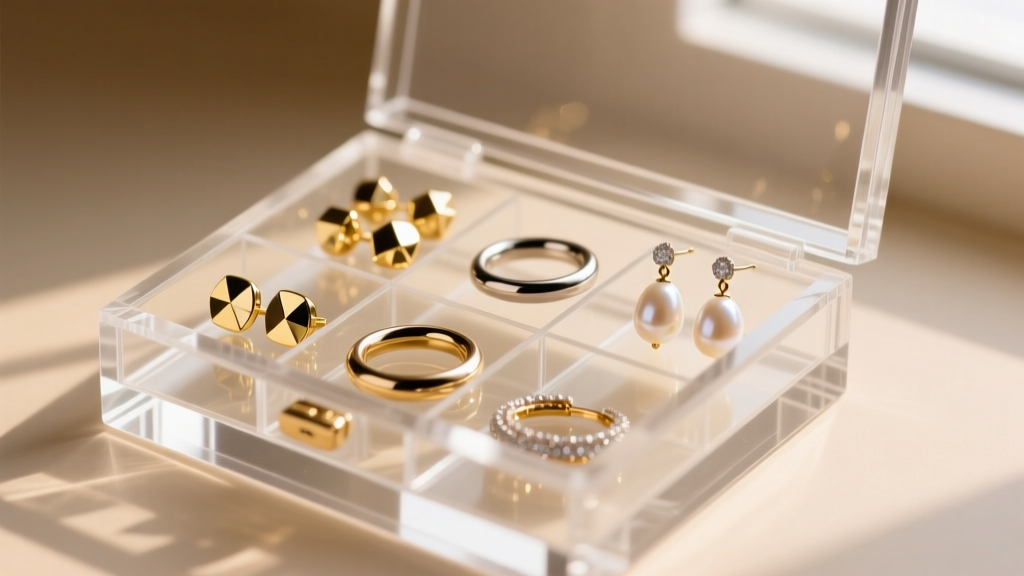
Invest in a multi-drawer acrylic or wooden organizer with flocked (fuzzy) inserts. Flocking prevents micro-scratches on high-polish metals caused by jewelry shifting when drawers are opened and closed. Dedicate specific rows to specific styles: keep heavy dangle earrings hanging or laid flat to prevent bent wires, and store studs in individual grid squares.
Anti-Tarnish Technology
For long-term storage of silver and copper-alloy pieces, place 3M anti-tarnish strips in each drawer or storage bag. These strips contain copper particles that actively absorb airborne sulfur compounds and hydrogen sulfide, remaining effective for up to 6 months. Alternatively, store individual silver pieces in airtight polyethylene zip bags with a small piece of anti-tarnish chalk.
Upgrading Earring Backs
Standard metal friction backs (butterfly backs) are notorious for slipping off and getting lost in carpets. Upgrade your most-worn studs to silicone friction backs for superior grip, or invest in locking earring backs (like La Pousette) which use a mechanical click mechanism to secure the post permanently until manually released.
Troubleshooting Common Earring Failures
Maintaining a large collection means inevitably dealing with minor mechanical failures. Here is how to troubleshoot them without ruining the piece:
- Stripped Screw-Backs: If your 16g cartilage stud won't tighten, the internal threading may be cross-threaded. Never force it with pliers. Use a jeweler's loupe to inspect the threads. If a thread is bent, a professional jeweler can re-tap it; if it is stripped, the post or backing must be replaced.
- Bent Posts: Standard 20-gauge (0.8mm) and 18-gauge (1.0mm) gold posts bend easily when pushed through thick earlobes. Roll the post on a flat glass surface to identify the exact location of the bend. Use nylon-jaw pliers to gently straighten it; the nylon prevents the steel tool from marring the soft gold.
- Loose Prongs: If you hear a diamond or sapphire rattling in its setting, stop wearing it immediately. Place a piece of painter's tape over the stone to hold it in place and take it to a jeweler for prong re-tipping. Continuing to wear it risks losing the gemstone entirely.
- Stuck Hinges on Hoops: If a huggie hoop hinge is stiff, do not force it open. Apply a microscopic drop of synthetic watch oil to the hinge pin, work it back and forth gently, and wipe away any excess with a cotton swab.
Final Thoughts on Collection Maintenance
Owning lots of earrings requires a shift in mindset from passive ownership to active curation. By implementing material-specific cleaning routines, respecting the Mohs hardness scale, and utilizing anti-tarnish storage solutions, you ensure that every piece in your collection remains in pristine, wearable condition. Schedule a deep-clean and inspection session every three months to check for loose prongs, worn friction backs, and early signs of tarnish, keeping your jewelry box organized and your earrings sparkling for decades to come.


