Chain Earrings for Double Piercings: Budget & Value Guide
Discover the true cost of chain earrings for double piercings. We compare materials, pricing tiers, and longevity to help you maximize your jewelry budget.

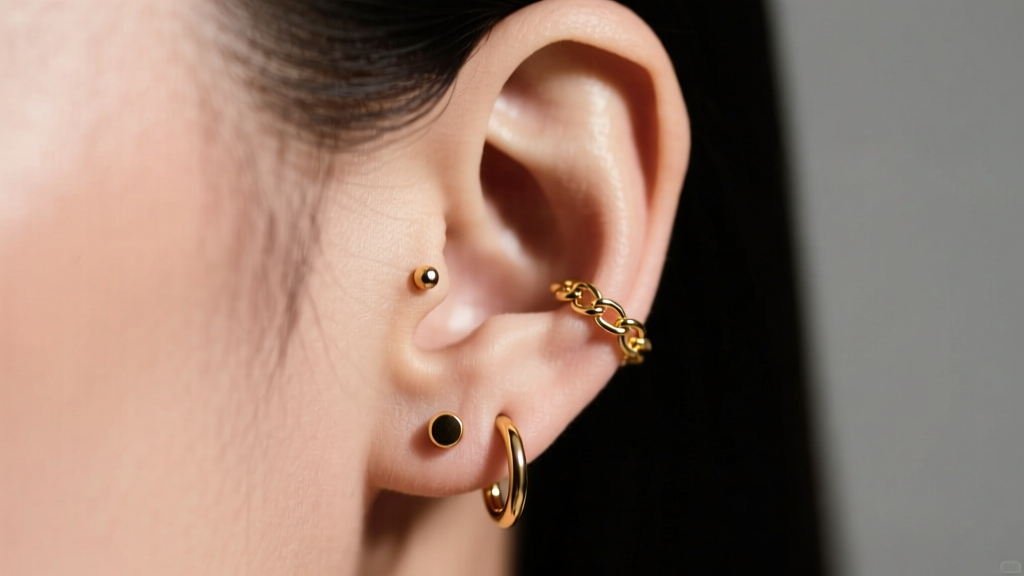
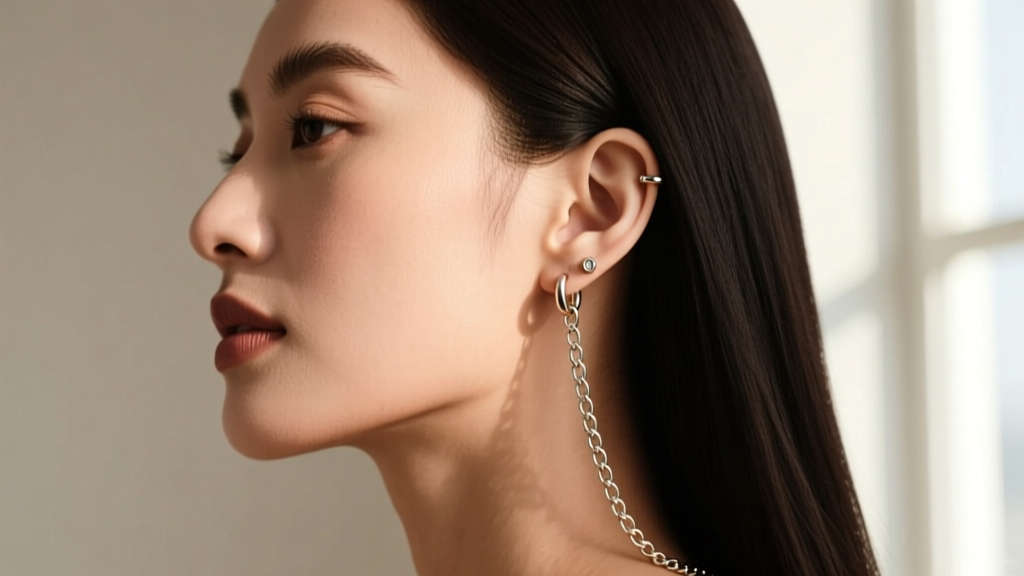
The curated ear trend has evolved beyond simple stud-and-hoop combinations. Today, connecting two piercings with a delicate chain is a hallmark of sophisticated ear styling. However, when shopping for chain earrings for double piercings, consumers are often caught between ultra-cheap fast fashion and exorbitant fine jewelry prices. Understanding the intersection of material science, structural mechanics, and cost-per-wear is essential for making a smart investment. This guide breaks down the true value of connected ear jewelry, helping you allocate your budget toward pieces that drape beautifully and last for years.
The True Cost of Connected Ear Curations
When you connect two piercings, the chain acts as a suspension bridge. It endures constant micro-tension from head movements, hair brushing, and sleeping. A budget-friendly $12 chain might seem like a steal, but if it snaps after three weeks, taking your favorite lower-lobe hoop with it, the replacement cost and emotional frustration skyrocket. Value in ear jewelry is not about finding the lowest initial price; it is about calculating the lifespan of the alloy, the integrity of the soldered links, and the reliability of the clasp mechanism.
Material Breakdown: Where Your Money Actually Goes
The base metal and plating thickness dictate both the price and the longevity of your chain earrings. According to the Federal Trade Commission's Jewelry Guides, terms like 'gold plated' and 'gold vermeil' have strict legal definitions that directly impact durability.
Gold Vermeil vs. Gold Plated vs. PVD Stainless Steel
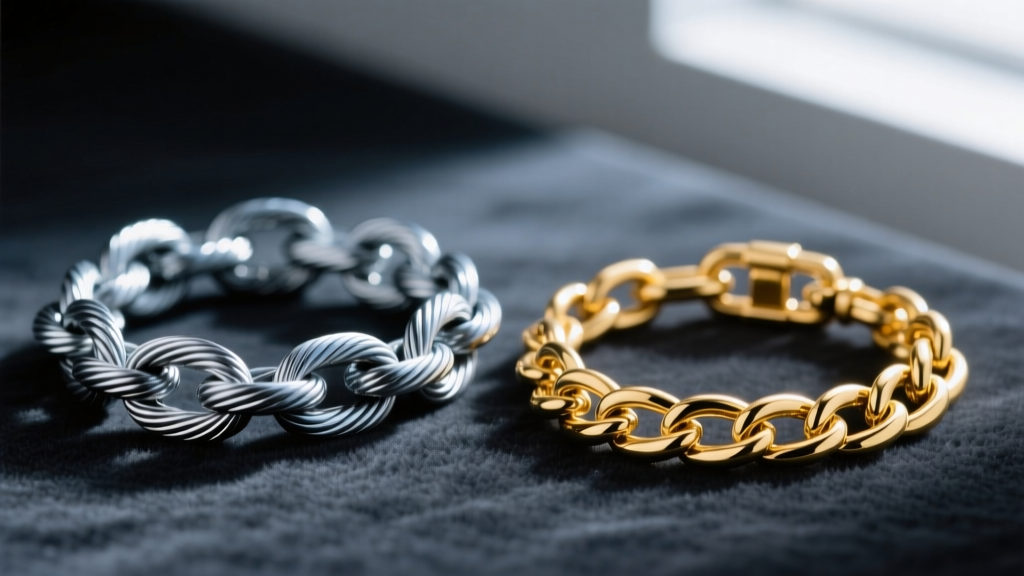
Standard gold plating usually involves a thin flash of gold (less than 0.5 microns) over a brass or copper base. This is the cheapest option but will tarnish and wear through within months of daily use. Gold vermeil, by contrast, requires a sterling silver base and a minimum of 2.5 microns of gold plating, offering significantly better longevity and hypoallergenic properties. However, for pure budget durability, PVD (Physical Vapor Deposition) coated 316L stainless steel is the undisputed champion. PVD bonding creates a surface layer that is up to 10 times more resistant to wear and sweat than traditional electroplating.
| Material Grade | Base Metal | Coating / Thickness | Avg Price Range | Expected Daily Lifespan |
|---|---|---|---|---|
| Flash Gold Plated | Brass / Copper | < 0.5 microns | $8 - $18 | 1 - 3 Months |
| Gold Vermeil | 925 Sterling Silver | ≥ 2.5 microns | $45 - $95 | 1.5 - 3 Years |
| PVD Gold Coated | 316L Stainless Steel | PVD Titanium Nitride | $25 - $50 | 3 - 5 Years |
| Solid 14k Gold | 14k Gold Alloy | Solid throughout | $160 - $350+ | Lifetime |
Chain Gauge and Clasp Mechanics: The Hidden Value Killers
A common mistake when buying chain earrings for double piercings is ignoring the wire gauge. The gauge determines both the drape of the chain and its tensile strength.
Why 20-Gauge is the Sweet Spot
Most delicate connecting chains are made in 22-gauge (0.64mm) or 20-gauge (0.81mm) wire. While 22-gauge offers a beautiful, nearly invisible drape, it is highly susceptible to kinking and snapping if caught on a sweater. A 20-gauge chain provides the optimal balance: it is thin enough to look delicate and sway gracefully, but thick enough to withstand the daily friction of a double piercing setup. Avoid 18-gauge (1.02mm) for connecting chains, as the thicker wire creates a stiff, rigid line that lacks the desired fluid movement.
Spring Ring vs. Lobster Clasps
The clasp is the most frequent point of mechanical failure. Spring ring clasps are cheap to produce and commonly found on budget chains, but their internal springs typically fail after 300 to 500 actuations. Lobster clasps are more secure and feature a stronger internal mechanism, but their bulky profile can ruin the aesthetic of a delicate 20-gauge chain. For the best value and aesthetic, look for chains that utilize a minimalist toggle clasp or a seamless soldered jump-ring closure if you plan to leave the chain in place for weeks at a time.
Chain Link Styles and Structural Integrity
Not all links are created equal. The shape of the chain link heavily influences how it handles stress and tangles.
- Cable Chain: The classic oval-link design. It offers excellent drape but is prone to kinking if twisted. Best for careful wearers.
- Rolo Chain: Features uniform, round links. It is highly resistant to kinking and lies flat against the skin, making it the most durable choice for daily wear.
- Curb Chain: Links are flattened and interlock tightly. While incredibly strong, curb chains are often too stiff and heavy for delicate double-piercing suspensions.
- Snake Chain: Tightly joined rings create a smooth, tubular surface. Beautiful drape, but if bent sharply, the internal structure can permanently fracture.
Pricing Tiers: What to Expect in 2026
Navigating the market requires understanding what you are actually paying for at different price points. In 2026, the jewelry market has clearly segmented into three distinct tiers for connected ear pieces:
The Fast Fashion Tier ($8 - $20): Expect brass bases, flash plating, and 22-gauge wire. Buy these only for occasional, short-term wear or costume styling.
The Demi-Fine Tier ($40 - $90): The sweet spot for value. You will find high-quality gold vermeil over sterling silver, or premium PVD stainless steel, usually in a durable 20-gauge rolo or cable link.
The Fine Jewelry Tier ($150 - $400+): Solid 14k or 18k gold. You are paying for the intrinsic melt value of the metal, lifetime durability, and often, custom-length sizing to perfectly match your specific piercing anatomy.
Cost-Per-Wear Analysis: Making the Smart Investment
To truly assess value, jewelry experts use the Cost-Per-Wear (CPW) formula. This metric reveals the hidden expense of cheap jewelry.
Imagine you buy a $15 fast-fashion chain. It tarnishes and breaks after two months (approx. 60 wears). Your CPW is $0.25 per wear, and you must continually repurchase replacements. Now, consider a $65 demi-fine gold vermeil rolo chain. With proper care, it lasts for three years of daily wear (approx. 1,095 wears). Your CPW drops to $0.05 per wear. Furthermore, you avoid the 'hidden tax' of losing a valuable bottom-hoop earring when a cheap chain snaps unexpectedly.
Maintenance and Hidden Replacement Costs
Even the highest quality chain earrings for double piercings require maintenance to preserve their value. The Gemological Institute of America (GIA) notes that environmental factors like sulfur in the air and chlorine in water accelerate metal degradation. Budget chains cannot withstand ultrasonic cleaners; the high-frequency vibrations will shatter weak solder joints and strip thin plating. Demi-fine and solid gold chains, however, can be safely cleaned in mild ultrasonic baths. Factor in the cost of a $15 professional polishing cloth and occasional jump-ring replacements (usually $5 to $10 at a local bench jeweler) when calculating your long-term jewelry budget.
Final Verdict: Maximizing Your Double Piercing Budget
When sourcing chain earrings for double piercings, the highest value lies squarely in the demi-fine category. A 20-gauge gold vermeil or PVD-coated 316L stainless steel rolo chain offers the perfect synthesis of tensile strength, elegant drape, and long-term affordability. Avoid the false economy of sub-$20 flash-plated chains, which compromise both your skin health and the security of your entire ear curation. By prioritizing precise gauge sizing, robust link structures, and verified plating thicknesses, you can achieve a luxurious, connected ear aesthetic that respects both your style and your wallet.


